


SteamyTea
-
Posts
23378 -
Joined
-
Days Won
190
Everything posted by SteamyTea
-
Yes. It would have been worse if the battery had just 'worked' as the Apple Generation says. I am sure I can get my car to do 20 MPG if I want to, instead of 65 MPG.
-
 How easy is that to do? How long does the paint last? That is an interesting point, I suppose you can claw a lot of it back via windows, doors and ceilings. The walls may only be 30% of the exposed structure.
 -
I would think that it really needs to be done before the insulation and VLC is fitted. Making the inner surfaces does not help wind driven cold air by passing the insulation. Trouble it doing it that way, is that the trades come along and ruin it.
-
I have often wondered where the point is between losses though the structure and losses though the infiltration is. There is a minimum infiltration for humidity control, so that should be the point to aim for, though MVHR skews that somewhat.
-
Or make one, it has WiFi.
-
pH is an odd thing as it changes with temperature. Ideally you want the pH to be the same as what it is in contact with, raise the temperature and the pH lowers i.e. more H+ than OH-. It is also a base ten logarithmic scale, so a small change makes a big difference.
-
It is strange how we think of insulation as a diminishing return but do not use the same term for airtightness. What we really need to do is set maximum targets i.e. no part of walls, floor and roof insulated above a U-Value of 0.11 W.m-2.K-1 and a mean of 0.1 0.11 W.m-2.K-1 Set an ACH limit of 0.3. I thought it was a water based latex, bit like self levelling floor 'stuff'. But I also think that the word 'latex' is generic and the product may not contain any real latex i.e. natural rubber. A quick google and natural latex is produced in most flowering plants and is part of the defence mechanism. If made from poppies, then it is known as opium, so get the right type of sprayable latex, put Portishead or Jefferson Airplane on the turntable and enjoy the experience.
-
I am a fan of fan heaters, they can heat a room up very quickly, but I do dislike the noise they make. Any convection heater lets the hot air rise to ceiling level, then as it cools, starts to heat the room. Having a stone place will not help any, the mean air temperature inside the house will be set by the wall temperature to a certain extent. Stone conducts heat quickly. It is why we insulate houses. I am currently sitting in my kitchen (3:30 AM with an OAT of 8°C) which is at 20°C and I turned the storage heater off 2 days ago, my house is lightweight timber construction, but well insulated. If there are any damp problems, or the place has high humidity, it may be worth using a dehumidifier, they dry the air, recovering some of the latent heat and add heat to the tune of their power draw i.e. 1 kW. Storage heaters are a good option if you can get on a time of use tariff, but they are just convection heater. They supply heat exactly the same as any other heater, the term 'background' heat is a bit of a nonsense term for 'too small'. It would be better to say that if they are undersized you will need supplementary heaters, if they are over sized you will need to turn them down. They can often be picked up for nothing though, and with some digital timers that switch them on and off to coincide with the cheap period, no rewiring would be needed (except maybe change an outlet to a double pole switch, you can't run a large one from a 13A plug and socket). If you really are going to put in UFH in the future, remember that you do need a lot of insulation under it, ideally 200mm+. You don't want to he heating the ground up, unless you really want to believe that, like thick stone walls, it stores energy for a later date. Identify and fix any obvious air leaks and put in lots of loft insulation of you can. Running costs are easy to work out. Price of energy [£/kWH] x sum of power [kW] x sum of runtimes [h] My energy prices are currently £0.3672/kWh during the day and £0.1468/kWh during the night. The last two week I have used 21 kWh during the day, 130 kWh during the cheaper night period. So 14% is day rate and 86% is night rate, makes the mean rate £0.24/kWh including VAT and meter rental (£0.6246/day). If you can get a fixed tariff below that, then no need to change supply. That included hot water at night, what is your Mother doing for hot water? Hot water is the greatest part of my annual bill because it is needed every day, and I use way too much.
-
As it is a current clamp and your heap pump is an induction load, it will not be that accurate.
-
I will probably be going up during the week, depends if my 'missing' chef comes back.
-
Replace electric shower with bath and shower
SteamyTea replied to Lifesigns's topic in Bathrooms, Ensuites & Wetrooms
That just looked like a lagged cold water tank, AKA F&E. A simple test, but not always 100% accurate, is that if you can put your thumb over the tap/shower pipe outlet, and stop the flow, the water is gravity fed. If you can't, it is mains pressure. Obviously if it is pumped and the pump is running, it will squirt everywhere. -
What day? I intend to visit my Mother during the week, the extra 100 miles to get to Kent does not seem to be much more on my journey.
-
It is a bit more than just the size of molecules. The 'weave' of the material will reduce the speed of the air because it has to take a longer path. So say the material is 0.1mm thick, but the weave means the shortest path is actually 1mm, for any given pressure, the time taken will be ten times greater. From that you would think that a water molecule with a slight + charge, rather than a nitrogen (charge 3-) or oxygen (charge 2-) molecule there would be no difference, but by choosing a membrane material with the right charge properties, water molecules can be attracted and made to stick in place, then normal evaporation can take place.
-
Replace electric shower with bath and shower
SteamyTea replied to Lifesigns's topic in Bathrooms, Ensuites & Wetrooms
Do you mean a pumped shower, rather than using electricity to heat the cold mains water? A combi boiler usually directly heats the cold incoming mains water, which then comes out the tap, a system boiler usually heats a cylinder. (a combi can be set up to heat a cylinder, but that is a special case) -
I seem to remember this topic has been discussed before, and what you describe is the gist of it.
-
Does your heat pump use that heater to defrost? The energy could just have been blown out the unit.
-
calculating heat loss from window u values and degree days
SteamyTea replied to rolling-orbit's topic in Windows & Glazing
Seem a good place at start from. I generally find that if the mean outside air temperature (OAT) is above 9°C for 3 days, I don't need any heating. This does not work in December and January though as there is so little solar input (both in intensity and duration) that even my heavy breathing does little to warm the place up (even today, valentine's day). Generally if my house is unoccupied and unheated it will always be 3 or 4°C above OAT in the winter. -
Thermal engineering of a house is pretty basic. Stop warm air leaving, stop cold air getting in. All that means is the outside of the house has to stop air movement, not the inside as that can allow the insulation to be cold. Don't let anything that conducts heat better than the insulation go from inside to outside i.e. beams and joists. Control the internal humidity, this is usually done mechanically l.e. a fan and ducts. Any humidity that does manage to get past the vapour control layers (basically a sheet of polystyrene in the inside walls) must be allowed to migrate to the outside. This is why walls are constructed so that the more vapour tight layers are inside, and the more vapour open layers are outside. Vapour movement and air movement are not the same thing. Sealing around window and door frames is a matter of taping either side ideally. Window and door frames are also thermal bridges, i.e. they conduct heat better than the walks, which is a bad thing. The better the frame U-Value the better, but be conscious that large windows have poor thermal performance anyway, so the frame may only be a small part of the overall heat loss. You can swap around U-Values i.e. thicker insulation on a north and east facing wall, these are climatically colder in the UK, and still get a well performing house. Your most likely to have overheating problems than under heating problems these days, even sticking to minimum building regulations. Do so thermal modelling i.e. solar angles, intensity at different times of the day and year. This only needs to be basic, split the day up into 18 hours, 9 either dude if noon, split the year up unto 26 weeks, then go to PVGIS and download the TMA hourly data for your location.
-
Could be that PVC pipes are inherently smoother, including the joints. My first house had a glazed downpipe, had been repaired with some concrete mix. The Richards often got stuck halfway down. The next house and all but one since had PVC, no problems, except the old one in Weymouth.
-
Have you seen Mr. HD's beard, she will put up with a lot. (when I visited the IWI was being done and there was a baby somewhere, heard it, never saw it)
-
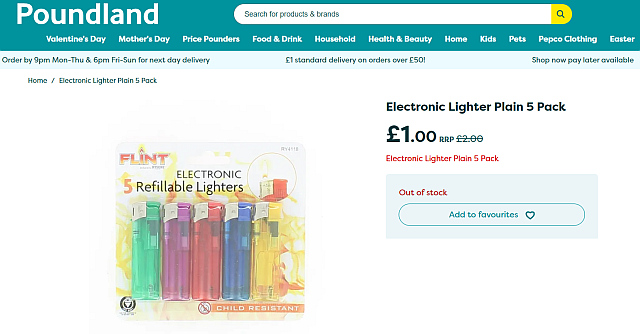
You're lucky to have a wife that is happy to shop at Poundland.
-
Can you drill and screw the split together, then remove the screws and screw in the missing part?
-
Where is all the cat shit buried?
-
I think as a research opportunity it is excellent, especially as you can be logging the data, and the associated costs, while you don't have a working gas boiler. I assume that you can distinguish between imported energy and your PV energy, and how much is going to space and water heating. I am amazed that, with an early UK design TF house like yours (and mine), that with fairly sensible measures, you got it up to an A. How much does the PV contribute to that though, rather than the aerogel wall lining? Did you get it pressure tested before and after?
-
MVHR, ASHP and DHW
SteamyTea replied to Nic's topic in Mechanical Ventilation with Heat Recovery (MVHR)
Same problem here as I am in a World Heritage area. I think you need to rethink the interior layout a bit. You can get slim DHW cylinders.


