


SteamyTea
-
Posts
23377 -
Joined
-
Days Won
190
Everything posted by SteamyTea
-
Could be sent to them, they are probably interested.
-

Getting frustrated with heating suppliers.
SteamyTea replied to MikeSharp01's topic in Other Heating Systems
I was thinking about this just yesterday. Never seen a convincing argument either way. -
So the 90 quid one in the link I posted up is no good then?
-
Passivhaus in St Albans for sale
SteamyTea replied to TheMitchells's topic in General Self Build & DIY Discussion
When interest rates were very low. Yes, not stupid then. -
Puddle pump https://floodandwaterpumps.co.uk/collections/puddle-pumps Couple of millimetres they claim.
-
Just started a self-build in Dorset. Exciting times!
SteamyTea replied to NailBiter's topic in Introduce Yourself
And for half of the dream. If the architect project manage it, that would be £200k. -
Passivhaus in St Albans for sale
SteamyTea replied to TheMitchells's topic in General Self Build & DIY Discussion
I always liked St. Albans, used to meet my Indian lover Suzi in the grounds of the cathedral, which had a catholic chapel in it. The house though. Got a GRP flat roof, but apart from that, it is horrible. -
Washing machine in outbuilding - turned off
SteamyTea replied to AdamD's topic in Kitchen & Household Appliances
I just had a look at a Karcher K7 pressure washer spec, 180 bar or 2600 psi. 60 litres a minute flow. That will be 2900 psi and the pipes rated at 10150 psi. But we should really convert to metric 1 bar is 100 kN.m-2. -
Technology Connections does heat pumps (USA)
SteamyTea replied to George's topic in Air Source Heat Pumps (ASHP)
https://en.wikipedia.org/wiki/Ton_of_refrigeration And a BTU is https://en.wikipedia.org/wiki/British_thermal_unit -
What do you all think about the recent sea temps?
SteamyTea replied to gavztheouch's topic in Environmental Building Politics
Not all of them will recombine to water, some will make nails rust, and some will become hydrocarbons. The way I understand it is that not every excited electron will release an ionising photon (high energy). Most will just fall back to a lower energy state, creating a very tiny rise in temperature. If it was not so, all shiny things would kill us. I think most ionising takes place as protons (and neutrons) decay, changing the high number elements to lower number ones i.e. uranium to lead.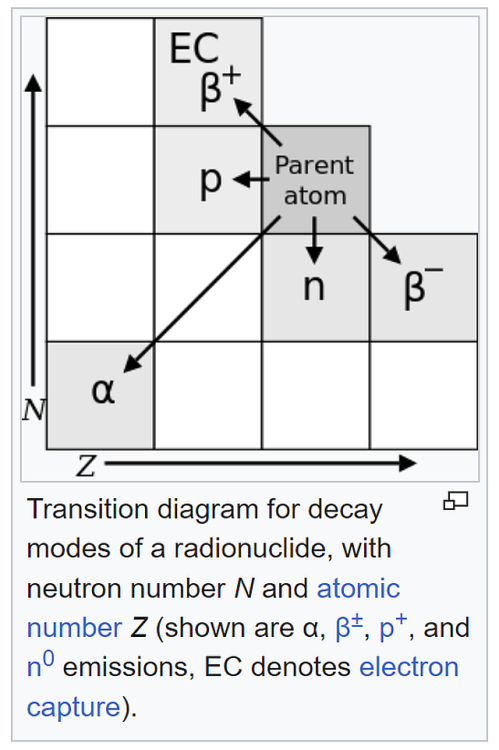
-
What do you all think about the recent sea temps?
SteamyTea replied to gavztheouch's topic in Environmental Building Politics
Yes, should have explained it a bit more. There will still be some molecular breakup though. -
Quantum quirk explains why carbon dioxide causes global warming A phenomenon called the Fermi resonance, which affects how molecules vibrate, is responsible for a large part of carbon dioxide’s planet-warming effect By Alex Wilkins 13 February 2024 Carbon dioxide emissions are warming the planet Rupert Oberhauser / Alamy Carbon dioxide is uniquely suited to cause global warming because of a coincidental quirk of quantum mechanics. Global warming is largely caused by carbon dioxide and other gases absorbing infrared radiation, trapping heat in Earth’s atmosphere – known as the greenhouse effect. The most accurate climate models use precise measurements of the amount of radiation CO₂ can absorb to calculate how much heat will be trapped in the atmosphere. These models are excellent at predicting future changes in Earth’s climate, but they don’t provide a physical explanation for why this gas can absorb so much radiation, which can make their predictions difficult to explain. Robin Wordsworth at Harvard University and his colleagues have now shown how CO₂’s heat-trapping properties can be explained in terms of quantum mechanical effects, in particular a phenomenon called the Fermi resonance. “Rather than just a narrow range of radiation getting absorbed, as you would naively expect, it becomes much broader,” says Wordsworth. “It’s this broadening which is really critical to understanding why carbon dioxide is an important greenhouse gas.” The Fermi resonance describes how the different directions and patterns in which molecules vibrate can influence each other and make them vibrate more. This is similar to how two pendulums, connected by a shared string, can increase the amplitude of each other’s swinging. A molecule of CO₂ consists of two oxygen atoms bonded to one carbon atom. Two of the molecule’s vibrations influence each other to make it absorb more light: a side-to-side stretching of the oxygen atoms, and a sidewinder snake-like zigzagging of these atoms. Wordsworth and his colleagues came up with equations to describe how much radiation CO₂ can absorb based on its physical properties, with and without the Fermi resonance. They found that its light-absorbing features and its warming effect on Earth’s atmosphere could only be reproduced when the resonance was included. The Fermi resonance was responsible for nearly half of the total warming effect. “Even things that are happening on the scale of our planet are determined, ultimately, by what’s going on at the micro scale,” says Wordsworth. While it was already known that CO₂ had a particularly large Fermi resonance, having an equation that links this to the greenhouse effect could be useful for quick calculations without running a full climate model, says Jonathan Tennyson at University College London. This could also help physicists model the climate of exoplanets, which can require large amounts of computing power to fully simulate. Something that Wordsworth and his team couldn’t explain is why CO₂ vibrates in such a unique way – a question that might never be answered without a theory of everything. “There doesn’t seem to be a clear reason why this resonance occurs in CO₂,” says Wordsworth. “One could imagine a different universe where it was slightly different, and carbon dioxide might not have the same effects.” Reference: arXiv DOI: 10.48550/arXiv.2401.15177
-
Melting of Greenland ice could cause European heat extremes this year When lots of freshwater from Greenland pours into the North Atlantic Ocean, it triggers feedback loops that lead to hotter and drier weather in Europe, according to a study of the past 40 years By Michael Le Page 28 February 2024 The melting of ice in Greenland could be worsening weather extremes across Europe REDA &CO srl/Alamy The 10 hottest and driest summers in Europe in the past 40 years have all followed the release of particularly large amounts of freshwater from Greenland’s ice sheet, and it may mean an especially hot summer is coming in southern Europe this year. The link happens because the extra meltwater triggers a series of amplifying feedbacks that affect the strength and position of the atmospheric jet stream over Europe, according to Marilena Oltmanns at the National Oceanography Centre in Southampton, UK. “2018 and 2022 were the most recent examples,” she says. In 2022, there was extreme heat and many wildfires across Europe, with parts of the UK hitting 40°C (104°F) for the first time. These feedback effects mean Europe is going to get even hotter and drier in coming decades as the melting of Greenland’s ice sheet accelerates, in addition to the underlying warming trend due to fossil fuel emissions, says Oltmanns. “This occurs on top of the warming that we already have because of increased greenhouse gases,” she says. Although hotter heatwaves and drier droughts are expected as the planet warms, in some regions such as Europe, recent heatwaves and droughts have been even more extreme than climate models projected. Several studies have linked these extremes to the changes in the strength and position of the northern polar jet stream, a belt of high-level winds whose position and strength have a big influence on the weather. The uncomfortable reality of life on Earth after we breach 1.5°C Passing 1.5°C of global warming isn't just a political disaster, it will have dire consequences for us all, as those living on the front line already know But it hasn’t been clear what is causing these changes, says Oltmanns. Now she and her colleagues have analysed weather observations over the past 40 years, which they say show that the weather extremes are ultimately a result of periods of increased melting of Greenland ice. “The statistical links based on the observations are very robust,” she says. The extra meltwater leads to a shallow layer of freshwater spreading south in the North Atlantic Ocean. Because this layer is less likely to mix with the warmer, saltier water below, in winter the sea surface becomes colder than usual. This leads to a more extreme gradient between this cold water and the warmer waters further south, which strengthens the weather front above. That in turn strengthens wind patterns, which push warm water flowing north – the North Atlantic current – even further north than usual. This amplifies the temperature gradient even further. “These fronts that get created between the regions where we have cold freshwater and regions where we have warmer ocean water are the main energy source for storms,” she says. In a 2020 study, Oltmanns suggested that this process is leading to increased storminess during some winters. Now Oltmanns’s team is suggesting that these winter changes have lasting effects in the following summers. “We still see significant signals two years after the freshwater anomaly has occurred,” she says. The stronger temperature gradient leads to a stronger jet stream across Europe, leading to hotter and drier weather in southern Europe, the team found. Then, as the abnormally cold water recedes, the jet stream shifts north, bringing hot, dry weather to northern Europe. “Individual links in this feedback chain have been discussed before,” says Oltmanns. “What we have done in this study is put these links together.” This chain of feedbacks has been missed in computer models because they don’t include factors such as the big variation in meltwater from year to year, she says. “The proposed link in this study between Atlantic freshwater anomalies and subsequent summer weather over Europe is intriguing and relevant to current scientific research on long-range prediction of summer weather, particularly if the relationship holds in future summers,” says Adam Scaife at the UK Met Office, the country’s national weather service, who works on long-range forecasting. “I think the study is somewhat convincing,” says Fei Luo at the Centre for Climate Research Singapore. But looking at meltwater in the previous year won’t be as good as looking at winter weather conditions when it comes to forecasting summer weather, says Luo. Vikings left Greenland after growing ice sheet caused sea level rise The increasing mass of the Greenland ice sheet caused local sea level to rise more than 3 metres after Vikings colonised Greenland, flooding many settlements and contributing to their abandonment of the place Oltmanns, however, is confident enough to predict that, because of increased melting of Greenland ice during the summer of 2023, Europe is in for more heatwaves and droughts in the coming years. “I think this summer we’ll have strong heat anomalies over southern Europe,” she says. These could be even stronger in 2025, and will then start to affect northern Europe. “We estimate that we will have another strong heatwave and drought not this year in northern Europe but in the coming years.” Journal reference Weather and Climate Dynamics DOI: 10.5194/wcd-5-109-2024 T
-
Technology Connections does heat pumps (USA)
SteamyTea replied to George's topic in Air Source Heat Pumps (ASHP)
He sums it up well. Where is the shorter version? Here -
Most of the old mechanicals meters have a ratchet that stops the disk reversing. I also think that a meter has to be changed every 20 years, not that they always do get changed.
-
Washing machine in outbuilding - turned off
SteamyTea replied to AdamD's topic in Kitchen & Household Appliances
Same happened to my Father's pressure washer. Odd how they can pump at 3000 psi but crack the pump open with the first frost. -
Maybe they use a fast breeder reactor. @Pocster may know more. I am sure he mentioned fertile material and transuranics in the same breath recently.
-
What do you all think about the recent sea temps?
SteamyTea replied to gavztheouch's topic in Environmental Building Politics
You are probably right, to a certain extent, air pressure, wave and bubble size will have an impact as well. But they are probably more effected (or us it affected) by temperature more than anything else. If you put more energy into a system, eventually it goes bang. Just depends if it is a normal bang, or an extraordinary bang. -
A few short years back you could have employed one. Trouble is they stole all the high skilled, high paid, pidgin scaring jobs, but they did learn Pidgin English.
-
Most portable fan heater have a microswitch on the base, so cut out if knocked over. They also have a thermal fuse or thermal cut out if the airflow is reduced too much and the element goes over temperature. I broke my favourite fan heater by inadvertently knocking it so that it was pointing to the wall a few inches away. This was enough air flow reduction to blow the thermal fuse. I bought a new fuse (well 10) but not got around to replacing it, now I can't find the heater.
-
What do you all think about the recent sea temps?
SteamyTea replied to gavztheouch's topic in Environmental Building Politics
I don't know why they were surprised. Probably need a better thermometer and gas analyser. Maybe they forget that heat is the old word for energy and when you get down to the quantum level (parts of atoms, so very tiny distances and sizes), a photon is just a packet of energy and can easily knock at electron free from a molecule, what plants to all the time (how they convert CO2 and H2O to C, H, CO, HO, complex CH molecules as well as all the other elements that are in the plant). So what is probably happening is that a loosely bound (hot) water molecule is split into hydrogen and oxygen by the energy in a photon (photons have different energies/intensities) and evaporates as separate atoms. It is almost the opposite of how we get to almost absolute zero by adding in photons (energy) of laser created light. When cooling, the trick is to stop the atoms vibrating by hitting them with a equal and opposite amount of energy. Works well, they they are down to the past picokelvin. Worth noting that temperature is the mean free path speed of the atom or molecule. Some will be faster (hotter) and some will be slower (colder). If you can knock the faster ones away, you actually lower the remaining average speed (temperature) of the sample. This is what Maxwell thought up with his Daemon while thinking about thermodynamics. (I miss studying thermodynamics, it is the basis of traditional physics, only ruined by all this quantum malarkey. -
As @Bramco says. It is probably more to do with sensing and reporting which way currents are flowing, and when, and the ability to react to it.
-
Well it is Paris.
-
Welcome Industry professionals are always welcome.
-
Ask for more


