SteamyTea
-
Posts
23836 -
Joined
-
Days Won
200
Everything posted by SteamyTea
-

180m borehole cost per metre for ground source heat pump
SteamyTea replied to Strak's topic in Other Heating Systems
Is that diameter? Or 300mm on each side. Trouble is that not many experiments that test just for different CO2 variation. Most 'tests' are done without taking humidity and temperature into account properly. Then they need to be repeated hundreds of times. Very hard to to in a double blind, randomised fashion. But it don't matter, people will believe that it is the CO2 as they think they can control that easily and it is the only thing that can make a difference. -
Why would someone build this here?
SteamyTea replied to Adsibob's topic in New House & Self Build Design
I suspect my old Yamaha YDS3 was more polluting than nearly every car made in the last 40 years. Being a two-stroke it always sounded broken and was dreadful of fuel. I keep looking out for a Kawasaki H1 Mk3 for a 'final ride'. From Wikipedia Handling characteristics were not favorable according to many sources. "Viewed logically, the Kawasaki H1 had many flaws. The gearbox was odd, with neutral below first, the brakes very questionable and the handling decidedly marginal in every situation - except when the bike was stopped with the engine switched off. Not for nothing was the H1 known as, 'The triple with the ripple'" -
Why would someone build this here?
SteamyTea replied to Adsibob's topic in New House & Self Build Design
Yes, the most economical and cleanest car I have owned. And I don't live in London. When I worked there I had a Corsa (Mk2) automatic, but took the rain in most days. Traffic pollution is being legislated out, congestion will probably be priced out. I still have my collection of cycles, 5 of them. More than I have cycling shorts. -
Have PIV (VMI), what next? Humidity-sensitive ventilation? HRV?
SteamyTea replied to Garald's topic in Ventilation
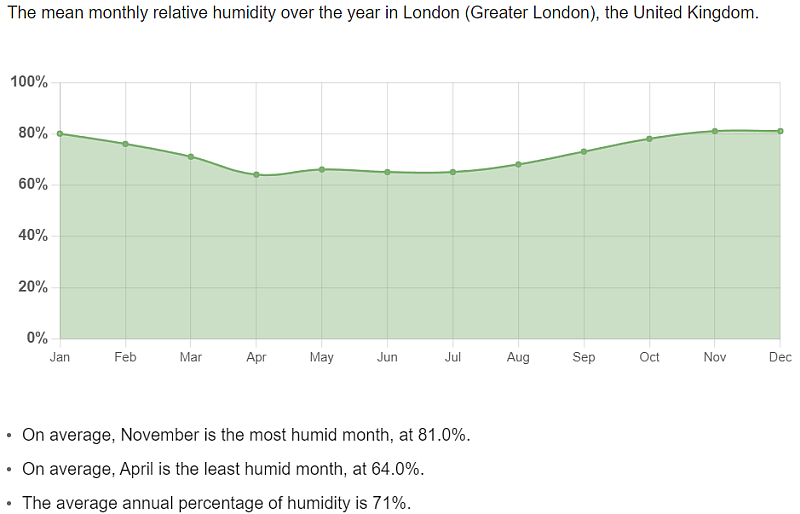
Paris is a relatively high humidity city. London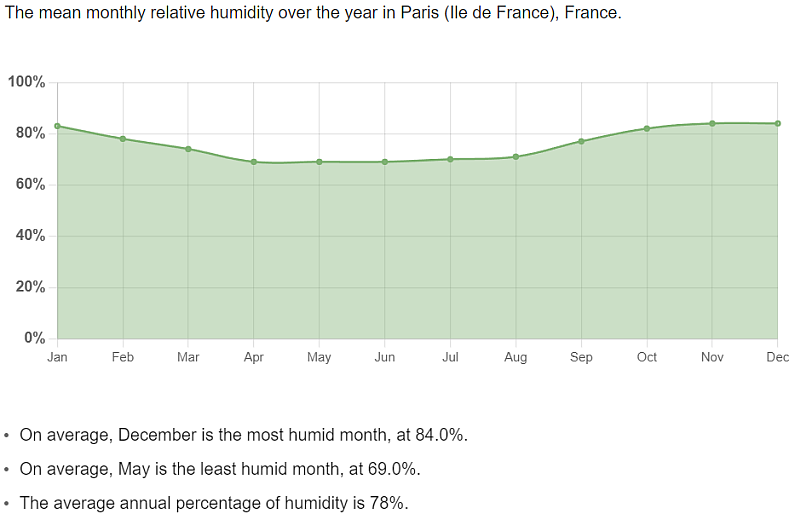
-
Why would someone build this here?
SteamyTea replied to Adsibob's topic in New House & Self Build Design
The C-Max has been scrapped. -
Have PIV (VMI), what next? Humidity-sensitive ventilation? HRV?
SteamyTea replied to Garald's topic in Ventilation
May work, calculate how much energy you use for DHW and how much you would save using a HP based one. Is the air really cooler, or is the courtyard just in shade. My air temperature is currently 5.2°C, a piece of wood in the shade is currently 3.5° and another piece of wood in the sun is 8.5°C. There is a reason that there are two standard methods for taking air temperature measurements, dry bulb and wet bulb, and a Stevenson Screen is used. -
Why would someone build this here?
SteamyTea replied to Adsibob's topic in New House & Self Build Design
I can count 7 cars, 5 look like SUVs. What is wrong with you people up country. This is how I remember it. -
@joe90 I think it would cause problems at the extremes. This is why the limit is quite low at 16A, no reason why it could not be 40A in isolation, trouble is it is not isolated, but part of a dynamic system. The National Grid relies more on prediction than dynamic management, the last thing it wants is two or 3 nearby sub networks all running and different voltages.
-
There are a couple of things going on. While the power may be limited by the inverter, that power could be higher at the wrong time i.e. around noon. This can cause the local network to increase in voltage until it hits the limit, this can cause problems. Then there is the energy side. DNOs have to manage energy flow over a half hour period, if there is a lot of micro generation over supplying unexpectedly, then the planned delivery may be wrong, this costs money, and DNOs hate paying out. Taking a bit of an example, say 10 houses are all at the G98 limit on the local substation. Then say 4 up capacity by 20%, but still let the inverter limit to the 16A. In a sunny autumn morning, there may have been 10 kW being pumped in, now it would be 10.8 kW. Now that should be perfectly manageable, but if 50 houses did it, problems may arise (mainly the local voltage). This basically comes down to the National Grid being designed for central generation, and not distributed local generation. In some ways micro PV is better than micro wind generation and it reacts slower. Having worked on a micro turbine (5 kW), it is amazing how hard they work the inverter. Not unusual for the turbine to hit auto stall speeds as the inverter is playing about with the MPP algorithm.
-
How to raise 125mm SIP panels?
SteamyTea replied to AwesomePete's topic in Structural Insulated Panels (SIPs)
Can you do it with foam glass, I think that is easily sawn to size. -
180m borehole cost per metre for ground source heat pump
SteamyTea replied to Strak's topic in Other Heating Systems
The Government could buy PV capacity, but the problem is, they would make such a pigs ear of it that it would cost £1/kWh delivered. -
A Chemistry question for those that know about chemistry.
SteamyTea replied to ProDave's topic in Boffin's Corner
Two if you don't know the security code. -
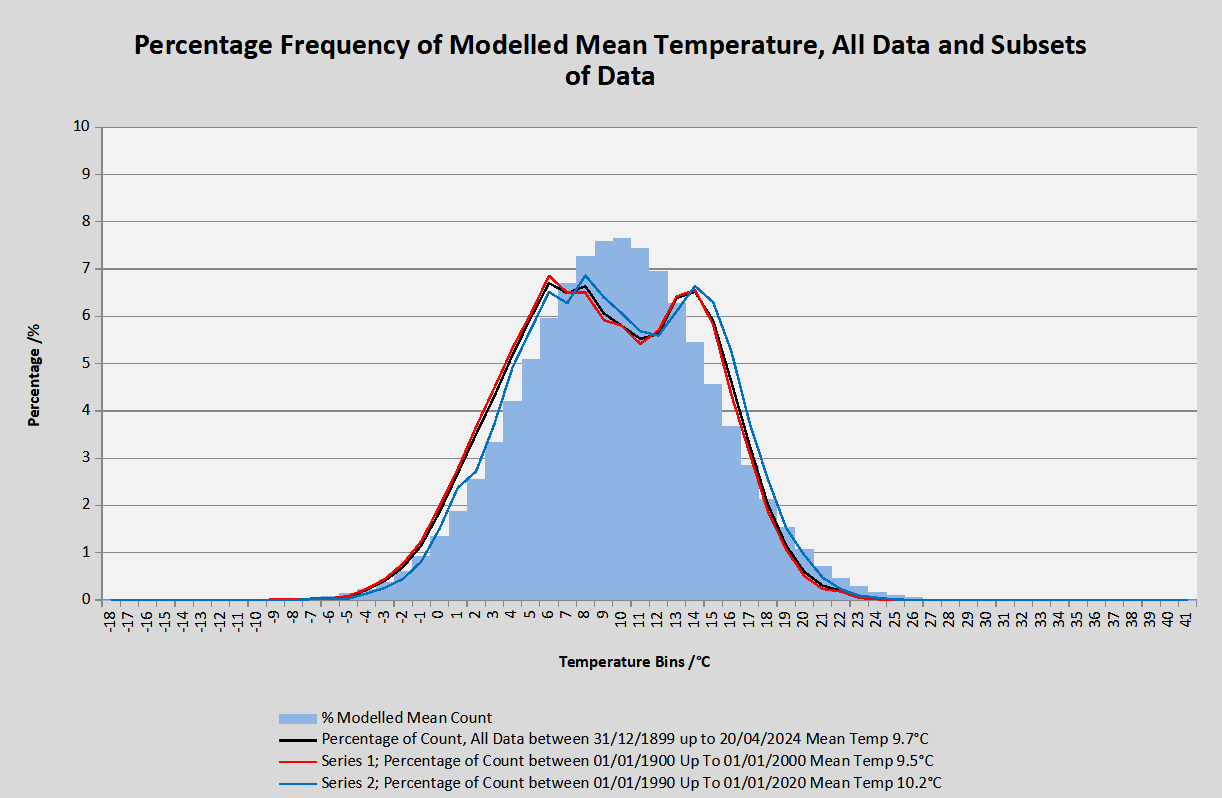
I may be used the wrong word and meant platykurtic anyway. Flat in the middle bit. If you plot the CET PDF you find that around the mean temperature the probabilities actually reduced a bit. A 'bit' is a statistical term to mean 'i can't tell you exactly'. Why the mean is really called the 'central tendency' as that gives some wiggle room on the numbers.
-
A Chemistry question for those that know about chemistry.
SteamyTea replied to ProDave's topic in Boffin's Corner
The PCB was probably printed, rather than etched. So could be part of that processes that has dissolved. -
Not a word i have used this week till now.
-
I used to work for the RNIB, they have a special format for computer screens, I used to know the ins and outs quite well. They also took advantage of Alt Text to get JAWS to read out the screen. Trouble was, I left the 'o' out of the sentence 'counting children'.
-
Same with my house, maybe a bit lower. HDDs are based on a normal distribution around the the mean temperature, with the standard deviation changing for different climate zones (the kurtosis) rather than actual location specific data. As the UK has a more leptokurtic temperature distribution (flatter in the middle bit), this can skew the number of 'official' HDDs and CDDs. They are still useful for a first order approximation and when you have a system up and running are probably the best method to fine tune your weather compensation curve.
-
A time-lapse (of sorts)
SteamyTea commented on BotusBuild's blog entry in South East Cornwall Low Energy build
Only two are in focus, they will be from the reconasence planes. -
Called ENA Connect Direct now.
-
180m borehole cost per metre for ground source heat pump
SteamyTea replied to Strak's topic in Other Heating Systems
For a bore hole GSHP to work efficiently, it needs a flow of ground water, so geology is important. A 'slinky' based system works the same as an ASHP in that is using the local mean air temperature, just with less variation around that mean temperature. -
If your 300 litre cylinder was at zero and the immersion heater takes it to 100⁰C, then that is 35 kWh. About a third what you registered. And it would be boiling. Somewhere in your pipework will be a pressure relieve valve, wherever that vents to should show some sign of steam coming out.
-
180m borehole cost per metre for ground source heat pump
SteamyTea replied to Strak's topic in Other Heating Systems
If you want to see how badly a GSHP can go wrong, both technically and financially, take a trip to my local swimming pool. Jubilee Pool -
Swapping a tumble dryer for a Poundland washing line is still way better.
-
I thought everything in Australia was upside down, so making a British roof is going to cause problems, mainly the tiles falling off.