SteamyTea
-
Posts
23375 -
Joined
-
Days Won
190
Everything posted by SteamyTea
-
 What is your kWh/m2.year figure? What is the embodied energy and CO2 for the products you used, and how do they compare to mineral wool? I don't know where you live, but it is too sparsely populated down here to be economically viable. At 160pp/km2, it is about a third of Buckinghamshire. A quick look at Google Earth shows that Bucks is very green. They are a student, everything they learnt last week is forgotten now. I wish I was a student again, better than lecturing.
 -
As many of you know, I like to measure everything. My energy usage is just about the top of the list, and as I have got a new PC with a bit more power than the old one, I have been able to analysis several years data in one go. The main areas I have been monitoring are electrical energy usage, in my all electric house, internal and external temperature, and a weird one, zero power draw times. For the last decade or more, I have been using a CurrentCost Envi, this has an optical sensors that counts the number of 1Wh pulses off the main electrical meter. It is what gave me the idea to design a similar one. Over the last couple of decades, I have slowly been improving both the fabric of my house by replaced old glazing, but not frames, added 'lockout times to limit the E7 window, bought lower powered electronics, added insulation and improved airtightness. The biggest thing I have tried to do is to make sure that there are no parasitic loads, this is where the Zero Power Draw metric comes in. This got me thinking that if I ever went for battery storage, which usually has a minimum power draw to start, with 200W often being quoted, would it be of any use to me. In August 2023, I foolishly agreed to a smart meter being fitted. Now I have no objection to a smart meter, in fact, I quite like them. The problem was that my energy supplier EDF, fitted a dud, then spent months sending me incorrect bills, took weeks to replace it, changed my contract without informing me, and eventually had to give me a couple of hundred quid as compensation, so not all bad. What this has allowed me to do is to calibrate my CurrentCost meter. Since the beginning of the year, which is the only time I have reliable smart meter readings from, until the beginning of this month, October 2024, my smart meter has registered 2383 kWh, while my CurrentCost has registered 2349 kWh. Taking one from the other, dividing by the smart meter amount, multiplying by 100 gives me a percentage difference, 1.4%. So not exact, but can probably be accounted for for the few times that I have disconnected the CurrentCost (moved it, sender battery went flat, other disconnects). One year, I shall have a trouble free, 100% full readings. So now some charts. This first one is a time series since the beginning of 2019. There is a little break in the outside air temperature readings (was using a DHT22 and it probably got wet in a storm). There are times when I get seemingly high readings which are caused by the sensor being hit by full sunlight, but for 22 out of 24 hours a day, the readings are good, and I can filter out the over temperatures if I need to. I have a plan to improve this by making a shield, but going for a coffee is more fun than doing 'engineering'. When we had the energy price shock back in 2022, I added triple glazing to my windows. This was a cheap option (about £120) and after the first winter I noticed that I did not have to turn my storage heaters on until the mean outside air temperature went below 9°C for a few days. This was a degree lower than before. I also noticed a drastic reduction in sound transmission from outside. There is an energy reduction that is quite clear on the charts, even though there is missing temperature data, though luckily during the summer. This second chart shows the mean power by time of use and the percentage of time that the house draws no energy from the grid.
-
Chesil Cliff House is still on the market. But then it is ghastly.
-
Was more a case that the last two Augusts have been pretty poor weather wise. Working in catering, we all know that it starts to rain during the last week of July, then stays wet in Cornwall till second week of September.
-
Most unmodified cars make more noise from their tyres than the induction/exhaust systems, so you are going to be disappointed. As @JamesPa says, it is physics, you are not going to change that. Maybe the real solution is a massive increase in RE generation, then we can just run resistance heating for thermals outputs. My storage heater is heading into its 38th winter without any replacement, maintenance or noise. Actually that gives me a thought, why not get the people that complain about the noise from an ASHP to pay the difference between the CoP of say 3 and the CoP of 1 for resistance heating. Many people move to the countryside, at great expense, for the peace and quiet, so the conce3pt is not new. You want something, you pay for it.
-
Is that the forum equivalent of a blank look? Now that is a good thought. It double posted as I was editing, then when I tried to delete the duplicate, it just took the text away. Hopefully an administrator will come and delete it.
-
Ah, the latest horror story doing the rounds. This one has been sitting on the shelf for awhile, the while was because we were still burning coal in the UK. Funny that there was no mention of biomass to electrical energy mentioned. I would think that has a greater CO2e per MWh delivered than EfW. And as it is a larger industry, the accumulative emissions are probably higher. Must have a read if the report sometimes. I camped by a babbling brook once. Never doing that again. Kept we awake all night with worry. The worry was I could not here anything else (expletive deleted)ing nature in tooth and claw. Had 150 years of refinements, not a lot is going to change. It does seem ridiculous to me that I cannot have an ASHP outside the front of my house because I am in a world heritage site area, but my neighbour can park his modified car on the street, start it up at over 95 dB (15 to 20m away) at 3 AM. (expletive deleted)ing postmen. Oddly enough, his side if the street is not in the World Heritage Area, so he can have an ASHP facing the street (his back yard faces it).
-
Did that produce anything this summer?
-
Well that makes it easy to use everything you generate, and get others to pay for it.
-
Is it on metered exports, or on total generation? Why are they bothered about if you have batteries?
-
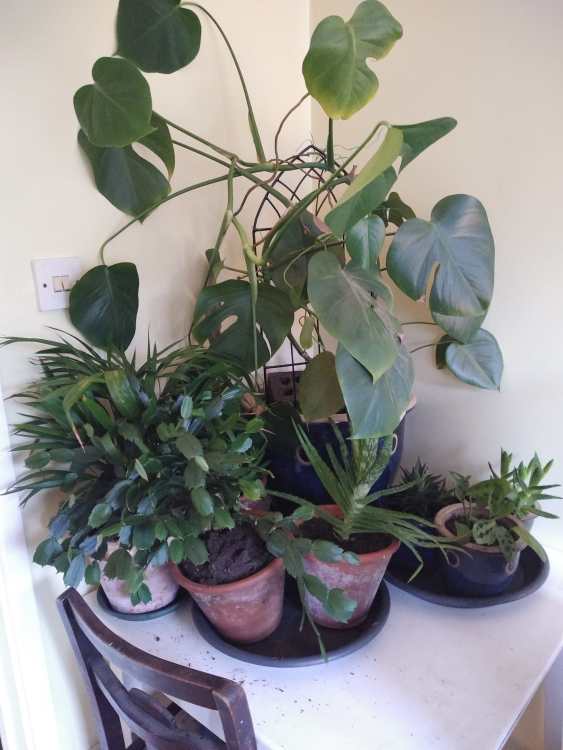
You can hire my plants for a tenner a month.
-
I am sure they meet a minimum standard, so as long as they are clean and not obstructed, they should be fine. Why don't you get yourself an A2AHP fitted, may seem a waste if money for temporary accommodation, but could be reused. Last night was not cold down here, so whatever you decide to do, it is going to cost you a lot if you stick to resistive heating.
-
T&Cs 4.8 If the Authority cancels an Eligible Installation’s REGO Accreditation, We cannot request further REGOs for that Eligible Installation and will not provide any payment At £4/MWh, it is not exactly generous. Would it be considered income, and therefore taxable? or worse, push some people over a benefit limit.
-
Is it a case of the energy suppliers having to pay to meet their renewable generation obligations. Probably cheaper, for them, to offer existing customers that already have the kit, a few pennies to export more. As RE generation increases, it is easier for energy companies to buy in supplies, so these deals will not exist in time.
-
A2A heating example needed in Scotland or the North
SteamyTea replied to Whodat's topic in Air Source Heat Pumps (ASHP)
Take her on a holiday to the USA, there are a lot of A2A units there. I was at a heat pump installer a few weeks back and they had a A2A unit in the conference room. The noise was not intrusive, but they are not the prettiest things. An alternative is an A2WHP and a combination of skirting radiators and plinth heaters (FCU). That can also do your DHW. -
Goes back to the basics. k-value is the thermal conductivity, the unit is W.m-1.K-1 This is the important property because you can calculate the other units. R-Value is the thermal resistivity and takes the thermal path length into account. It is calculated from the k-Value and the length. R = length (m) / k-Value The length, in metres, is just the thickness i.e. 0.2m R-Value has the units K.m2.W-1 R-Value is used as an intermediate calculation step as it allows different layers of materials to be added together i.e. brick, insulation, block, plaster, to get the total thermal resistivity. U-Value, which is generally the value we are after, is the reciprocal of R-Value. U-Value = 1.R-1 or 1/R It really comes down to the available thickness, the price and ease of fitting. The foil coating is there to act a a vapour control layer, a sheet of polythene is more effective.
-
Ken Tyrrell used to say "an engineer does for 10p what any fool can do for a pound". That is where the engineering creativity comes in.
-
That is an interesting problem, and one that may require a creative engineering solution.
-
Liquid water has a specific heat capacity of 4.18 kJ/kg.K. Water vaporisation is 2,260 kJ/kg. At phase change, water expands 1600 times. Phase change can be virtually instantaneous. So it is easy to see how easily a drop or two of absorbed water can cause mechanical damage when heated.
-
In daylight
-
Welcome Put the two together, Jen.
-
Will you live that long?
-
And gas movement, why they vapour 'openness' is important. The further towards the cold side, the more vapour open it needs to be to aid evaporation.
-
Welcome Just to add to While it is identifying the leaks that is hard, two other things need to be considered, condensation management and wind washing/air bypass of insulation.
-
Which metals in plumbing can't be used together?
SteamyTea replied to Chris Mc's topic in General Plumbing
https://en.wikipedia.org/wiki/Galvanic_corrosion https://en.wikipedia.org/wiki/Galvanic_series