SteamyTea
-
Posts
23836 -
Joined
-
Days Won
200
Everything posted by SteamyTea
-
Ask you supplier, they should know about this, failing that, ask the DNO.
-
It does. There is a statistical quirt when you eliminate parasitic loads in that you get two mean figures. One that includes times of zero power draw, the other when you exclude them. Because of that, an inverter size may be different. This is my last 6 years usage as an example. Date Week Day Mean Zero Power 54% Mean Power 0.45kW Mean Power when >0W 0.56kW Mean Max Power 7.66kW Mean Energy 3781.7kWh 01/01/2019 Tuesday 54 0.50 0.57 8.91 4362.6 01/01/2020 Wednesday 46 0.53 0.59 9.21 4567.7 01/01/2021 Friday 56 0.55 0.73 13.16 4649.1 01/01/2022 Saturday 63 0.36 0.46 12.99 3133.6 01/01/2023 Sunday 62 0.38 0.50 8.13 3260.8 01/01/2024 Monday 45 0.35 0.47 8.90 2716.4 01/01/2025 Wednesday #DIV/0! #N/A #N/A 0.00 #N/A
-
 TL:DR Any mention of safe zones? https://flameport.com/wiring_regulations/BS7671_selected_subjects/zones_concealed_cables.cs4
 -
Try drying the fitting out with a hair dryer.
-
A fantastic example of why there is a difference between kW (power) and kWh (energy). Would be highly unlikely that a 3.6 kW inverter could pump out 15 kW of power to the grid, even if the DNO approved it. Apart from cost, and some minor charging issues, the size of the storage (kWh) makes little difference. Like putting a larger fuel tank in a car, it does not affect the engine power, or how fast you are allowed to drive. As for the 3phase, this is a bit more technical. Net metering is meant to get around this, but not sure how well it does it. Ideally, a 3P system has balanced phases i.e. they all draw the same power at the same time. This is hard to do in practice as no one wants to turn on 3 lights, or 3 kettles, when you only need the use of one. This is especially hard if you have neighbours that are still on single phase and may be drawing power as well. I can see this becoming a bit of a problem as we transition to all electrics domestic heating, but engineers are clever people and will be testing systems already. So what to do. Can you run everything off a single phase, with some time shifting maybe i.e. car charging but not DHW heating (that takes more power, even via a HP than space heating). Then when 3Phase is the normal, upgrade the PV and Inverter/Battery.
-
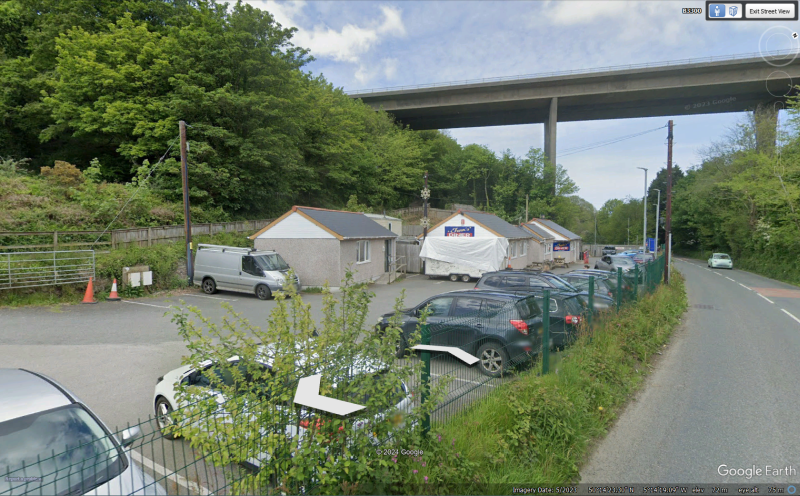
Near Redruth, there was a diner that looked like 3 bungalows when it was first built (not that long ago, maybe 12 years) It went bankrupt, and now seems to be 3 bungalows.
-
Seals from the inside though, so may initially mask badly fitted insulation and cold air paths to the inner walls. I was at @joe90's when the blower test was done (think it was 1.45). It was quite obvious where the holes were when the fan was running (though I failed to mention the WBS air inlet leak at the time, but then I hate WBS) , so well worth knocking something up. Why make life hard for 50 quid at the scrap yard.
-
How best to expand an existing PV system?
SteamyTea replied to richard_scotland's topic in Photovoltaics (PV)
Except that litres are not an SI unit. My water bill comes in m3, have I ever mentioned it is the most expensive in the country. Lister's can pump water, or be made into Listerine. -
What colour do you want?
-
How best to expand an existing PV system?
SteamyTea replied to richard_scotland's topic in Photovoltaics (PV)
That last bit is power (except it isn't as the w should be W as it is for watt, named after James Watt), energy, or the storage capacity of the batteries is kWh. -
Not getting involved.
-
Then look at your floor U-Value, while 0.14 W.m-2.K-1 seems impressive, the heated slab is not room temperature i.e. 20°C [293K], it is probably closer to 30°C [303K], so losses are higher, and highest when you need the heating most. The ground floor/slab is also one part you cannot improve later. The Celotex XR4000 has a k-value of 0.022 W.m-2.K-1, which is a normal value for a PIR material. Increasing the thickness from 0.12m to .2m changes the R-value from 5.45 to 9.05 m2.K.W-1. That is the kind of improvement that would negate the last 2 years energy cost rises for that element. Many people on here have found that second floor (or is it first floor, upstairs) UFH is not necessary in a well insulated and airtight house. Natural convection and conduction though the internal fabric usually suffices. Having said that, not many people believe that is the case, so it does offer some reassurance, and is relatively cheap to install. By Buildhub standards, that is pretty poor, and if you are fitting MVHR, which you should be, then sub 1 ACH is better. Be careful with the air test calculations as the m3.m-2, air volume divided by surface area, at 50 Pa, calculation is for all exposed elements, not just the volume of air divided by the floor area. A Vapour Control Layer (VLC) is NOT there to improve airtightness, it is there just to stop the high humidity internal air passing into the structure and condensing into liquid water. It is on the wrong side of the insulation i.e. the warm side (in the UK) to improve airtightness. Ideally an air test should be done before the VLC is installed, but no one every wants to pay for several air tests, so very few people really know how effective the insulation is, until cold patches and mould appear. Some people have made their own fan units and test as they build. There is nothing to stop you opening windows, in fact, if you have to open a window, it shows the hard work of getting the airtightness right was worth it. And you have control of where the 'leak' is, not the builders.
-
Ubiquiti Cloud key confusion !
SteamyTea replied to Pocster's topic in Networks, AV, Security & Automation
BBC? Looks a bit pasty. I liked him on Veg Talk back in the 90s. -
Tile paint. Want to whiten non white tiles.
SteamyTea replied to OldieNewbie's topic in Wall Tiles & Tiling
I painted some tiles (can't remember which tile paint now as it was 25 years ago), I was quite surprised how good it looked afterwards. Just get a small tin and try a bit, you can easily scrape off. Generally, when I use gloss paints, I use a gloss roller (one of those sponge ones), quick to do and gives a smooth finish.- 1 reply
-
- 1
-

-
I have corrected your handedness for you, you be OK now.
-
Remember that if power cables are surrounded by insulation, they may need to be upgraded. Don't matter for data, but may well change the initial layout. Your electrician will know about this, so suggest you have a serious meeting with them to sort it all out. Many people on here cover their homes in network cables, but technology is changing, and we are heading towards much more wireless devices.
-
Are you just looking at the price of doubling the insulation thickness and comparing that to the cost of energy? You need to look at the marginal price of the whole structure i.e. a wall or floor, not just the insulation. Are you going for UFH?
-
Brilliant. Well worth knowing. There was a program on the World Service the other night about this, but I fell back to sleep during it.
-
Entry 10: Redundancy helps progress
SteamyTea commented on BotusBuild's blog entry in South East Cornwall Low Energy build
Shall I bring my LEGOJ back pack over for you? It only weighs 7.5kg. -
I am not sure now, lithium has reduced a lot in price, but a few years ago, they were by far the cheapest. They are the most mature technology though, well understood, and easily recyclable. Thermal storage is still the cheapest and most reliable. At 7p/kWh (if you can get that rate) there is price parity with natural gas, with much simpler technology.
-
They are charging similar to the rest of the big boys, it is generally what happens with 'disrupters'. They get a critical mass of the market, then push prices up. As a lie user the 44p/day standing charge appeals. Then you would have breached the contract and it may be terminated. Done that, been there.
-
Ubiquiti Cloud key confusion !
SteamyTea replied to Pocster's topic in Networks, AV, Security & Automation
Use the unique id number on the back, see if that works. -
A look at the periodic table will show why Lithium has become the go metal for storage. If you want cheap, reliable and recyclable, then lead acid works a treat.
-
Air-to-air ASHP replacing warm air heating
SteamyTea replied to Gooman's topic in Air Source Heat Pumps (ASHP)
Yes, I assume this would be to just heat the DHW, then you would use something else A2A maybe, for space heating. -
Ubiquiti Cloud key confusion !
SteamyTea replied to Pocster's topic in Networks, AV, Security & Automation
As I am sure you know, a lot of things have a key for security. I can generate them on my raspberry pi, usually built in to the OS. Can you just generate one of the right type and try it out?