


Kelvin
-
Posts
4085 -
Joined
-
Last visited
-
Days Won
48
Everything posted by Kelvin
-
It’s a tank and a pump https://pumpexpress.co.uk/explaining-cold-water-accumulators/
-
Feels like we’re going round in circles. What’s the minimum cost to have a proper SW connection with you doing as much of the trenching and pipe laying as possible. I tend to try and follow the rules (rules are for fools etc) as while you might get away with it you might not which just creates a whole World of pain later.
-
Yep pretty dear. My garage was £24k.
-
Unfortunately we are right on the edge of it. 100mm forecast for us. I’ve been helping digging out culverts today. I’ve made up 25 sandbags and built up my problem areas. I also got some of those water activated snake things. I’ve moved everything that the wind might have picked up and secured it. Not much more I can do. Will head down to my site early tomorrow to keep an eye on things.
-
I originally wanted an insulated timber kit garage built to a similar spec to the house in the same cladding and roof material. When I looked at it 5 years ago it was all quite affordable. However fast forward to this year and it was going to cost £70,000 which was more than twice the cost and way over my budget. The steel building came in well under my budget including the foundation and was up and usable in two days. Aesthetically it’s matter of taste but I really like the look of it.
-
Not in England. I had two water meters at the last place. One for the house and one for the paddock. This was in Cambs.
-
How much is insane? Stick built on-site or block built will be cheapest traditional build method or do what I did and build an insulated steel building. Mine has 80mm insulation in walls and ceiling with insulated doors. 100mm insulation under the slab. 2G window. 10m x 6.5m
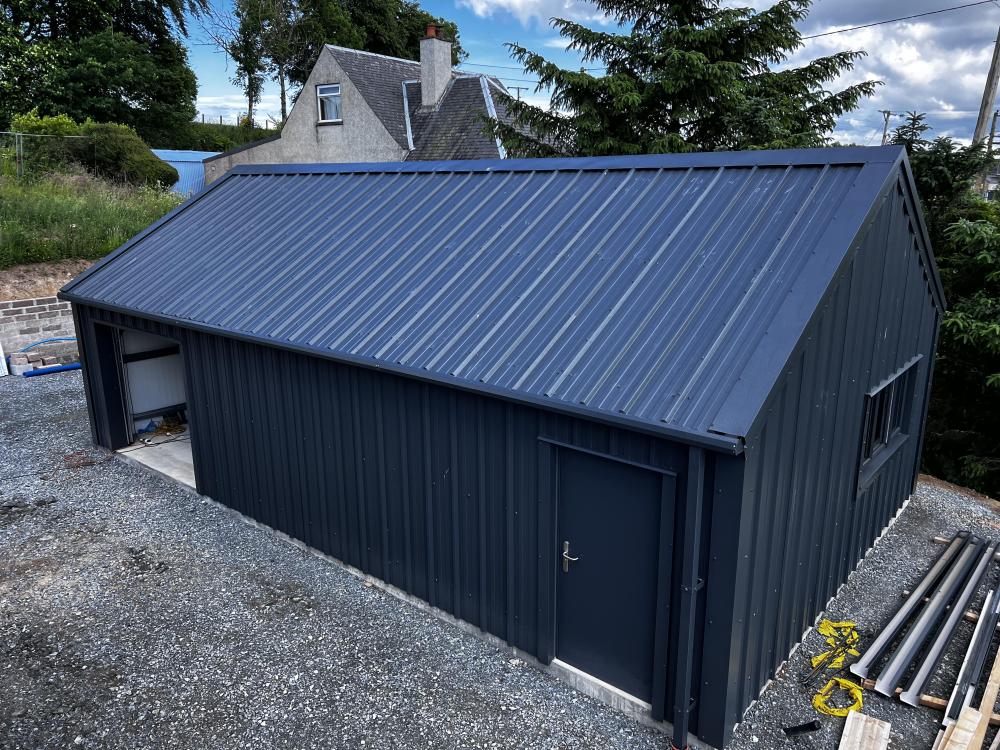
-
I have the A team then 😂
-
Yep. Definitely cluster flies. Seems a poor window design if they can get under the alu cladding.
-
Best model acoustic insulation for studs and joists?
Kelvin replied to ashthekid's topic in Sound Insulation
https://soundproofingstore.uk/product/soundproof-acoustic-sealant-900ml-tube/ This stuff. I ummed and ahed about using this or just one of the many tubes of other stuff I already had. -
I’ve noticed flies gathering underneath the window flashing and settling on the window surround. I’ve googled this and it seems common enough. It’s only happening with the top hung windows. The one centre pivot we have is made differently and there’s no evidence of it so far. I’ve bought some insect repellent spray to help discourage them. Anyone else noticed this?
-
Self build affordability in a higher interest rate world.
Kelvin replied to gavztheouch's topic in Costing & Estimating
Average arable farmland is £10k-£11k per acre in England and Wales -
Best model acoustic insulation for studs and joists?
Kelvin replied to ashthekid's topic in Sound Insulation
I was similarly confused. I looked at all the systems and decided that I couldn’t justify the expense so read that Canada report and did this: 1. sealed all joints and every gap. There are a lot of gaps and holes between rooms especially after first fixing paying particular attention to the wall to the edges. I treated it like airtightness 2. fitted 75mm insulation in the walls and 100mm in the ceilings making sure there were air gaps as described above and that it went into all the edges 3. upped the plasterboard to 15mm and double boarded two of the rooms. 4. plastered the walls Several of our rooms also have OSB on both sides of the wall. Hard to judge the performance as we are still building. Currently at the plastering stage. However, initial tests suggest it should perform pretty well. The bigger issue is likely to be the fact we are tiling the floor throughout so there will be gaps under the doors apart from one carpeted room. -
They all seem to default to 100mm. It was only me researching it that I found out you should put in more. I planned for 210mm but we ended up at 185mm. My architect said anything above 150mm was a waste of money!
-
Self build affordability in a higher interest rate world.
Kelvin replied to gavztheouch's topic in Costing & Estimating
TP prices have reduced too. I’m getting ply much cheaper than 6 months ago. Whether we see a wholesale reduction in materials prices is debatable. None of the input prices have reduced so it’s reduced margins. Some materials have huge margins some don’t. It’s possible that trades will reduce labour rates and become more available. I’ve yet to see that as all the trades round me are still flat out. We certainly built at the ‘wrong’ time, if there’s ever a right time. I managed to avoid the worst of the inflation by hedging some of my big ticket purchases and buying them last year but prices were still high due to availability post COVID. we aren’t going to make money on our house but it also won’t cost us anything and it’s better than we could ever have bought. -
It must be water trapped between the concrete slab and plastic membrane. But then where does it go if it only happens when it rains and there no obvious signs of wet in the house.
-
When can you move into a new build?
Kelvin replied to Norbert's topic in General Self Build & DIY Discussion
You definitely roughed it with a kitchen, breakfast room, 3 bathrooms and 1 en-suite completed. 😂 -
If it’s sloshing but nothing is obviously wet then it’s underneath the plastic membrane which suggests the membrane is sealed at the perimeter. Otherwise you expect more obvious signs of things being wet. Is it possible the DPM has failed and water is coming up from underneath? I was surprised at how much groundwater water seeped into my steel wells for example, easily a few litres per day into two the wells (both inside the house whereas the perimeter well stayed dry)
-
Ceiling Speakers Recommendations
Kelvin replied to richo106's topic in Networks, AV, Security & Automation
I have a mixture of Focal and Bowers & Wilkins. -
My most useful thing I purchased was the trailer actually. Permanently attached to the car. Big enough to take a standard sheet of anything.
-
While they might not lower the splay below 25m what you’re trying to show is that there’s reduced risk as a consequence of your unusual situation. If a survey showed the 85th percentile was significantly lower than 20mph you could use this to show the reduced risk. There’s nothing you can do about the free flowing traffic requirement (if that really is a requirement) I’d call a traffic survey company and ask them their advice.
-
They use the 85th percentile to calculate road speed so the speed 85% of drivers will drive past your entrance. Given your situation it’s likely people are driving significantly slower than 20mph, is that your observation? If so, it might be worth getting a traffic survey done.
-
I had a similar problem. The excuse was they couldn’t get the nail gun in. They’d also missed all the bolts for the web packers.
-
Depends on the stage of your build, how secure it is, how much space you have, ground conditions. I’ve rented when i’ve needed. The tele-handlerwas on-site longest and probably the most useful but only because we’d done all the trenching. Otherwise a digger would have been more useful.
-
Yep do your homework. Use their own guidelines against them and what they already agreed to in other planning applications.

