


Kelvin
-
Posts
4085 -
Joined
-
Last visited
-
Days Won
48
Everything posted by Kelvin
-
Following threads on here I’ve not extended the UFH to the upstairs. I have wired for two wall panel heaters or will just use portable heaters if needed. We have a electric towel rail in the ensuite and we’ll probably add electric UFH too.
-
Yep. They are quite deep though so I had a few places where they didn’t fit without some ‘adjustment’ 😉
-
I’m a Scot and it’s a Scottish use of the word I’ve never heard of. My understanding of the word is soil related! I’ve no idea whether you could. I assume it could be ok as long as it was well below being damaged/penetrated by screws or nails.
-
The good news is I included A2A in my planning application for the garage so we’re covered there should I decide to do it
-
I assume by solum you mean the top layer of soil? SPEN will have guidelines on this. Ducting needs to be 450mm below garden or paths and 750mm below driveways. It also says you need to lay it on a bed of gravel with warning tape above it. Here’s the eon guidance but they are all much the same. https://www.cablejoints.co.uk/upload/E.ON___Electricity_Cable_Ducts,_Guidance_Notes.pdf
-
I couldn’t believe the fitted quote I received so much so I sent it to Ben at Catnic. It was £6k dearer than the PLX I eventually had fitted and they form the sheets on site. I also thought the PLX was better than the Catnic which looked more shiny/plasticky coated. The advantage with Catnic is you can do it yourself whereas with zinc and PLX you need the experienced skillset. I was also really unclear on how the flashing around the Velux windows was going to be done with the Catnic. Overall I am really happy with our PLX roof and glad we went that way and not Catnic. But like I’ve said elsewhere go with a product that the local to you trades are familiar with. If you go with someone from miles away you will never get them back. If your local builder is familiar with Catnic, the price is within your budget, and you like the roof go with that.
-
Don’t know either but ours arrived last week and it’s excellent for the money and as good or better than kitchen units at twice the cost from elsewhere. Time will tell in use but on first inspection I’m really impressed.
-
Yes I was surprised at how little any of the trades understood airtightness and how it works. I had an audience of the joiner, plumber, and electrician watch me fit a pro clima duct seal. They’d never seen anyone ever seal up a wall penetration before. It seemed odd to me to have to explain how a lot of little holes add up to one quite big hole so when I said it would be the equivalent of not fitting a window or a door they finally got it.
-
The other lesson I’ve learnt is use products that the local to you trades are familiar with so you have a choice of installers. I’ve had a really hard time with the Alwitra flat roof membrane. Had I gone with Sarnafil I’d have had a choice of installers in the area whereas nobody up here had heard of it let alone fitted it.
-
I’ve found the PMing quite hard at times and I’m an experienced PM. It’s not to be under estimated how hard it can be managing all the individual trades especially when you run into problems. What’s made it hard is I know nothing about building so it’s been a baptism of fire.
-
Yes that would be helpful too. My issue is it’s a really big garage to heat. 65m2 with a high ridge line so it’s a big volume. When I’ve been working in it recently I’ve used a big electric rad which are good for heating the area around them so I as enough to take the chill off on the coldest day we’ve had so far.
-
Sounds the ticket. Which model?
-
Missing insulation in vaulted ceiling
Kelvin replied to d87francis's topic in Lofts, Dormers & Loft Conversions
My understanding is building regs in Scotland is changing such that every house must be inspected to address exactly this type of problem. House buying/building ought to be an exciting fun thing to do. It just seems so crap in the UK. You seem to have a handle on it so good luck in getting it resolved. -
Missing insulation in vaulted ceiling
Kelvin replied to d87francis's topic in Lofts, Dormers & Loft Conversions
That’s infuriatingly awful. Builders like this should be hung out to dry. It’s worse than incompetence as they just don’t care from the guys installing it up to the people running the company. If it’s like that in your house your neighbours will be the same I expect. It might be worth pulling resources and engaging someone to do a full survey. I had a similar issue with my insulation but fortunately caught it early enough to fix and ended up doing half of it myself. The lack of care seems endemic unfortunately. -
When you’re being attacked by Aliens remember to look up there after you’ve sealed the room.
-
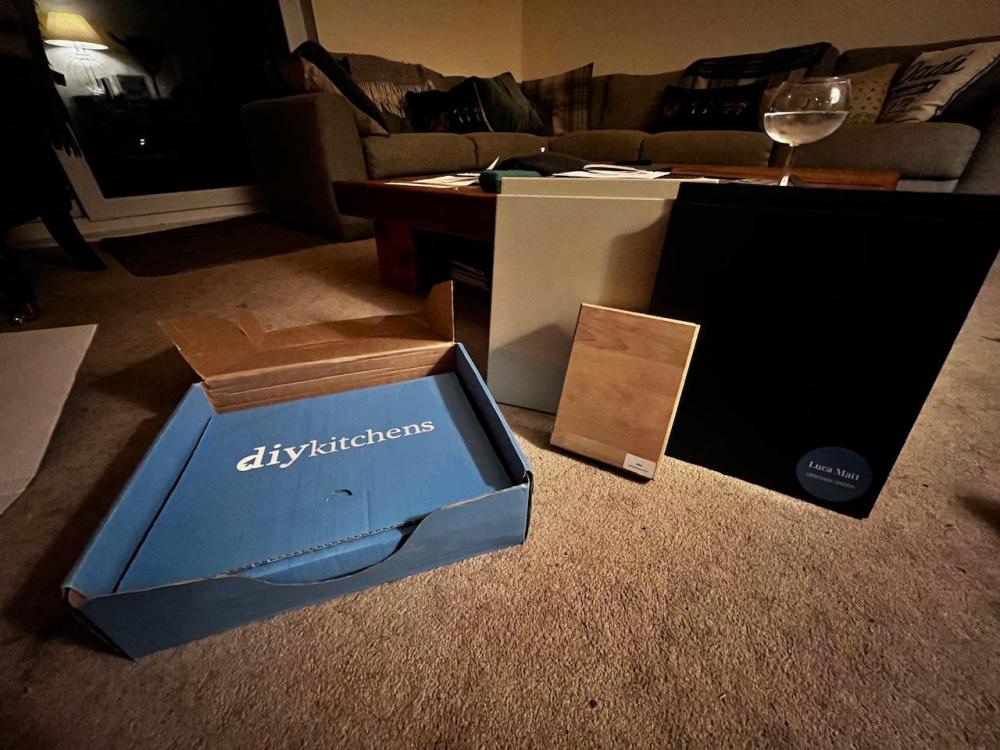
I suggest getting a DiY kitchens sample pack for anyone else thinking about kitchens (not @Thorfun 😂 ) Even that is excellent tbh. 22mm panels. Solid oak worktop. Comes pre-assembled and glued although you can specify dry assemble.
-
Don’t scrimp on stuff like insulation as you can’t upgrade it very easily after you’ve built the house.
-
We have a Howdens in Blairgowrie but because of the big Trade Only sign I’ve never bothered going in so no idea. The trades seem to use a Perth building supplies place rather than the local Howdens.
-
They popped by our build to ask if they could quote on some stuff so I let them loose on the utility room. Very simple layout. £6600! 😂 DiY kitchens came in at £2800 and it’s better quality imo.
-
Fortunately ours was done in the long period of dry weather we had in May/June. Since then would have been a pia given the non-stop rain in my part of Scotland
-
@saveasteading Has posted what I was thinking. You are where I was 2 years ago I think, and that’s a huge desire to do it and little knowledge about what is involved. You’re asking the right questions but, if I may be so bold, you probably ought to have done some of this research before you achieved planning permission. For example, I had already decided the build method (timber kit to supply and erect me PM trades as necessary), and lined up a short list of trades etc. based on local knowledge/recommendations. I did this because I was warned it was hard to get trades and despite all that up front it’s still been hard at times which ultimately has meant a lot more DiY than I planned. The problems and decisions come at you quickly and relentlessly and while I thought I had a detailed plan it really wasn’t.
-
What does the manufacturer of the standing seam product you are using recommend? We went with 18mm wbp (class 2 I think it’s now called) plywood as it was what the joiner recommended and, more importantly, the standing seam roofers recommended. You need to fit a vapour membrane over whatever you use so the rain is irrelevant. It was quick to do so it meant we got the roof weather tight really quickly. We’ve barely had a drop of rain in the building since we started.
-
Location of steels and insulation
Kelvin replied to Tetrarch's topic in House Extensions & Conservatories
You can insulate them. Some people box around them and then fill space with foam. You can also mount the steels on thermal bridge breaking blocks to lift them off the concrete. If you have enough space you could fit 25mm PIR on the outside wall side of the steel on the left allowing you to move out of the room. This is more or less what I did. -
Not many do.
-
Whichever is easiest. Sounds flippant but don’t make life hard for yourself. How likely is it will get hit by a car where it is? Mine is in a kiosk on our boundary. I don’t intend moving the meter so here it will stay.



