Kelvin
-
Posts
4081 -
Joined
-
Last visited
-
Days Won
48
Everything posted by Kelvin
-
Design for mull of Galloway. Thoughts?
Kelvin replied to DannyT's topic in New House & Self Build Design
Difficult and relatively expensive. Would be happy to talk with you about our experience. I’ve documented it on here too. -
Adding wet UFH to the first floor is an unnecessary expense that adds a degree of complication to your floor build up. A lot of us on here don’t have any heating upstairs apart from heated towel rails and/or electric UFH in the bathroom(s) which is what I’ve done. In addition I fitted sockets at points where we could fit electric wall panel heaters in the upstairs rooms should it ever be necessary. If you build the house well enough you’ll not need UFH upstairs and for the odd day you might want extra heat input there are other ways to achieve that. We’re in Perthshire and the heating has barely come on at all since the weather turned over the last few weeks and the upstairs rooms are still around 21°C.
-
Good shout. I have a tin of ACF-50 on the shelf. I forgot about that.
-
I used silicone gel and tape. But only just installed them so time will tell. Mine are behind the timber cladding so won’t get wet as such. I expect they will still fail due to moisture however. My original plan was to bring the Reolink cable into the house through a duct to avoid this but the cables aren’t long enough.
-
If you are an Octopus customer they will loan you one for free. However they are in short supply and high demand. I applied last year and missed the cut but they’ve said I’m a priority this year. Too late now as the house is built.
-
We're featuring on Grand Designs next week 🎥
Kelvin replied to thefoxesmaltings's topic in Property TV Programmes
What’s great was finding that local builder guy to help you. He came across brilliantly well. Like you the thing I found hard in our build was not knowing what I didn’t know so you easily get caught out with stuff. Plus all of the energy sapping time wasting balls ups done by others that you are left to resolve. The worst one of those for us was the ducting for the electrical cable from the kiosk to the house. Groundsworker didn’t use a coupler to join the two bits of duct together and just used tape. This split apart when the trench was backfilled. When I came to feed the SWA cable through it got stuck. Unfortunately this was all behind our retaining wall so under several hundred kg of gravel that I had to dig out by hand trying to find what the problem was. Complete waste of two days to resolve something that should have been a few hours work max. -
Many ASHP/UFH have a floor drying mode. It ramps up to max temperature over a number of days and then brings the temperature back down again. We then switched it off for 48 hours before we started tiling then left it off for a few weeks after tiling. We also used Ditra mat and expansion joints at every door and across the biggest run of tiles in the open plan area. Screed was Cemfloor. Best practice? Overkill?
-
We're featuring on Grand Designs next week 🎥
Kelvin replied to thefoxesmaltings's topic in Property TV Programmes
Very well done. It looks terrific. -
LVT over a cemfloor liquid screed with UFH
Kelvin replied to iMCaan's topic in Wood & Laminate Flooring
Still quite thin. Imagine a small stone under that. -
LVT over a cemfloor liquid screed with UFH
Kelvin replied to iMCaan's topic in Wood & Laminate Flooring
How thin is the LVT you’re using? The click LVT stuff is generally thicker than say the Amtico stick down stuff. Some folk also lay it on a foam underlay. The thicker it is the more forgiving it is I expect but you still want it scrupulously clean. -
LVT over a cemfloor liquid screed with UFH
Kelvin replied to iMCaan's topic in Wood & Laminate Flooring
You need to make sure it’s completely flat and smooth. The builder badly installed LVT at our previous place and you could see all the floor imperfections under the LVT. They had to lift it and fix the floor and relay. It’s also better to fit LVT that isn’t shiny and has some kind of texture especially if you have a large floor length window opposite it. The first type that went down was a shiny smooth wood effect type and showed every tiny surface scratch. The second type was more matt textured wood effect. The difference was night and day. Both were Amtico. I also wouldn’t assume it’s level without checking. We had one room where it wasn’t in that it was slightly higher than the hallway. This was due to the hardboard crack inducers across the doorway. No issue for us as we were tiling over a decoupling mat. -
Design for mull of Galloway. Thoughts?
Kelvin replied to DannyT's topic in New House & Self Build Design
There’s a thread of my build here: -
An app or website, so I can play with my plans
Kelvin replied to Strangey71's topic in New House & Self Build Design
Something like this? https://help.magicplan.app/import-and-digitalize-an-existing-floor-plan For electrical layout, lights, circuits, switches, sockets etc I just used Powerpoint. -
Design for mull of Galloway. Thoughts?
Kelvin replied to DannyT's topic in New House & Self Build Design
It’s pretty much like ours (which is a Heb Home) and we also have a 45° degree pitch although I decided not to fit the PV on the roof. How deep is the porch section? We made ours 4m deep as when we visited some other HH their standard depth seemed too small. -
Cold unventilated loft - condensation risk?
Kelvin replied to G and J's topic in Roofing, Tiling & Slating
Our main living room is vaulted as is the upstairs sitting room and we created a high coombed ceiling (2.7m) in the master bedroom. It’s meant the rooms are all quite different which has added a bit of character I think. -
Internal Walls - Marmox Thermoblocks & Concrete Blocks
Kelvin replied to Mulberry View's topic in Brick & Block
I calculated it that way too largely informed by one of your posts on one of my threads. -
Cold unventilated loft - condensation risk?
Kelvin replied to G and J's topic in Roofing, Tiling & Slating
Agreed. It is much easier to detail and reduces your condensation risk to near zero. You then have the option of a vaulted ceiling should you so wish. You also don’t need to worry too much about ceiling penetrations etc Why are thinking of doing it this way anyway? -
We're featuring on Grand Designs next week 🎥
Kelvin replied to thefoxesmaltings's topic in Property TV Programmes
Congratulations. Looks great. Shall watch GD, I don’t normally. GD draws a mixed but mostly negative view on here. It’s an entertainment programme about building houses not a house building programme. Consequently we don’t really learn very much about building houses. If it was actually about building houses it would be boring for most. Plus there needs to be a little bit of drama albeit their staple diet of ran out of money family and friends rallied round and stumped up £300,000, had 4 kids, bought windows from Chechnya but they didn’t turn up fortunately my sister runs a window company, etc gets a bit samey. It's bit like Top Gear was. Back in the early days it was actually about cars but few folk were interested in that so it was reinvented as an entertainment programme involving cars and driving. Interestingly Clarkson’s farm is the other way around, a farming programme that is also entertaining. -
It’s a lot of SVPs. Our garage is connected to the foul waste so the SVP is in the garage roof. Nothing coming through the roof of the house. Have an AAV in the house. There’s another vent on the pipe that exits the treatment plant.
-
Water installation quote. Seems excessive.
Kelvin replied to flanagaj's topic in General Self Build & DIY Discussion
I would ask if it really is a road closure. I had some work done at a previous property and it said the same (traffic mgt/road closure) but they didn’t intend closing the road. -
MVHR Design: Feedback & Mythbusting
Kelvin replied to joshwk's topic in Mechanical Ventilation with Heat Recovery (MVHR)
One of the things that has surprised me is the number of self-builders that don’t care that much about air tightness. This seems to correlate with how involved they are with the build with the less involved being less interested. I’ve met half a dozen people who live in houses built for them that couldn’t tell you what their air tightness was nor particularly care. I’ve met two who actively made their air tightness worse to save putting MVHR in. As Ian says, it’s a fundamental decision you need to make right at the start. -
MVHR Design: Feedback & Mythbusting
Kelvin replied to joshwk's topic in Mechanical Ventilation with Heat Recovery (MVHR)
It has to be better than the regs obviously as a minimum. Some timber kit suppliers will provide their target air tightness score but only if they are doing most of the building work. A few will even guarantee this figure. That said, you need to decide what level of airtightness you’re aiming for then come up with a strategy to achieve it. The vast majority of trades don’t understand it nor care that much. Given that you’re building a new house you should be aiming for as low an air tightness score as possible. -
MVHR Design: Feedback & Mythbusting
Kelvin replied to joshwk's topic in Mechanical Ventilation with Heat Recovery (MVHR)
psi is a measure of heat loss per metre between two thermal components such as the wall to floor junction. You may have come across the term thermal bridging. Ian is talking about how air tight the building is so how much air is getting in or out. The lower this is (so more air tight) the less heat is lost. Whereas there’s diminishing returns with the level of insulation you can’t be too air tight but you also need to think about ventilation. The numbers Ian mentioned are the current building regs and easy to hit with no particular effort but are pretty terrible really. -
MVHR Design: Feedback & Mythbusting
Kelvin replied to joshwk's topic in Mechanical Ventilation with Heat Recovery (MVHR)
We have the Q350 mounted on an outside wall of the plant room. The room next door is a study. You can’t hear the Q350 running from the study. You can hear the heating however. It’s a very quiet constant hum. I think it’s coming from the UFH manifold which is mounted on the adjoining wall of the study so worth considering what else will be in your plant room and just adding rockwool won’t work. As Mr Blobby says we have two large attenuators on the supply and extract which then goes into a Lindab manifold. -
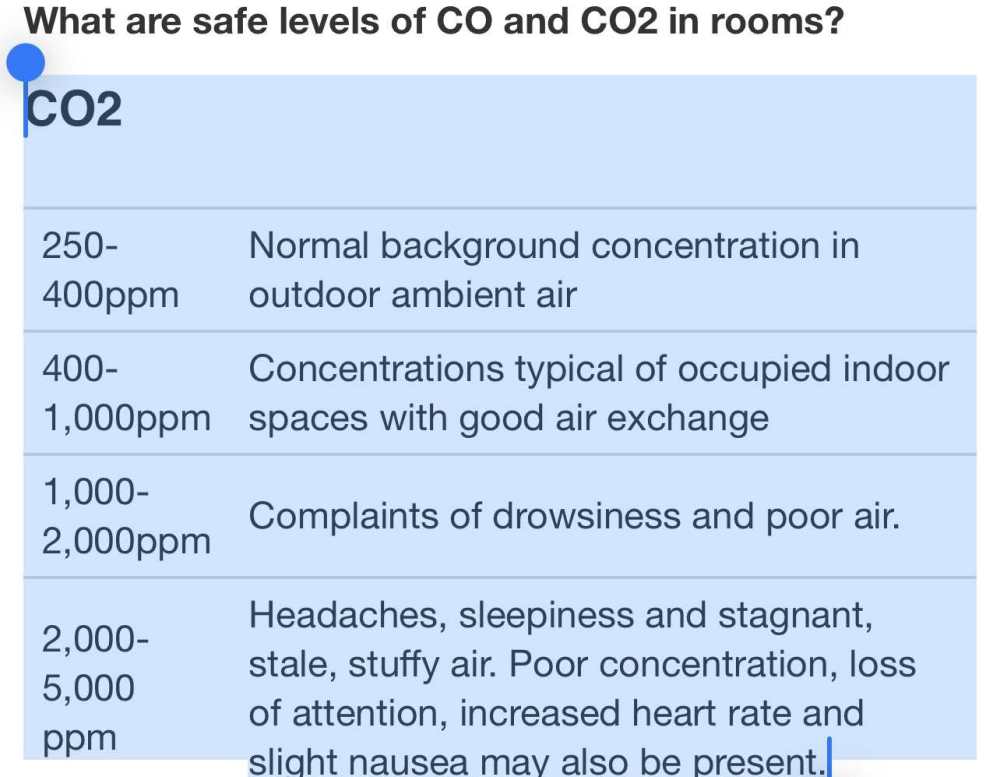
I fitted Deka CO2 monitors in each bedroom and the study so four of our rooms are monitored. They record current level, 8 and 24hr average and 24hr peak. Google says: I couldn’t sleep last night so used the small guest bedroom. Guest bed ( 1 occupant small room low ceiling window closed) - 8hr average - 789ppm 24hr peak 906ppm Master bed (1 occupant large room high ceiling Velux trickle vent open) - 8hr avg - 540ppm 24hr peak 625 ppm Upstairs sitting room (unoccupied large room high ceiling Velux trickle vent open) - 8hr avg 345ppm 24hr peak 503ppm - monitor is beside a wall mirror that other half uses to get ready for work Study (medium sized room low ceiling variously occupied throughout day window closed) - 8hr avg 402ppm 24hr peak 473ppm The guest bed has peaked much higher than that when we’ve had two people sleeping in it so I open the window.