Ferdinand
-
Posts
12213 -
Joined
-
Last visited
-
Days Won
41
Everything posted by Ferdinand
-
I think I will just strengthen as much as possible. I am told that 82kg is not that heavy for a bath & a cast iron one would be about 130kg. + up to 80kg for the water. + up to perhaps another 80kg (x2?) for the occupant. = potentially a 400-500 lb gorilla standing in your bathroom. Swing it from the roof like a hammock? If you are concerned you could bridge the floor area where the bath is going with a more rigid floor to engage more joists (eg one or two thickness of ply, as you would to lay tiles over a suspended floor). Or you could just put a BFO steel plate under the bath as far out as necessary. Or if you intend to cover them up a plate below may do the same job .. effectively giving you a monocoque. You would need to consider finishes, though. Could that be done with several steel rods inserted through a series of joists and attached to each, or something similar, or steel braces done like noggins? F
-
They also clear carpets, for example. And I suppose that they can also be a halfway house towards self-closing fire doors eg if the closing device is stronger than a child trying to open it. F
-
As I wrote elsewhere I spent last weekend fitting laminate floorIng with an acquaintance. They have used rising butt hinges throughout their house, and I was wondering whether anyone has used these in their self-build, and if not why not. I had forgotten how much pfaff they save ... all you do is list the door off, and lean it against the wall. https://www.ironmongeryonline.com/blog/diytips/how-and-when-to-fit-rising-butt-hinges/ Ferdinand
-
It seems that the canine has decided to return to a state of slumber, so just proceed cautiously until something says stop. if you are roughly doing the right thing, then other priorities will probably be prioritised. If there is anything you intend to communicate on a 'please reply within 14 days or I will assume it is ok basis', Thu 20 or Fri 21 may be a good day to send the email ;-). UNless you actually want something to happen. YOu can even use the December post and 'x .. 14 or 21 .. days from the date of this letter'. There are lots of beneficial options, including quite useful deemed service dates measured from your date of proof of posting. F
-

Diversions whilst Laying Laminate
Ferdinand commented on Ferdinand's blog entry in God is in the Details
I was the Junior, so would not presume to make such a suggestion on that occasion. Rather like I tend to get people in to do awkward jobs at home, so I don't get jumped on when it breaks ? ? ? ==>> ?. -
A varied, and educational, long weekend laying down laminate flooring (one of the Uniclic range from Quick-Step) to help an acquaintance improve his house in London. The task was to lay about 3 rooms-worth full of Uniclic Laminate (28 packs), and moving a lot of furniture around - the killer reason for needing two people. My protagonist in laying the laminate, and moving all the furniture, is a detail-of-finish man, and at one stage was whittling away with a multitool for 20 minutes at a piece of laminate to match the outline of a curly 1930s doorpost; a demented boy-scout aiming for "Floor Laying, Advanced". Inevitably the worst happened. As at Beauvais Cathedral in 1284, the integrity of the structure did not quite measure up to the aspiration of the designer, and there was a sharp crack followed by some of the most creative language expressed in 750 years. It worked second time around. Having bought a car with the dimensions of a small barge (aka my new Skoda Superb Estate), this was the first opportunity to really test the performance over a long run. An MPG of 59 on the way down to London on a Thursday afternoon / teatime, and 64 mpg on the way back on a clear run, measured on a tested-and-accurate car-computer, will do for a car that can fit in a couple of coffins, and tow 2 tonnes. It is about 10-20% more economical than my old non-turbocharged Citroen BX from the mid-1990s, and has twice the power. Whilst on waiting time, I was able to binge-watch on Netflix the documentary The 9 episode 11hr documentary mini-series The Civil War, by Ken Burns. I never studied this historical period at school, and time to reflect provoked a few new insights for me - a bit of an eye-opener. I had not absorbed just how contemporaneous is the American Civil War. We (or at least I) think of it is a long time ago, but the war was only 5 years before my own Great-Grandfather was born. The last Civil War widow - Maudie Hopkins - only died in 2008. Yes - she was a 19 year-old who married a pensioner during the depression, on what looks like a classic security-for-care type arrangement, but the point stands. Sobering.
- 3 comments
-
- 1
-

-
- us civil war
- barge-sailing
- (and 2 more)
-
Bedroom/Ensuite/Dressing Room Inspiration
Ferdinand replied to canalsiderenovation's topic in New House & Self Build Design
Give thought to your bed, too, and whether your arrival will bounce your other half in the air slightly. Consider one of those Scandinavian style ones that is actually 2 separate mattresses and where the support can move independently at waist and knees. My parents bought one back in the mid-1980s, and it is still delivering value as mum now has to sleep nearly sitting up due to a hiatus hernia. The medics were talking about flocks of pillows, and all she actually does is pull a release, take off the pressure, and the bed sits up. F -
Course we multitask. The very thought. Perfectly capable of simultaneously appreciating the skills of at least two beach volleyball teams, AND drinking a glass of beer, AND supervising someone cooking lunch. Bah-humbug!
-
That might be an inappropriate comment. ? The 2 piccies are 7 years, 11 months, and 3 days apart. Linear interpolation suggests that it might be GoneOff (this mortal coil) not OnOff by the end... F
-
Joist Hangers: too many holes?
Ferdinand replied to ToughButterCup's topic in General Construction Issues
Jack, have PM'd you. F -
Joist Hangers: too many holes?
Ferdinand replied to ToughButterCup's topic in General Construction Issues
It's in Lancashire so according to Greenpeace you are now an existential-threat-due-to-the-earthquakes area, once they do more fracking. Better make some more holes and put nails in those too ! -
Surely you have to advertise it so that somebody can come forward say they own the road. The biggest problem with these afaik are that when someone misbehaves (eg parking on it) no one can enforce as only the owner has the legal right. I wonder if anyone goes around answering these in the affirmative for the devilment of it ? ? It would be quite like trolling wedding services objecting at the "does anyone know just cause or impediment..." moment. In the UK - certainly EW - everywhere *is* owned by somebody. The legal system is designed to maximise land usage, which is iirc why we have the possibility of nicking it by unopposed occupation. I thought you could do just that, but that PP gives to right to implement the PP. And that there were stronger information requirements (ie serve notice) as of about 15(?) years ago. One issue is that people assume PP overrules others' legal rights. F
-
Which heating system in our old house?
Ferdinand replied to Dee J's topic in Boilers & Hot Water Tanks
THe golden rule is do nothing, or at worst absolute minimum, unless the EA tells you that it will make good value as a mini renovation project, or it makes it easier to sell when it would otherwise be difficult. In this case you may find that 95% of customers would not even notice the changes, unless it makes a material difference to something that aids sellability or is a big benefit to one of ten areas that makes a difference. Or I guess removes a millstone at minimal cost. Your passion is probably now with your new life not the old one, so spend the time and money on that unless there is good reason. GO on holiday instead. F -
Just moving the house a few degrees & making holes
Ferdinand commented on Adam2's blog entry in Wedding Cake Re-build
Classic tax calculation. -
Check on Reading Commercial Gas Meter
Ferdinand replied to Ferdinand's topic in General Self Build & DIY Discussion
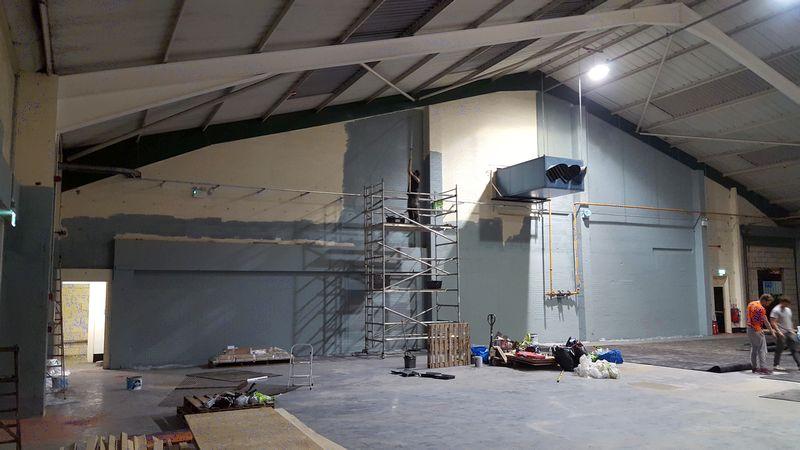
This is the whole thing pre-refurb. Length is about 55m, and width a little under 30m. Eaves height is about 4.5m, and apex about 9m. Here is the unit during refurb showing the gas heater. Our unit is about 18m x 30m, with a couple of extra spaces on the end - a former dye house and a store. When we ran a test yesterday it put the temperature up by about 6-7 Celsius in 15 minutes. A previous test had people commenting on being too warm whilst exercising. Suspect our members are quite inured, however. I'll see if I can find a more recent one with the fit out more complete. It is nice in summer that it keeps fairly cool, as we have double doors one end and a roller shutter the other for a through draft. We need to do a bit of playing around - I think in winter on cold days it will want a whump in the morning to get the chill off, and then perhaps another in the afternoon after the afternoon lull. I think we may get some Far-Infrared type heating for the more sedentary areas such as warmup / yoga stretching / childrens area and reception. Time to collect some data and ask for some feedback from members and people on the current pre-Christmas promotion. F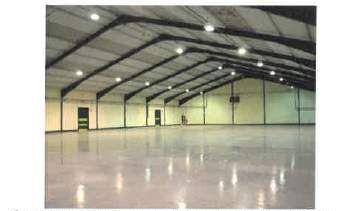
-
Check on Reading Commercial Gas Meter
Ferdinand replied to Ferdinand's topic in General Self Build & DIY Discussion
Thanks Peter - so about 10p per minute whilst it is running. Good enough to know we won't get an umpteen thousand £££ bill without warning. Thanks. Yep - we need to think it through carefully. Will add a couple of piccies. Ferdinand -
Can someone check that I am reading a commercial gas meter correctly. 2 photos taken 15 minutes apart. Am I right that is 5 cubic m of gas, which will cost something like £1.50? I don't mind being out by a third in my guestimate, but I do not want to be out by 10x. I am asking because we have a BFO gas blower in our gym unit - they divided 20k sqft into 3 and as the first occupant we got to choose and had the one with the existing heating system - and I don't want to find I calculated it wrongly in 2-3 months' time. We just want to take it from frozenballs to training temperature in the morning 1st thing through the winter. Cheers F


-
Best simple ideas and concepts to design in to new build
Ferdinand replied to albert's topic in New House & Self Build Design
Oops. Brain addle. The brain was on remote shower taps. -
The Build - Mission accomplished! We're in!!
Ferdinand commented on Redoctober's blog entry in Our Journey North of the Border
Looks very good, solid, and Scottish. Great stuff. The chapel chairs are an interesting idea. Can I ask what the drive material is, and what will be your maintenance regime - is it gravel + rake once a year? -
Best simple ideas and concepts to design in to new build
Ferdinand replied to albert's topic in New House & Self Build Design
OTOH you need to be able to reach them from inside the shower when you want to turn it off... -
Tricky (as Deep Thought said to Vroomfondel and Majickthize). I think my first comment is that the Deskcheck may be a bit over, but it is not horribly over. I think you may want to be in the £500 ballpark, but it will depend on your site. There is quite a lot you can do yourself; I do not know if anyone here has actually written their own Phase I report, but some have done a substantial part of the spadework (online research and digging holes). There is some stuff on this thread: In your case, is your barn old enough that you can show it has not been disturbed? Can you invite someone to come and look for uxb's as part of their training or "keeping the skills"? Local Cadets? All the best. Ferdinand
-
Estate Car to carry house doors inside, flat
Ferdinand replied to Ferdinand's topic in General Self Build & DIY Discussion
This is fun. Bought an accessory from the Czech Skoda accessory site, and they sent me a memory game: With a version on the back designed for people like me who lose their cars in municipal car parks in Sheffield and Wakefield: That's customer service for you. F

-
Help with kitchen renovation/ 1st house.
Ferdinand replied to zoothorn's topic in Bathrooms, Ensuites & Wetrooms
Or sleep at work? -
Good point. Engineering bricks would be from about £400-500 per 1000 if yu wanted those for the first 1m. You could probably do something with a pattern of reds and blues as one option. Blues would be a bit more. It would be like the finish line at the Indy 500, which has iirc a yard (!""£$%^&* Yanks and their Georgian units) of bricks in memory that the course used to be a brickyard. F
-
Hope this isn't you then. An unapologetic diversion, 'cos you probably need one. (Mentioning Brexit again ... this is complete bollards imo, but funny and very good). I love Mr Cameron's "Brits don't quit!". Guess who quitted the next day...