


Marvin
-
Posts
2389 -
Joined
-
Last visited
-
Days Won
3
Everything posted by Marvin
-
Most people around here think its an air conditioning unit.
-
As far as I'm concerned I don't have that capability.
-
I have no fans. Even my wife is not impressed.
-
Maybe, but on the EPDM flat roof on the south side of the bungalow there's definetly warmer air hitting me.
-
If you use it for cooling in the summer then perhaps better out of the sun?
-
Well I do but I don't necessarily know what I'm looking at....
-
+1.
- 12 replies
-
- 1
-

-
- ashp
- compressor
- (and 1 more)
-
Thank you @SteamyTea. I am sorry that I did not ask the right question but your answer has greatly helped me to understand the basics. (hopefully). So, I understand that when relating your information to my questions you are saying (as its easier than talking about Carnot engines) in a non pedantic sense, the heat (or cooling) produced by an ASHP depends on the existing air temperature, the air passing through the unit and the change of pressure in the compressed liquid. As such if you wish to keep the same output in heat if one of the 3 reduces the heat effect the others have to compensate: When air temperature goes down airflow and/or compressor pressure change would need to increase to produce the same output. When temperature rises airflow and/or compressor pressure change would need to decrease to produce the same output. If I have this right then it leads to what I meant to ask which was actually based on attempting to improve the COP. If we were to keep the same amount of heat production and the air temperature stayed static, which would improve the COP the most, increasing the fan speed and reducing the change of pressure by the compressor, or reducing the fan speed and increasing the change of pressure by the compressor. I assume that both processes use different amounts of energy. If there is no significant difference, what causes users to want to adjust the 2 parameters? Oh well I hope for a simple answer...
-
Can anyone explain in simple terms what effect adjusting the ASHP compressor and or fan settings will have on the output? Also is the ASHP pump that people have referred to mean the pump circulating the water? The ASHP involved is the Cool Energy inverTech Air Source Heat Pump CE-iVT9 4.3kW-9.5kW. Thanks for your help. M
-
Hi @F113tch Welcome. I believe that the best energy saving combo is: Insulation, insulation, insulation. Airtightness through design, and construction of build, along with MVHR which gives you fresh air and less loss of the building temperature. Heating with an ASHP, espically if you have PV. ( Here we have a cold bright day and 3kW power at present going towards heating and charging the electric car. We renovated our bungalow which has all the above: 100m2. Below zero last night: 8kWhs to keep the house above 19C. Good luck with your plans. M
-
There have been lots of discussions about the effectiveness and efficiency of an ASHP and so I am keeping basic records. I have my own electric meter on the supply to the ASHP so I know how much power has been used whether from the mains or the PV. The result so far using the ASHP installed is 123 kWhs have been supplied to the ASHP from Jan 1 to Jan the 21st to heat the building and hot water. As it is difficult to split the power used for hot water (and we have an immersion using the excess PV power on the hot water tank) from the power used for heating if we assume all of this power was used for heating that would equate to an average of roughly 2.6 Watts an hour per m2 of floor over the 20 days. Normal living with 2 people, showers, average 20C inside all day. Last night -2C outside some of the time. Used in the last 24 hours: 12kWh's. Whilst we are happy with the results now being obtained, I would like to point out that the results were completely different when we installed the ASHP, when the very thick lagging was missing and we were using it like a boiler! Good luck with your endeavours. M
-

Insulating a 1967 timber framed bungalow
Marvin replied to esalglop1945's topic in Introduce Yourself
Oh yes and covered it with 50 mm of celotex. -
Insulating a 1967 timber framed bungalow
Marvin replied to esalglop1945's topic in Introduce Yourself
This was our bungalow before we renovated it! -
A kit of Tracepipe 22mm 15m long is about £160 including fittings each end. certainly cheaper than altering the mains gas pipe, even with labour!
-
Hi @SuperPav Sadly +1 to temp's suggestions above. ASHP is good if you have great thermal resistance and airtightness because its strength is being able to keep the temperature stable. But if you have heavy thermal loss the ASHP has to work much harder (less efficiently) to raise the temperature. Put as much insulation in the loft as you can. We have about 100m2 bungalow with the combo of an ASHP, MVHR, PV and an EV. This works very well. But we have a timber framed 1970 renovated and greatly insulated building with about 200mm rigid insulation in the floor, 150mm insulation in the walls and 400mm fluffy in the loft, no trickle vents, no cat flap and reasonable airtightness. Good Luck M
-
Sorry @elrao you caught me when busy. I meant to say best to check all the document (which it looks like you may have already done) Good luck M
-
Actually, I'm not sure about the other rules...
-
Between a rock and a hard place....
-
What do you think of the stone wall underneath?
Marvin replied to CalvinHobbes's topic in Landscaping, Decking & Patios
In my humble opinion... Sometimes these walls are rendered over because of the effort involved in repositioning and pointing around each stone. Its unlikely that render will stop any serious structural problems already there, but it will stop the stones from loosening and falling out, causing a serious problem. -
Hi and Welcome @elrao https://assets.publishing.service.gov.uk/government/uploads/system/uploads/attachment_data/file/830643/190910_Tech_Guide_for_publishing.pdf Long and boring but look at the pictures and page 10. Sorry to disappoint. Good luck. M
-
Surely @Adsibobyou will be the site 24 hour security? A sort of Grenfell fire watch team... Oh and plenty temporary battery ? smoke alarms....
-
How long for sand and cement screed to dry?
Marvin replied to Porthole's topic in General Construction Issues
+1. Is the screed on concrete or insulation? If on insulation then I wouldn't go near it for days. And how thick is it? -
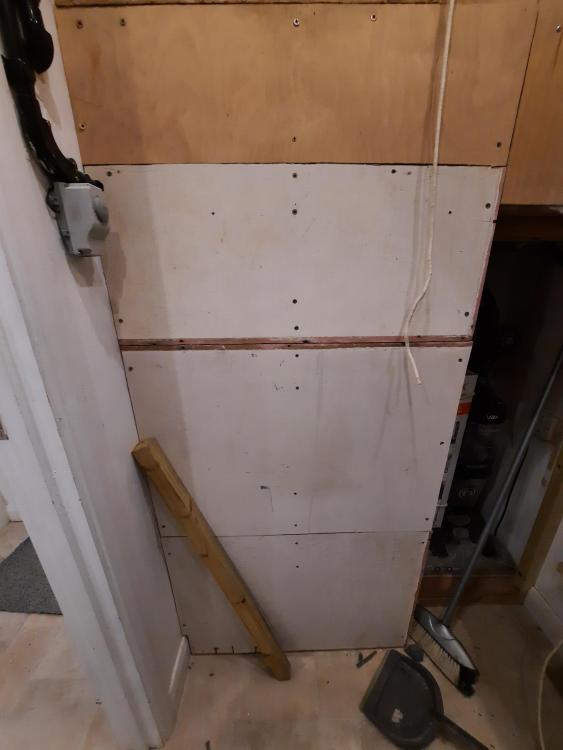
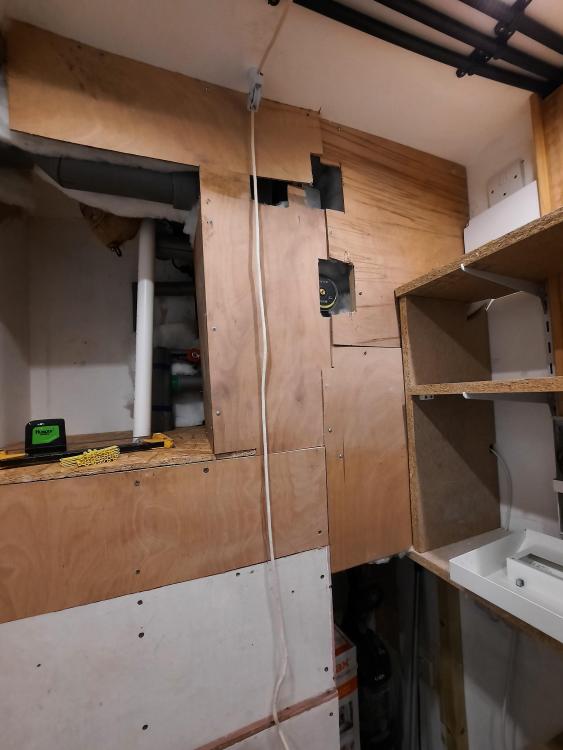
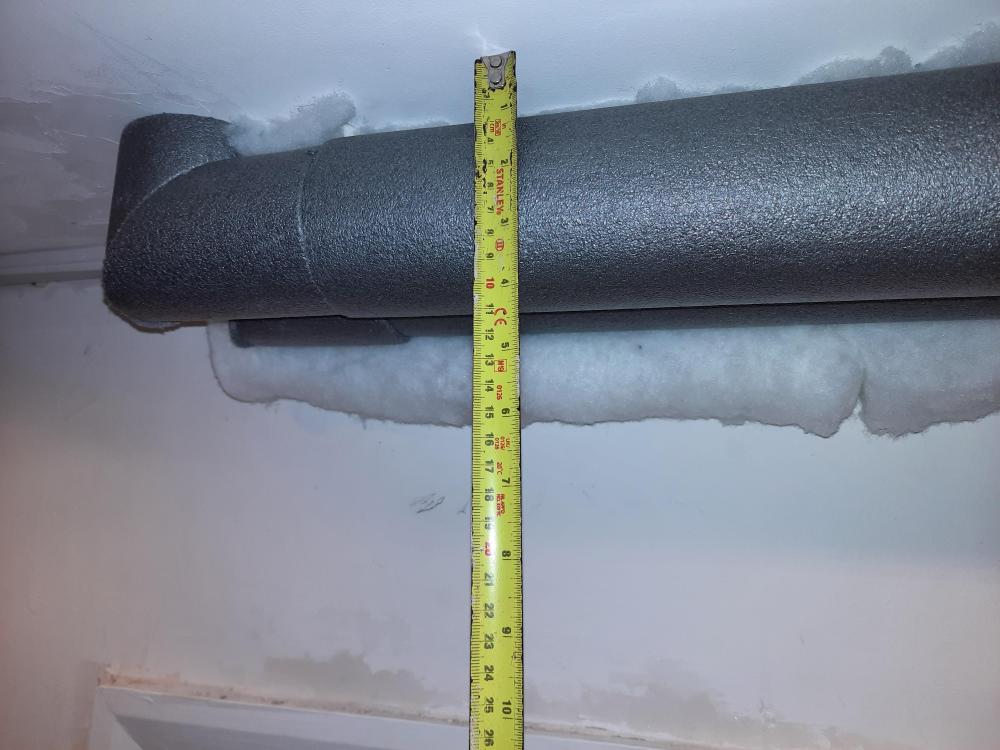
Primary pipework insulation with additional insulation Buffer tank on the right. Gaps for pump and port valves Hot water tank hiding
-
Hi @Wil Hmm... Leaky buildings are a big problem. Make the building as air tight as possible.... fill every gap, seal round every pipe on the inside and outside of the external wall. Are you fitting mechanical ventilation? How are you supplying air to the wood burner? Of course we had to have a new EPC certificate, as our one was older than 2 years, before we could apply for RHI.... This is a timber framed 1970's bungalow with a timber floor. We have roughly 400mm fluffy in the loft, 150mm Celotex in the walls and 200mm Celotex in the floor. We have a MVHR system for the fresh air. When renovating our bungalow we sealed every join between wall and wall, wall and floor, wall and ceiling and vapour barriered every wall and ceiling. We have no trickle vents in the windows, no cat flap, although we have a letterbox in the front door and only 18m2 of glazing. As the ASHP heating water temperature is already lower than that from a boiler every loss from the ASHP pipe work is a greater percentage. These are some of the other items we have worked on: Made the length of pipe work between the ASHP and hot water tank and buffer tank as short as possible: less than 5 meters in one direction. Insulated the ASHP to tanks pipework to within an inch of its life. 25 - 28 - 25mm walled Climaflex minimum with additional insulation where possible, especially the pipes from the ASHP which are outside the thermal envelope (an additional 100 to 150mm thick fluffy wrapped in EDPM and taped together.) Additionally insulated the buffer tank and hot water tank even though both are within the thermal envelope. Additional insulation to all heating pipework where possible. Finally completed my RHI application today. M
-
Picture to make you feel very uneasy
Marvin replied to Russell griffiths's topic in General Self Build & DIY Discussion
? Fook!



