
saveasteading
-
Posts
10106 -
Joined
-
Last visited
-
Days Won
82
Everything posted by saveasteading
-
Remote DNO Kiosk, need cable to consumer unit indoors
saveasteading replied to Post and beam's topic in Power Circuits
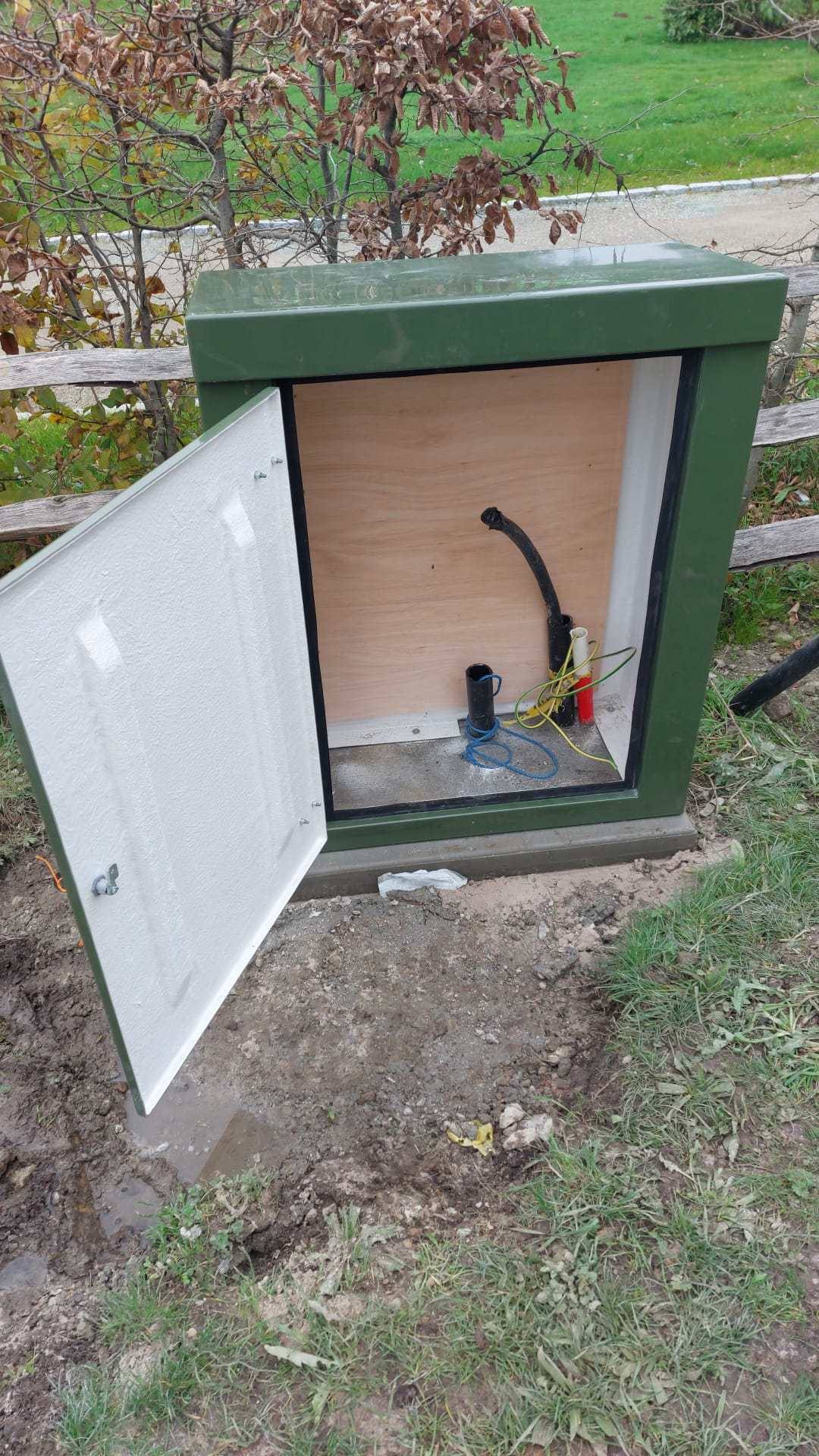
Fortunately after advice here and from the sparky, I got the bigger kiosk. It is called an S3. Very glad I did, and even without the constraints we had, I now know how awkward that big cable is to handle. We will put a polite note on the backboard asking for ukpn to use the left half. They will draw their new supply through the duct with the drawcord. It is a 15m duct by the site vendor's builder so I hope it's OK. @Post and beam if you still have the choice, get the bigger kiosk option. More buying advice available if you want. -
Remote DNO Kiosk, need cable to consumer unit indoors
saveasteading replied to Post and beam's topic in Power Circuits
Yes. The concern is that it is buried there and and not adjustable. But I've seen cables stuck in ducts where there are curves or being too long a pull. I'm nervous about 1. Ukpn saying it's not right 2. Sparky ditto tho he's seen the pic 3. Ukpn putting their stuff on the right and sparky hasn't room or enough cable 4. Not enough free cable. That was supervision....I had to leave site and hadn't explained 1m above finished slab. There is loads of cable at the other end. Everyone else says it looks fine. The hockeystick shows that the cable isn't deep at that point. There was an obstruction. We should have cut the red end off and only shown the white. -
Remote DNO Kiosk, need cable to consumer unit indoors
saveasteading replied to Post and beam's topic in Power Circuits
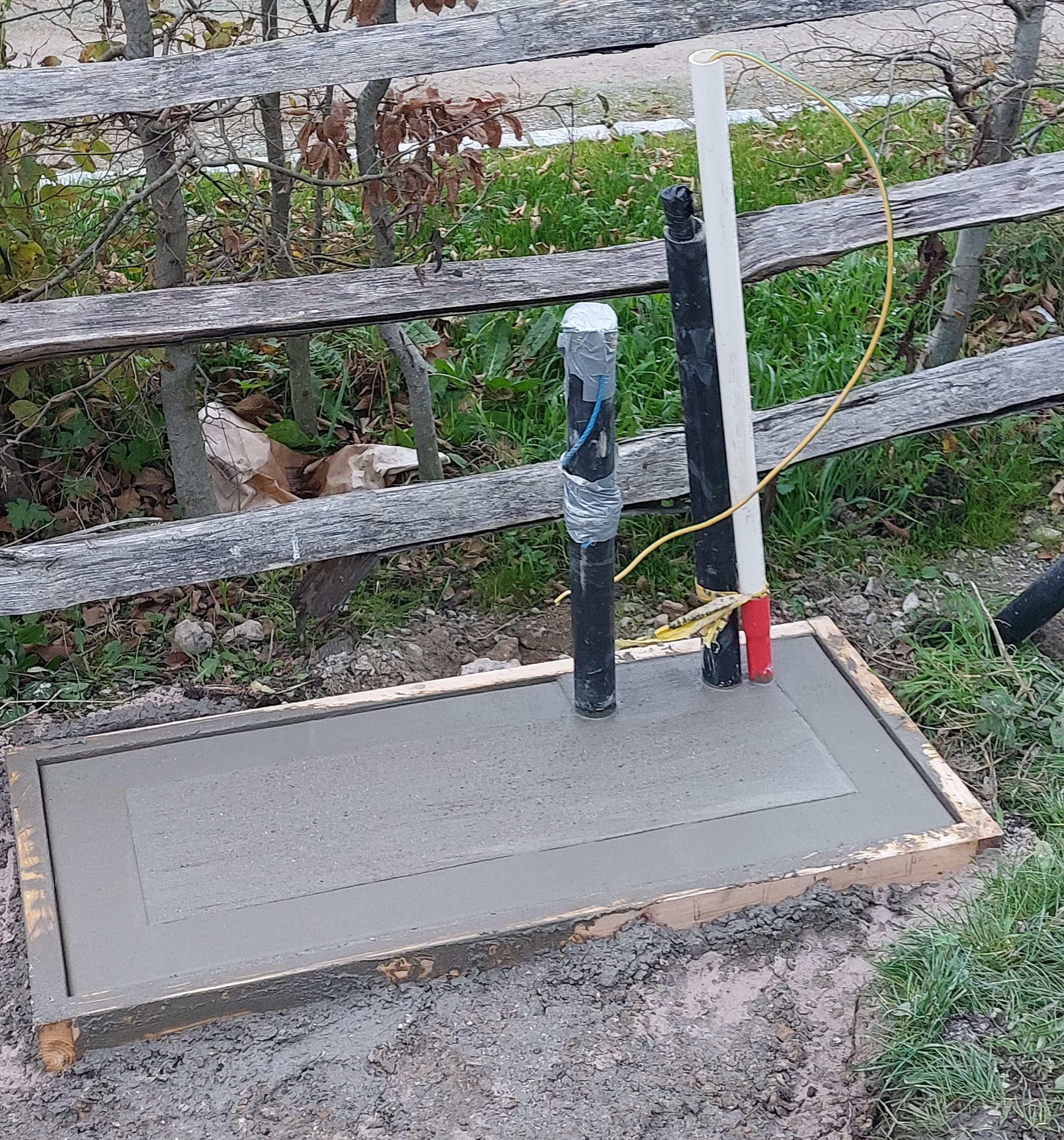
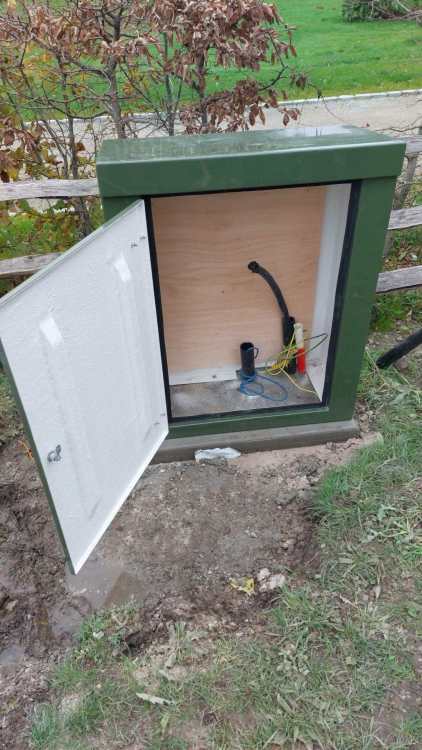
Just done ours after some advice on here. Our electrician asked for 4 core and a separate earth. 35mm cable, even 4 core, is very heavy and stiff. Even a 65mm duct provides a lot of resistance. Ours is in the ground with sand bed and surround and only ducting for 1m into the kiosk and a hockeystick for the earth: it's what they expect to see. In the photo the other duct is for UKPN. ours are too far to the side because of constraints by others, and it should have been longer out of the duct but hey-ho it should be OK.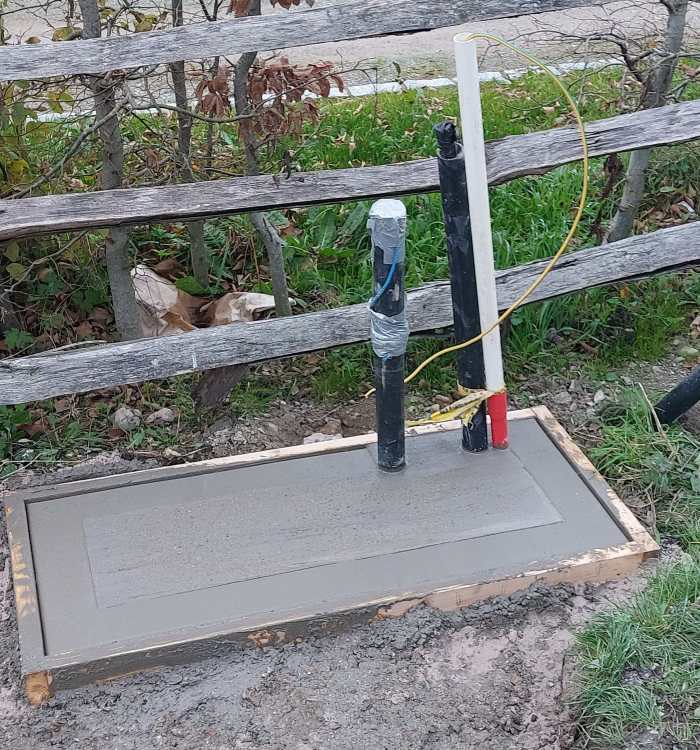
-
music room in basement sound insulation
saveasteading replied to Thorfun's topic in Sound Insulation
Resilient is the right term, yes. -
music room in basement sound insulation
saveasteading replied to Thorfun's topic in Sound Insulation
Ok thats easy. It is all tried and tested. Just remember that the contructions are tested in laboratories... a lump of wall inside a controlled testing box. You will have junctions and corners, and services and doors. I think i recall building a music room next to a maths classroom, and it worked out fine. I haven't got details any more but the requirements will be published. Once you find the construction, which will be as dcsibed by others above, you should choose the next level up, to overcome the difference between laboratories and real life. And avoid service holes and doors. Now it's coming back to me. Stud walls with flexible (acoustic) bars and many layers of board, plus dense mineral wool. I think we sliced the floor slab under the wall to break continuity. Floor above similar with plasterboard under a cushioned floor boards for density. -
Success! How do they expect us to know the weight of mixed waste? Appeal. Our electician md bought into this, and he collected all his carboard boxes, bundled them and took them home. In another time they would have fillled a skip. One our our site managers got a digger to squash the ckntents down. It saved the cost but missed the reduced waste point. Back 10 years ago we were saying that the real cost of a skip was £2,500, including the materials that had been bought and wasted. Probably £3,500 now. Self builders think differently to commercial builders.
-
music room in basement sound insulation
saveasteading replied to Thorfun's topic in Sound Insulation
Just thought...curtains...everywhere. then you can play around with the resonance. -
Timber frame house (MMC), found mice in ceiling - advice needed
saveasteading replied to Kuro507's topic in Timber Frame
Up in the attic I found the remains of a plastic tub of poison blocks. Mice (and/or rats) had chewed their way in, eaten the remaining poison, then eaten the lid of the tub, which was like lace. We don't appear to have mice or rats at present. -
music room in basement sound insulation
saveasteading replied to Thorfun's topic in Sound Insulation
I don't think the above mention one thing. Avoid parallel faces, as this creates repeated reverberation. The established principle of egg boxes on the surfaces still applies. Don't overdo it or it becomes an anechoic chamber, which is equally unpleasant. I stood 3m from a starter's gun, and heard only a single muted sound. -
At what size does an upstairs make sense?
saveasteading replied to Crofter's topic in New House & Self Build Design
School for me. I really wish they had made me understand it fully, and the uses, rather than how to pass the exams. -
At what size does an upstairs make sense?
saveasteading replied to Crofter's topic in New House & Self Build Design
Land. The cost and layout of a plot may be decisive. With expensive land, go up. With views, it depends if you need an upper floor to see them. Then there is the roof structure and finish. The cost varies a lot depending on structure and finish. I'm surprised uo see some large single storeys being built on commercial developments in the SE. They seem to be in prime positions so the cost will be huge. London money. -
That concrete is dressed over the surface by the looks of it, not part of a beam. In which case knock out and replace.
-
I heard that I was called the skip inspector* by a site manager. That showed it was working. I would set a maximum number of skips for a project. Typically 3 for a £1M project. Once everyone thinks of it, the waste drops dramatically. Once had them empty a skip and fill it again as it was mostly air. That, and the principles above, of muck balance ( none off site) and crushing all hardcore. And no cardboard boxes in the skip. I told another contractor MD this and he tried it. He found the site agent hiring in grab lorries instead. * why are there bricks and timber, and empty boxes in this skip..etc.
-
At what size does an upstairs make sense?
saveasteading replied to Crofter's topic in New House & Self Build Design
Almost, depends on how you consider the area, after deducting the stair area on both levels. -
It won't be very strong, being washout. Mostly cement slurry, and very wet. That was a well organised site. Most aren't. Good thinking on your part. Any ideas on the trades tidying up after themselves?
-
What they are saying is almost correct. These depths of foundations are for the amount of water that a mature tree will suck from the ground. So we assume that the trees will continue to maturity. If these were immature then the effect is less. How much less, I don't think is known. Thus your depths are on the safe side. But the depth stated us as if they are retained. And there has been one winter of recovery. It's not for me to say more and I was mainly checking it wasn't all to the most extreme depth.
-
Welcome. What do you know, and what do you know you don't know?
-
That is wrong and needs sorting. Was there a surveyor involved in the PWA? It's their job to resolve this. It will likely be unpleasant but you are not the culprit. Let the preofessional deal with it, and i trust the fees will go to the neighbour too.
-
The building regs. A long time ago i did these calculations from first principles. 50mm dia up to 2m. I've forgotten it all now, but my point is that it is complex. Someone has done these sums for normal uses and published them. The building regs have these in chart form. Using them is easy and slightly conservative, so do that. Most importantly, avoid sharp turns as they severely disturb flow. Also note that too steep a slope and too big a pipe cause solids to be left behind....the charts cover that too.
-
Builders who are ignorant of their subject do not do research. No chance of the wrong unz being on here.
-
That sounds onerous. The thirstiest tree in heavy clay. Some designers make the mistake of designing for the closest foundation and applying it all round. Are yours shallower further from the former trees? How long ago were they removed and how mature?
-
It is an unheated building so doesn't need insulation, although it is prudent to have some. The office is secondary and can be dealt with on its own merits. How cold does it get relative to outside?
-
I'd say no, its an option. Very seldom used. We don't know much about the location or product so can't get so precise. And the OP isn't responding so I'm ducking out.
-
Of course it can be done. But is it necessary? Forklift drivers can wear warm clothes indoors as they can outdoors. For perishable goods I think I'd be more concerned about summer heat. Up at the roof space it can get horribly hot, and the plan shows skylights.
-
how much weight can i put in a skip?
saveasteading replied to gaz_moose's topic in General Self Build & DIY Discussion
If it will absolutely be only hardcore friendly materials then shop round for those who acknowledge it, and price accordingly.