
saveasteading
-
Posts
10897 -
Joined
-
Last visited
-
Days Won
94
Everything posted by saveasteading
-
OUCH the price!. £60 for 2.5litres. That should be good then. Good luck.
-
I don't know Barretine but I see that it is a stain and preserver. I think you want a sheen, rather than any more protection. If it dries to matt and you want a sheen then you will need something on top. However this will need to have good resistance to the weather as it becomes your outside layer. All I can suggest is 1. see what it says on the tin. 2. go to a paint merchant and ask for advice. 3. put another coat on, but of clear "stain" for want of a better term, that does produce a sheen. 4. let us know your solution and how it works out.
-
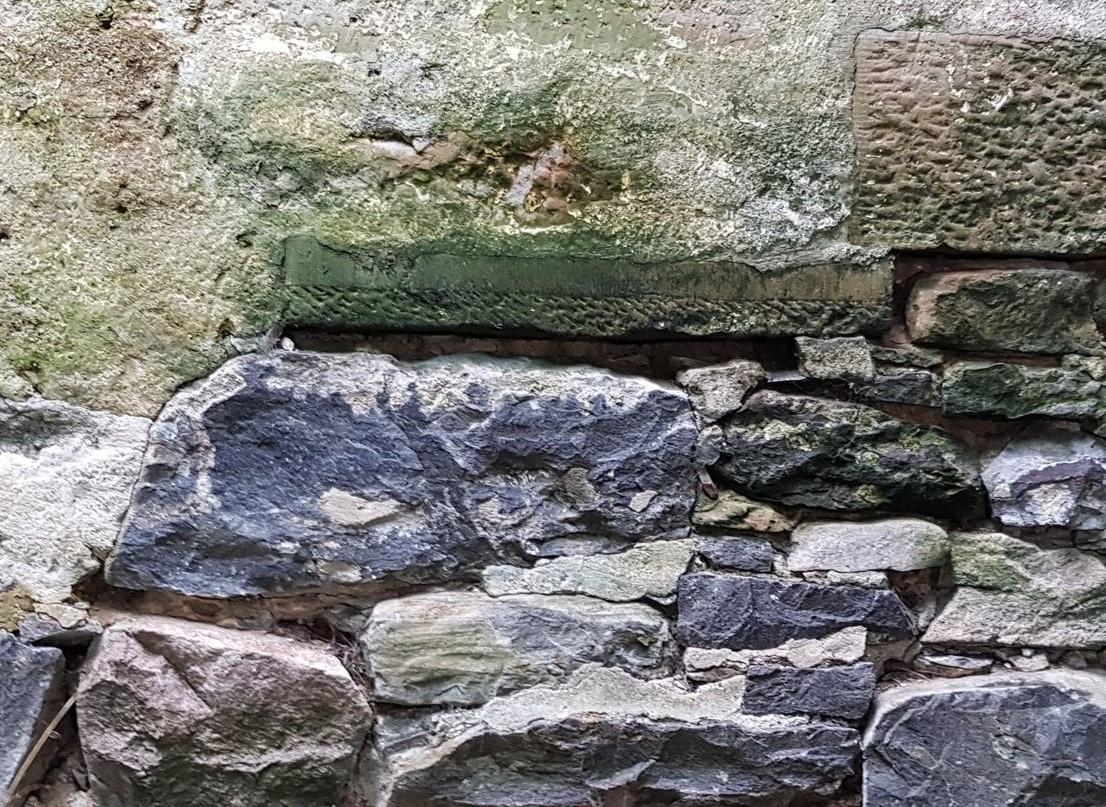
 This is what professionals do, and none of us here can see the context completely. If I was that person I think it would take a good half hour on site to check it out, and soak it all in. We can't do that on this forum. Perhaps it is a Structural Engineer you need here though, in case there is shrinkage of the ground. He will look at the rest of the building too. Are there any cracks in the walls? sign of similar issues at neighbours?
 -
If it is the waterproof type, then dampness is not an issue. But your roof should not leak, and if it did it would pond on the lino and then run off. Try without. For a cheap fix, apply the cling film that is sold as floor protection during works. NO NONSENSE HARD FLOOR PROTECTION ROLL 25M X 500MM (32544)
-
Have a look at the known names for stain, like Sadolin. Get a small sample tin and try it . I have used it several times on new cladding and the subtle sheen has been very pleasing. How it works on older wood I don't know, but my hunch is it will be good. In my experience this keeps its looks for 10 years on the sunny side, and longer on the other faces. If you use the oak finish on pine, there is very little change but then it stays that colour instead of changing to grey. Darker colours last remarkably well too.
-
Stud walls for wall hung toilets
saveasteading replied to James94's topic in General Self Build & DIY Discussion
I have 2 at home. One of the most expensive jobs ever as I had people doing it. The plumber must have done 6 visits to do little bits before another trade was needed while he went away. Mine are Roca wc with a very heavy steel gantry behind, which for some reason are not Roca, Geberit I think. The gantries are good and I would use them again rather than home-made. Lining everything up was tricky. I think someone who knows what they are doing could do it in 10/th the time. But I have had it apart again because the wc was rocking (imagine that failing in use!.) The pan is secured to the cantilever bolts by 2 plastic plug inserts (which looked the worse for wear, and very long grubscrews. It did concern me but has been ok for 2 years now, but the plumber must have fixed it loose/too tight??? One tiny detail...a flush that works by push lever works much better than a push button. And putting it behind the pan lid is not a great detail. They are great for tidiness and cleanliness as there is no break in the floor cover or hidden space behind. -
Flat roof considerations: Safety, Rain and Shine
saveasteading replied to puntloos's topic in Flat Roofs
Not a specialist 'secure fixing point consultant', but someone who can choose a hook and a fixing and specify what to fix it to. Not your architect by the sound of it. Don't let hem engage another consultant at your expense. If you have an SE then that is not going to be difficult or expensive. Ring + 2 nuts and a suitable piece of wood or steel in the structure. £5 should cover the materials. -
If the water is cooled by 2 deg it is then heated again by the ground underneath, perhaps some nice rotting going on at the bottom, and the inflow of water (dam not pond) 4 deg is going to be midwinter, so really is a worst case, and don't they quote heat exchangers down to -35C? In summer it will recharge to say 20C. Sounds like a good idea, especially if there is a significant flow of water, but I can't do the sums for it.
-
Flat roof considerations: Safety, Rain and Shine
saveasteading replied to puntloos's topic in Flat Roofs
One last thing from me on this. That skylight is huge. Daylight from a skylight is about 3 x that from a window, so it doesn't need that size if daylight is the reason Cost: what size is that? It is a huge piece of glass which would have to be rather special for safety and strength for wind and snow.. As one piece glass in a special skylight....£8,000 and a crane??? GUESSING. With subdivision by glazing bars perhaps half that but will hold the muck, and need extra cleaning...so obviously out of the question. -
Having had some months of reduced mobility (ladder related), I now sympathise with the 450mm high sockets: That would be very much easier to reach than kneeling down and getting up again. Presumably this is also reachable from a wheelchair, as is the light switch.. Can anyone confirm if this works well in practice? Also presumably you are allowed a second socket/switch at the old height if it is so important.
-
Tends to look industrial, can be noisy, can be draughty. This is what goes in to commercial properties. Generally the air comes from units in the suspended ceiling but can be from louvres more discretely positioned. The heat has to be moved from the source to the outlet though so is still intrusive in a retrofit. There are options where air is heated at a central point and ducted to outlets, then drawn back to 'base' for recirculation. This is much quieter but the ducts are big. I would consider this in a new big house, as I know it works well in offices. Does this work in an existing house? Will depend on a lot of variables.
-
Yes. Usually joiners are aware of what works and doesn't, but by experience not calculation skills. . But not all do, and there may be other circumstances. At 600cc the timbers will be heavier, so the SE must decide, and you certainly can't use frames designed for 400 and place them at 600.
-
No felt under the metal roof ?
saveasteading replied to Lee Ridley's topic in Roofing, Tiling & Slating
At the ridge and eaves unless well fitted fillers and clever lapping used. So that would be ok for an unheated shelter, and any condensation will run down the underside and then drip off the next indent. But not otherwise. -
How to reduce thermal bridge / draughts with RSJ beam
saveasteading replied to WWilts's topic in Heat Insulation
The main thermal loss would appear to be from the beam to the column, as it appears to be exposed to the elements. Is that the case? If it can be insulated then that would be great. I don't know aerogel but it appears to be as good as PIR board but flexible with it. Whatever, wrap the column on all sides with whatever you can, and find a way to protect the beam too a Thermal break between the column and the beam will have to be very strong too...so is perhaps a bit special. but anything that is a lot better than steel will help, however thin. But do get your Engineer's approval for it. Actually, tell your Engineer that you want to insulate the steel, and what does he suggest. -
Concrete pin holes - prep for epoxy resin
saveasteading replied to dangti6's topic in General Flooring
Poss a damp cloth or mop after the vacuuming, depending on the suction power. The polished stones should show up nicely then for a moment. -
How to reduce thermal bridge / draughts with RSJ beam
saveasteading replied to WWilts's topic in Heat Insulation
Sketch or photo please? You can probably fix PIR to the steel before the wall goes up. -
That would be my argument against accepting their requirement. They do tend to have to accept carbon-saving initiatives. If you can show where the 'future water supply' comes from I think this might be get-overable. A lot of my designs have dotted future solar panels and future lifts, as long as the design is genuine and it is doable. eg roof stronger for panels, and a box-out in the floor for a lift. Don't know your circumstances but might work.....future additional rainwater storage?
-
Grand designs - new series 2021
saveasteading replied to Moonshine's topic in Property TV Programmes
Unfair. If they are thick , then so am I. I once estimated and won a project for some heavy civil engineering. Our PM politely asked me how I planned to get the lorries under the low railway bridge on the access track. Fortunately, smaller lorries and a bit of road scraping resolved it. I had been on a site visit. And then there was not thinking of the power cables over a new office block in a power station! Assuming these people are not in the industry, the weight of a concrete lorry might never occur. I need to catch up on these new GDs. Advice on the most interesting programmes please? -
No, they would be seen as petty and wasting the court's time, especially if they had not tried other means of resolution, and you were seen to having been reasonable. The word 'structure' is used extensively in the definitions section of the Scottish regs, but not defined itself, which is interesting but not helpful. I would revert to this: Walls that are not Party Walls include boundary walls built wholly on one owner’s land).
-
No felt under the metal roof ?
saveasteading replied to Lee Ridley's topic in Roofing, Tiling & Slating
Can you tell us the product please? Whatever the shape, and this is pressed to look a bit like tiles, this is metal cladding. Therefore it ether needs to be sealed at every joint to be completely weathertight, or it needs to ventilate, and have another weather layer below it. Even if sealed, you will have issues from condensation. My first impression therefore is that this is ok for a tractor shed but not anything occupied or heated. -
As Gus says, research the specifications. There are several finishes available, with different qualities. Plastisol is the ubiquitous one, which is good in pollution but the 'cut end' issue has to be considered. Plastisol in extra thickness near the sea. Polyester is cheaper SuperPolyester keeps its colour well pvdf good colour retention The metal can also be of different thicknesses and hardness. Some economy sheets are very soft. Aluminium much more expensive than steel. Agricultural quality is not designed for long life. Careless cutting can damage the bond between metal and coating and allow rust. And I could go on. secret fix or screws. insulated or double skin or singe skin. Aluzinc finish. Do the homework and check the spec and the quality control of the contractor. Get it right and it looks good. How long does it last? Indefinitely if maintained. But maintenance and repainting can be in 10 years or 30 years depending on the above.
-
The tracking process online is very efficient, and you even see the signature at delivery. I don't imagine many tracked packages go missing....much too risky for thieves as the package is handled through the process. The point that it went missing would be known. Copying has to be worth it though, even if it costs. As well as the possibility of loss, you have the full info in case of any discussion. If there are hundreds of small (value or physically) receipts, at least copy the forms, and the big invoices.
-
from the government document https://assets.publishing.service.gov.uk/government/uploads/system/uploads/attachment_data/file/523010/Party_Wall_etc__Act_1996_-_Explanatory_Booklet.pdf A wall is a "party fence wall" if it is not part of a building, and stands astride the boundary line between lands of different owners and is used to separate those lands (for example a masonry garden wall). This does not include such things as wooden fences or hedges. Walls that are not Party Walls: These may include boundary walls (a fence wall/garden wall built wholly on one owner’s land) and external walls (the wall of a building built up to but not astride the boundary). As you say it is all on their land, that seems to be answered. there may be footings on your side, but technically shouldn't be, so let's not go there for now. Has their surveyor said this to you or is it second-hand from the neighbour? Is the surveyor qualified, and in what? Even RICS covers lots of variable skills and does not necessarily include law/ party wall or even construction. IF other buildhubbers can confirm, then in my opinion: No point in messing. Tell the neighbour your advice is that their surveyor is wrong, but please advise us in writing if you wish. We will hold you liable for all costs from this stage.
-
Take lots of pictures of the current condition of everything, even the clematis. Also the road/pavement kerbs. Tell your surveyor you are doing this, and so the pictures are acknowledged. I have had verbal and written claims of substantial damage to adjacent factories and houses on various occasions. All I had to do was say that I had condition photos of their building before the works commenced, and that was the end of it They didn't even ask to see them.. I did have to advise our insurers of potential claims, otherwise there is no cover, so it is all hassle.
-
Minimum space needed for a soakaway...
saveasteading replied to Ferdinand's topic in Boffin's Corner
That depends. Some don't really appreciate or understand the significance of a soakaway not working properly. Some are so used to the major developers getting away with 'relaxed' rules that they think it fair to allow it to individuals too. Some rightly recognise that there really will not be any problem with the proposal. But the last thing you need is an overflowing soakaway causing damage to your and neighbours' grounds. The rules about soakaways are guidance, not strict rules, so you can argue for example that if it overflowed it would not cause damage, depending on site situation. The 5m rule is a very blanket statement, as the ground could be any material, with or without good percolation. My rule of thumb is to make the situation no worse than before the building. It always rained on the land and it went away into the ground or across the land. Can I design a system to replicate that? It is usually not a single hole in the ground.

