
saveasteading
-
Posts
10897 -
Joined
-
Last visited
-
Days Won
94
Everything posted by saveasteading
-
Sorry to nag: I have seen many a steel with insufficient thickness and some left-over paint, because the painter said he didn't need it all. It is usually very much thicker than normal paint. Also many where there is no seal coat. The working intumescent stuff is soft and gets mucky, so make sure you have the finish coat too. On the other hand, the paint company likes to sell paint. If the steel is already enclosed on one or more sides the amount of paint reduces, and they dont always bother to mask. A heavy enough steel doesn't need extra protection at all.
-
steel doesn't rust without water and oxygen. paint prevents that if it is adhering, even primer will suffice in normal indoor conditions, I would rub down the flaky bits, gently rub any flaking rust bits off, but not through to shiny metal, then put a coat of primer on the exposed steel. then intumescent away. I assume you have the intumescent base coat and also a finish coat. it is horrible to put on as thick as it is required. Sometimes best to work out the volume of paint you need, then keep recoating til all gone. then seal.
-
It is my son-in law's birthday and I want to get him a book that is relevant to barn conversion or building basics generally. If still available I might get 'Why you don't fall through the floor'. I gather there is a sort of self-build 'bible'. any suggestions.?
-
In case they revert to blaming you, or want to share an expensive proposal, make sure you have dated photographs that are clear to understand. This discussion is proof to some extent. Meanwhile you don't want the stuff on your side to extend. Next growth season do one of the processes above, if the neighbour has not. There are some really good official documents on this, free on the web.
-
 In real life I have always found it to be less than half that. BUT it depends on the screed having been laid with the right (low) amount of water so that there is little free water after curing. Curing in ambient temperatures takes about 28 days, but continues thereafter. The chemistry of curing takes water into the matrix and it does not register as free water/ dampness. If they have added water for ease of laying (normal I am sorry to say), or allowed it to get wet then this is different, and it needs to dry Ventilation is essential, more than extra heat. If the heater is gas then it is pointless, as the combustion creates water. A surface dampness monitor can be hired (for accurate measure) or bought quite cheaply for 'near enough' guidance. You could insist the contractor proves it before covering. Beware of carpet/vinyl contractors wanting extra to seal the slab. 1. it is better to be dry than sealed in . 2. they charge a lot and it is a good earner, often pointless...Also I have had them fiddle the readings.. or perhaps they didn't really understand.
 -
Heat in Buildings Strategy Statement
saveasteading replied to IanR's topic in Environmental Building Politics
I don't have the programme any more. We did play around with different thicknesses but in the regions of up to 250mm, at which all tests were being passed and costs were unjustifiable. As you say, other priorities come into play. Intuitively there is little sense in having 500mm in the roof and 50 in the walls. The blue line on the graph surprises me, and perhaps I am not understanding it properly. Is it implying that after, say, 60mm the benefit is minor? It is surprising what an immediate benefit (real life, not perhaps in theory) there is from an underlay of 10mm on cold concrete. -
Loft Hatch recommendations for bungalow please?
saveasteading replied to patp's topic in Lofts, Dormers & Loft Conversions
I have 3.1 height to ceiling and some roof timbers in the way. I will check some of these out though, once more, as that is really cheap. -
I will pass trough you all with hearts shortly. About to speak with the family, and I fear they want it all down!!!!! because they quite like the joiner. will report back.
-
Loft Hatch recommendations for bungalow please?
saveasteading replied to patp's topic in Lofts, Dormers & Loft Conversions
I have the same issue. all the ladder ones need a longer hatch, so i think i am going with this, for 600 x 600. https://www.laddersandscaffoldtowers.co.uk/acatalog/Concertina-Loft-Ladders.html -
how much came out past the required opening size, and did it sit reasonably vertical or did it V out? All the stone will be sold or used in the very long term for garden features
-
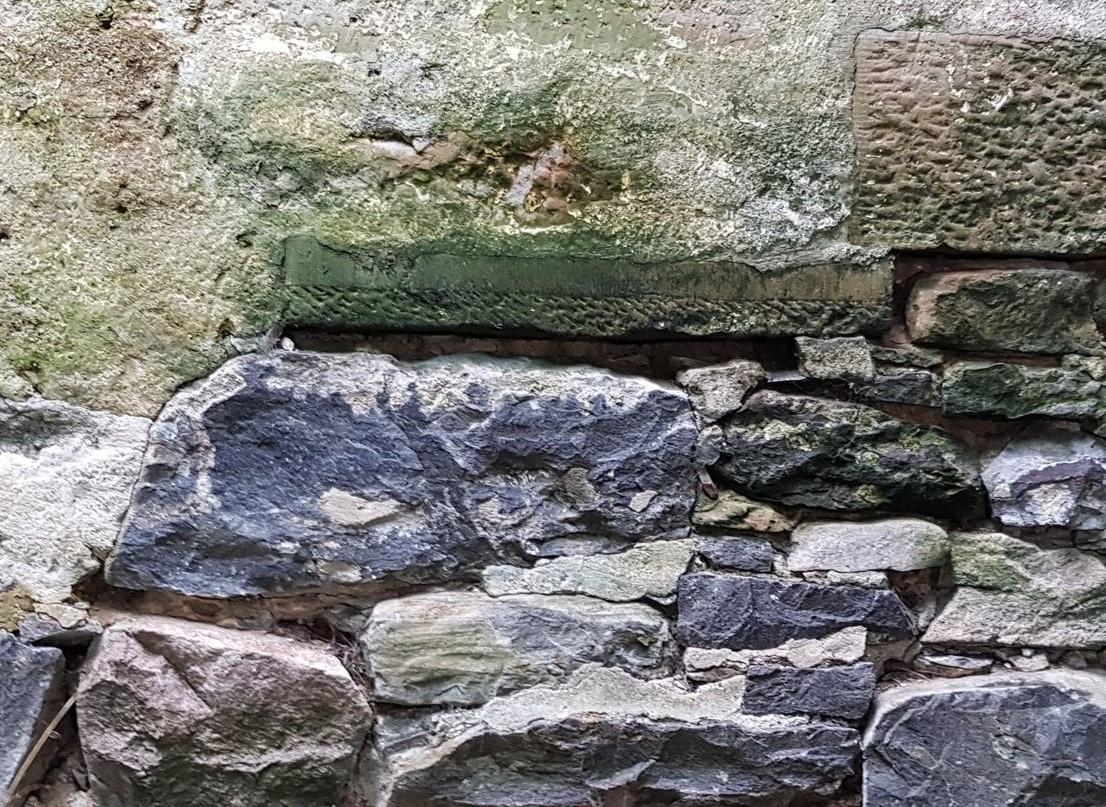
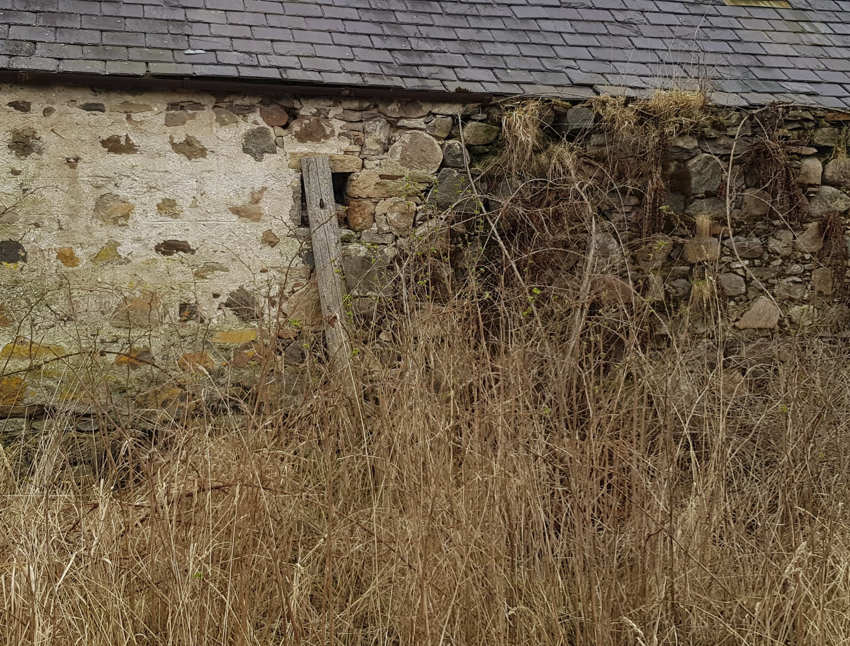
Yes this section appears to be older than the rest, and is of coarser stone and includes some rough patching. Our design is to form 3 openings for doors or double doors in this wall My concern is having seen, on a blog, someone forming openings by removing stones to about 45 degrees, that too much has to come out and might as well be rebuilt. However, elsewhere we have a bit of wall that has fallen out through rain damage and/or tractor impact, and it stays remarkably intact (even oversailing counter to gravity). Hence my hope that a cleanish cut can be made, and you all seem to be saying probably it can. If only. The eaves is only about 2.2m above the floor (Approx where the render starts.) I am for gently taking out the floor and lowering it. (thinnish concrete incorporating original cobbles, all on sand) The rest of the family wants to knock this section down and rebuild in new. So do the builders we are talking to (easier for them and our money). I cannot be on site to PM , so have to be realistic that the family on site will let the builders will have their way.
-
Bolt an angle iron or a scaffold tube to the stone and clamp the drill to it?
-
I have had specialists do it in reinforced concrete (downwards, with a normalish drill) and it was surprisingly good value. The kit was the star, and the labour wasn't specialist. But I am thinking that the drill requires support for horizontal work and could be special kit.
-
Perforated granite!
-
How many chains? say this was a full height cut (roof supported of course). cahins appear to be from £220 each The wall is traditional 3 layer. granite (and some sandstone) outside, granite inside and a good stone rubble centre, which I would expect might fall away a bit.
-
Does not need to be perfect, and it can be reformed in blockwork as will be timber clad after. At least that is our assumption that it will benefit from covering. I have seen a picture of very tidy cutting but assumed it would cost a fortune.
-
Heat in Buildings Strategy Statement
saveasteading replied to IanR's topic in Environmental Building Politics
Just a few weeks ago. It must be 10 years since sensible people stopped considering these. However I went to a BRE talk perhaps 5 years ago where they still suggested wind turbines and small hydro schemes for individual houses. The same organisation wrote the EPC programme that everyone has to use, hence the nonsense therein. For example, unless recently changed, it automatically assumes that an ASHP will also be used for cooling, and adds that to the power use. It is all in the back pages, if you insist on getting them. -
How best do we cut openings for windows in a 600mm, 3 layer, granite wall? I would like to do this without taking it back 45 degrees from the bottom of the new openings. I may have some very clever ideas....but you may have done it before and know, whereas I am speculating. This is the worst condition section of wall.
-
Flat roof considerations: Safety, Rain and Shine
saveasteading replied to puntloos's topic in Flat Roofs
I have learnt from it, even though I know a fair bit already. Indulge us nerds please. -
Heat in Buildings Strategy Statement
saveasteading replied to IanR's topic in Environmental Building Politics
The monetary payback target of 10 years is often a good guide to the carbon payback, unless there are subsidies. These small scale solar panels and wind turbines cost a lot of carbon to make and and bring from China, possibly never recover it. And they wont last 30 years anyway. Someone gets paid to give us this rubbish advice. How long ago was this? Surely nobody is suggesting small wind turbines any longer. -
Heat in Buildings Strategy Statement
saveasteading replied to IanR's topic in Environmental Building Politics
It didn't matter to us, but the guy said absolutely no, they had no interest in re-running it. The reason for mentioning it is that this was another bad example of incompetents (or worse) doing assessments, and I wonder what the standards will be when the need arises to check the nation's property. -
Flat roof considerations: Safety, Rain and Shine
saveasteading replied to puntloos's topic in Flat Roofs
My preferred method as a manager doing very specific one-off inspections. Take up another person whose job is ONLY to watch and warn against shuffling backwards over the edge etc. Needs a trusted and alert person though...no getting bored and looking away, or too interested and distracted. But first find a safe way up. Once did a job for a huge international company who had a permanent safety inspector watching us. We were once hoisting a ladder up, to tie to a fixing at the eaves. One man climbing the ladder with a rope, another holding the bottom and he stopped us. You can't do that, the ladder isn't tied. This sort of thing gives safety specialists a bad name and causes problems. The ladder was somehow tied in place the next morning, perhaps a cherry picker was hired for 5 minutes, and immediately taken away. My suspicion is that £20 would have resolved the situation, but we wouldn't do that. -
Heat in Buildings Strategy Statement
saveasteading replied to IanR's topic in Environmental Building Politics
Our daughter renovated a Victorian terrace house. We stripped the lath and fitted insulation everywhere. An EPC person came for some reason (mortgage?) and would not allow anything that wasn't standard, ie all assumptions. Therefore every building of this type will get the same rating, allowing only for dimensional changes. I didn't meet him but I think he was unskilled and uninterested, using a simple programme, and probably working for the company that bid lowest. -
Flat roof considerations: Safety, Rain and Shine
saveasteading replied to puntloos's topic in Flat Roofs
To do the test requires the tester to go on the roof. Ten minutes may become an hour. I wonder if they use the anchor that they are there to test...I just don't know so someone tell me please. Harness and lanyard have to be inspected too and I think disposed of at 'use by' date. I think this is 3 years assuming you haven't been sold one that has been sitting around. -
Flat roof considerations: Safety, Rain and Shine
saveasteading replied to puntloos's topic in Flat Roofs
Not really rhetorical. I would trust the 'fixed' one least, because I have no idea if it is fixed well , or at all. Could be siliconed on, or bolted to a skinny bit of wood. I would want to see a load test certificate or fix my own. To clean the outside of the skylight you need to provide safe access. This can be by an opening skylight or hatch or by safe climbing. If a ladder or tower is anticipated then I would also want tying points at the best point of access. Roof lights do get dirty of course, but also blasted by heavy rain. So for daylight they will usually be clean enough, especially if on a decent slope.. For a clear view of the sky perhaps not. The Scottish Standards say this both faces of a window and rooflight in a building are capable of being cleaned such that there will not be a threat to the cleaner from a fall resulting in severe injury a safe and secure means of access is provided to a roof,
