saveasteading
-
Posts
10892 -
Joined
-
Last visited
-
Days Won
93
Everything posted by saveasteading
-
For an overview of the tiles: Are many missing or broken? Are they all the same colour (Concrete tiles fade, so repairs may be visble) Are they in straight lines along the roof, especially as they overlap the gutter? Are there any sags in the roof (best seen looking at an angle). It isn't so much the tiles that tend to fail, as the battens beneath, or the fixings.
-
The advice above is good. In a trench of round gravel, a third is air and the rest is stone. Anything less than round and the volume of air (hence water) decreases. Therefore your trench of 25m3 will only hold about 8m3 of water at best. Perhaps that is enough. The calculation depends on location, rainfall intensity and duration, and is rather hard work, hence computer programmes are used as standard. You haven't said much about the site: permeability, slopes, area. This can be increased by using expensive crates instead of gravel, or by adding empty pipes to the trench, although that can be as expensive. As Gus says, the trench will perform as a soakaway, depending on your ground permeability. This can be increased by changing the shape to provide more edge area, if space allows. Also you may be able to use the drain pipes as temporary storage, and soakaway area, if they are shallow slopes. It is good practice, even if not enforced, to avoid any water at all running straight to the burn. I don't think pollutants are an issue in your case, but it is good to do your bit to avoid increasing flooding downstream. What happens to the water after your storage trench? Is it to soak away, or is there a controlled outlet to the watercourse? Bottom line. Designers sometimes forget that rain has been falling on your site before your project. Your responsibility is to not make it worse for the environment. Soakaways, ponds and swales can be worked with to achieve this. The latter have the benefit of surface evaporation as well as soakage.
-
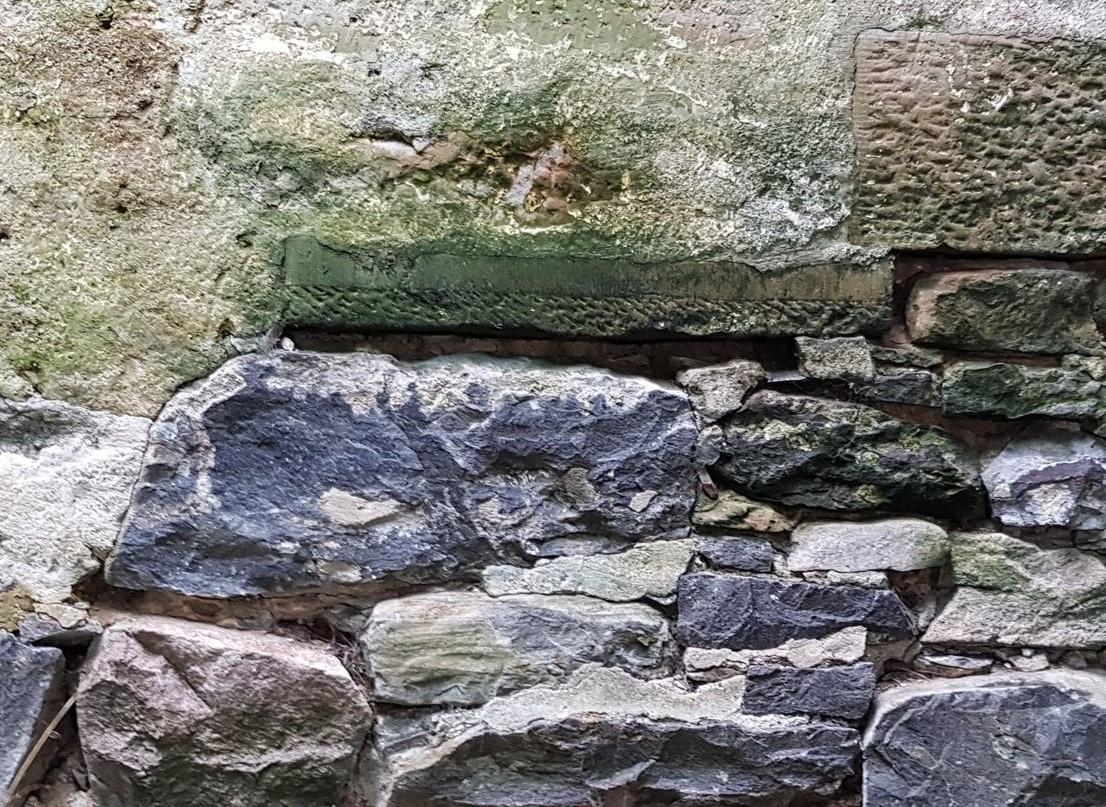
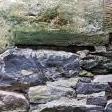 It's OK. leave it. If people can't tell if it is concrete or stone then it can't be too bad. I agree with jet wash , repair, and distract, Your beautiful plants will get all the attention. I would also drill some drain holes through the mortar to let water out and reduce pressure that may lean the wall over. as is probably the cause in the last picture. Try through the mortar at the top of the perpend, perhaps every 2nd or 3rd block, and that should be quick and easy. Drill bit as big as the mortar will allow.
 -
Is that wise? Something not being normal is often for a good reason. I am thinking that the foam and silicon are flexible so the door movement might cause the timber to 'swing' ever so slightly relative to the steel. I think at least screw through timber packers (cut exactly or folding) so that the screw is pulled tight.
-
Just when I thought I’d seen it all.
saveasteading replied to Canski's topic in House Extensions & Conservatories
So can a piece of tape on the rod, and lay the rod on the surface over the drain run...but yours is more fun. -
Air Source Heat Pump in Stone House
saveasteading replied to Bemak's topic in Ground Source Heat Pumps (GSHP)
I think it was ProDave who pointed out that the summer PV is not a waste as it is needed for hot water. -
I have used this a lot and it works. The plastic will chip at the top over time but it will continue its job of retaining the stone. Yu must consider if you will have heavy loads on it ever, and put more stone underneath accordingly. Yes you will be able to dive up that slope, but the decision on attractiveness/ comfort must be yours. Yes that works too but you then need pedestrian ramp or steps, and there is a potential 1m fall off the drive.
-
Air Source Heat Pump in Stone House
saveasteading replied to Bemak's topic in Ground Source Heat Pumps (GSHP)
That is very pretty but the price!. 40% less energy consumption to bring a room to 21°C from 10°C How so? Energy in = Energy out. 40% quicker I could believe. Less energy, no. The electric fan is heating the space too, of course. -
That is true once you have credibility and people are contacting you. The knowledge and experience do the selling. But sitting by the phone or looking for non-existing emails will not get business. I started business with a partner who was 10% Engineer ad 90% sales, and he would phone /visit possible clients and connections all day. I just couldn't do that, due to some sort of shyness/modesty/ lack of skill. Once there was a job the clients wanted me not him, so it worked. Later, when he had departed, the phone rang anyway, and my sales were through networking. I recall a client telling me at the opening ceremony that he recalled our first discussion. He phoned me asking if we were interested in x. I apparently was comfortable to talk about it, but not excited ' I will have a look and see if it suits us'. whereas all the other contacts were selling like md, and could do absolutely anything, and meet him tomorrow. If only I had known that, then the negotiating period would have been less stressful. But if work becomes less plentiful, then the sales oriented businesses tend to do better. It is part of an Architect's training to sell themselves. We Engineers are more inclined to deal with what is in front of us. I once did a presentation to a school board, after which the Head thanked me for my clarity and honesty......so what had the competition been saying? Is that selling?
-
Air Source Heat Pump in Stone House
saveasteading replied to Bemak's topic in Ground Source Heat Pumps (GSHP)
Using electricity to drive the fans? I do favour fans in big spaces, especially on the ceiling to force the hot air down again. -
Air Source Heat Pump in Stone House
saveasteading replied to Bemak's topic in Ground Source Heat Pumps (GSHP)
According to recent discussions on here, only mains gas would be cheaper, prior to the current price increases and concerns. There is lots of good info on bh on this, including quite recently about ashp with PV., and that is what we will be doing. Just thought though, further to saying that ducted heated air works... it worked fine in a 10 hour office scenario, but maybe not so well in domestic, with varying room conditions. -
Air Source Heat Pump in Stone House
saveasteading replied to Bemak's topic in Ground Source Heat Pumps (GSHP)
Yes in theory. But with this type of building the foundations are probably very shallow. We had area already exposed, ie the stone walls were 100mm above the visible ground, thus sitting on 100mm of exposed vertical ground. It would be very easy to destabilise the walls..indeed there are tales of them falling down during such works. And yet existing lintels may dictate the finished floor level. Cassettes of insulated timber positioned 25mm inside the masonry. That was fine on paper (or screen) but the reality is of non planar walls and so the void varies and more floor is lost. Yes that works. I designed that, with ashp, into our own office building 15 years ago. The effect is indeed quick, and can be reversed for cooling. But the ducts are large and obtrusive. -
Air Source Heat Pump in Stone House
saveasteading replied to Bemak's topic in Ground Source Heat Pumps (GSHP)
From a very quick look, the tested value for a 600mm stone wall in good condition is an r value of 1.0. So that is like 40mm of mineral wool or 20mm of PIR. Or a U value of 1.3, which is much better than the published figures for a solid brick wall (2.0) but nowhere near a relaxed conversion target of 0.3, or a modern house target of 0.18. Thus the walls are a very good start to the insulation of a building, but not remotely enough for modern expectations. -
Air Source Heat Pump in Stone House
saveasteading replied to Bemak's topic in Ground Source Heat Pumps (GSHP)
We are currently converting such a building, with 600mm of granite, plus some ashlar sandstone. There are tested figures for these walls, and they are better than the heat loss programs allow proportional to thickness. However they are not remotely close to building standards. Scottish warrant requires insulation to certain numbers 'as far as reasonably practicable'. That does not allow bare stone and no insulation, unless it is a listed building with very special walls. Heat loss is not related to the source of the energy, so ashp makes sense...we are doing this. Obv the floor is warmed more than with space heating, so floor insulation must be paramount.* As mentioned, dampness in the wall will increase heat loss. Read up on pointing. As above, if you were to have no insulation on the walls then you will need a lot of heat to warm the walls before the space becomes comfortable. And it will be expensive. * an insulated floor requires 100mm minimum insulation under a screed. Beware the effect of this on your works esp excavation ,(and wall stability) and existing door heights. -
Just when I thought I’d seen it all.
saveasteading replied to Canski's topic in House Extensions & Conservatories
Those of us who can handle a tape measure, don't always appreciate that transferring a position from inside to outside ca be tricky, involving logic and sums. and then a cautious pilot hole. That is my guess of the issue that was then abandoned. -
Not something that is easy to answer. Cheapest/ most durable/ most attractive/ boxings for columns and beams allowed? Then we could make suggestions but you cant find a builder who would do it that way, or at the budget. In principle, for small buildings use cavity wall and timber roof, with a steel beam if necessary, then any builder can do it. Do work to some approved standards please, whether they are required or not.
-
We should never make holes in webs or flanges without a check. In reality there is usually some spare load capacity, and spread out fixings will be ok....but a phone call to the SE is likely to result in a straight forward 'no problem'. Also consider out of balance loading..If the timber is all on one side, then the load will twist the beam....which is bad thing. I prefer to fix using purpose made 'timber to steel' screws. This allows for careful tightening , and some adjustment. Concealing the head without risking pull-out may require consideration.
-
Insulate. The pipes will tarnish anyway. In fact insulate a lot. Pipe insulation of the higher quality then box around.
-
That looks like my rendering skills. Except I know it is wobbly and make it rustic. My guess is that this is wobbly render rather than loose, but do what PD suggests....a light tapping with a hammer to listen for hollow sounds.
-
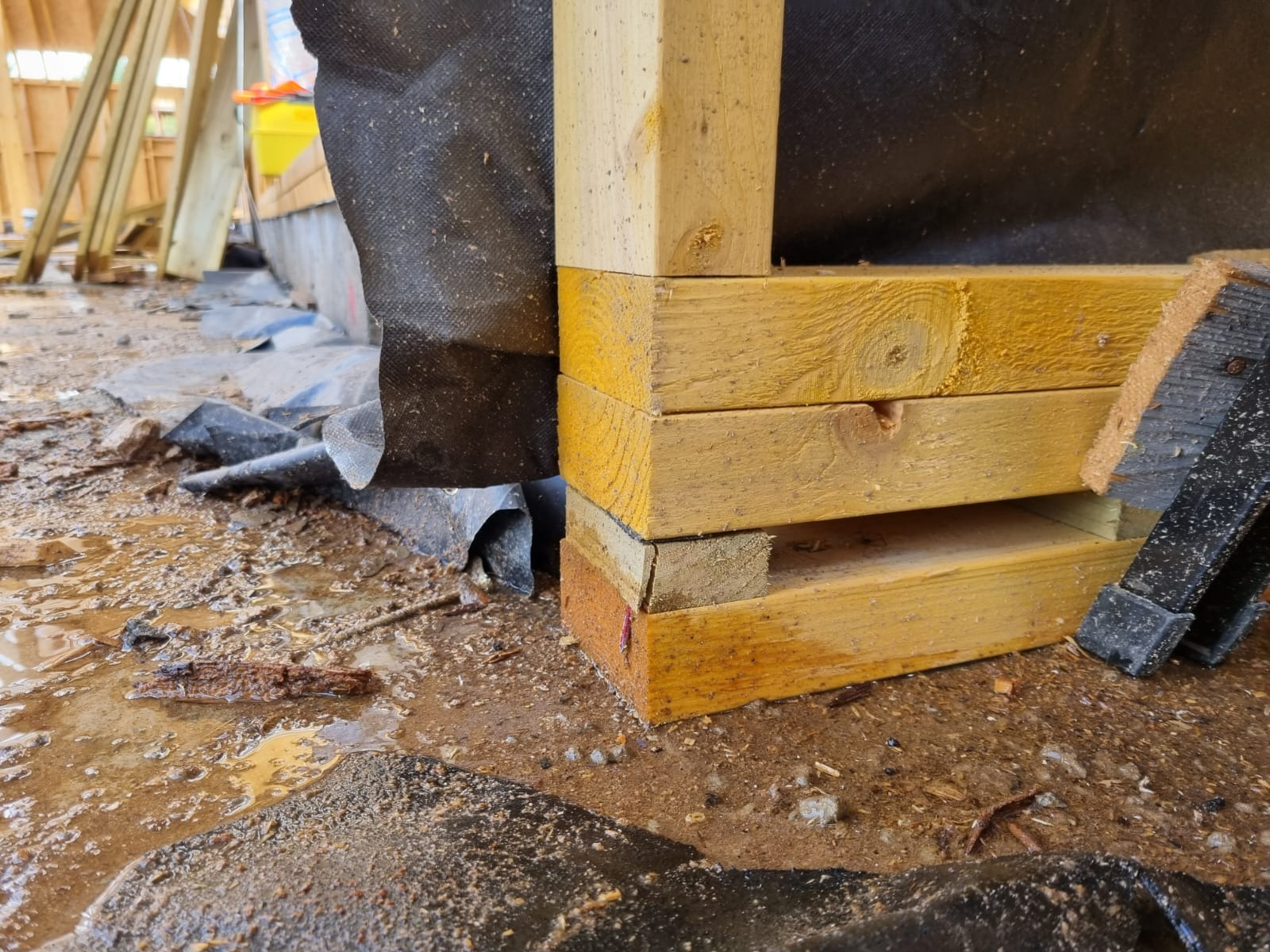
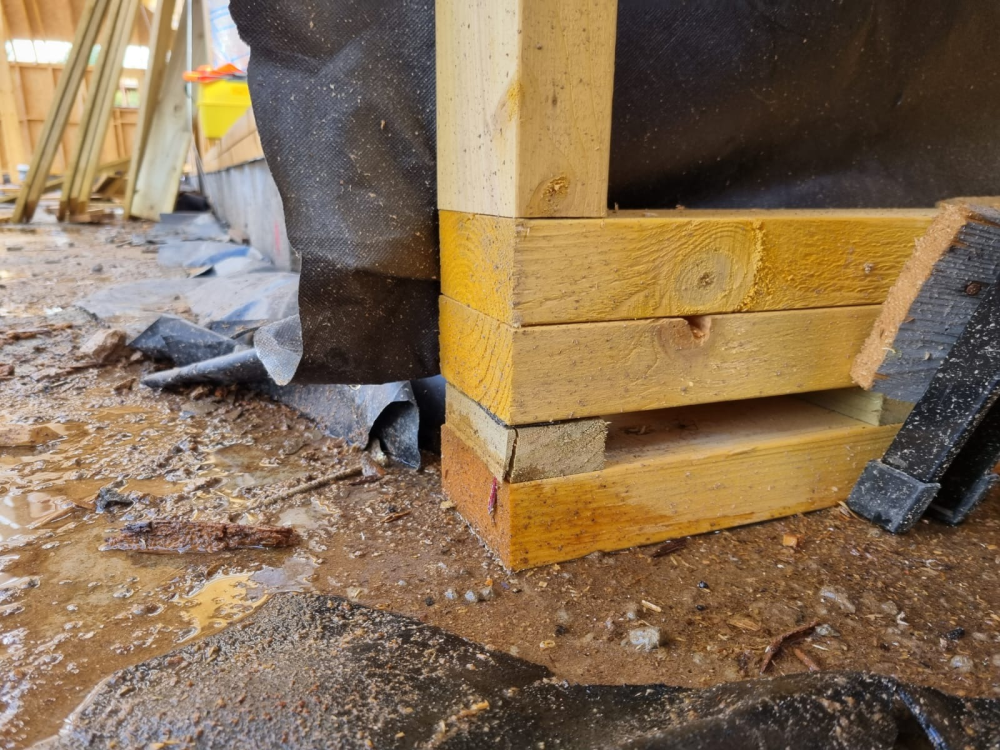
Doing it again I would write the floor construction tolerances on the drawings. NHBC seems to only refer to the final floor level, and not to the subfloor. Obv there are some expectations or it could be +/- 100mm. I come from doing commercial projects and can't believe how poor house building is allowed to be. Then this amount of packing would not be even argued about......'nobody cares about the subfloor level...it doesn't matter' The slab is not thin here, as there is a footing under it. That gap will be filled. Haven't decided whether folding wedges or drypack...or both.
-
Roofer recommendations please?
saveasteading replied to saveasteading's topic in Roofing, Tiling & Slating
Absolutely splendid joiner, but says slating is better by a roofer. Or perhaps locally that is simply the expectation. I guess if I was a good joiner I would pick and choose too, and clambering over the roof and cutting slates is not the pleasantest thing. -
It is time to form the new openings for skylights, I think 8 of them. The joiner is staying on to do the framing, but we need a roofer to prepare, repair some sarking, then fit the skylights and retrim around with the slates. There will also be gutters and some finishings to do. From Inverness or Elgin people are travelling without any quibble. PM if you prefer to avoid it being too public. Thanks.
-
It is time to form the new openings for skylights, I think 8 of them. The joiner is staying on to do the framing, but we need a roofer to prepare, repair some sarking, then fit the skylights and retrim around with the slates. There will also be gutters and some finishings to do. From Inverness or Elgin people are travelling without any quibble. PM if you prefer to avoid it being too public. Thanks.
-
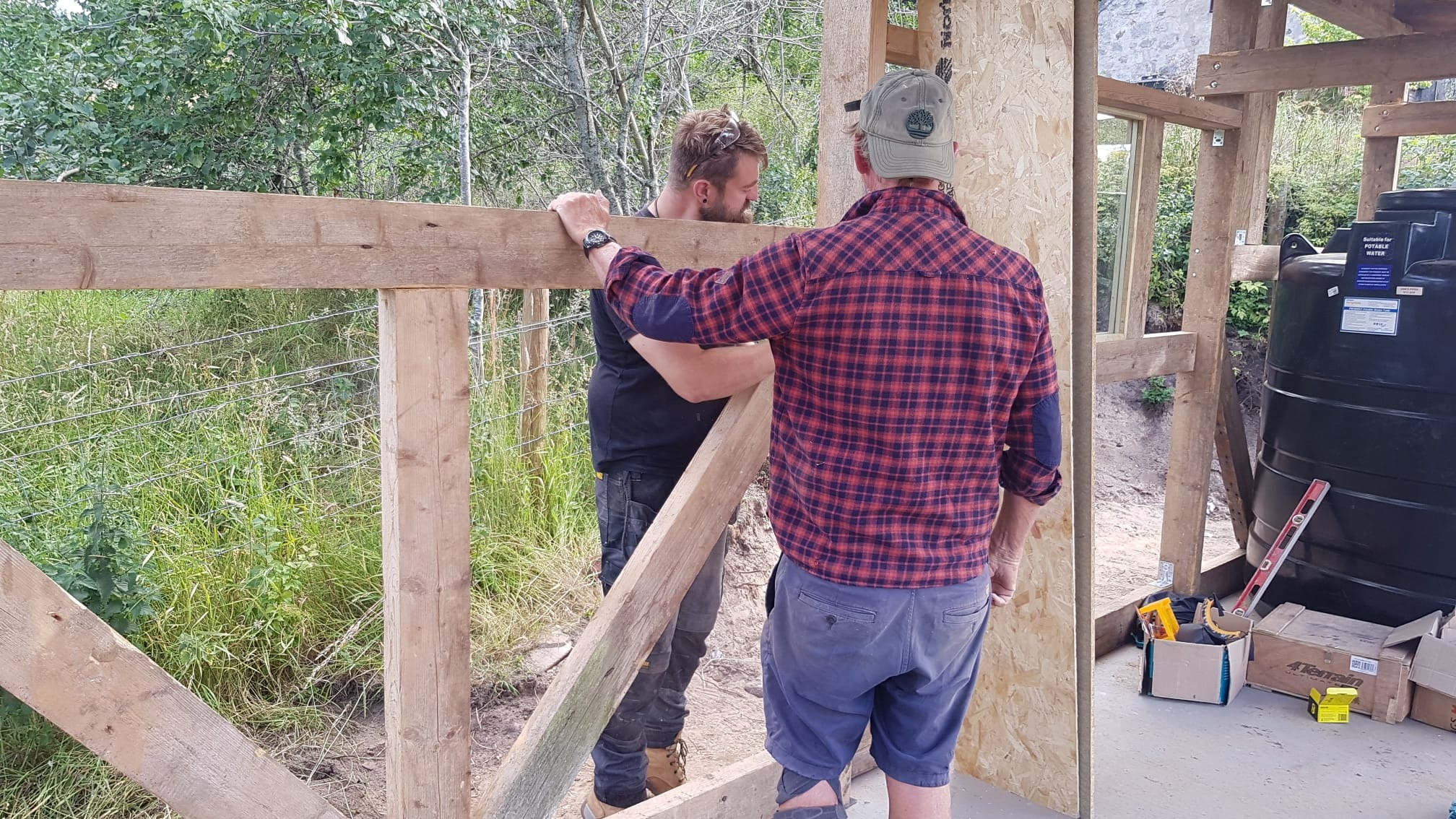
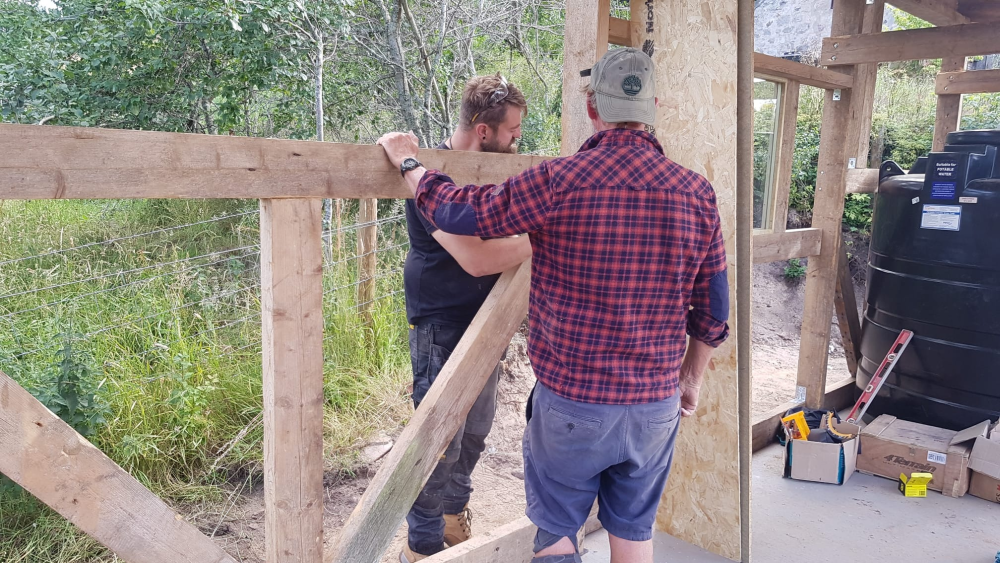
The timbers are all different dimensions, but near enough for a rustic job.
-
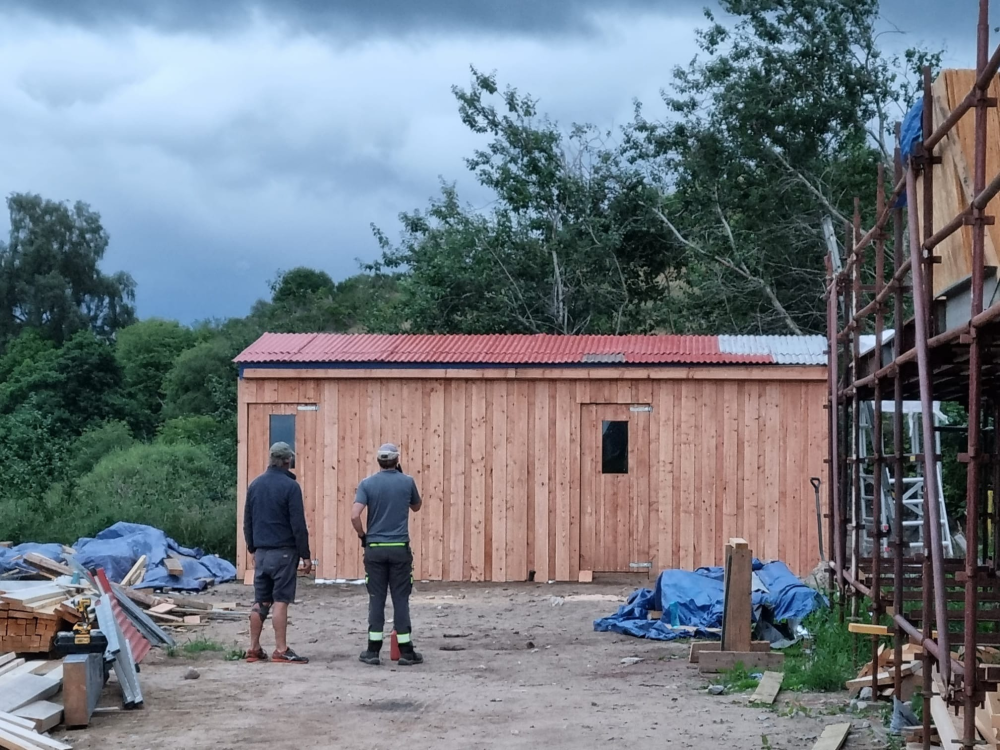
Recycling: We had to demolish 1/4 of the stone building, and rebuild in stick (kit as they call it locally). The stone was crushed by the demo company, using the jaw basket on the excavator. It all went to make the very rough base of the new driveway for future parking/garage. The roof timbers were cut apart and de-nailed. 20% unusable through worm or rot. The rest was trimmed on the table saw to get rid of the surface worm-holes. Then together with galv roofing salvaged from the courtyard roof, this was the result. The cladding was bought locally at a very good price. It will house the water tank, log store and, so they tell me, sauna!