
saveasteading
-
Posts
10890 -
Joined
-
Last visited
-
Days Won
93
Everything posted by saveasteading
-

Appliances for shower room. Better value required.
saveasteading replied to saveasteading's topic in General Plumbing
From a known name or a warehouse only supplier? Am I right that we are looking at 40% difference or so? And that the retail sites perhaps won't break ranks on discounts? -
We should have huge buying power with lots to procure. Our plumber suggests two retailers whose prices are utterly crazy. Perhaps he planned to keep the discount. Tried the usually reliable local bm, but they are going through another party, not big name manufacturers, and the prices are disappointing. We are looking at roca, hansgrohe, etc level which we can schedule. Any suggestions of a good source? To Inverness , but where necessary we can explain that this has roads.
-
Drainage help please...
saveasteading replied to Mulberry View's topic in General Self Build & DIY Discussion
Yes. A roddable bend. 45 degrees better and has standard fittings. Or a chamber. Don't count on it. And hot oil will soon coagulate. Plus the flow can be slow. If the run is short then you can remove the U and get a snake along it. -
14 week lead, then delivered on a hiab but the driver had no ticker for the crane. Another week. The alu ones are supposedly on 6 weeks lead...we will see
-
Drainage help please...
saveasteading replied to Mulberry View's topic in General Self Build & DIY Discussion
I think you need the rodding eye, and thd extra cost or hassle is presumably small. I don't like the red option. Keep the flow simple. It's simple really. Imagine a blockage at each (every) point of the system, and make sure you can rod right through it. -
I don't understand the question. Vitcas is a fire resisting board. Sts is a tile backer. If it is to act as a thermal barrier then insulate the pipes. If a retrofit then the one with foam in it should have more insulation.
-
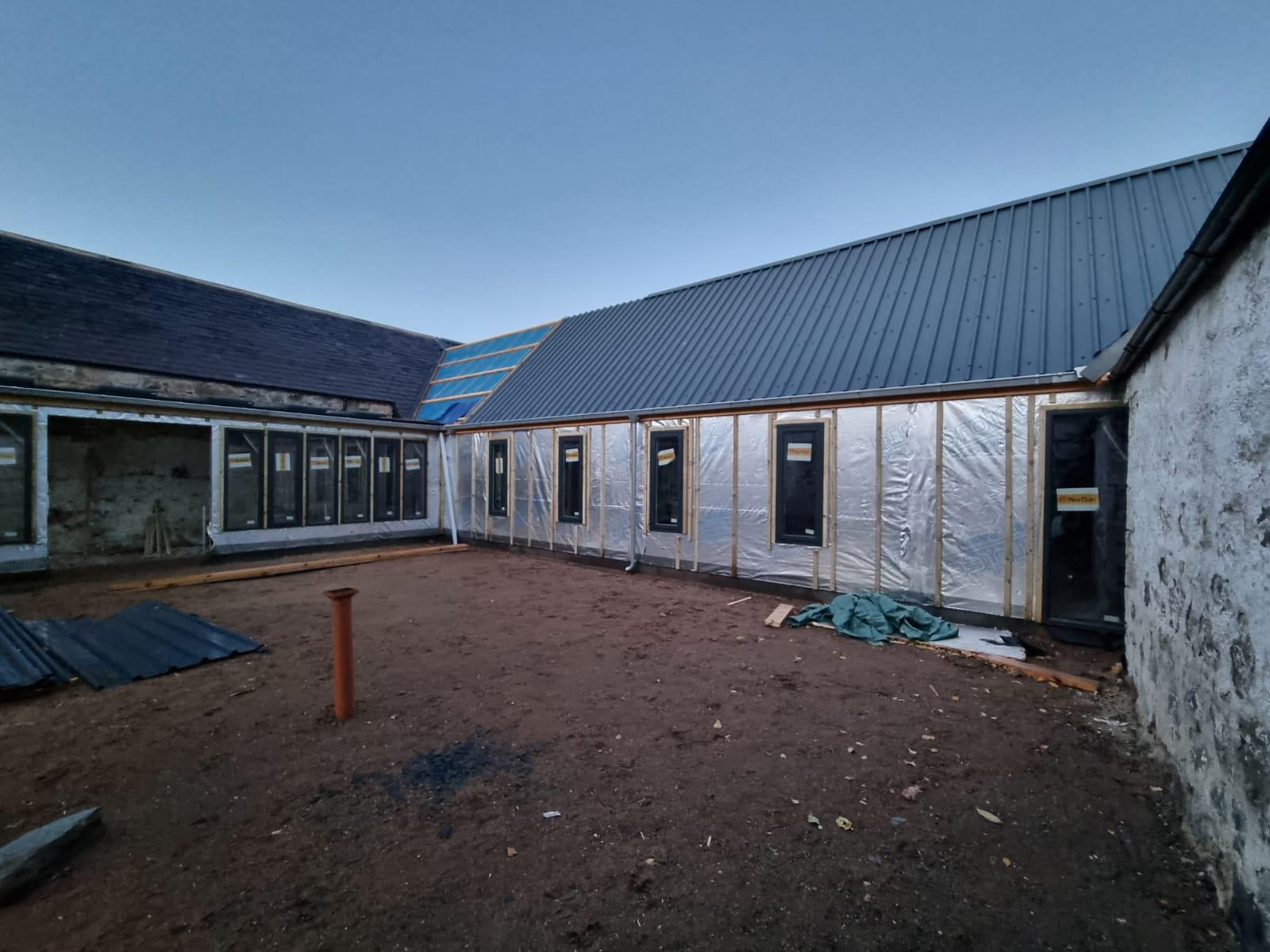
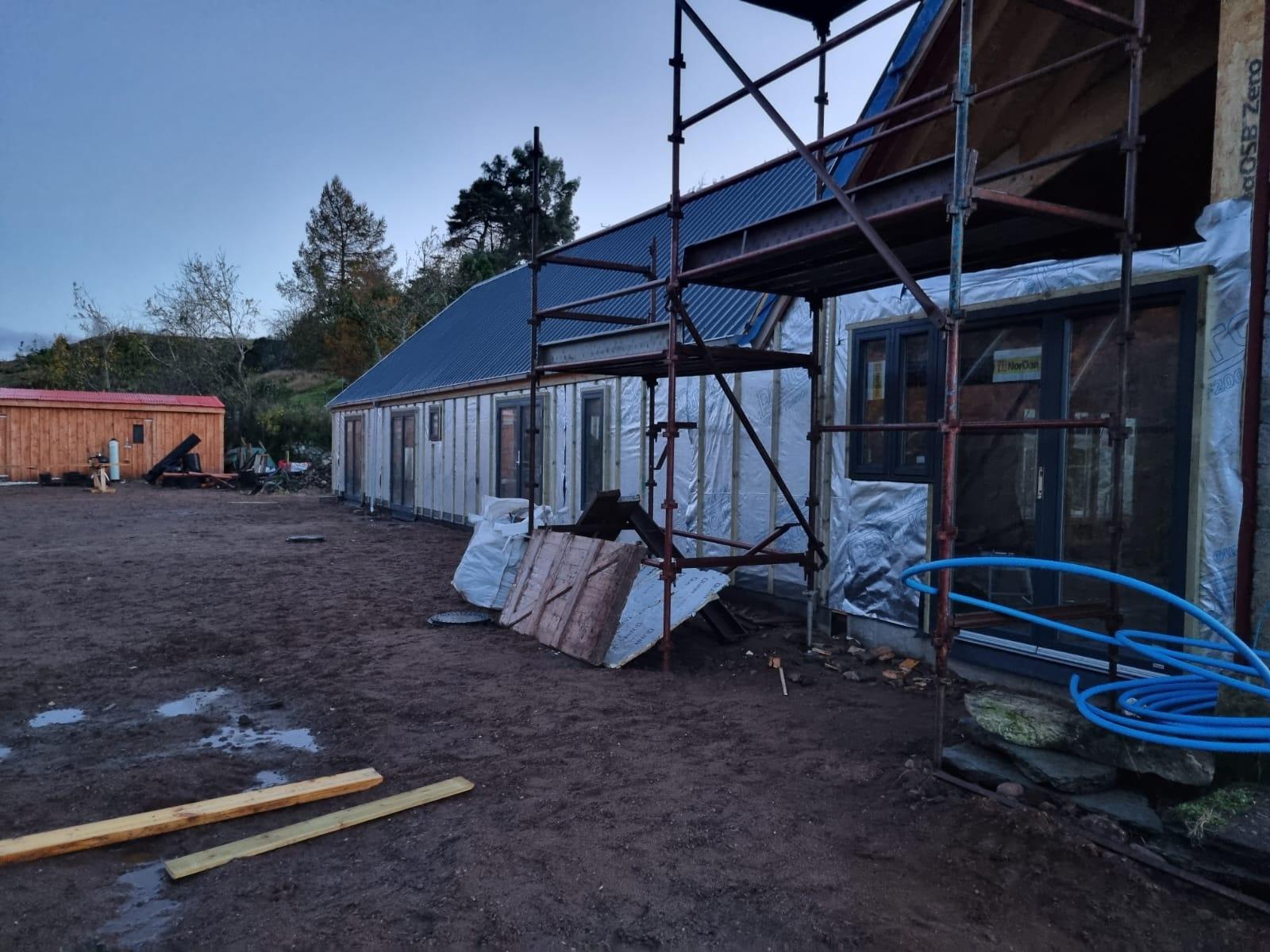
I learn from and enjoy contributors' progress reports. Not everything has to be a problem. So some progress from us. Our first batch of windows went in. The easy ones that are all rectangular and into new build. A lot of units, installed in 1.5 days by our joiner and his 2 employees. A few more doors and windows to come from the same supplier. Timber with aluminium facing. The upper area of the big gable feature, the other complex windows (arches) and anything in the same rooms will be aluminium from a different supplier, who can cope ( we hope) with non-rectangular shapes. BTW, that shed in the background is made of salvaged, reworked timber and corrugated cladding. All DIY and a satisfying project involving much of the family. It will house the water system, log store and perhaps a sauna one day.
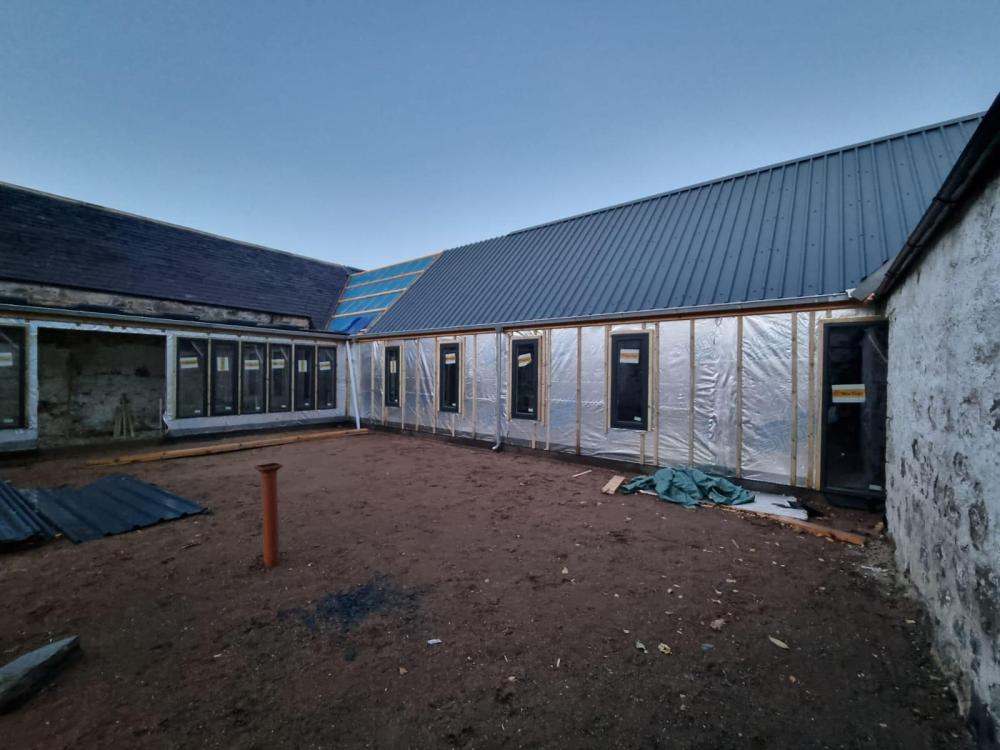
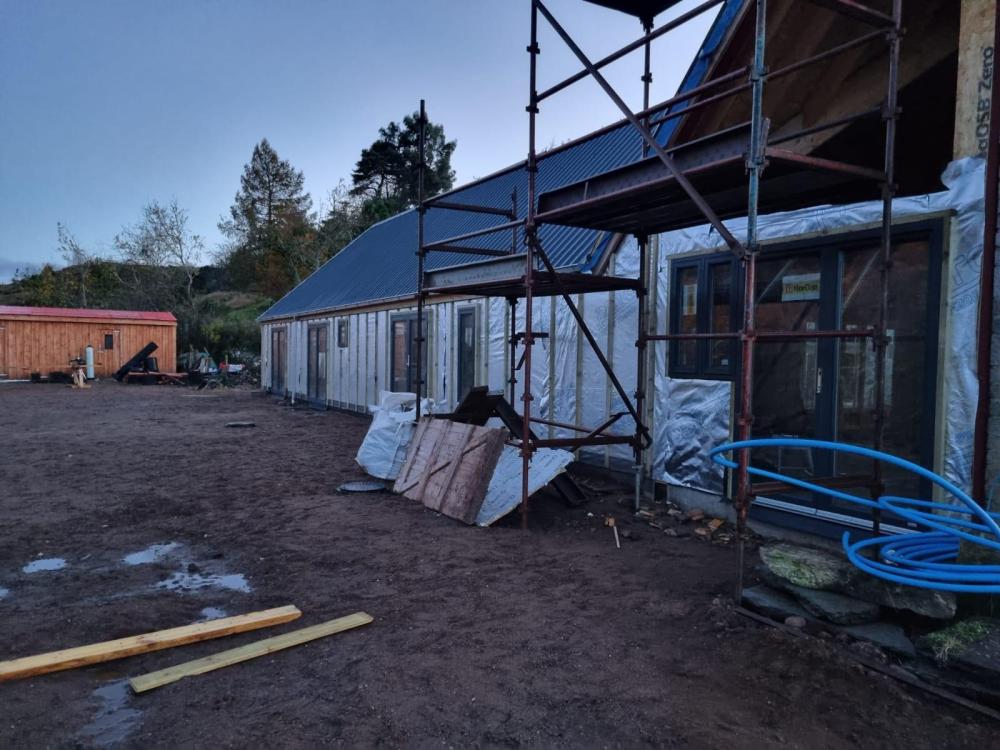
-
Knowledge, quality control and pragmatism. An alloy.
-
A good SE is unlikely to hear of any such allegation, and usually isn't responsible for insulation levels. My business was mostly very big sheds. A slab over 25 x 25 or so doesn't need insulation. The walls and roof do. We had a relationship with a specialist manufacturer who promoted fibreglass throughout. They bought in pir sandwich panels if the client required, BUT insisted on complete movement joints in the roof every 40m. Why, I asked the development Engineer. The gist was that some huge building by someone else had (allegedly) big issues due to shrinkage of the pir within the roof panels. Crazing and crumpling of the roof and leaks apparently ensued. As there was a big legal case and a private settlement, nothing was published, but our people learnt what they could, and decided that they would assume shrinkage and design a sliding joint for roofs. We used sandwich panels a few times, without problems, but never dissected an older building to look for problems. Yes I think it shrinks. We did use pir under the slab for smaller buildings The pir has a plastic sheet over it so it isn't tied to the concrete slab, so there will be gaps rather than crazing. But perhaps the pir behaves differently next to the colder ground. Nobody has any incentive to check. If there are known issues they are not publicised. With this in mind, for our current steading project we used 2 thinner layers of pir, with staggered joints. The heat losses if any, will be minimal.
-
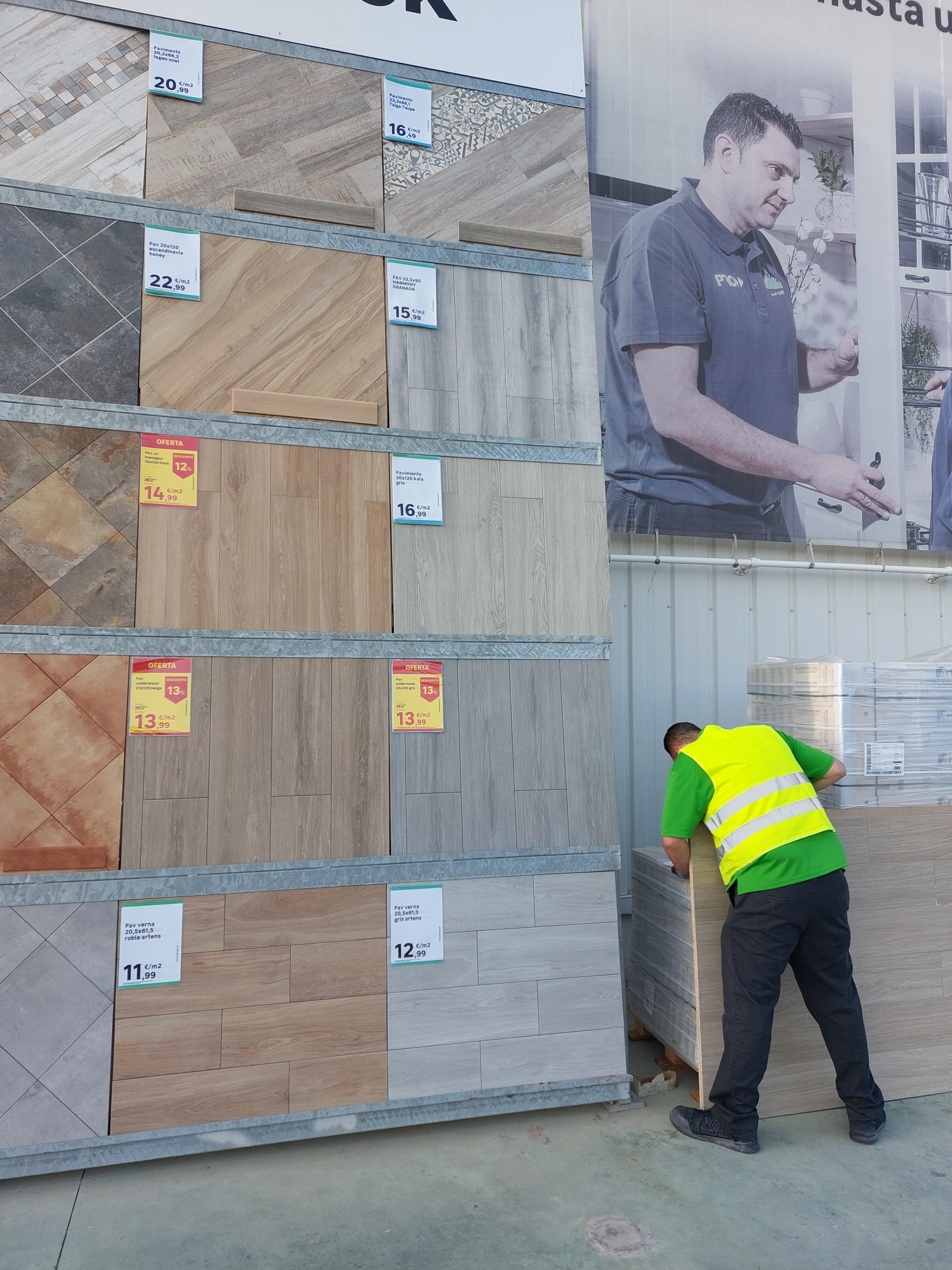
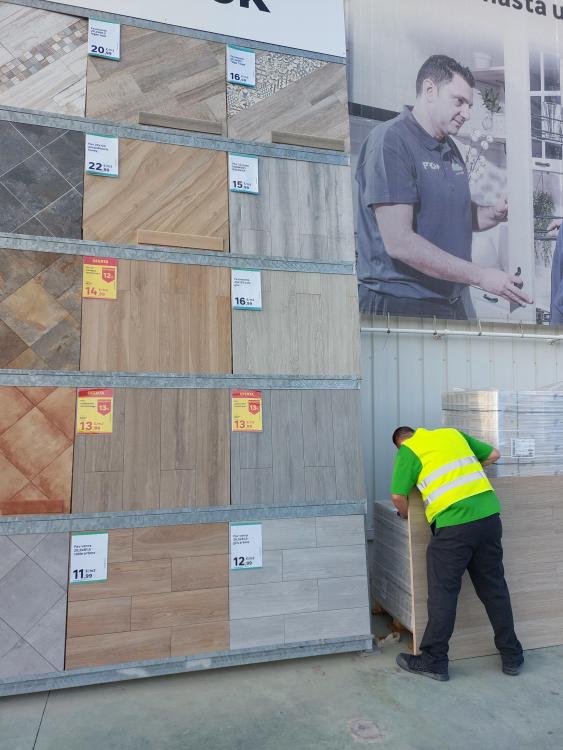
I'm on holiday in Spain and popped into the big DIY to look at tile quality and variety, so as to discuss quality with the family on site. As we looked at one display this man came along and reduced the prices. 12 Euros /m2 for decent tiles. Inside they got more expensive...about E18 average. Exchange rate 1.14. So I'm thinking 60% discount should be easily OK in UK, even allowing for transport of Italian or Spanish tiles, and priced at £50. On the other hand, real timber laminates were silly expensive.
-
This is a skilled job, so your contractor should advise. However they don't always fully understand, so you are right to ask. It depends on concrete thickness and mesh selection. I don't have the book to hand. It will need something between 4 and 6m centres for cuts.
-
Building a Block Workshop - ADVICE NEEDED!
saveasteading replied to stunotch's topic in General Self Build & DIY Discussion
As your picture? That is what I assumed we were talking about, and am OK with if you are careful in backfilling. Not for a house perhaps but fine for a shed. -
Interesting. What machine, and cost? Can you use it at distance eg to see the heat from the whole house?
-
Building a Block Workshop - ADVICE NEEDED!
saveasteading replied to stunotch's topic in General Self Build & DIY Discussion
Flat blocks as the first course isn't going to cost you a lot. Cutting woukd be a chore. Just be careful when filling and compacting against and over them. -
I have contacted the Italian company that makes the MySpace tiles recommended by Russdl. We would have to see a big sample. The suppliers have promptly responded, that suppliers (having told them Inverness) are in Chichester, Bedford and St Albans. They ignored my question on repeat patterns. £40/ m2 is to be found on websites, which is over budget.
-
Looking to Buy a Mini Digger - anyone selling?
saveasteading replied to patp's topic in Tools & Equipment
No, we had a digger with broken tracks, sitting in the way for a month. Nice, reliable guy, so we were soft. I think eventually it went foc. He told me it was going to cost £3k or so to replace the tracks, and it needed hoisting off site. Probably any expert looked at general condition too eg why did the tracks come off? -
Looking to Buy a Mini Digger - anyone selling?
saveasteading replied to patp's topic in Tools & Equipment
Beware. We (in business) used the same small groundworker for many years. He bought oldish excavators (about 5t) rather than hire or lease, and they always developed expensive problems, usually hydraulics, but sometimes tracks. The repairs were often expensive until they ended up scrapped or abandoned on our site. Eventually someone would take it away foc. Presumably repaired on the cheap and sold on...to diy? How to avoid I don't know, without a premium to a dealer. Why is someone selling this digger? I wouldn't know what to look at. For a less hardworked machine on your own plot , I suppose there is a decent chance of getting away with it. -
The underlayer can be the woodpulp board that has rather low insulating properties. But it won't be as conductive as tiles, you are right. Bedrooms only? The ad does go on to say that wellness moments can be in other rooms too.
-
Reducing heat loss through the keyhole of an exterior door
saveasteading replied to november romeo's topic in Heat Insulation
My favourite. Any magnet, but there are umpteen on the fridge uselessly. -
Egger worth a look for the bedrooms and bathrooms ...Any floor that has this, from their website, is worth a try... the latest wood design or stone effects create more wellness moments in your own bathroom,
-
Reducing heat loss through the keyhole of an exterior door
saveasteading replied to november romeo's topic in Heat Insulation
A fire resisting door does not necessarily have to be part of a fire escspe route. This will be to keep the burning car from spreading to the house. Or do you mean that the fire will pass through the keyhole? Not much chance of that going far....in fact it would be a good warning to ...RUNNN. -
But back to thd question...gravel underneath is a good compromise as something to lay the tank onto, to a prepared level and that will spread the load. We were precise about getting the tank level. The digger driver said he had never seen anyone bother to get one level. Also that he had lifted in many tanks and had never seen a concrete base....we used gravel.
-
When the tank is under the water table, presumably so is the soakaway and the feeding drainage system. Do the pipes just slowly release treated water due to the surcharge of your drains?
-
critique my Pent shed / wood store design please
saveasteading replied to Adsibob's topic in Garages & Workshops
Type 1 is designed to be like solid stone when compacted, a recipe of large to small stones that pack solid. It will barely go into the grid. For the wood you need single size stones, with gaps, to drain. Under a shed anything will do. Type 1 is best but ott. For 50mm over 11m2 I would buy a thumper for £20, but it won't compact gravel unless you blind it with sand. Only cutting corners to save you money, do it with thick Type 1 if you want. -
critique my Pent shed / wood store design please
saveasteading replied to Adsibob's topic in Garages & Workshops
The plastic grids need small gravel infill, so why not use that for the base too? 11m2 x (50+40). 1m3. Two bags. Get angular gravel preferably, ie not pea gravel. A layer of membrane too, to keep the weeds out...there are small rolls available. Subdividing is good. It reduces the outward loads, and allows you to separate big and small, or old and new. The gravel will allow rain to drain but will clog with woody bits. Another layer of membane? Most rain is close to vertical so a roof but no sides for me. Instead of plastic grid i used halfed pallets for a raised base, and the other halves for the roof.