
saveasteading
-
Posts
10890 -
Joined
-
Last visited
-
Days Won
93
Everything posted by saveasteading
-
 Metal cladding has been big in my career, but I wouldn't have it on my house walls. Untidy around windows and a bit too industrial. On roof yes. In fact I have done loads of buildings with metal walls and overclad in timber, usually stained. Probably not on my house though.
 -
Yes this is normal. You have to compact it as you go (150mm layers) and yet not knock over the walls. Best to use crushed hard-core for density and to avoid voids. Then for the top layer a better quality with more fine stuff. Then probably a sand blinding for level control. Slab into smaller areas? Do you mean crack control?
-
When you can’t find a tape measure and then …
saveasteading replied to Pocster's topic in General Self Build & DIY Discussion
If you have only one tape, any errors are proportional and you may never know there is inaccuracy. Stanley 30m tape measured 30.1 on a Silverline. Could have been very expensive. So needed a 3rd tape to check. TS agreed that I bin theirs. I thus learnt that there are 3 rated levels of accuracy, and then silverline tapes. -
When you can’t find a tape measure and then …
saveasteading replied to Pocster's topic in General Self Build & DIY Discussion
i need of my missing bit holders. 'Borrowed' by dry-liners. -
Amazing things, so small yet accurate and tiny power use.
-
What building regs apply to a wooden garage,?
saveasteading replied to joe90's topic in Garages & Workshops
This is a really good point. It seems to me that timber treatment is much more superficial than it used to be, with very little reacing the insides. Even fully treated timber does rot though. I have experidnce of 4 timber buildimgs with 4 solutions. 1. My garden shed sits on timber bearers on concrete and is ok after 15 years. Crucial is that the shed overhangs so most water tuns away. 2. Current conversion. The timber bearers are on dpc on blockwork, and the cladding sheds rain to ground. 3. A 3 storey building. The timber frame company did not accept brick but required a concrete upstand. We used concrete lintels, which apparently was a first, but they were happy. But then had brick skin. 4. Ditto but a concrete slab up to dpc level. Sole plates straight onto it, brick outside again. Only no 1. Really applies to this garage which is really a shed. The wall slats appear to sit on the base, and be susceptible to wetting. Therefore i think a raised edge in masonry or concrete is called for. That will leave a gap under the doors, but a concrete hump would be a good thing anyway to keep water out. My other concern is that t snd g doesn't stack well. The slightest twist in one plank leaves gaps everywhere else. -
The priority should be to prevent pollution especially of the aquifer. If you design for that you will get permission. Secondly actually do it right and you won't kill people or get fined. Finding a stream would have been a bonus, but it looks like you need this designed appropriately with a professional document to prove it.
-
Are these costs realistic for a 500m2 house
saveasteading replied to miike's topic in General Self Build & DIY Discussion
It will either go on the selling price or come off the land price. The latter won't suit the landed classes, so I don't expect the tax to last long, or they will just slow down the building til persuaded to speed up. Yes, 25% net is what they make as developers. Huge and unjustifiable profit levels. Contractors make more like 2 to 5%. -
It is ok to struggle with geometry. Rather than rely on software, which still needs understanding of the principles involved, can't you ask a friend to help you with this stage?
-
The easiest way is to make one triangle using Pythagoras. If you have 2 tapes it is even easier as the third corner is where the 2 distances coincide. The corner is automatically square. Once that triangle is made, you have 2 fixed corners and a fixed diagonal distance. Then measure the other triangle to complete the rectangle. In your case length 5800, width 4898 and diagonal 7539.
-
....whatever excuse they can think of. It probably works most of the time.
-
Are these costs realistic for a 500m2 house
saveasteading replied to miike's topic in General Self Build & DIY Discussion
From my limited experience, second hand information really, purchasers of very, very expensive houses often replace perfectly good, even ultra-expensive, upmarket kitchens immediately. I suppose there has still to be some minimum standard to demonstrate what is possible. I heard that there is a decent market for such second-hand kitchens, if the fitters have time to dismantle rather than rip out. But the time is usually limited, no excuses for delay tolerated....and fees ultra high to suit. -
Thus, slinky pipes underground are near the surface. The ground warms and stores heat in summer, but loses it in winter. Hence the newish acceptance of force heating the ground, using solar panels, in summer. Power therefore needed all year.
-
Correct. If the ground was porous sand/gravel with a flow of groundwater then the cooled water would be replaced by warmer. In heavy clay or rock there is no significant replenishment and it gets cold then freezes.
-
But that might be enough for the bco to say 'prove it'. Bear in mind that a ditch is not necessarily a water-course and, if it is, it might be the wrong direction.
-
-
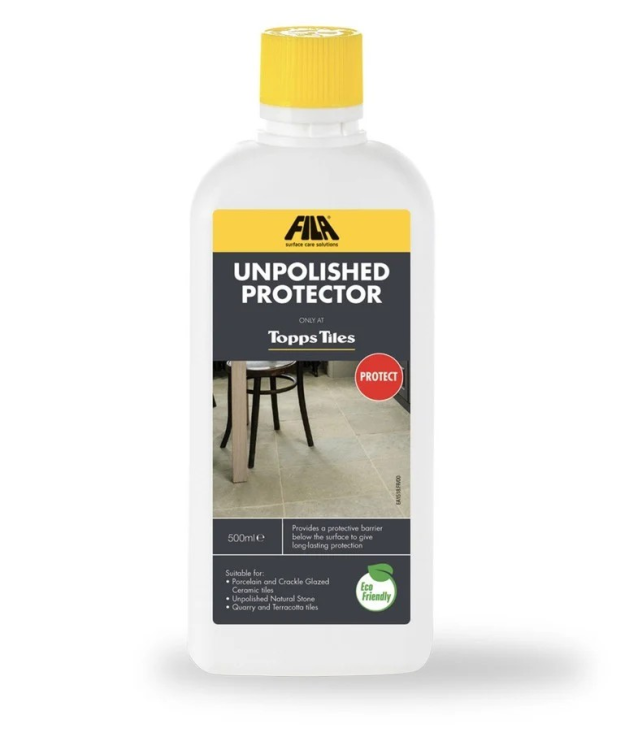
One of the great things about this site is saying nothing if we can't contribute. At least you know you aren't missing anything you could have done knowing. Bu here goes..Stone tiles for bathrooms get treated with a special liquid. Is it right for you? I don't know.
-
Where do you park the car? If you can still park in the grounds, not on the street, it is likely to be OK.
-
What building regs apply to a wooden garage,?
saveasteading replied to joe90's topic in Garages & Workshops
I meant has anyone used or inspected the structures from Quick Garden, as mentioned above. -
What building regs apply to a wooden garage,?
saveasteading replied to joe90's topic in Garages & Workshops
I went to their Kent depot to look at examples, but they have closed it and it is now a distribution centre only. They seemed very surprised that i wanted to inspect, and said it is now online only. That concerns me considerably. There was one shed, the gatehouse. Seemed ok, but not as thick timbers as I recalled the spec, and being 10 years old, is that good or too long ago to be relevsnt? I wonder if anyone on here has used/seen the latvian make. -
Which drill bit type for steel beam?
saveasteading replied to BotusBuild's topic in Tools & Equipment
There can be a huge difference in bit quality. It is well worth paying for big brands. -
Are these costs realistic for a 500m2 house
saveasteading replied to miike's topic in General Self Build & DIY Discussion
If I was to design a house for the lowest cost per m2 but a durable quality then there are a few basic principles. 1. If land is at a premium, then do what the bulk housing market does. Timber box to a standard, proven design, with brick skin and tiled roof, or poss metal roof (not standing seam). Small rooms are a feature as they are economical on materials, both structurally and in outer surfaces. No pretend chimneys. 2. Or, if plenty of land, one big rectangle in steel frame, divided by partitions. Metal roof and walls. Not standing seam Walls over-clad to taste and budget. 3. In both cases the chunky rectangle is key. Note that in 2. we not only save the stair cost but gain twice that floor area, and need no fire escape. The downside is the added external area. These will balance out. Rooms can be as big as required with savings rather than penalties. For 1. I would approach the frame suppliers and ask for a proven design, so there are no design or setup costs. In summary. 1, for a small or conventional house. 2. For larger with bigger rooms. -
Carpet over UFH. is it special stuff?
saveasteading replied to saveasteading's topic in General Flooring
I have done some research. Basically underlay has tog of about 3.0, but the special stuff is 0.7, so much more heat comes through. Avoid foam-backed carpet, or wool. Carpetrght have their own name for this special underlay and sell it at £13/m2. it is called Duralay elsewhere and the cheapest I have found is £9/m2. Delivery to the Highlands is stupid extra money as often. (£70 for the last 50 miles from the notional barrier to transport). I think free with Amazon, much as I'd rather not use them. -
We have a downstairs bedroom to carpet. Suddenly the Carpet-right quote of £28/m2, laid, incl underlay, becomes £50/m2. We do appreciate that an insulating layer over the heated screed isn't the cleverest thing. There appears to be specialist underlay that is less insulating then the norm, at £9/m2. Also special carpet, and the laying is now extra. Any comments at all please? There is also the flooring industry try-on of quoting for gripper /m rather than in total.
-
Correct. I think it is because the work is unpleasant, so an under-resourced market. And then it is buried and forgotten. Not just sloppy, unfortunately, as I have had 'specialists' attempt to con extras for unnecessary work. 'Tut, tut, big problems here mate but we can sort it.'