saveasteading
-
Posts
10890 -
Joined
-
Last visited
-
Days Won
93
Everything posted by saveasteading
-
You are right of course. This is what they do and they know their costs. They also appear to know that they can put up their prices and still get the work. I was meaning pricing a project generally, esp not knowing who will build it. If all contractors quoted the same price then we wouldn't need to get more than one quote. The industry seems to think that large scale housing projects will slow down dramatically in May/ June as housing developers complete projects but don't start much new. Whether that capacity will feed through quickly to reduced cost nobody knows.
-
Fixing into plasterboard
saveasteading replied to Temp's topic in General Self Build & DIY Discussion
I agree with Radian. We once had multiple toilet cubicles to be fitted by the manufacturer, and they were clearly wary of the wall fixing efficacy. You would think they would have a preferred solution. After research we supplied these expanding fixings with rivet gun. It worked really well. Fitted impressed and no follow-up issues after years in a school. Without the gun these fixings are a pain. -
Galvanised is safest but expensive. Painting on site with the right, specialist paint is fine, as long as it is properly done (esp the bits which can't be seen) (which usually means you do it yourself or watch full time). £50 / tin of Ruberoid etc. Plus labour of course. Galvanising a beam specially....I'm guessing £200+ plus transport each way. Likely to be a long and heavy beam, so maybe much more.
-
Basic building regs question...
saveasteading replied to Beanyboy2802's topic in New House & Self Build Design
Floor joists must sit on structural walls, so yes, some internal walls will be structural, with footings. There is nothing magic about 6m, but it is the standard maximum for timbers at a merchant. Longer is special. But at 6m clear span joists get very deep, so you are getting into intermediate steel beam territory, or fabricated (and deep) joists. -
Looked it up online. So much history, not all nice. Vikings, fossils, salmon, golf, gold, clearances.
-
I think it is now permitted development to have a caravan throughout the works. Ours came from GNR Sutherland too. If you have good access (we didn't), the ex holiday park 'caravans' can be good value, esp if you don't mind the first job being to do it up, as they have been very well used. But watch the £1,000 transport each way. And perhaps more difficult to resell.
-
It is pretty impossible to provide a realistic cost. Our joiner got a qs to cost his work, and I thought it was high. I analysed it and found 10% added to all quantities. Then extras which the joiner agreed he didn't need, and some doubling up. So the agreed price was 30% less and I think the joiner did OK. But that 30% could have been needed in different circumstances. Also as I have explained elsewhere, there are multiple oncosts when using a main contractor and project managers. It depends an awful lot on your own ability to manage and question, as well as DIY.
-
East of Inverness us. Currently tiling. Heating went on last week. Looking forward to hearing your progress and helping if poss. Btw, the caravan will be redundant shortly.
-
Yes it looks great. Thanks for the link. From a quick flick through it has lots of good info. Not enough perhaps about clever detailing as the current question, or showing natural fading when it turns out scabby. Lots of photos of beautiful work, in its newly built state. Fully coloured, no weathering and no shrinkage or warping.
-
decent metal drill bit recommendations?
saveasteading replied to markharro's topic in Tools & Equipment
3/4 is very thick. Has to be a mag drill. It will take 5 minutes cutting. It is safer too as you are not pushing into the steel and risking losing balance. See if you can get a deal for half a day. Aim for half the listed hire price. Or get the rental of the bit thrown in. -
decent metal drill bit recommendations?
saveasteading replied to markharro's topic in Tools & Equipment
The only own-brand or barely known names i would buy would be for a contractor who forgot to bring any bits, esp for concrete, but i get some to keep him on site. I won't be seeing them again, and don't care. A known top brand will be many times quicker and end up cheaper. Won't wear out the drill or arm either. No comment on Milwaukee so i look forward to a report, but the likes of Erbauer have been pretty good so far. -
The science behind sewage treatment plants
saveasteading replied to Crunchynut's topic in Waste & Sewerage
There is a formula. An assumption is made for a domestic digester, for the balance of poo, wee and water. Out of balance creates inefficiency. From experience, for a sports hall there is barely any toilet use, but lots of theoretical showers. They are barely used but could be. Meanwhile the next door classroom block has toilets but no showers or other plain water. Each on their own need bigger units or they don't work properly. We combined them and it works fine. Bleach kills the bacteria and I guess dishwashers are bad for that. (Did you know that airports have exceptional poo content in the morning? Needs high stall proportion in the mens' toilets.) I don't think anyone has mentioned the chicane of pipes and wiers between sections, to allow only the grey, and clearing, liquid through. -
Fire barrier tape for timber cladding cavity
saveasteading replied to markharro's topic in General Joinery
Ie only when fire is close and hot enough to start the expansion. If the gap is already closed, the fire is less likely to go that route. -
Boundry partwall issue
saveasteading replied to virat bhavsar's topic in House Extensions & Conservatories
There is often the remains of a fence within a hedge. Or look at the ends for signs of previous connections -
Fire barrier tape for timber cladding cavity
saveasteading replied to markharro's topic in General Joinery
As etc shows, there is no intumescent material stated in this indicative list. It is only required in circumstances where a gap is required (round a door or to close a gap, usually ventilation) or for paint. It is easy to spec intumescent, and there is a bit more certainty that the cavity will be closed. But the priority in fire protection is stopping spread, and a fully closed cavity is better at that, when appropriate. -
Great Crested Newts -District Level Licensing
saveasteading replied to Furnace's topic in Planning Permission
Yes you wonder how rude you dare to be. I bet you wish this hedge had died mysteriously last year. There has to be another way that it would be ridiculous to argue against. I don't think there is any 'closed shop' so try the competition. Just a phone call, and nothing to lose. -
Size of hole for wood burner flue exiting a wall
saveasteading replied to Ralph's topic in Stoves, Fires & Fireplaces
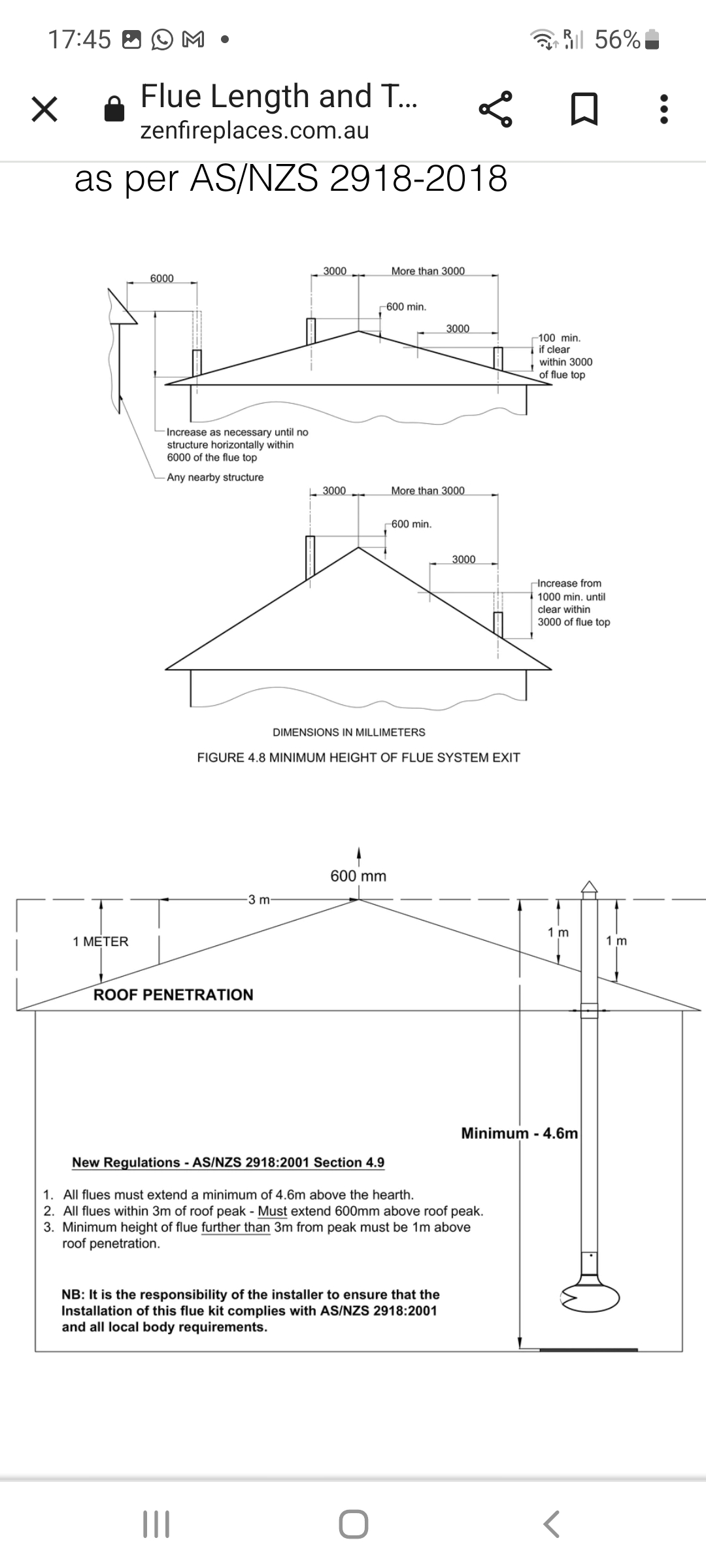
Great pic. Have you checked the height rules? I'm not saying this attachment is correct but I found it quickly.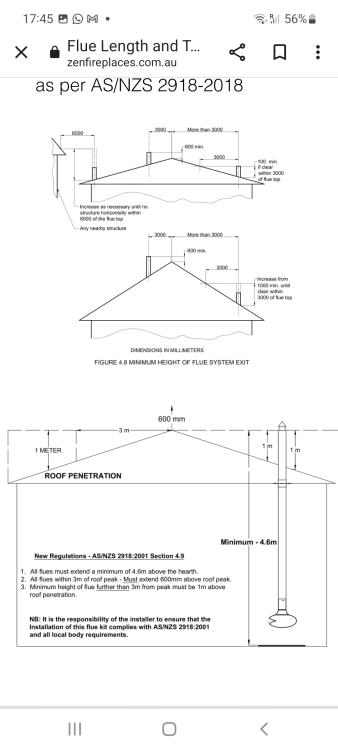
-
You may not need special 'socks'. Rockwool can be cut and then folded or rolled tightly and squeezed into gaps. Thus it is much cheaper and always fits. If you use the cavity type it is also dampproof.
-
Great Crested Newts -District Level Licensing
saveasteading replied to Furnace's topic in Planning Permission
If you don't mind me saying, I think your letter needs a statement of your complaint at the start. Unreasonable, disproportionate, and pointless because no newts will be protected. Then how you already made a pond, which is more than recompense. (It's a shame your newts didn't have names.) And that this is 11m of an x m hedge. You now offer a.....newtorium or whatever, which will help newts in your area whereas cash is of no use to them, but nice for consultants. And what you want is..y Would I be right in suspecting that your planning agent suggested these consultants? Could be too close. Tried a chat with the ones I suggested in the pm? -
Our local bm beat everyone else, plus they held them in stock til we could take them, then delivered.
-
Any truth to ASHP problems based on location?
saveasteading replied to Shaun McD's topic in Air Source Heat Pumps (ASHP)
Metal cladding needs plastisol with double thickness and the cuts treated. Other coatings can be OK if exposed to rain. You can see the difference where a wall is protected from rain by an overhang. Moral: everything near the sea gets salty but it washes off. But it is easy to specify to not be affected. I bought a b and q satellite dish. 10 miles inland it rusted and fell apart in 2 years. -
Size of hole for wood burner flue exiting a wall
saveasteading replied to Ralph's topic in Stoves, Fires & Fireplaces
Flues don't necessarily look bad. After all, new houses even put fibreglass dummy chimneys on because people expect to see them. Do children still draw a chimney on a house because that is 'normal'? -
Size of hole for wood burner flue exiting a wall
saveasteading replied to Ralph's topic in Stoves, Fires & Fireplaces
That's the problem with standing seam. No penetrations then someone cuts a big hole in it that is impossible to flash efficiently. Can you get the outlet near the ridge. That will reduce the leakage risk and not need stays. PD Is right about the stays, and they have to be solid, not cables, in your situation. If you do cut through the wall you can cut 2 x elliptical holes. Sums required for size and positions. -
Sounds like you have it. Plastic skin inside the insulation, so that humid air does not get from a room into the insulation. Breathable outside it, to let any humidity escape.
-
Fire barrier tape for timber cladding cavity
saveasteading replied to markharro's topic in General Joinery
I have seen it overspecified. If there is no need for through ventilation, then a solid barrier is OK. That can even be wood, as it is to stop spread of flame. Likewise any vertical closures don't have to be fancy. The cost can also be reduced by partial filling of a cavity with something else, then a thinner cheaper intumescent product. You might have to convince your architect and the bco. Go back to the basic rule in the building regs. Indoors, roll up rockwool for vertical closures.