
saveasteading
-
Posts
10643 -
Joined
-
Last visited
-
Days Won
90
Everything posted by saveasteading
-
 You could try simply telling them that sort of thing. Theyve given you the headings, so you could address each in turn, giving them something to tick. Any real numbers would be good. Your council may well have published some of their aims. One such might be called the drainage hierarchy... so if your rainwater is going elsewhere than drains or ditches, or being slowed, then you tell them what you are doing.
 -
I say I'm questionning. Others may say cynical. At a self righteous presentation by one of the very big contractors, we were being told we must all be zero waste, like them. I dared ask what happens to stuff that can't be reused or recycled . After much waffle, eventually I got an admission that what they really mean is that they don't have any waste among what can be recycled. The rest is recategorised and omitted from analysis. Cabin rubbish is not construction waste. Mastic tubes and old tarpaulins can be burnt for energy. Someone takes it away and gives them a receipt stating its going to be cared for. They didn't mind declaring zero waste, and their clients accepted that. That company will equally have standard answers about other aspects of sustainability. The planners don't have resources to challenge it.
-
I actually agree that the planners require this, as at least it makes people think. The problem might be that planners are not technical people and don't necessarily understand the difference between the green-wash they are subjected to, and reality. So I agree that you try to find a previous successful write-up and adapt if to your circumstances. I'm especially pleased re water use. That is a big issue that is mostly being ignored but is sortable. Add sustainable drainage if that applies.
-
2 x 100m or 1 x 200m borehole
saveasteading replied to ronaldgibbons's topic in Ground Source Heat Pumps (GSHP)
Time for a chat with your architect I think. You need them to accept what you have established, or prove otherwise. Also for a clear understanding that you want expertise, not bad info from sales pitches they have heard. That applies to the rest of the project too, for example insulation and airtightness. Looking forward to hearing of your progress. -
2 x 100m or 1 x 200m borehole
saveasteading replied to ronaldgibbons's topic in Ground Source Heat Pumps (GSHP)
Ask them to guarantee the performance. Ie who pays to replace it if it doesn't work properly? The ambient temperature of the rock drops as the heat is drawn from it. At some stage it may freeze, and then your system reverses to thaw it. Hence they need 200m, which will cost you many tens of thousands. We aren't telling you what you want to hear, i know. The great thing about buildhub is that most people stay quiet if they don't know about a subject. But between us we are more likely to know than are most architects. I'd love to know what your advisers are saying about air source not being suitable. Get comparitive quotes for air source. -
2 x 100m or 1 x 200m borehole
saveasteading replied to ronaldgibbons's topic in Ground Source Heat Pumps (GSHP)
They don't normally work properly at all. Is the rock hot? Otherwise you are taking heat out of the rock, but it can't replace it quickly and you run out of energy. Near me, a development with 12 borehole systems 90m into clay has had at least 4 replaced by air source, because they weren't working. All agreements to replace were private, so there may be more. There used to be a lot of cowboys in ground source. Most have gone, and so those left are perhaps giving you great advice. Anybody near you with GSHP so you ca see how well it works? what guarantees will you get? what happens if it doesn't work well Trench type is actually air source. The ground warms in the summer from the sun and air, and stores it for winter. you only need 1m or so. A borehole needs the heat to be replenished from hot rock, or from water flowing past, eg in sand or fissured rock. That's what we'd expect. For a 200m2 house you'd probably pay about £10,000 for the ashp and internal gubbins (excluding the plumbing around the house which applies to any system). I'm guessing the gshp will be many times that cost. ??? there is no limit to the energy available in the air. Unless you are in the arctic Id expect air source to be a better bet. -
Basement redesign: Issue with structural engineer
saveasteading replied to JGR's topic in Building Regulations
I realise I wasn't clear. I mean write now with a brief statement of your position and why withholding. Also write a draft of your whole argument. Who instructed who and why and then the process. That is an exercise to clarify your own thoughts and strength of argument. -
Basement redesign: Issue with structural engineer
saveasteading replied to JGR's topic in Building Regulations
To which add legal costs, another SE for the continuation of the project and dealing with bco. I'm not saying just to pay it, because I don't know the circumstances. But you must write to say what your complaint is and why you blame them. If you are right, a boss may step in to resolve it. Writing that letter will clarify your argument....it's basically what you might end up reading to a court. -
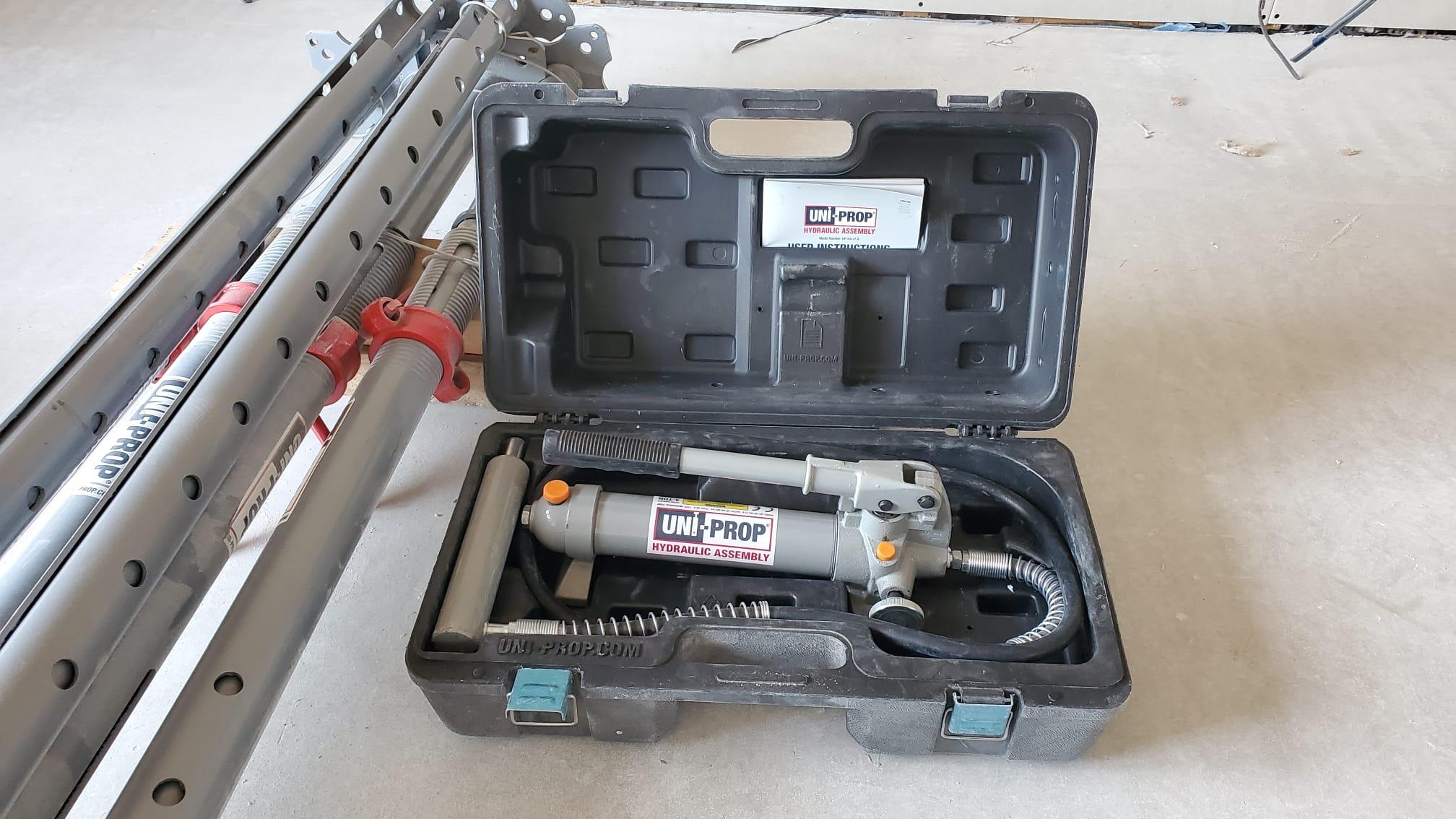
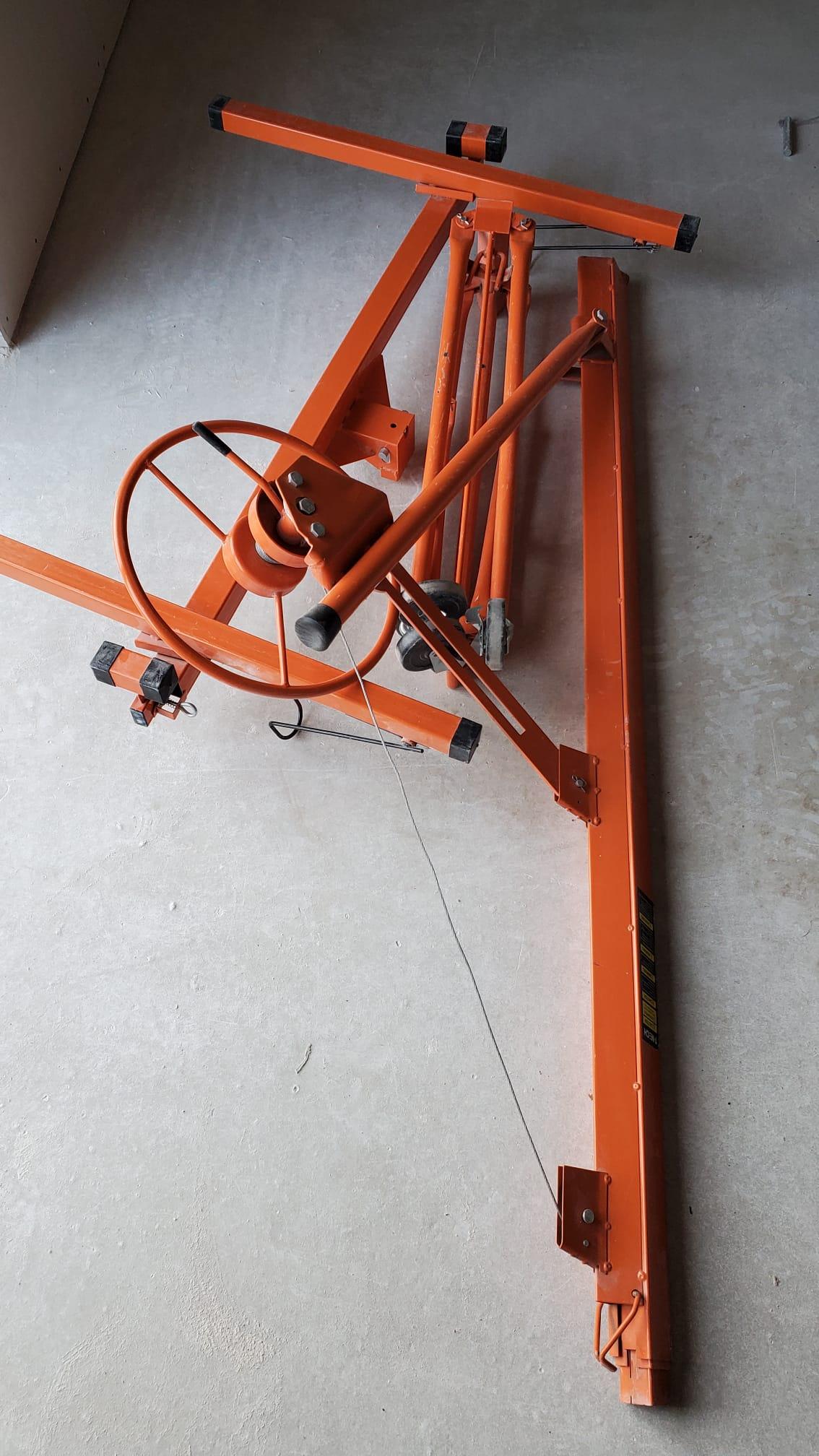
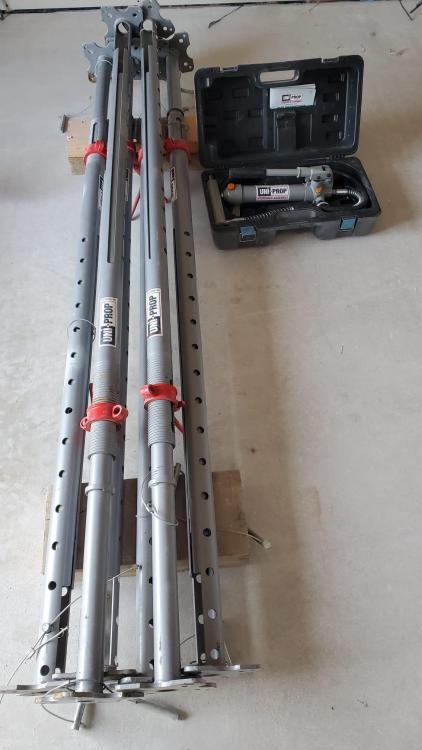
We ate now done with the heavy work and have some gently used equipment for sale. 1. These structural jacking posts are vastly superior to acrow props. They have a hydraulic jack so can be used gently and precisely to support or even lift joists etc. No more bashing the screw with a hammer. Equally importantly they release gently. They were barely used as I instructed their pirchase to support a very dodgy area of the old building, but we knocked it down instead. Very suitable for self builders. I would not have bought them for a commercial project as they would have disappeared. 2. Plasterboard hoist. For lifting and holding plasterboard up to 16ft, into place until fixed. Can deliver between Inverness and Gloucester A9 and M6 / M5 when passing in a couple of weeks.
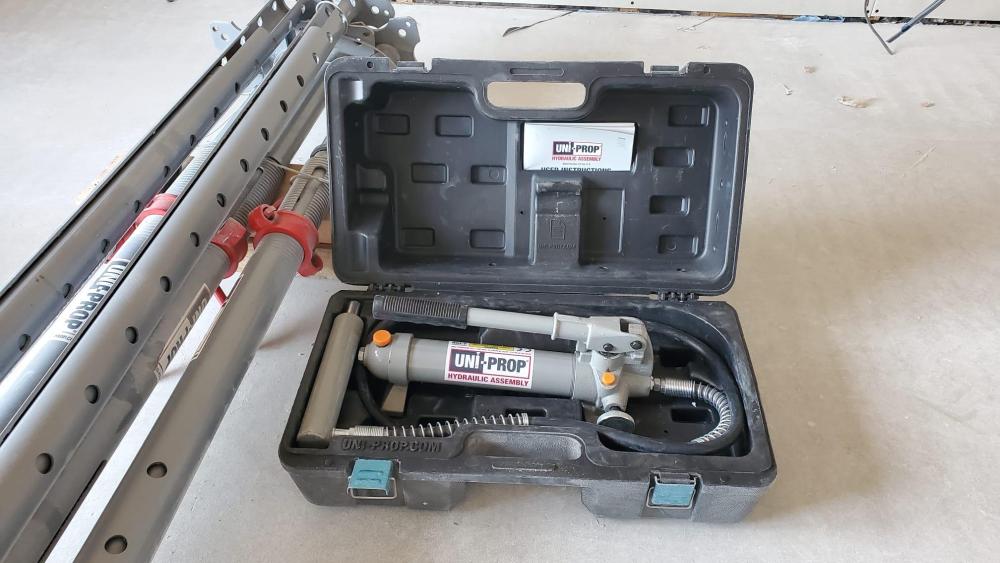
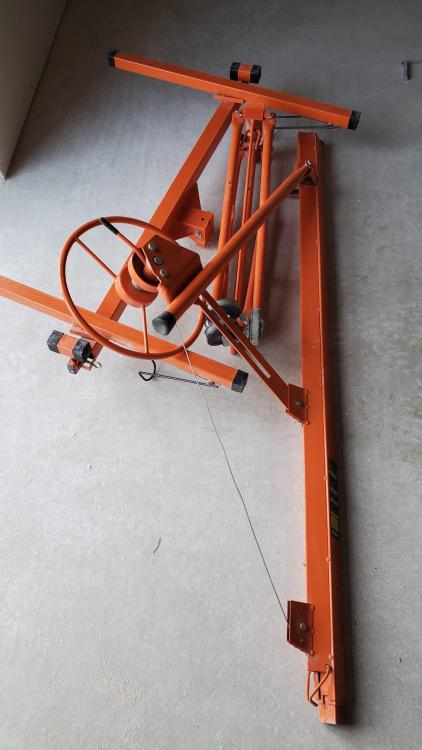
-
Basement redesign: Issue with structural engineer
saveasteading replied to JGR's topic in Building Regulations
You can't ignore it. At the very least you must write and say that you are not happy and why. It sounds as if they have done what was required. The issue seems to be who is managing the process and who reports to who? If we could see the initial brief and instructions to and between all parties, then we could understand the situation. That is what your lawyer or claims surveyor would do, at some cost. . They will also assess how much you have lost through this process, which may be nil. Cheaper is for you or a friend to run openmindedly through the paperwork and summarise who said what. In particular look at the initial design...was it an overview or detailed? -
Help identifying guttering
saveasteading replied to djarthur78's topic in Rainwater, Guttering & SuDS
As @Blooda says. Here is the tech drawing so you can check the dimensions. What do you plan to do?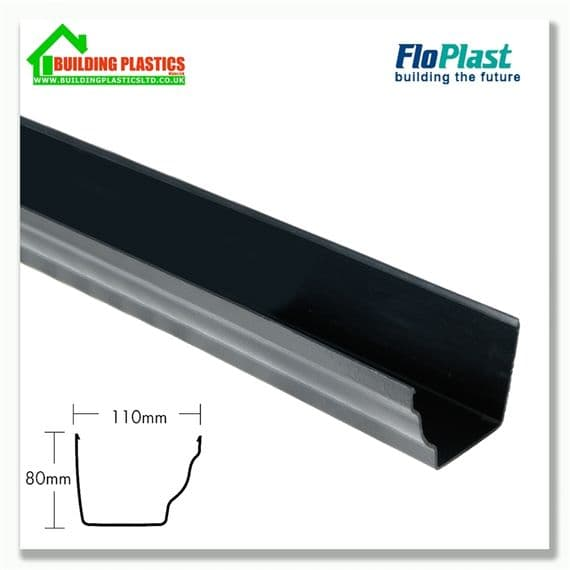
-
Basement redesign: Issue with structural engineer
saveasteading replied to JGR's topic in Building Regulations
It depends perhaps whether this was general advice or detailed design. As @Moonshine this is perfectly feasible in block, but needs detailed design . I've done a basement and chose to use a proprietary block system into which went reinforcement and concrete, rather than standard blocks. But it needs very specialised and expensive waterproofing if it is to be an occupied space. On the other hand, a reinforced concrete wall, designed as if for a swimming pool, water tank or reservoir is feasible too, and may need less waterproofing measures. Cost difference? It depends on a lot of variables. Without seeing the detailed design and covering correspondence, and the client brief, and understanding of the contract and supervision responsibilities, we can't really comment on the design suitability, and I probably wouldn't choose to anyway. -
Recommendations for a weatherproof (cement) cladding board
saveasteading replied to markharro's topic in Building Materials
I'm rather amazed that the manufacturers haven't found a standard solution for this, as it is a common question, and would concern me. If there was one, they would supply it or even apply it at the factory. I'd be concerned about any (even a few mm) eps being exposed to air or earth too, as rodents and insects could burrow a cosy home. Perhaps find a screw/ rivet type fixing that can expand deep in the eps to form a grip? -
An access chamber needs to be accessible so if it's not, then that would be a bc failure in itself. The testing kit costs £40 or so, though there are better (as in ease and robustness) for about £60. Your builder not having one is a worry. @ProDaveis correct that there should be ways to do all runs. If any is really a problem, then at a push, the bco may accept that you plug the downstream ends, fill with water at the appliance end, and observe that it doesn't reduce. There is no reason why there should be leaks without some bodging going on, so it should all pass. BTW when we did ours, I tested each run before moving on. That's plain common sense. As it happens the bco trusted us and didn't want to observe another test. I guess ' why would we cheat ourselves).
-
They were probably that colour originally, and will fade and attract moss, but could be a clash for few years. If you can demonstrate that the original tiles are, for example, Redland ' heather' then I don't think you can do better than use the same, even if currently brighter. Sell it to the planner as an upbeat proposal of doing what's best.
-
ICF vs Precast Insulated Panels
saveasteading replied to MariaD's topic in Insulated Concrete Formwork (ICF)
That's often said. It's relative though. With a practical design, good builders and good management it will be faster , better and cheaper than without. -
Valley repair with liquid GRP
saveasteading replied to gravelld's topic in Roofing, Tiling & Slating
On the other hand, don't mess with valley gutters. So paint it for a quick fix, but get it fixed in better weather. -
Valley repair with liquid GRP
saveasteading replied to gravelld's topic in Roofing, Tiling & Slating
I'd first try bitumen paint, encouraging it into the cracks then a couple more coats. I recall there is a product with fibres in it which would help clog the holes. I'm assuming these are cracks or small holes not big holes. -
ICF vs Precast Insulated Panels
saveasteading replied to MariaD's topic in Insulated Concrete Formwork (ICF)
Houses are the shape they are for very good reasons, mostly keeping the weather out. Any variations such as flat roofs, fancy shapes and novel materials are a cost and a risk. Go for it if you've plenty of budget and don't mind some problems. -
I've looked again at the English reg's. My interpretation is that the huge drainage field only applies to septic tanks, and that treatment plant outflow does not need further treatment. ie not 20% reduction but 100%. It doesn't say that it is not necessary, but the drainage field is applied only to the section on septic tanks, It is silent on the matter in the treatment tanks section other than that outflow must be 10m min from building or watercourse. That fits with the @ProDavelogic above. That's certainly what I've worked to before in England. I think the 20% thing used to apply but has disappeared at some stage.
-
Correct by the BCO. Nonsense by Puraflow. If the ground can't absorb it, then it will overflow and run on the surface. Puraflood. The volume isn't high, but still has to be catered for. This is a remnant from when treatment tanks were a new thing. Septic tanks emit a still filthy but very active liquid, and the vast area of the gravel surfaces allows it to cling to gravel and degrade, They allowed a very ungenerous 20% reduction in area for properly treated water.I designed for this and we installed phase 1, but we haven't got round to Phase 2, and the BCO still says he has never seen as much as we put in. I've looked at the liquid coming out of modern tanks (I've done 4, I think) , and it looks clean and doesn't smell. They have rightly stopped suggesting you could drink it though!
-
3 phase connection question asked by SSE
saveasteading replied to BigBuilder's topic in Electrics - Other
Doing commercial and education projects , where our company took over from the clients' consultants, our electrician usually suggested that the mains supply be reduced, typically halved. The consultants apparently didn't want to hear of the project again, so estimated way to high. Other peoples' money. I didn't know that. Isn't a 3 phase cable rather different and more expensive? -
That is unusually pragmatic, good sense. Also, after a dry spell the first 'flush' for perhaps a week will all rest in the soakaway for a while. as the ground either gets wet again or not. BUT I've just looked at the Puraflo website. Firstly using peat is sustainable?? More importantly I can't see why anyone should need one*. A product in search of a need. The output from a modern treatment tank is close to clean. The percolation field or soakaway is to let it soak away, not clean it further, although it will do that too.. Water that has gone through a secondary or tertiary treatment plant is no less in volume, so still needs the same soakaway or stream. Or am i missing something? * to be fair, this could be added to an existing septic tank instead of replacing it, but so could a treatment tank.
-
How fragile are tiles on tile backer board?
saveasteading replied to Tony K's topic in Wall Tiles & Tiling
Why can't you get some noggins between these studs? Just bits of 2 x 2 timber jammed in? @markc is right. I just thought you might as well. Can you fit soft buffers? -
I'd want £3k to do a proper design and no supervision. It could be much less if you've a good builder who knows how to do it, or if you read up all the regulations yourself. Try googling architectural technician, or services. Or building drawings. Architect is a protected title. Going right to the boundary creates msny issues. £40k diy feels right assuming a practical design.