
saveasteading
-
Posts
10887 -
Joined
-
Last visited
-
Days Won
93
Everything posted by saveasteading
-
Yes. talk to them all. Some are sentimental and don't like development. some relish their authority. some like making lots of money. but some are pragmatic and accept that there are other ways to do things / real life. BUT if you've bought a plot with bats on it, then they are your responsibility.
-

Timberlok vs Coach Screws. is there a difference?
saveasteading replied to Thorfun's topic in General Joinery
I am nervous about fixing it over a flexible surface. It will rock if shaken, and crush the underlay. Then it moves even more etc. I've had a steel barrier come loose (rawlbolts to concrete) through repeated pushing by children, because once it starts to rock it becomes a game/ challenge. Perhaps if tightened down hard enough the floor will compress and resolve this. I would do this by fixing the whole system, then repeatedly tightening from end to end That brings us back to the weakest link being at the nut to aluminium interface. It needs hefty steel washers or plates. I've seen steel cladding sheets ripped off screw fixings. The sheet fails before the screw. Aluminium is much softer. I am rather shocked that the manufacturer doesn't specify how to fix your rail in any way. On a positive note, If the ends are also fixed into walls or at returns then this issue will be much reduced. @Gus Potter sometimes looks at my input so I'll @ him too, but he is probably busy doing paid work. Don't panic though. steel coach screws n every fixing hole, with washers, tightened up til the floor compresses and the screws stop tight, and all is probably ok. Fixing direct to the floor board is best though. -
I recall that a nut should go on and leave 3 turns of the bolt thread exposed, because the start is tapered and the others not full strength. So you could work out how far a normal nut would go on, and thence how far this connector should fit on each rod, and pack accordingly. Or get 70mm connectors. It is odd though. Isn't there instruction? AHAA! the notches mimic the shape of the other face of a normal nut. That is how much (plus 3 threads) should be on each rod as a minimum...probably. I've seen that such connectors are always (?) 3 x the diameter. Therefore, by default, you need half on each stud and that must be sufficient.
-
That's fair enough. As long as they accept sensible responses eg bats don't live in a green field might seem sarcy. But: "we can confirm that there are no trees, buildings or any other potential roosts, hence no need for a survey" gets a tick. Or should as long as it's true.
-
Might have been intersting to ask what the perceived risk is. Good news that there was no methane or CO. But a gas membrane isn't expensive and its an assett.
-
I have no argument with respecting nature. Ditto archaeology . I do object to blanket requirements for all possible surveys, and have argued against them when it is excessive, usually successfully. But that takes time and sometimes an expert. But once not (before commencing this project, search the whole development estate for and remove any unexplored German bombs). That site was dropped and hasn't been developed as nobody wants to be the first,and the site owner must be too mean or poor. The land price should reflect the risks, costs and constraints attached to these issues.
-
I am. It is perfectly doable but needs some research, and a fitter that is prepared to contemplate it. Most just do what they do. I had air to air, fully ducted and recirculated, put into an office we did for ourselves. It's superb and invisible, but the ducting is complex. It's a USA system and seems tricky to get here any longer. Bottom line though is ASHP takes warm water into the building and through a radiator, and then air passes over the rad and is ducted into the rooms, with a return grille back to the plenum. Very simple technologically. Very difficult to get it done.
-
Percolation Test - local suggestions near Edinburgh?
saveasteading replied to Meabh's topic in Rainwater, Guttering & SuDS
Lots of good advice here. I think that one thing missed is that you should fill the hole once to soak the ground, and then do it again while timing it. Don't cheat as it will,be your garden that floods. There are alternative ways to build soakaways, then to fill a hole. So come back on when you have figures. -
Timberlok vs Coach Screws. is there a difference?
saveasteading replied to Thorfun's topic in General Joinery
Don't worry about that. Timber is good for this, and Glulam especially so. More important is to drill a very neat hole so that the thread bites into the sides of it. Then when you are screwing it in, you are cutting h threads into the timber and not trying to force it. I cant recall calculating for balustrades. I did though for a basketball net fixed into a timber backing. Think 2 x 2m athletes hanging from it. Coach screws worked fine. I got a couple of hefty guys to hang off it too. The other weakness might be the screw head bursting through an aluminium frame that is being forced. Hence big heads and washers will spread the load. The photos are great help as well as interesting. Very tidy. Is the nearer glulam spiked into the adjacent floor to give it stability? -
neighbours land
saveasteading replied to newatallthis's topic in General Self Build & DIY Discussion
How about widening your gateway now? It will probably get damaged anway. It might also be worth erecting a substantial fence post just in your land to act as a visible marker and physical constraint. -
Just about possible with engineered joists, deep and no spaces. Not to be discounted.
-
Timberlok vs Coach Screws. is there a difference?
saveasteading replied to Thorfun's topic in General Joinery
Looks to me as if Timberlok is specifically for joining wood to wood, hence the long shank. The area of thread is what resists pullout and these have much less than a coach screw. They are not interchangeable. Both will have rated pullout strengths. The head size may also matter. Balutrade supports and fixings have to withstand very high forces from pushing out at the top, and guessing isn't a safe option. It needs prove detailing (balustrade manufacturer) or calculation (SE). -
I'll never remember that when trying to complicate a discussion. Some heavy reading is called for later, but Wikipedia says its simple, if we consider two semi-infinite bodies. gulp. thermoception.... is a particularly important metric for textiles, fabrics, and building materials
-
The masonry one absorbs a lot of heat from the sun's energy and releases some if it by convection and more at night. The others resist the heat but don't absorb much. The heat gets through more quickly and more gets through in the day. At night, the opposite happens so it depends how much sun (location and season) and on day and night temperatures. Can I add to your thought experiment? In the middle of each room there is a big stack of thermal bricks as used in night storage heaters, laid in a grid for maximum surface. They will absorb energy in the day, once the heat gets inside, and hold it into the evening...but I won't dare call it thermal mass. Consider a Spanish villa. Zero insulation other than perforated bricks. In winter we turn up and it's 15C indoors. The fire heats it up to 22C in 3 hours, but overnight it's back to being cold. Next day repeat, and it remains moderately comfortable overnight. Day 3 and it's cosy. Clearly the solid walls and floor are absorbing and retaining the heat. In summer, it remains cool indoors if blinds and air are managed. Most sun energy stops at the roof tiles and vents.
-
Is a drainage field required for a sewage treatment plant?
saveasteading replied to flanagaj's topic in Waste & Sewerage
It has to go somewhere. The Scottish regs say, to a drainage field , @ProDave 's 85m2. Ours was even more but we haven't got round to the phase B bit yet and the BCO was happy anyway. But apparently, acc to the jcb operator, a soakaway (pit of rubble) is usually accepted. My premises is that the English regs make no such demand. At most it would be a pit or lateral soakaway for the daily amount of water going through, say 1000 litres, not as additional treatment. It's government policy according to how old it is. -
If I could find it I would be able to tell you. Section tables for timber joists? Searching for that I found this table...probably the same as the NI one. https://www.timberbeamcalculator.co.uk/en-gb/span-table/floor-joists?load=1.5&class=C24 and in nhbc https://nhbc-standards.co.uk/2018/6-superstructure-excluding-roofs/6-4-timber-and-concrete-upper-floors/6-4-8-timber-joist-spans/
-
Is a drainage field required for a sewage treatment plant?
saveasteading replied to flanagaj's topic in Waste & Sewerage
The Scottish reg's contain a formula for the drainage field size, allowing a 20% reduction from that for a septic tank to that for a packaged treatment tank. This is a ridiculously small reduction in my opinion, and seldom insisted on from what we hear. The English reg's used to be the same, from memory, but now appear not to require a drainage field for a package plant: which I think is sensible. Note that there is no mention of a drainage field, whereas there is in clause 1.3 for a septic tank. Plus, how could they be more economic unless there is no need for a drainage field? I welcome any proof to the contrary (building inspector asking for it doesn't count). (Welcome isn't the right word.....as I hope none of us needs a drainage field.) I've also noticed that the government regulation, as linked above, describes treatment packages as being mechanically aided. This omits the middle ground of a non-mechanical 3 stage tank which works pretty well but is not generally available these days......I wonder if the Scottish rules were designed for this and have never been reconsidered. This may not help when the planners state a P limit, but that's another matter.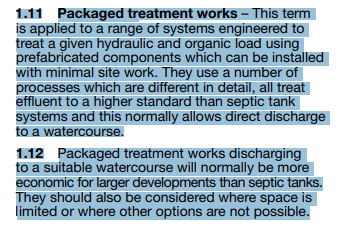
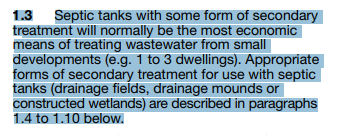
-
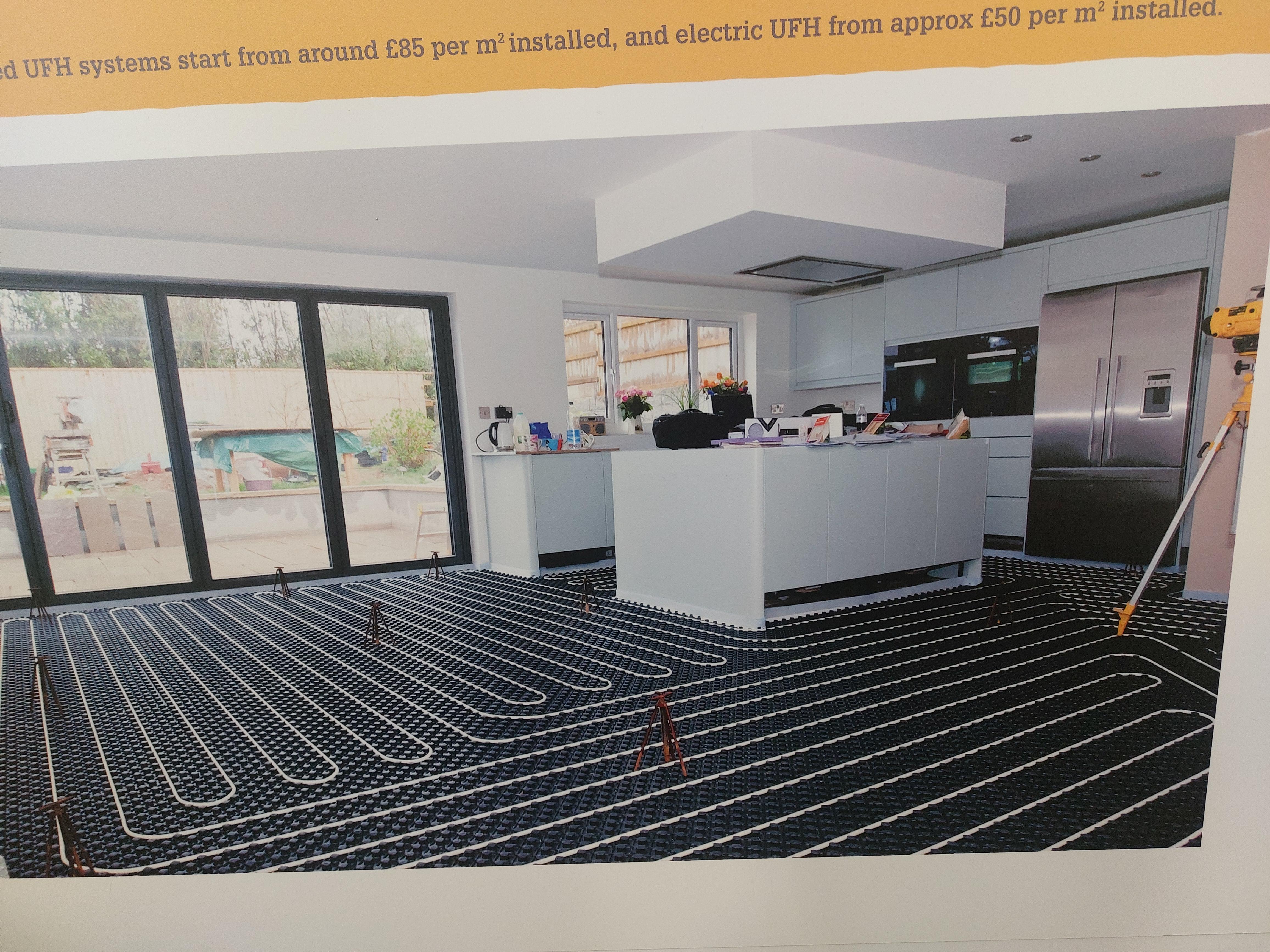
The same stand had interesting statements too. See the first "pro".

-
That's going to be rather from first principles isn't it? Ie not easy-to -use tables. Somewhere I've got a book full of tables that takes all the science out of it. Such must be findable online I'd think.
-
It was more interesting than I expected. Straight answers from most of the exhibitors. Plenty of hokum for the naive, but less than I had feared. Here is a novel idea. Fit the kitchen before pouring the screed against it.
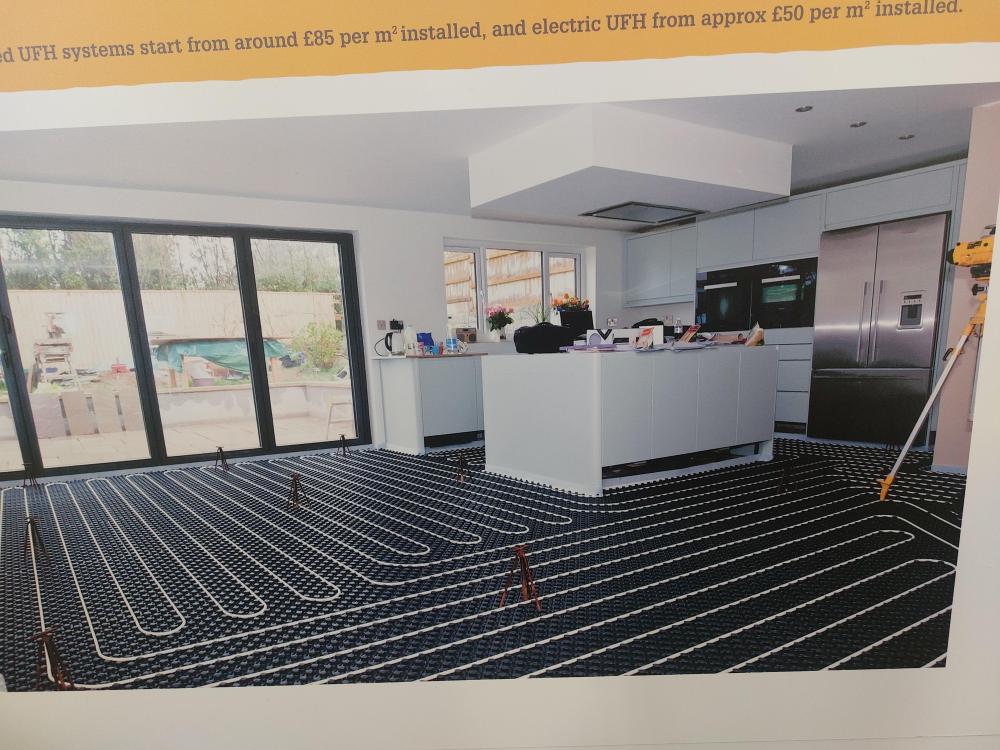
-
Rust removal from marble tile.
saveasteading replied to saveasteading's topic in Wall Tiles & Tiling
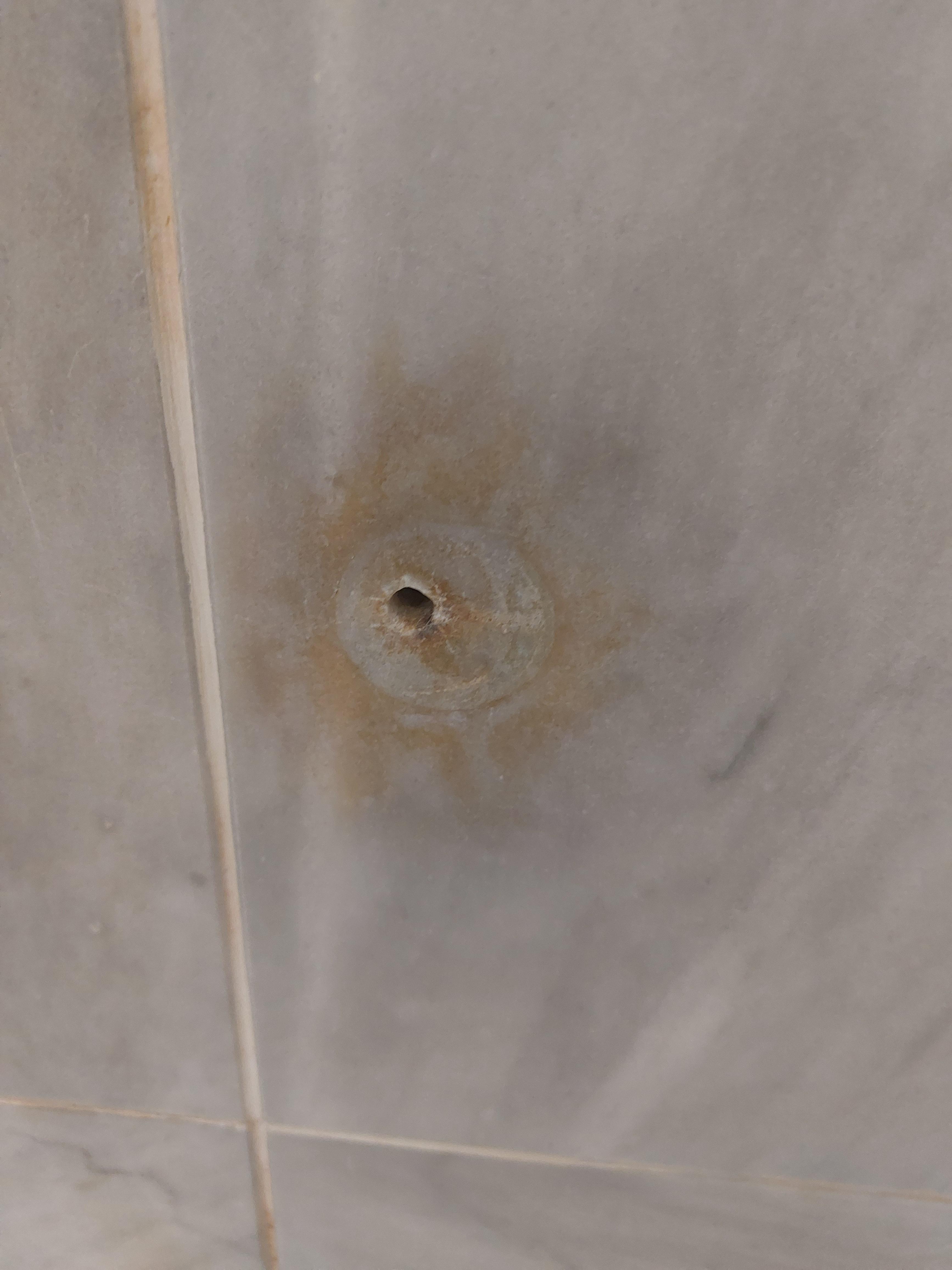
Toothpaste, bicarb, vinegar didn't work at all. I found the Rustex to be readily available online. Used that in multiple brush on/ wash off applications. The rust turns purple then comes off. Most of it anyway. the remaining stain must be embedded, yet the chemical doesn't reach it. I haven't worked out why the stain is less beneath the round plastic fixing. Going to refix for now. Thanks for the advice.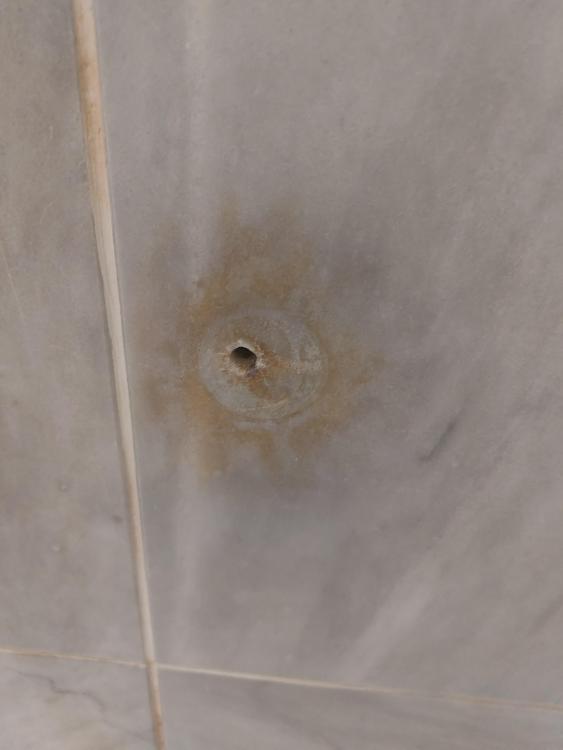
-
Some of them work by pads which stay luminous for a while. I've got one that glows all the time using inductance or some such.
-
T'other way round?
-
Measuring for composite front door and threshold design
saveasteading replied to Novice Becky's topic in Doors & Door Frames
Sometimes you have to leave it to the experts. If you get the wrong door it is an expensive mistake. You're trying to save money, fair enough. But expertise has a value. What would you think if the advice on here turned out not to work for you because of some misunderstanding? Maybe a fitter will let you pay direct for the door, but do pay for the advice. -
Is that the one where the Christmas lights are still up because the man that does it is injured?