
saveasteading
-
Posts
10887 -
Joined
-
Last visited
-
Days Won
93
Everything posted by saveasteading
-
Subsidence - is it always the fault of the tree?
saveasteading replied to Allyzap's topic in Foundations
But I do. Conifers are low water demand. I usually avoid saying anything that suggests an overdesign could have been avoided. but I assume these trees were very close. -
Couldn't you drill a hole, or several, for now? put a pipe in it for tidyness and to cast the water away?
-
If you formed a hole in the floor slab where would it go? What is preventing the water running out at the walls?
-
Passivhaus in St Albans for sale
saveasteading replied to TheMitchells's topic in General Self Build & DIY Discussion
I says its a Passive house. Not Passivhaus. Does that mean that it is according to some of the principles? -
First the pump, then this for the rest. Or brush it out of a door or gap? There are specialist pump suppliers who can advise, because many sump pumps need more than 3" to work.
-
Am I imagining the tiniest bit of level difference at the cracked bricks? I'd suggest that there has been a miniscule differential movement between two constructions, creating a stress. That line goes through the weakest line ( mortar to half brick). How wide is the crack? 2mm perhaps? Does a pound coin fit in? Worry. Not? Take a note of the gap, tell us so that it is on the record, and look again in 3 months.
-
Subsidence - is it always the fault of the tree?
saveasteading replied to Allyzap's topic in Foundations
The tree needs water but won't mind where it comes from. Clay takes a long time to recover from summer drying, and water has to very gradually migrate downwards. So if you can catch it and give it every opportunity to go down over a large area then this could work. A trench along the contour with a perforated land drain pipe and gravel or rubble surround is probably easiest, cheapest and best.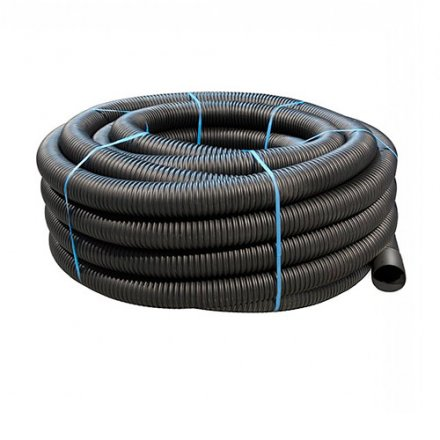
-
Subsidence - is it always the fault of the tree?
saveasteading replied to Allyzap's topic in Foundations
I agree completely. The rule of thumb I was taught was if a pound coin does not fit in the crack then don't worry. It won't fall down suddenly. Helical bars are overused IMHO. They move the stresses to a solid bit of wall. I'd want to see the situation but: It is on a hill so rain runs away. Can you put in a trench or swale or french drain to hold the water? And divert roof rain towards the tree, using a land drain or soakaway detail to encourage all the water into the ground. Or a pond. It's great that you don't blame the tree. -
Hot rolled steel building.
saveasteading replied to Jenki's topic in General Self Build & DIY Discussion
Very small wheels for on a hard slab only. Was that ever frustrating? The sliding platform handy though. -
Hot rolled steel building.
saveasteading replied to Jenki's topic in General Self Build & DIY Discussion
Yes it is a serious matter. The floor is expected to take domestic loading, spread out. A wheel can be a very direct point load, on a block or 2, or directly on a beam. Thus not to be dabbled with. Wheel size, or jacks, will matter too. I would want jacks to be onto a timber bearer across the beams. I only considered rough terrain mewps becsuse of the big wheels and to cross over bumps gently. Scissor lifts will spread load onto 4 wheels. Booms can have 3/4 of the load on one wheel, or jack. Also. The design load for a precast floor normally assumes the screed is laid. The screed adds considerably to the strength. Precast planks 150 thick will bounce simply with jumping up and down on them. With 70mm on top, they don't.- 22 replies
-
- 1
-

-
- the windy roost
- caithness
- (and 1 more)
-
Hot rolled steel building.
saveasteading replied to Jenki's topic in General Self Build & DIY Discussion
It needs serious checking. I used a pair of boom ones on a big sports hall floor of planks, before the structural screed. They calculated as comfortably OK when standing symmetrically but not with the boom out to one corner and fully extended. The steel erectors understood and used them appropriately. On beam and block similarly but there's a risk of blocks cracking.- 22 replies
-
- 1
-
-
- the windy roost
- caithness
- (and 1 more)
-
Hot rolled steel building.
saveasteading replied to Jenki's topic in General Self Build & DIY Discussion
sourced where? where should I be looking or enquiring? looking for 6m platform -
Hot rolled steel building.
saveasteading replied to Jenki's topic in General Self Build & DIY Discussion
May I digress or will I be in trouble with the digression police? Has anybody bought an old mewp for their project, or looked into it? They must be disposed of at some age and condition but probably when they are becoming unreliable or caked in paint. The convenience could be very valuable. But the risk of hydraulics problems? -
Advice on repairing a old chimney and bothy with lime mortar
saveasteading replied to Tapster's topic in Scotland
That's why I thought that using the same sandstone it could also crush or crack rather than stress the main masonry blocks. -
Advice on repairing a old chimney and bothy with lime mortar
saveasteading replied to Tapster's topic in Scotland
That's interesting to read. The addition of stones to large gaps makes sense, as does max 10mm if thy are hard stone. Wouldn't it be best to use a piece of stone recovered from the building, ie the same strength? or to make up some aggregate from recovered stone? -
Marking location of soil pipes through slab
saveasteading replied to gavztheouch's topic in Foundations
Yes. But note that concreting is a gutsy job and marks will disappear and pipes get moved. You're just thinking a long way ahead I assume. So think ahead to pipes through the walls. I like a small lintel and a generous hole , which is infilled later. -
Hot rolled steel building.
saveasteading replied to Jenki's topic in General Self Build & DIY Discussion
Me. Please don't do that. Erector. If I was going to fall off, I would have died years ago. Me to HSE: I want to use fall nets. HSE: They are a continental idea and we don't allow them. The erectors must shuffle along and hook themselves* to the structure. Now? At least the rules are clear, albeit costly. * that's a slow (15 mins?) way to die of blood blockage, hanging in a harness, unless there is a mewp to get you down.- 22 replies
-
- 3
-
-

-
- the windy roost
- caithness
- (and 1 more)
-
Hot rolled steel building.
saveasteading replied to Jenki's topic in General Self Build & DIY Discussion
Erection only? I'd say that will take 4 skilled men : day 1. Offload and prep. 2 erect primary steel and a few rails 3 to 5 remaining rails. 6 sundries and clear up. 7 contingency so 7 x 4 x £250 average? crane or FL 2 days mewp 7 days 10% sundries 30% markup if a working owner. Otherwise 50% £13k. To £15k assumes ready availability of the skills, if not, add accordingly. and a hard running surface. Inside and perimeter. If not, forget the above. assumes all parts correct, foundation bolts correct, and no drillling. would i do it for that? No. Too many things go wrong with other peoples frames on other peoples sites.- 22 replies
-
- 3
-
-
-
- the windy roost
- caithness
- (and 1 more)
-
Marking location of soil pipes through slab
saveasteading replied to gavztheouch's topic in Foundations
You are right to be thinking ahead. What is the issue? Do the pipes go through the concrete footing? If so, I would put an oversize boxing to allow for adjustment later. If above the footings, the question is for the next stage. -
That seems weird to me. a cardboard honeycomb would surely crush between the slab and the upcoming clay, that being the point of it. As I have never used such products perhaps I am missing something. If a void is formed then the insulation will need support, (using hangers I suggested, which could be made of coat hangers or fence wire. ) . If there is clay heave, all is supported. But if the clay shrinks again then the insulation could settle with it...so tie it up.
-
It is usually a monoculture and unattractive to wildlife. thus it provides no natural benefit. This applies to UK timber as much as to exotic stuff, as the forests are dense, dark expanses of dead needles. Newer planting is apparently more thoughtful with varieties of trees and some gaps.
-
I recall seeing very high piles of mahogany (or similar) logs at an Indian dockyard, and cynically wondering how much it would cost to buy a certificate for them. Madagacar continually loses forest, yet their government doesn't acknowledge timber as a resource. I don't wonder where it goes, and expect it can get a nice cert too, if at adds value. Yet if I had lots of land and trees, and knew the provenance I couldn't get a certificate for my own timber. Does it matter? Yes. at least some protocol is being observed by some suppliers. Do you fret about your bookcase? a bit of homework may resolve it, and you've done that.
-
Just started a self-build in Dorset. Exciting times!
saveasteading replied to NailBiter's topic in Introduce Yourself
But the principles apply. Play with them. Avoid their gimmicks for the last 1/2% improvement, and other fads. A lot of people on here have aimed for 'close to passivhaus' standard, in their own terms. In my opinion. Low and slow ashp, with the units positioned for aesthetics. No windmills. Consider future solar panels, by putting a cable duct in. But mostly, quality design detailing and construction, which trump everything else and are hard to achieve, so read other people's issues on BH for what to look for. -
Washing machine in outbuilding - turned off
saveasteading replied to AdamD's topic in Kitchen & Household Appliances
We had one under tarpaulins, outdoors for 6 weeks with no problem. Indoors, in packaging, for a week, don't worry. -
2 years. but they don't do any harm. Avocado stones take 2 years as well. coffee grinds can go straight on the flower beds and slugs don't like them.