ProDave
-
Posts
30671 -
Joined
-
Last visited
-
Days Won
423
Everything posted by ProDave
-
BT/Openreach New Connection
ProDave replied to worldwidewebs's topic in General Self Build & DIY Discussion
But will Open Reach charge you for that? When I met the Open Reach man, I was told there is a "budget" of a little over £3000 for each new connection, and you were only charged if it went above that. I don't expect to be paying anything. -
BT/Openreach New Connection
ProDave replied to worldwidewebs's topic in General Self Build & DIY Discussion
How are your other services coming onto your plot? do any of them require digging up the road? All our services come from the other side of the road to us (in the grass verge) so I managed to get away with paying for the road up only once, and laying in the water on that visit plus ducts to take electrcity and telephone cables. You need to talk to Open Reach to see what they advise. -
I'm getting a better U value than that, with 100mm wood fibre board and 190mm of Frametherm 35 earthwool. That's a warm roof room in roof house (see my avatar) More detail of your roof make up, thickness of rafters etc. What are you putting between the rafters etc.
-
Originally my timber frame was going to be filled with one of the blown in types of insulation. However when I loked at costings i found that was an expensive option. So I have chosen to fill my frame with Knauf Earthwool frametherm 35 which is under half the cost of the blown in stuff and gives the same U value. I have 190mm of that in the frame plus my 100mm EWI. I would consider something similar. I spent £1200 on insulation and that is more than enough to do all my walls (what is left over will be used under the floor or in the roof) so you don't have to pay huge amounts. I would also look at over sheeting on the inside with one of the PUR type insulations sheets, e.g kingspan, celotex etc to mitigatecold bridging of the frame members.
-
The "normal" timber framed house in these parts has a 150mm frame filled with insulation and quite likely a thin layer of something else inside. An important question is what is going on the outside? The traditional timber framed houses up here have a brick or block outer skin, but because the cavity has to be ventilated, the outer skin adds very little to the insulation, and is just an expensive rain screen. So as well as having a thicker than normal timber frame, I have chosen to clad mine in 100mm thick wood fibre external wall insulation and the render is applied directly to that. As a very rough ball park figure, the external wall insulation system is a similar cost to a blockwork skin, but helps to make the building more airtight, and adds more insulation.
-
What you are describing is a 2 stage heat pump. I believe the additional problem is needing a different refrigerant for the high temperarture stage, so two ordinary ones cascaded may not work well. And the second stage one would be a water to water heat pump, not an air source.
-
Probably an even better idea up here. Our drinking water comes from a loch about 600 feet above sea level, so it's the run off from surrounding mountains, and in the spring, snow melt. By the spring, it comes out of the taps so cold I wonder it's not coming out in lumps. One winter I must measure the incoming temperature.
-
Yes you can appoint 2 agents, but it's unlikely they would work together and in the event of a sale they would both claim their full commission. The original agent we were with offered to do dual agency and accept half of the commision in the event of a sale but I couldn't find anybody else to take up that offer. I have been advertising it myself on gumtree, but the only enquiries from that have been other agents wanting to market it for me, so a bit of a waste of time, but it's very cheap.
-
My Komatsu PC30 is nominally a "3 ton" machine but when I looked it up, it weighs 3.5 ton. It was way outside the weight for towing with any vehicle I have access to, it must be well over 4 ton allowing for the weight of a suitable trailer. So I just paid a local plant hire company to transport if from the seller to my plot. They came with an 11 ton beaver tail flatbed. Towing something of that weight is virtually outside the weight limit for a normal licence. I have seen it discussed on the boating forums and it can be done with a 7.5 ton vehicle that has been de plated to a lower weight then the vehicle weight plus trailer weight is within limits, but a fully plated 7.5 tonner you would be over the limit for your licence with the trailer. I did ask some of the car transporter and recovery companies first but they all point blank refused to even consider anything over 3 ton. If you don't have far to move it, a local farmer will almonst certainly have a suitable trailer he can tow behind a tractor, but that was not viable for a 70 mile journey.
-
Retrospective planning permission for oversized porch
ProDave replied to VickyHodges's topic in Planning Permission
A phrase that springs to mind is "incongruous on the street scene" That was the phrase used when South Oxfordshire district council refused planning permission for a garage. the garage was outside the building line so was not permitted development, but still further away from the road than some neighbouring houses. They could equally apply something like that if they feel its design and scale is out of keeping with neighbouring properties. But I won permission for my garage on appeal, so if they refused it for something like that, it too would likely be allowed on appeal. Jeremy, re your vivibility splay, I wonder how the council would react if a neighbour of yours drove into you while exiting your drive, because you couldn't see him? any one of you care to test that? When the council get the bill from the insurance company for allowing a dangerous situation they have previously been warned about..... -
Recommendations for breathable roofing membrane?
ProDave replied to Crofter's topic in Roofing, Tiling & Slating
Yes those are the things. I am sure they are even cheaper than that at TP, I was surprised just how cheap they were (though it might be a long drive to TP from where you are) -
Re-using electric cables - what to consider?
ProDave replied to Bobnjudi's topic in Electrics - Other
Check ebay. I am not sure what rhe market is now, but not long after part P was introduced, people on ebay would pay a premium for old coloured cable. I tried it once, anything over 5 metres I listed on ebay and sold several lengths. All sold for MORE than the cost of new cable from a wholesaler. I would never re use them because of the old colours, but there are plenty that will so they can claim their alteration was done before part P came into force. I have given up collecting scrap cable to weigh in since the price of copper fell. I only got £25 for the last lot, barely worth the petrol to get to the scrap yard. -
Recommendations for breathable roofing membrane?
ProDave replied to Crofter's topic in Roofing, Tiling & Slating
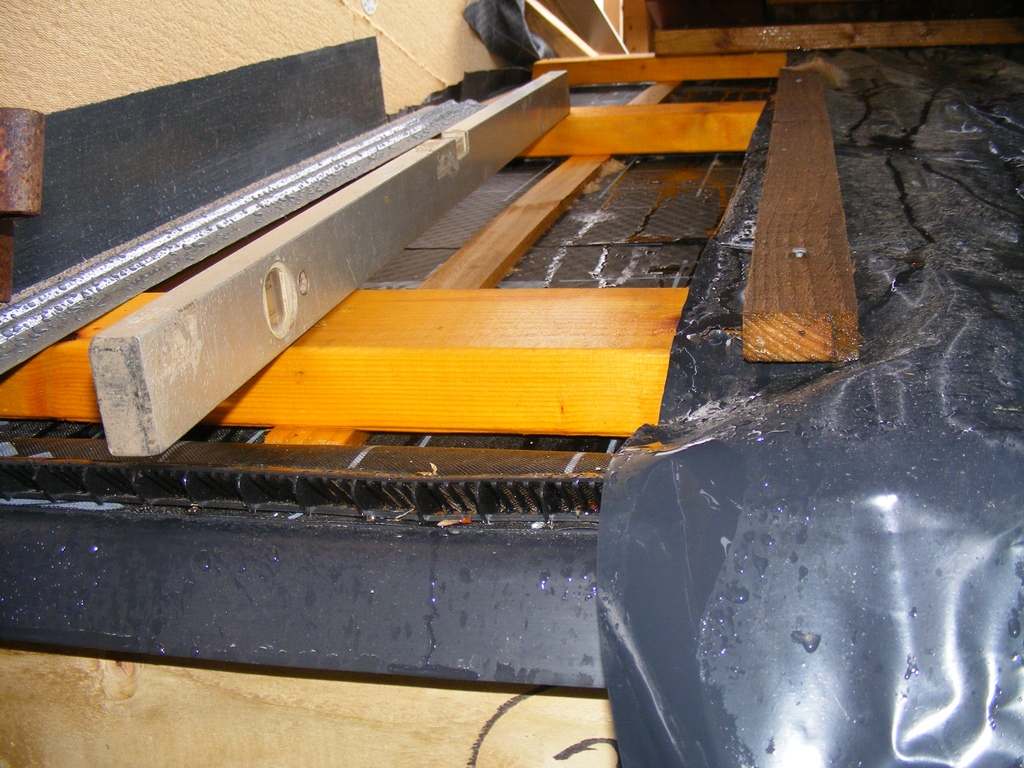
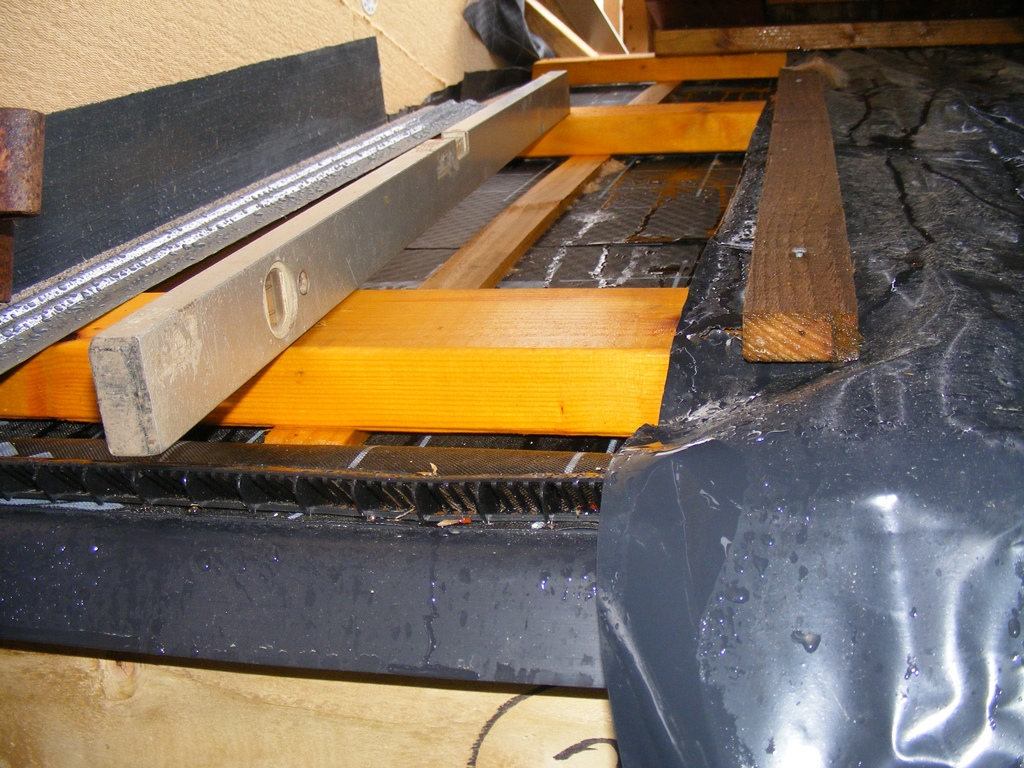
I have just updated my other roofing thread with this picture. This is the detail I ended up with for my sun room roof. Almost identical except it is set slightly lower, so the roof profile (as mocked up here by the spirit level) does not quite touch the ventilator strips. the filler profile for the box section roofing will fix (glued?) to the top of the ventilator strips.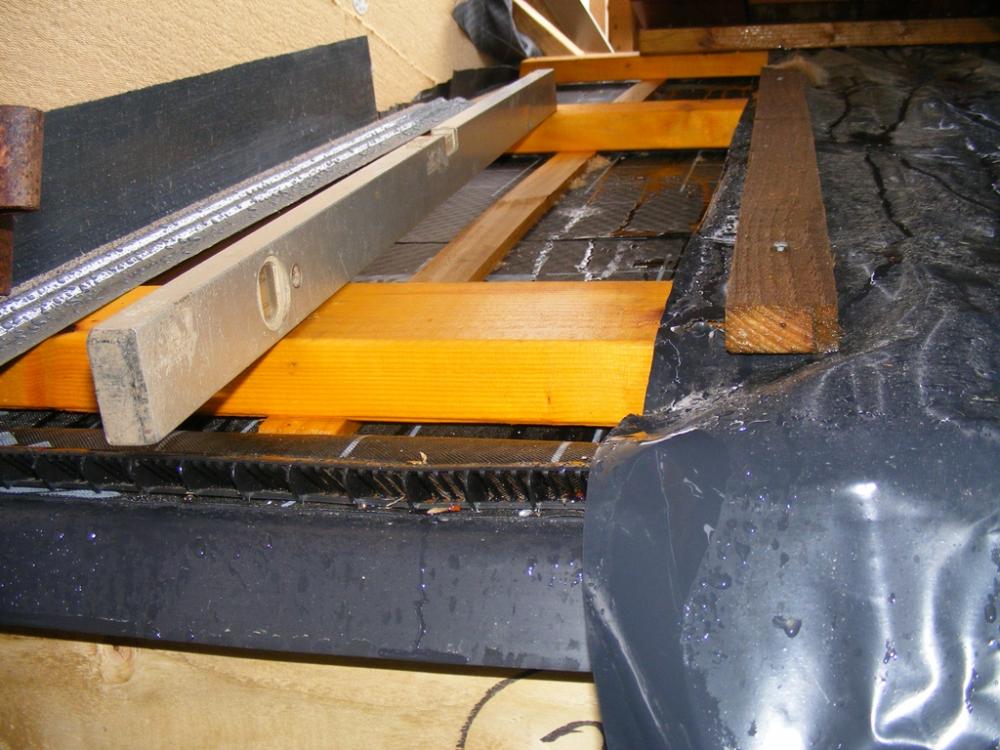
-
Box profile roofing - eaves details needed.
ProDave replied to ProDave's topic in Roofing, Tiling & Slating
To finish this thread off, here is what I arrived at. Almost identical to how I did the main tiled roofs, except the height is set to the roof profile (as mocked up here by the spirit level) does not quite touch the ventilator strips, to allow the filler profile to be fixed (glued) to the top of the ventilator strips.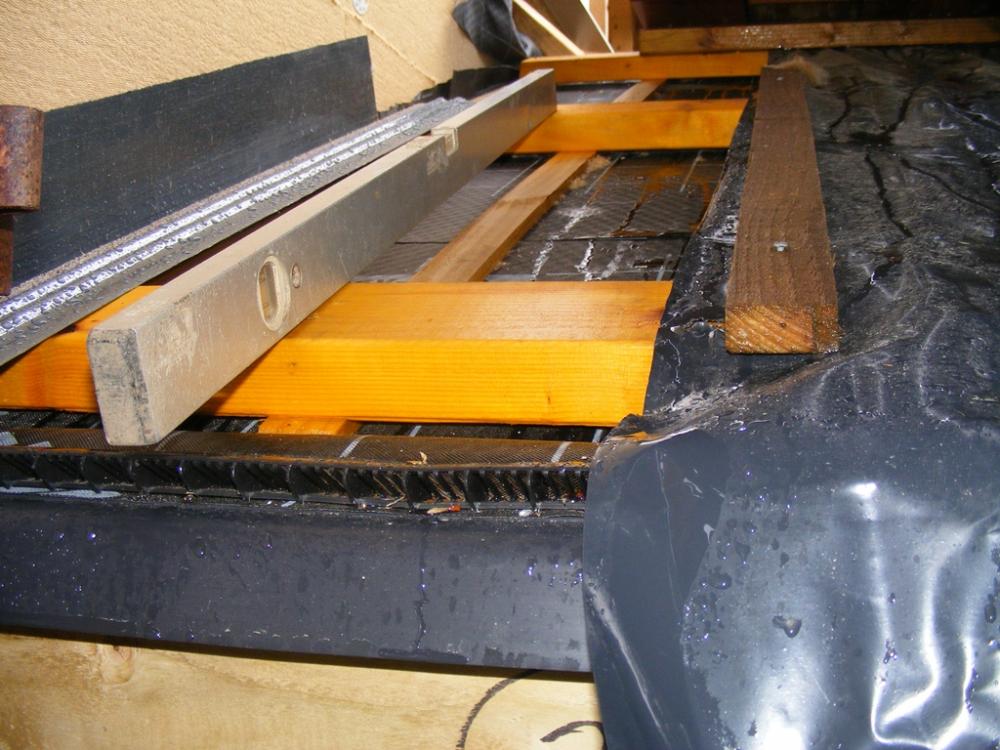
-
Drilling the bottom chord of a posi joist.
ProDave replied to ProDave's topic in General Structural Issues
Yes I was intending to drill "mid span" between where the nail plates fix to the bottom member, and not up in between the nail plates. -
Drilling the bottom chord of a posi joist.
ProDave replied to ProDave's topic in General Structural Issues
Yes just like TerryE's they are just like "spacers" He has an uncanilly similar arrangement to me, but I never got a picture of mine from above lke he did. I personally can't see anything wrong with drilling them, I am not going to compromise their function as a "joist" as the edge ones are not "joists" but "spacers" All I need is two holes for pipes, probably 22mm (cold water up from utility to rest of house, hot water down to utility) and a row of probably 20mm holes directly above the consumer unit for cables. Everything else can find a different route. -
Drilling the bottom chord of a posi joist.
ProDave replied to ProDave's topic in General Structural Issues
Think of a "joist" that throughout it's length sits on the downstairs wall so is evenly supported throughout it's whole length. Then the upstairs wall sits on top of this "joist" It is not in any way supporting a mid point load and being subject to bending forces like a normal joist. In fact I don't even know why they used a posi joist in this position. So instead of having the normal loads of a joist, that put some of it in compression, some in tension, some in shear, this one just has an even vertical compression load applied to it throughout its entire length. Yes it is the same height as the others and the only reason for using a posi joist here is to ensure it is exactly the same size as all the others that are really doing the function of a joist. -
Recommendations for breathable roofing membrane?
ProDave replied to Crofter's topic in Roofing, Tiling & Slating
So you are proposing putting the plastic strip on top of the membrane. So any water running down the membrane would run UNDER the plastic strip, and drip off in an uncontrolled fashion and may or may not drip into the gutter, it may just run onto the cut edge of the OSB? By putting rhe plastic under the memnbrane, any water running down the membrane passes through the slot vents over the formed edge of the plastic into the gutter, keeopnf the fascia (and any exposed cut edges of sarking) nice and dry. The edge of the membrane is sandwiched in between the plastic strip and the plastic slot vents, and secured by the nails holding the slot vents that go through all 3 into the top of the fascia board. I have detailed a similar thing for my box profile roofing which I will take a picture of and post it here later. -
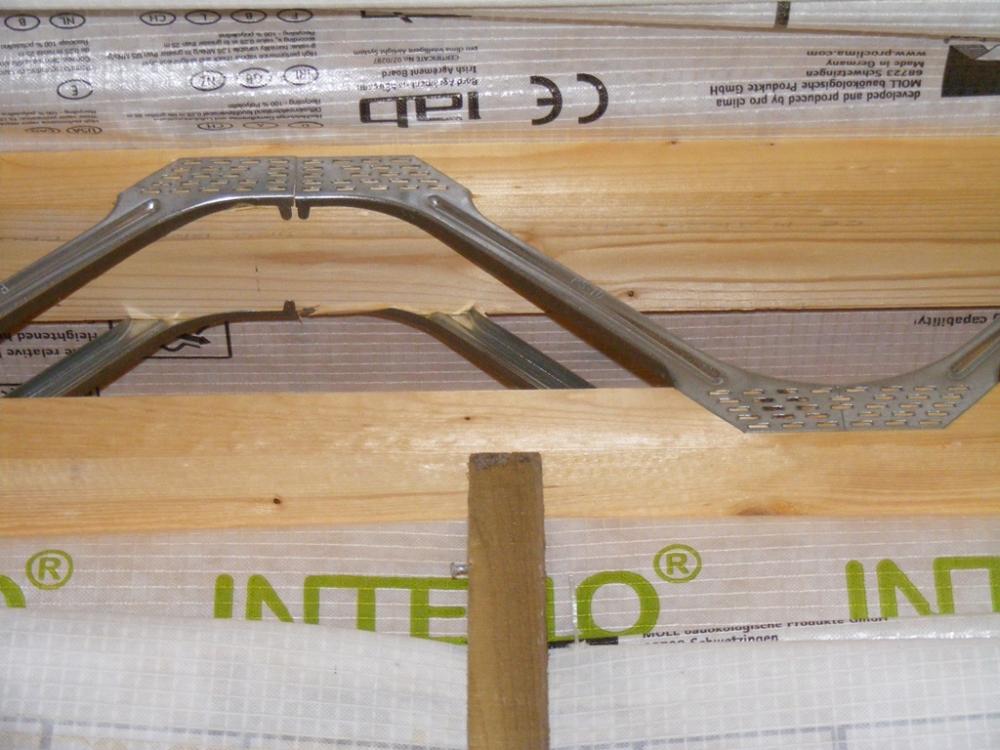
I'n sure you will read the post title and say NOOOOOO you can't do that. But it's not quite that simple. My posi joists run sideways across the whole width of the house, a total span of 12 metres, with two supporting walls. At the very front and very back of the house, an "extra" posi joist makes the same "span" but it's not really being used as a joist, it's helping to support the walls of the upper floor. Here is a picture: So hidden behind the Intello membrane are the front walls of the house. The posi joist is set roughly 2/3 above the wall and 1/3 overhanging in front of the wall. The upstairs wall rests on it in exactly the same way. (the intello membrane is the "tony tray") So the joist is not supporting any weight in the conventional way a joist would, instead throughout it's length it is in compression from the weight of the wall above. Now the problem I have is that it overhangs the wall by about 60mm. I want to create a 50mm service void for pipes and cables. I have fitted one such batten to illustrate the problem, that the posi joist completely closes off the top of the service void so I can't get any pipes or cables through. On the basis this is not really a "joist" the way this one is used, I cannot see an issue with drilling where required up through the bottom chord of this "joist" to allow cables and pipes through. What do others say?
-
Interesting thread. If I were DIYing a heat recovery system, I would not get bothered about the regs. All you have in essence is a cold water supply pipe running next to a waste pipe, nothing against that in the regs. the fact you [cough] solder the cold water pipe [/cough] to the waste pipe makes it no more likely that waste water will contaminate the cold flow. My thoughts, It would surely work much better in a long horizontal run at a shallow fall, feed the cold water in at the outlet end and take the warmed water out of the end nearest the shower trap. On the basis the water will flow along the bottom of the pipe, just a couple of heat collector pipes in a straight line following say the bottom 1/3 of the pipe rather than wrapped around it. Now I can see this working for a shower, to pre heat the "cold" feed a little bit. and having an individual heat recovery unit for each shower, feeding the cold feed to that shower. But what about a bath? A bath uses a lot more water. It lets it all go qickly when you pull the plug, and even if you had a heat recovery system where is the warmed water going to feed? So it seems only a viable idea for a shower then? for a bath you need somewhere to store the heat and a heat pump to extract the heat from it. I know, why not just leave the water in the bath after you have finished until it has gone cold (wared the room) before pulling the plug?
-
Recommendations for breathable roofing membrane?
ProDave replied to Crofter's topic in Roofing, Tiling & Slating
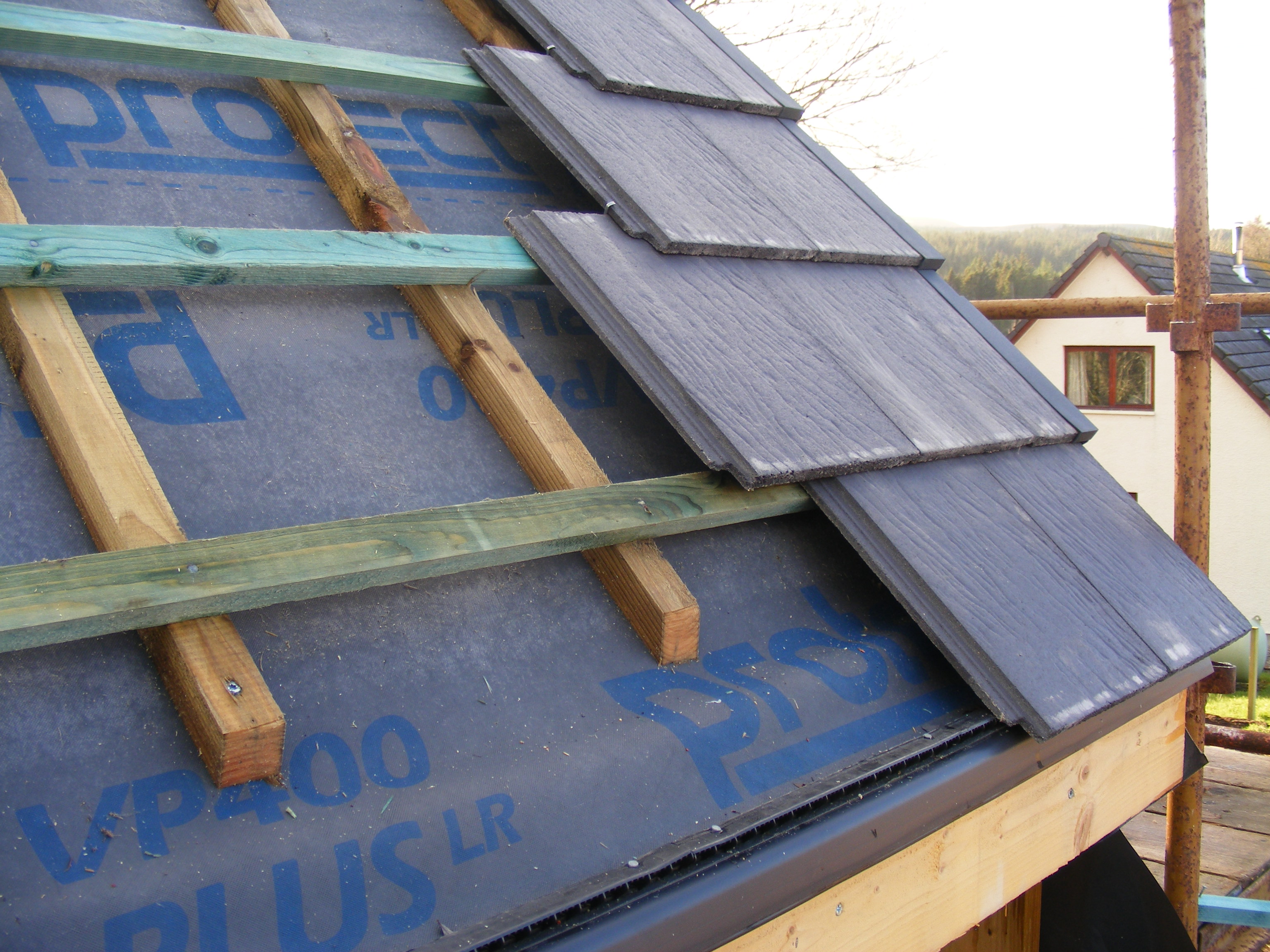
Do you mean this?: What we have is the fascia board set at a height so that allowing for the ventilator strip, it is at the right height for the bottom tile to rest onto. So that usually means the top of the fascia board is higher than the sarking board would be if it carried on down. Some roofers will cut the sarking board just below the bottom batten and have the bottom section of sarking angled onto the top of the fascia. What I did was bought plastic eaves boards (not the proper name but I don't know what the proper name is).They are as cheap as chips from TP something like £3 per 1.5 metre length. So the plastic eaves board fixes to the top of the fascia, and the plastic extends up the roof by 8" or so giving the "kick up". the membrane lays down over the top of this. Then the vent strip goes on and the edge of the membrane then gets trimmed off with a sharp knife leaving the edge of the membrane securely fixed and the plastic eaves board directs any water out into the gutter.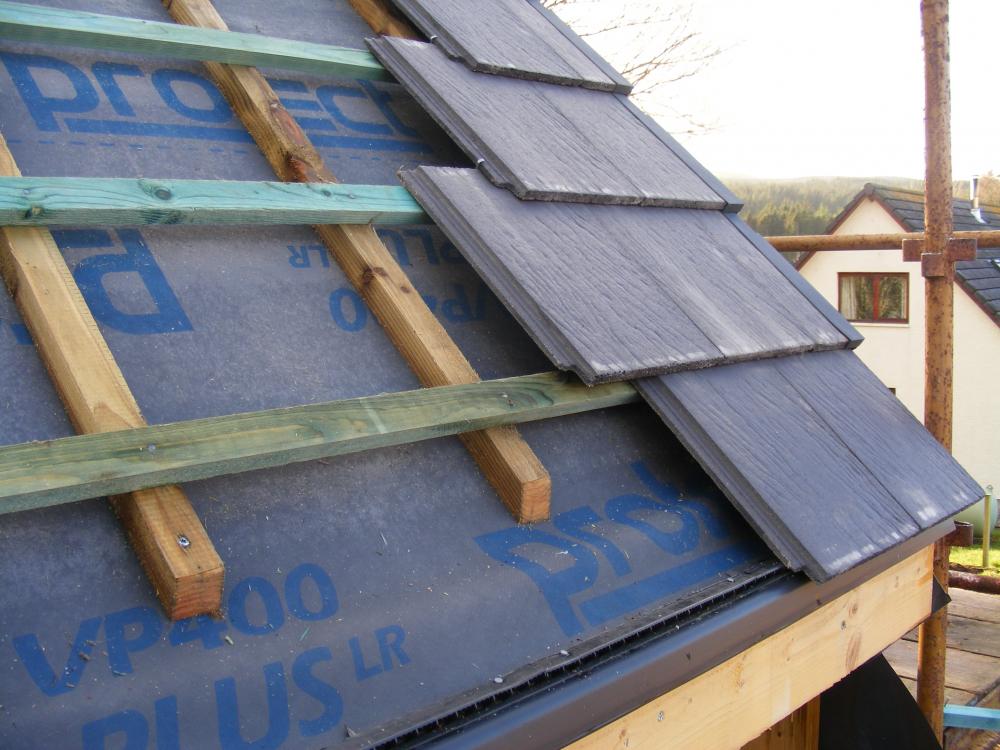
-
Welcome back. Glad you found us in our new home. I agree with Nick, it would be good to hear how the boundary dispute got resolved, and we look forward to seeing the build progress.
-
Is the wall strong enough to withstand the water presure? I am not doubting your bricklaying, it looks very good, but fill that with water and you have an outward pressure on the wall, and cement is not very good in tension. For that reason alone I would be loking at a fibreglass pond liner cast in place, if nothing else to add to the strength of the wall.
-
What's your reason for 3 port valves? Yes I agree they are quite clever the way they work, they also give a lot of trouble and in a multiple valve system designing the controls for them can be interesting. I prefer individual 2 port valves for each individual circuit, a lot more reliable and less complicated. You can also get normally open (energise to close) 2 port valves if that helps.
-
Ventilated cold roof - can it ever be airtight?
ProDave replied to Stones's topic in General Construction Issues
It was a common problem in older houses that the roof space was not ventilated well enough, so as soon as you introduced more loft insulation, condensation became a problem in the roof space. A lot of old cottages up here are built this way, then with walls lined with plasterboard, open to the roof space. If you remove a switch or a socket you are greeted with a howling gale of cold air coming through. For a low energy house today I would not consider a cold roof. Warm roof all the way for me. There would be far too many details to try and make air tight, not least any light fittings and even the loft hatch.