
ProDave
-
Posts
30674 -
Joined
-
Last visited
-
Days Won
423
Everything posted by ProDave
-

Scottish parliament Committee 'expert' opinion
ProDave replied to jamiehamy's topic in Environmental Building Politics
I once went into an "eco house" and thought it felt a bit stuffy. It wasn't long before I realised the occupier, who was a tenant, did not have the mvhr turned on, and further more didn't know what mvhr was, the fact they had one, and the fact it should be turned on. Certainly in the case of a rental property, you would think some pretty simple instructions wold be easy to provide. I have yet to encounter this "chronic overheating" phenomena in Scotland. -
You seem to have posted this three times so I have deleted two of them. In general, if mains services are available and the cost of connection is low, then use them. But there is nothing wrong with installing solar PV to supliment a mains supply and reduce your running costs.
-
The question boils down to do you want to have a go driving a mini digger? I'm one of the ones on here that bought my own for the build, and it has been a fun experience. They are not hard to learn to drive. As already mentioned you need to think through what you are going to do so you don't box yourself into a corner for instance but it's not hard. For me the benefit of having ones own machine (I know that is not what you are talking about here) is the sheer convenience of having it just sitting there waiting for whenever you want it and not being stuck to somebody else's schedule.
-
Scottish parliament Committee 'expert' opinion
ProDave replied to jamiehamy's topic in Environmental Building Politics
Lots of contradictions there and lots of miss understanding. I would love to know where these "lightweight, cheap to buy, highly insulated timber houses " are . At least my own new house will be complete before they can mess with building regulations and demand we all install high "thermal mass" And where was all this thermal mass in cavity wall houses? yes they were really efficient to run weren't they. -
will a gas balanced flue compromise air tightness
ProDave replied to lakelandfolk's topic in Boilers & Hot Water Tanks
I thought that described an open or conventional flue? I always understood "balanced" flues drew combustion air in from the outside and expelled combustion products outside. Often with two flue pipes adjacent in a rectangular housing, rather than coaxial. -
Jeremy installed his own treatment plant simply because the cost of connecting to the main sewer was too much and his planners accepted it. (ditto his borehole for water)
-
Have you got room for a treatment plant and a soakaway?
-
If it's any use to anyone, we have had some Open Reach engineers staying in our B&B for a few weeks. I was asking them the procedure to actually get connected (my cable is from the house across the road and a coil of cable left directly above the BT cable in the verge) It is in fact not OR that you contact for your final connection, but your service provider (that's BT then) and when you request a new line, they will arrange the connection of the cable with OR.
-
All I knos is Open Reach didn't seem to care HOW their cable got from one side of the road to the other. They just gave me a drum of SWA cable. So if you can get a contractor to put a duct under the road cheaper, then ask OR to re quote on the basis that a duct and draw string is in place.
-
I would have gone to planning with an over sized house, clearly stating that your aim is to make the habitable space inside 15% bigger, but to achieve that with passive house walls the external will be larger due to the extra wall thickness. And gone to appeal if refused.
-
Why HVDC for the inter-country interconnect cables?
ProDave replied to readiescards's topic in Electrics - Other
I thought they used a DC interconnect between countries on different frequencies (50Hz / 60 Hz) I would love to know how they convert the dc back to ac at the far end, that's one F big inverter? Perhaps it also saves countries on the "same" frequency all being phased together? After all you can see the argument as to who is going to be the master to set the phase and frequency. -
Up is the new trendy. When you see it on Grand Designs, remember you saw it here first.
-
Okay
-
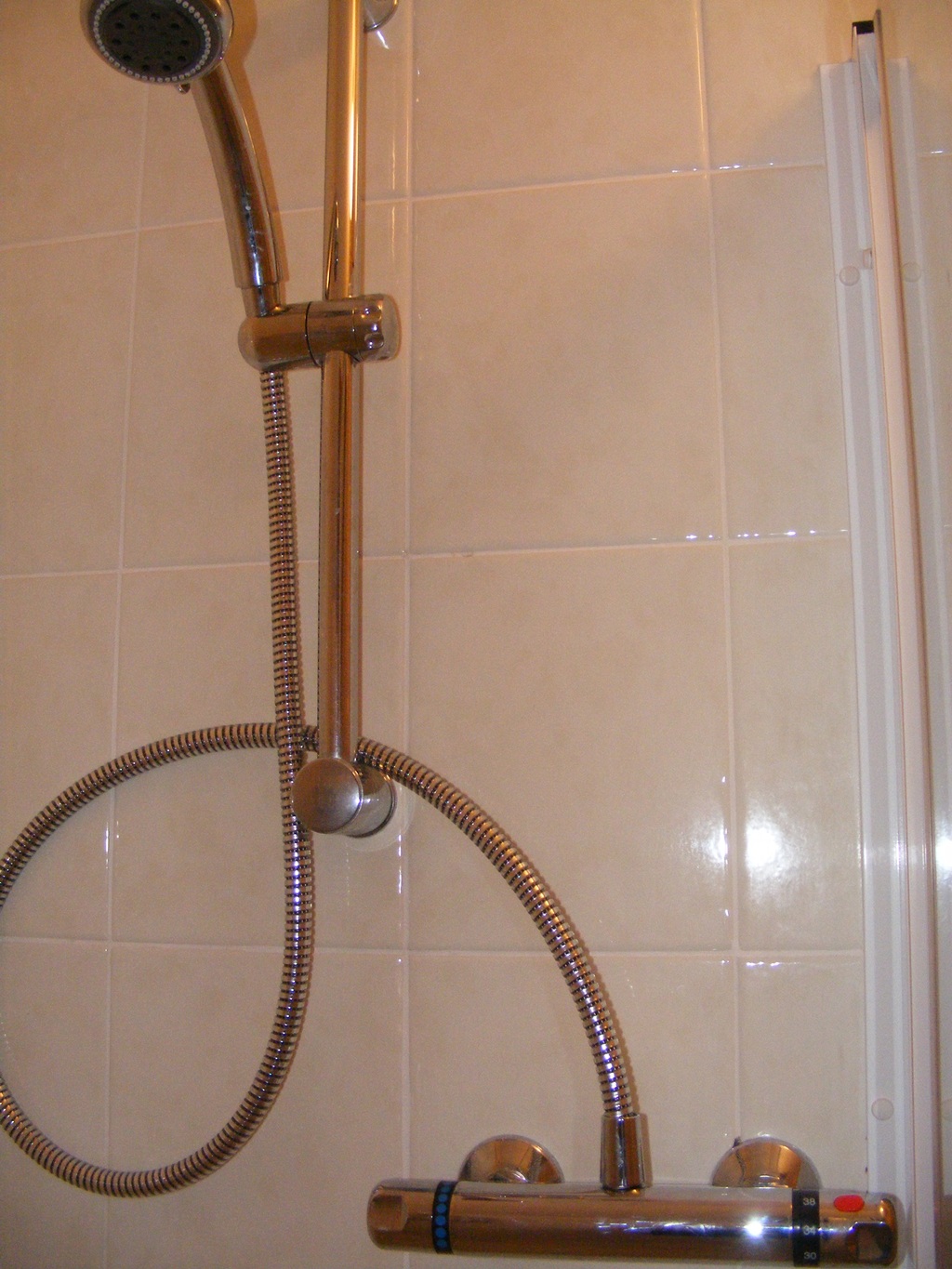
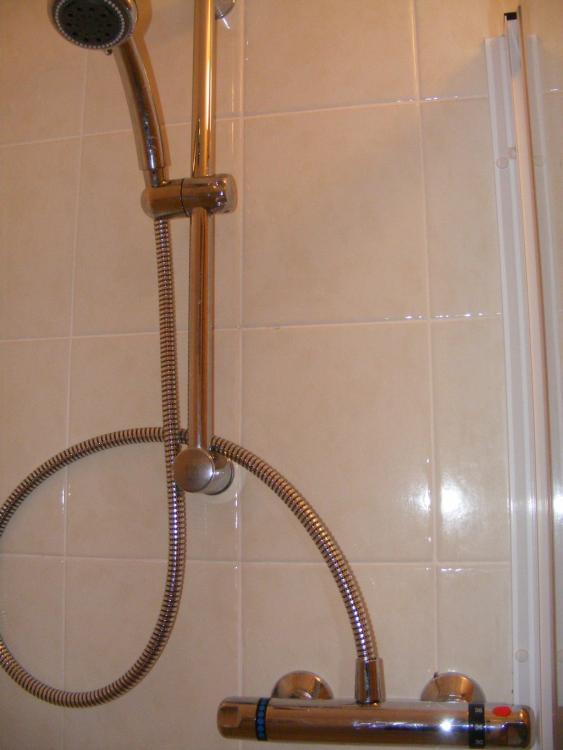
Well my £15 mixer arrived today. Slight faux pas. Description on the bay wasn't too good. It turns out the outlet is on the top and a larger diameter thread. I suspect it was intended to connect to a rigid pipe to a fixed shower head, not a hose to a handheld. Never mind, I soon discovered the outlet boss screws into the main body,and the thread in the body is nearly * the same size so I swapped them over from the old to the new. All now working, and i won't grumble about the hose coming out of the top instead of out of the bottom. * they were the same diameter thread but a slightly different pitch. The boss should screw in, until it bottoms out on an O ring flange. But due to the slight thread pitch difference it only goes in about 3 turns and binds before the O ring reaches the flange. Solved with ptfe tape.
-
MDPE is okay buried in the ground. It's what Scottish Water do here. The only duct is where it passes under the road. I see my neighbour is having "issues" with SW. they have refused his connection. One of the reasons being he put his toby too far from the road. I wonder if the fact he put the water pipe in a black duct under the road is the other issue?
-
There's a lighting shop in Inverness that has lots of posh light fittings, but every one seems to have an extra 0 stuck on the end. We did buy one fitting from there in their "bargain" corner, but everything else was simply over priced.
-
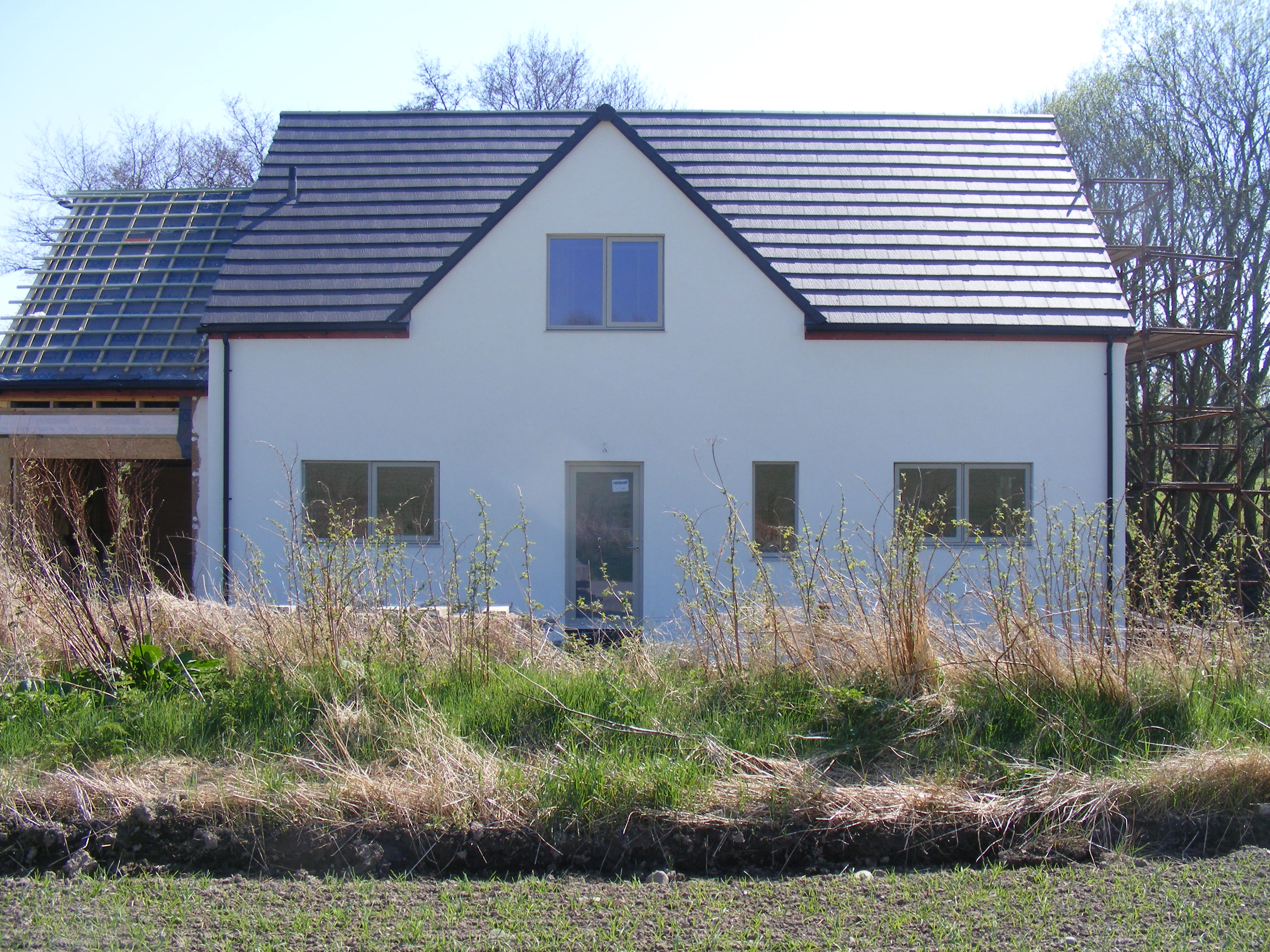
Up here it would seem the planners are trying to push the local vernacular back in time. When i built my present house 13 years ago there was no trouble getting planning for a house that generally followed the local vernacular but used concrete tiles on the roof. This time round the planners pushed me hard wanting real slate on the roof and I had to fight for the one and only concrete tile that looks a bit like slate that they would accept.
-
We have three different widths of gardening spade. The narrowest one the "lady spade" does a wonderful job on the building site for just such uses. My favourite general purpose shovel is now about an inch shorter than when new due to wear, but I like it as it's so light weight. It's like triggers broom, it's on it's second handle.
-
I carried them up the ladder, 2 at a time was all I could carry. SWMBO stacked them on the scaffold. Later she passed them from the scaffold up to me on the roof. 1800 tiles so 900 trips up the ladder at roughly 10ft up the ladder per trip = 9000ft of ascent up that bloody ladder or 3 Munro's up a ladder. My knees knew it. And that's not including the cut tiles, a fair few more trips up and down the ladder (though before the windows were in, I was climbing into the house to cut them upstairs) The only reason I did it myself is lack of money. I had a quote of £3000 to tile the roof and I would gladly have paid that if I could have afforded it. At my own hourly rate that's 120 hours. I am sure it took me a lot longer than 120 hours to tile the entire roof.
-
I tiled my first roof 30 years ago when I built a garage in a previous house, totally different sort of tile. This one is interlocking concrete tiles. Same technique as present house. I just watched the roofers when tiling the main house and copied what they did for the garage roof. So when it came to this house I had already done it before. As above the setting out takes some working out. you have to measure the total length top to bottom and work out how many rows of ties you need. There is a stated minimum and maximum gauge for the type of tile, and as it worked out the best solution was almost on the maximum gauge for the tile I used. When setting out the battens, it's easy if you cut two bits of 2 by 2 to just the right length for the gap between battens. I have never tried a slate roof, that would ne doubt be harder, or a different skill to learn. the planners here really wanted me to use slate, but I argued no, the houses either side, in fact all but one in this road had concrete tiles so that is what I wanted to use. the compromise is they approved Marley Edgemere Riven, which is a slightly thinner than normal concrete tile with a surface finish to look ever so slightly like slate when viewed from a distance by someone with less than 20:20 vision.
-
There's a lot about the Chichester canal here http://chichestercanal.org.uk/about-chichester-canal/chichester-canal-history/ There's only a couple of miles of navigable waterway now and the houseboat moorings are very close to the sea lock into Chichester harbour. They say the sea locks are still operated occasionally to allow houseboat movements. They face a very big challenge if they ever want to re open more of the canal as a couple of major roads have been built with just a culvert where the canal was, so would need major work to allow boats to pass.
-
There will also have been size limitations on the berth, they mentioned a height limit (which is why they had the sunken roof deck so not to exceed the height) so I am sure there will have been length and beam limits on the berth as well. It was certainly a lot larger and a lot nicer looking than the other houseboats adjacent. Maintaining the wood cladding is a logistical exercise in itself.
-
Yes that's right, it was not fixed. They also made the "house" a little bit longer than the float by mistake so it overhangs a little at the ends. It would not be hard to bolt a substantial timber block to the underside of the house floor right in the corners of the bilge so it could not possibly move. I asked about sewage. There were two visible "pipes" from the house to the shore, but only small diameter. I can see that being for water and electricity supply. all I can think for drainage would be a macerator type pump that would then cope with a small pipe and perhaps a slight uphill run to some mains drainage point. I think I would want a floating pontoon "patio" ourtside those doors. This is on a short disused landlocked bit of canal, so there won't be any padding boats. Though I do here rumblings about restoring navigation to the Chichester canal and restoring the sea locks.
-
But with building land, you own it, and you usually get a garden, parking space etc. With a floating home you don't own the water, you pay rental to whoever does, be that a marina, EA, CRT etc and you have to pay to use their facilities. The "limit" on floating homes is of course finding a mooring with residential permission. this sort of program never tells you how much rental they pay for a mooring, and if they need to buy the lease of the mooring to start with.
-
@Nickfromwales Yes we do want a rainfall shower in the new house. BUT we also want a walk in shower with no doors just a big shower and a big fixed glass panel. That creates it's own problem in that the shower head needs to be remote from the controls so you can turn it on and wait for the hot water to get to the head before you step in. Our present shower works as you can open the door, put one hand in, turn it on, withdraw that hand quickly until the hot water gets there. you can't do that with a big fixed glass panel, hence needing remote valves. Another topic for another day when we get nearer to that decision.