
ProDave
-
Posts
30682 -
Joined
-
Last visited
-
Days Won
424
Everything posted by ProDave
-
Worst case would be a 900mm (or would that be 1100mm) high handrail to be fitted in front of them.
-
With or without mvhr some people cannot grasp that when it is very hot outside and slightly hot inside, the last thing you want to do is open the doors and windows as that will just let the heat in quicker. A battle I used to have, and lose often when I lived down south and we got a summer heatwave. 25 degrees passes for a heatwave up here. A few weeks back however we discovered a quirk of a "night purge" with mvhr. We had a few hot days so had the bathroom and bedroom windows open just a crack on their ventilation setting. I noted the bathroom was cooling down quickly but the bedrooms were not. So I investigated. If you went up to the bathroom window, you could feel cool outside air being drawn in, but not at the bedroom windows. Then the penny dropped. The bedrooms have mvhr supply air fed into them, so can be considered to be at slightly positive pressure. So opening the windows just a crack, resulted in room air being pushed out, not cold air drawn in. But the bathroom has an mvhr extract, so can be considered to be at a slight negative pressure, so open it's window a crack, and it draws cool air in easily. You either turn the mvhr off for a night purge, or open the windows wider.
-

Extractor not staying on (on lighting circuit)
ProDave replied to gravelld's topic in Electrics - Kitchen & Bathroom
I personally am not a fan of fitting fan isolators. I removed them all from our rental properties to stop tenants turning the fan off because it was noisy, and then complaining about the damp and mould. I am still waiting for someone to give me chapter and verse on WHY we fit them. Maintenance is a poor excuse, any sparky that cannot isolate at the CU is not trying. It is no different to changing a light fitting that is looped at the light, so has a permanent L connection. We don't fit a 3 pole isolator next to each of those do we? I am convinced that we fit one because some directive says you must have a local isolator at a "fan" Now I can see that so when the HV engineer has the cover off and is changinf the belt on a 3HP fan motor there can be no possibility of it starting unexpected and taking his arm off. But to apply that to a poxy bathroom fan that would do no more than give you a bit of a nip if you put your finger in the rotating blade is a bit silly. So I have no problem with one in the loft, or even not fitted. But I always fit them on jobs because it is the "done thing" though nobody has shown me the actual wording of WHY we fit them. -
You think mvhr is controversial, you wait until you start discussing a wood burning stove.
-
Just to mention another myth. Fitting an MVHR does not stop you having a wood burning stove (though there are other arguments for or against those) Just buy one that is "room sealed" so it has it's combustion air ducted in directly from outside. You want to do that anyway, otherwise that would be yet another hole (vent) you are forced to have in the building to let cold air in all the time. When we do get hot weather (not right now) we do open windows, mainly so we can hear the burn and the birdsong in the morning. It does not upset the mvhr in any way. but if you have several windows open you could turn the mvhr off if you wanted to.
-
Extractor not staying on (on lighting circuit)
ProDave replied to gravelld's topic in Electrics - Kitchen & Bathroom
It is not at all uncommon to find people who have changed an ordinary bathroom fan for a timer version and then had to be "inventive" to make it work with a 2 core & earth cable. Usually using the CPC as a neutral. I have even encountered a bit of 3 core flex used with the green / yellow used as the switched line. You meet all sorts of horrors. -
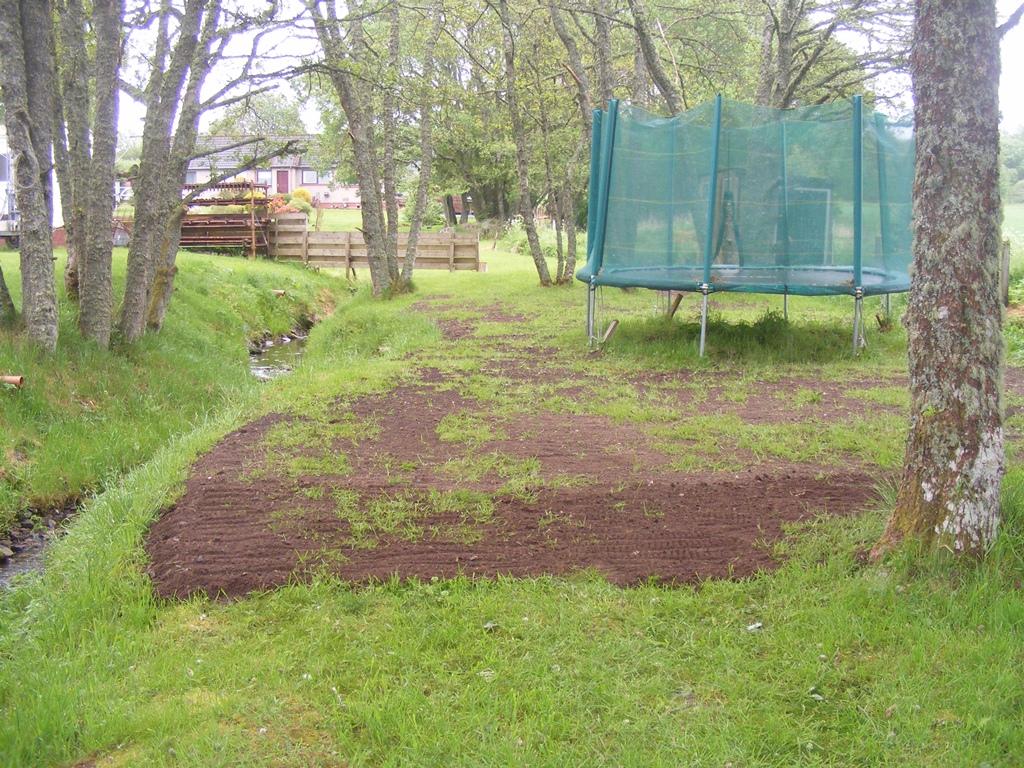
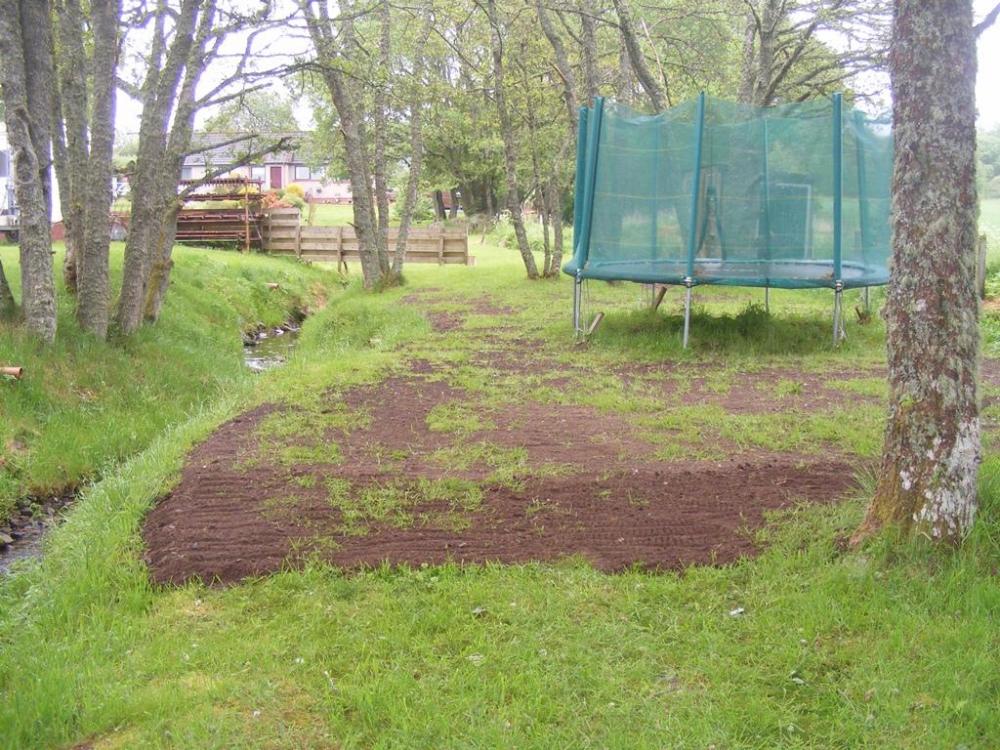
This is topical perhaps. Our south garden was the ground just as we found it. We cleared it. Strimmered it, and them mowed it into submission. It resembled a lawn from a distance but it was very lumpy with lots of dips and bumps. Well now, as a fill in job (pun intended) I have been using up some off the last pile of spare soil to level it out a bit. Nothing fancy just spreading soil over what is there to fill in all the low spots. I hope because the infill is not thick the grass will just grow through but anywhere it doesn't will just get re seeded.
-
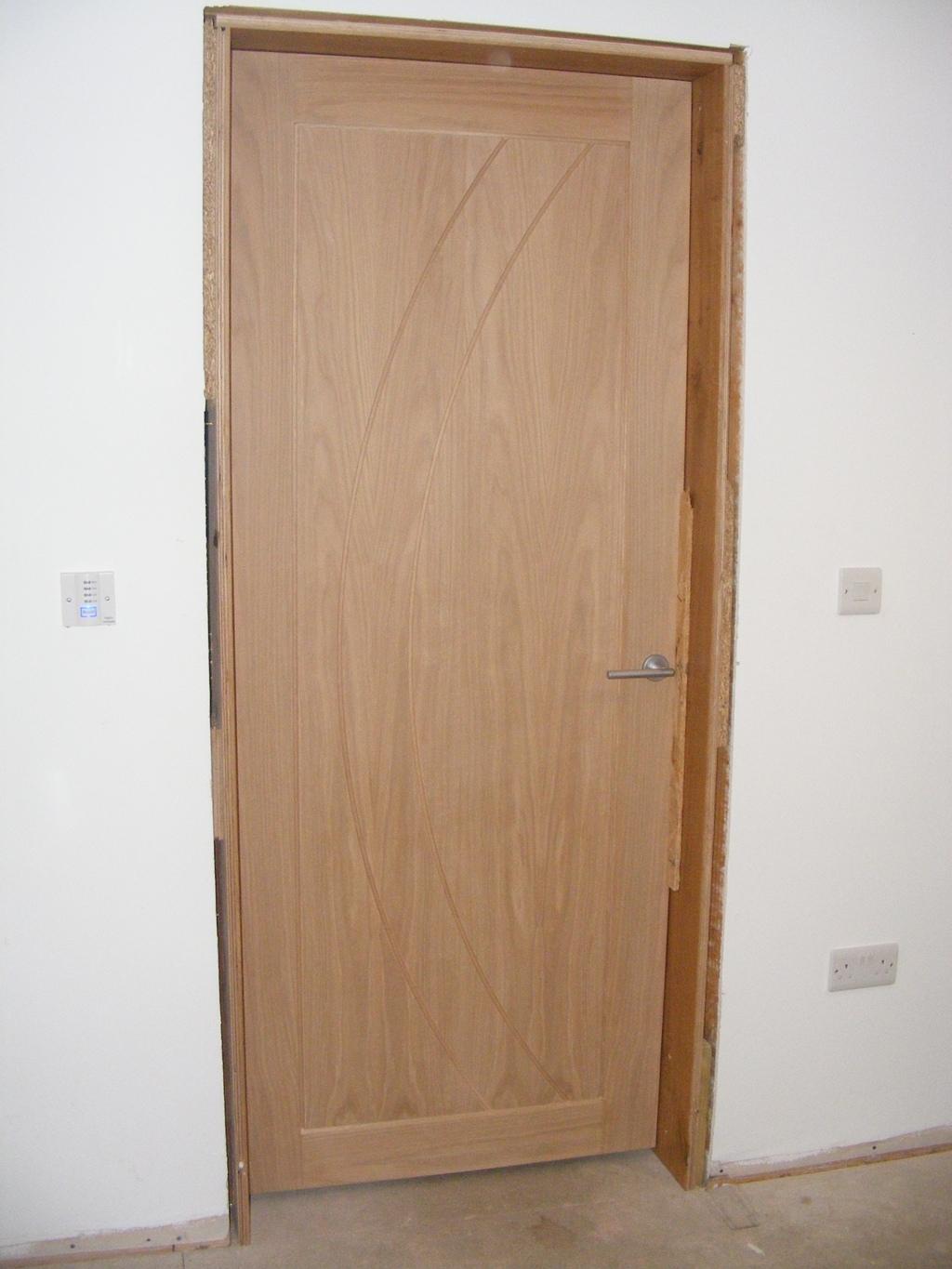
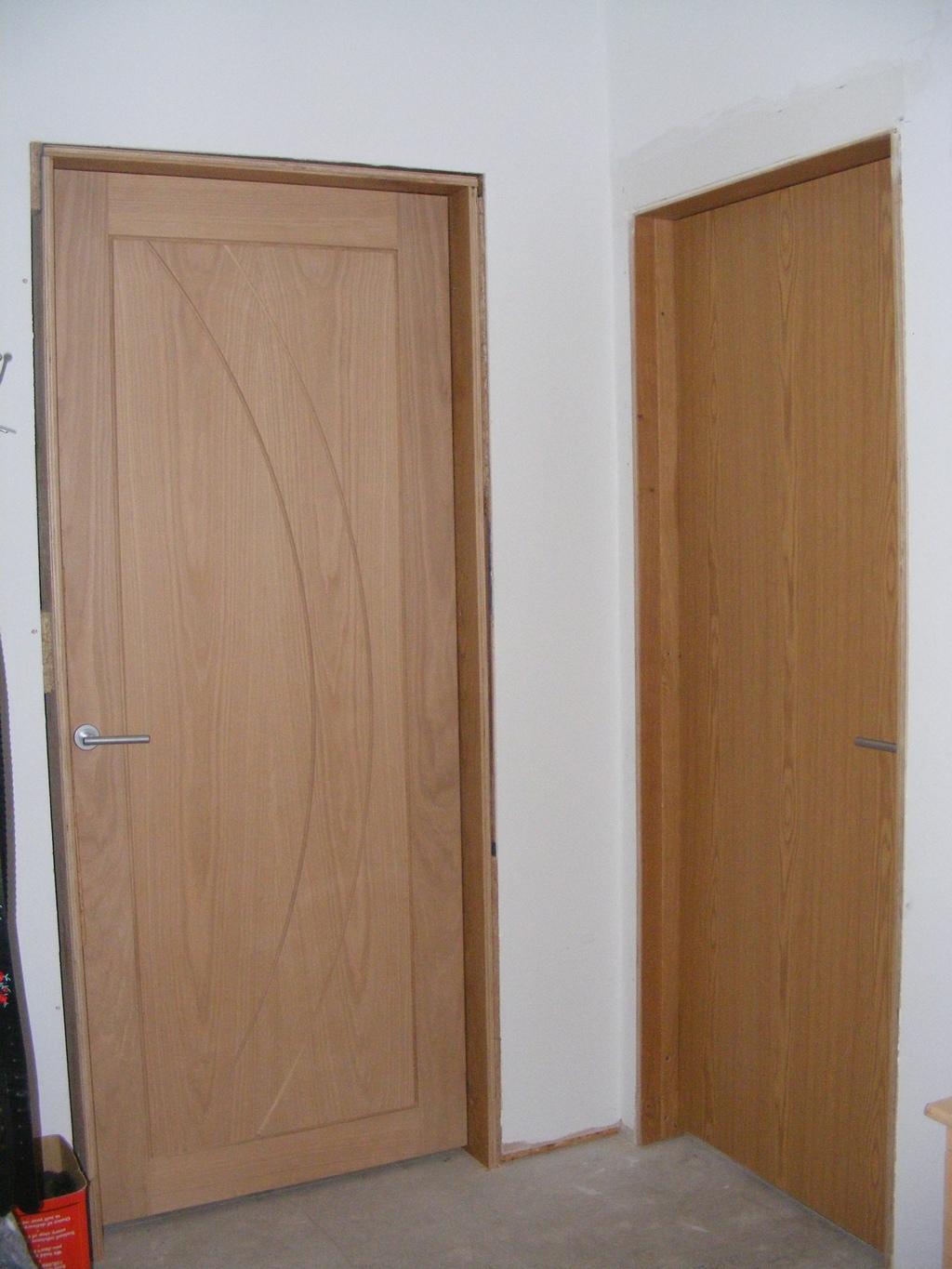
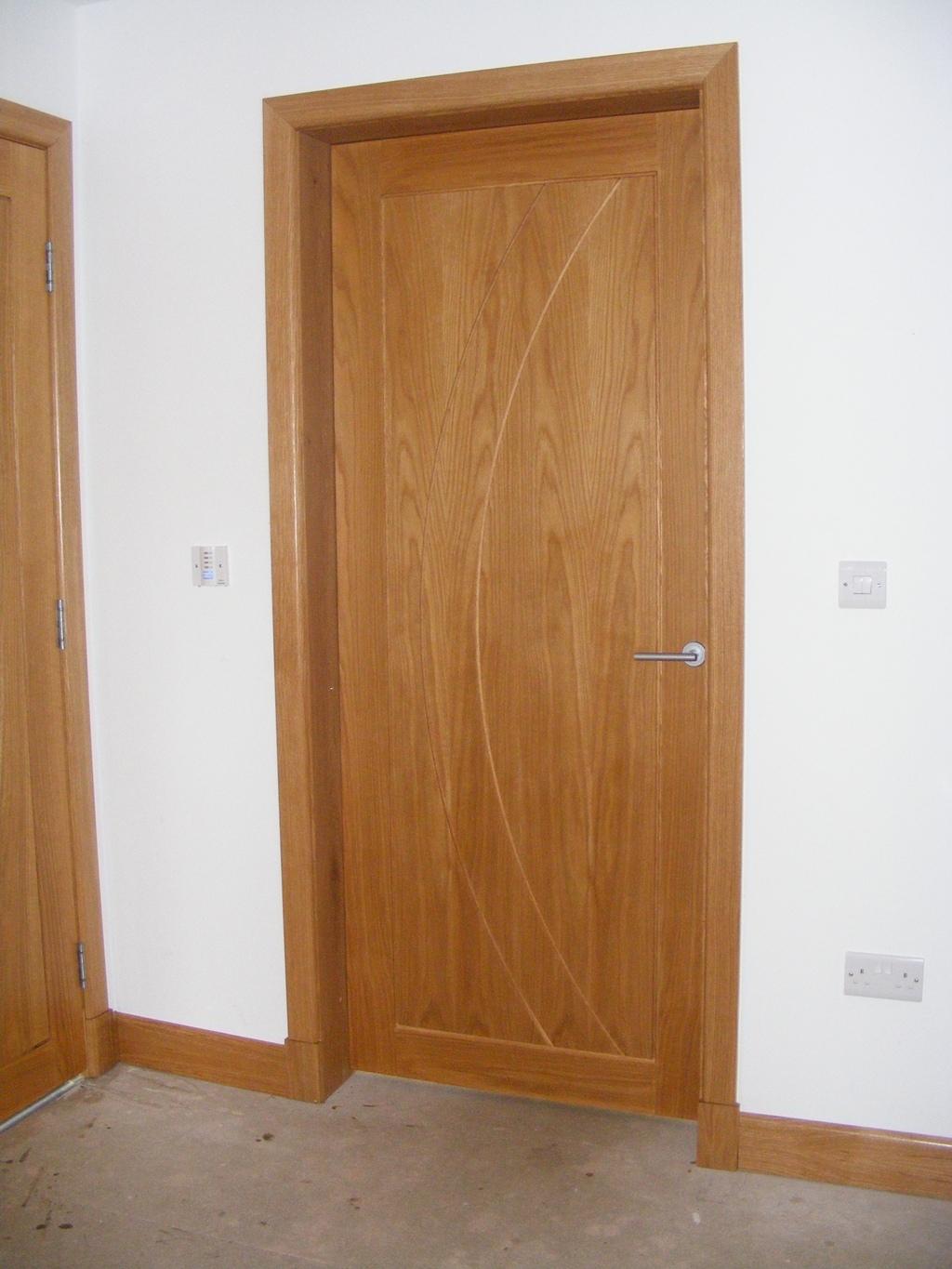
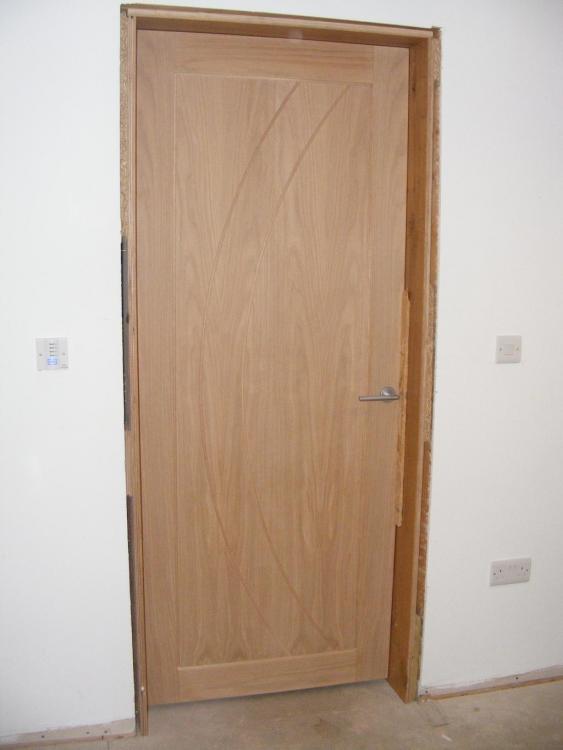
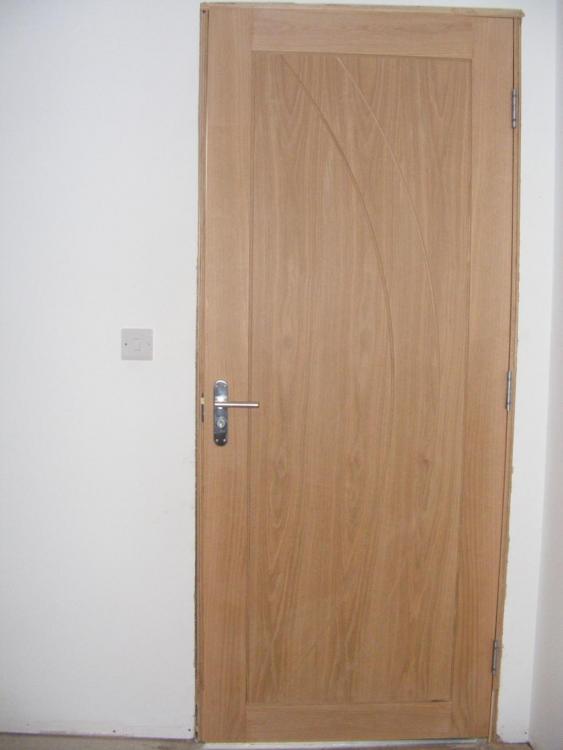
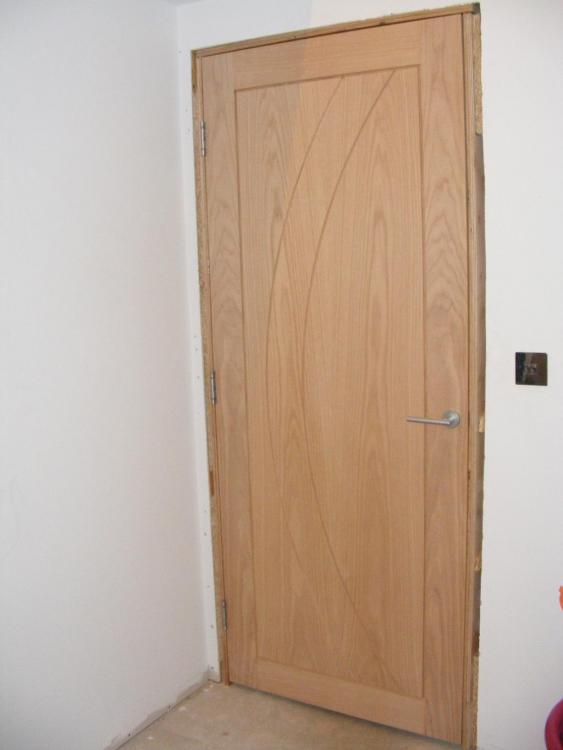
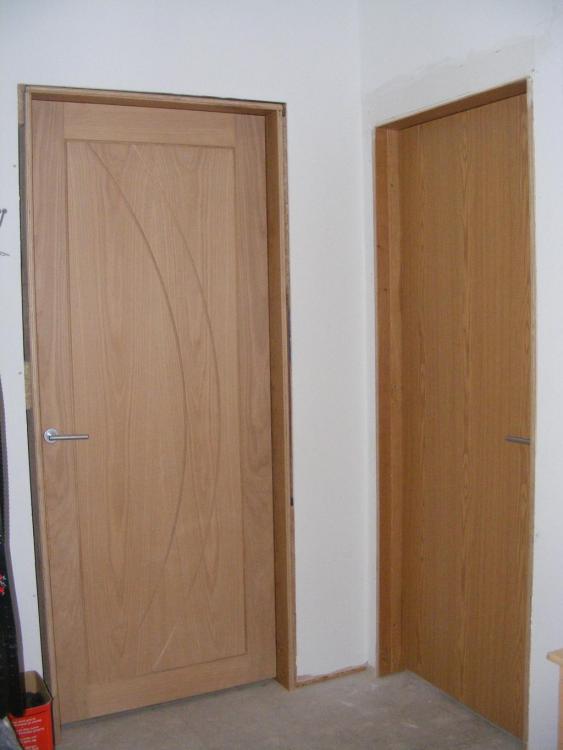
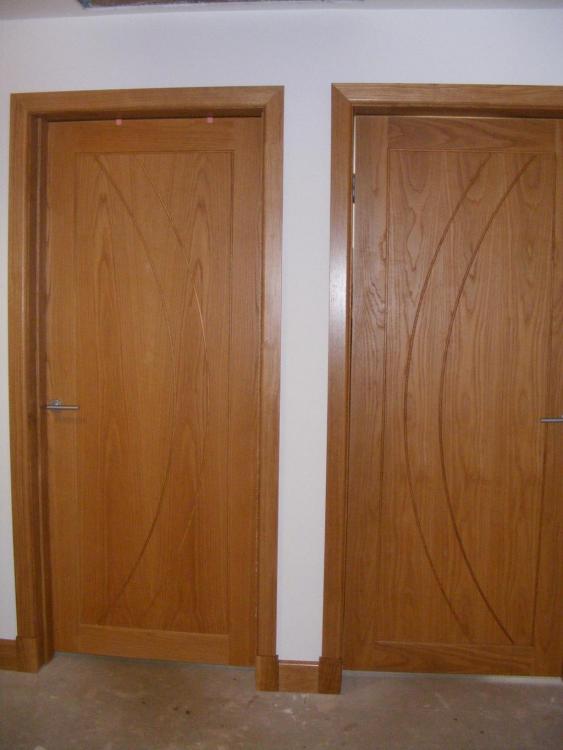
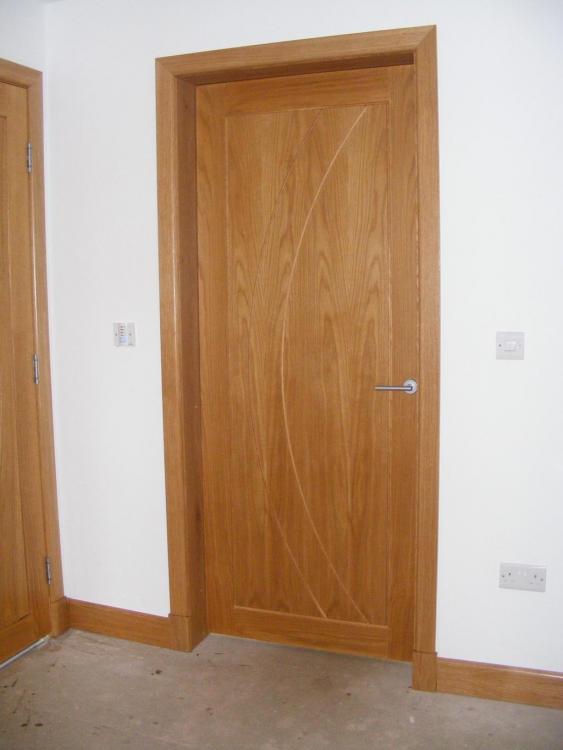
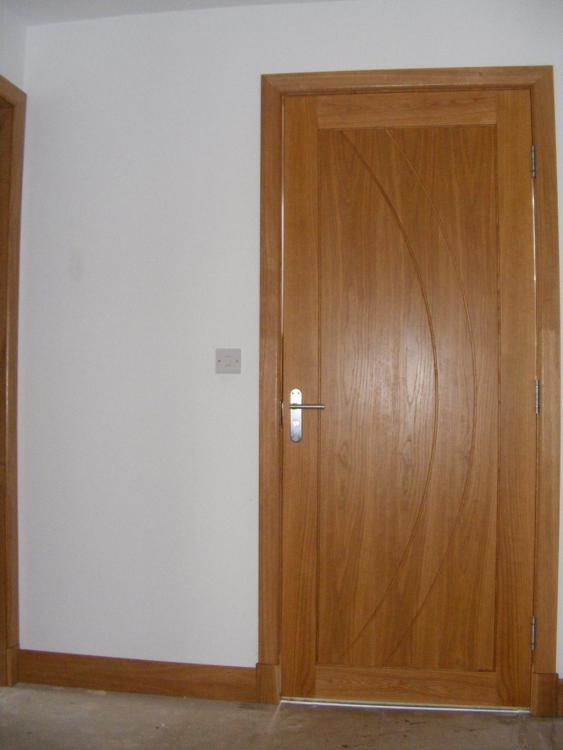
Just an update to this. I had enough left over floorboards to make the 6 upstairs door liners (with a joint at the bottom of each) After a long wait, the joiner came this week to hang all the upstairs doors (he is a busy man) A late edit. this is how they ended up with door stops and architraves No door stops or architrave yet, that will have to wait a bit.
-
Extractor not staying on (on lighting circuit)
ProDave replied to gravelld's topic in Electrics - Kitchen & Bathroom
+1 to the above, if you only have a 2 core and earth cable then you first need to change that for a 3 core & earth cable back to either the light fitting or light switch, wherever you can pick up a neutral, permanent live and switched live. Where you connect to depends how your lights are wired. -
What CAN get onto you r site? Our TF was built by some local builders who bought it to site in several loads on a tri axle trailer behind a transit van and lifted all the panels into place with their wheeled 13t digger with a boom extension acting as a crane.
-
I would be looking for a different compromise. Something you can change later, like perhaps a cheaper kitchen that in the future you could upgrade? If you later decide to add mvhr it will be a lot harder than changing a kitchen.
-
A lot of the people that use a heat pump for cooling in summer, have solar PV fitted, so the efficiency is not very important when there is plenty of free electrcity being produced by your solar PV when it needs to do cooling functions. Agreed if you don't have PV then you would be paying for that so it would be more of an issue.
-
I will be surprised if you actually achieve an EPC of A without mvhr. Once you get to a good level of insulation, the heating losses are dominated by ventilation loss. There was a discussion about this recently. It's easy to model your predicted heat loss and play around with the numbers and in my case not having mvhr would easily quadruple my heating costs. It's a double edged sword as well, one local builder here strvied for the best he could get without mvhr, then had his air tightness test done and was told by building control it was too air tight and he must fit mvhr, which effectively as a retro fit late in the build was a lot harder than had it been designed and built in from the start.
-
Hi and welcome. It sounds like you are aiming for a good house. The only thing I didn't see on your list which I think is a must have, is MVHR (Mechanical Ventilation with Heat Recovery) If you had not thought about now, start designing it in.
-
Not far from me then? I am aiming for £1000 per square metre and should just about achieve that, but I only employed a builder to build the very basic shell. Everything since then I have done myself. If you are looking for a turnkey project where someone builds a house ready to move into, there is no way you will do it for £1300 per square metre, not even up here in the north of Scotland. Sorry. The only way you will get close is to manage the project yourself starting with getting someone to erect the very basic shell. Then work from there, and do anything that you are capable of yourself.
-
Getting a Valuation for Land with Planning Permission
ProDave replied to Pemu's topic in Costing & Estimating
We have it easy here. There are always plots for sale to you have something to compare. When I bought mine I valued it at exactly the same as a similar size plot 5 miles away was on the market for. There are 3 plots for sale half a mile away, but they were £30K more. 5 years later they are still for sale, clearly over priced and nobody wants them at that price. -
What to treat doors when the manufacturer says "do not oil"?
ProDave replied to ProDave's topic in Doors & Door Frames
Thakns. Osmo it is then. -
What to treat doors when the manufacturer says "do not oil"?
ProDave replied to ProDave's topic in Doors & Door Frames
They didn't offer them finished in the 2040mm height that we needed. -
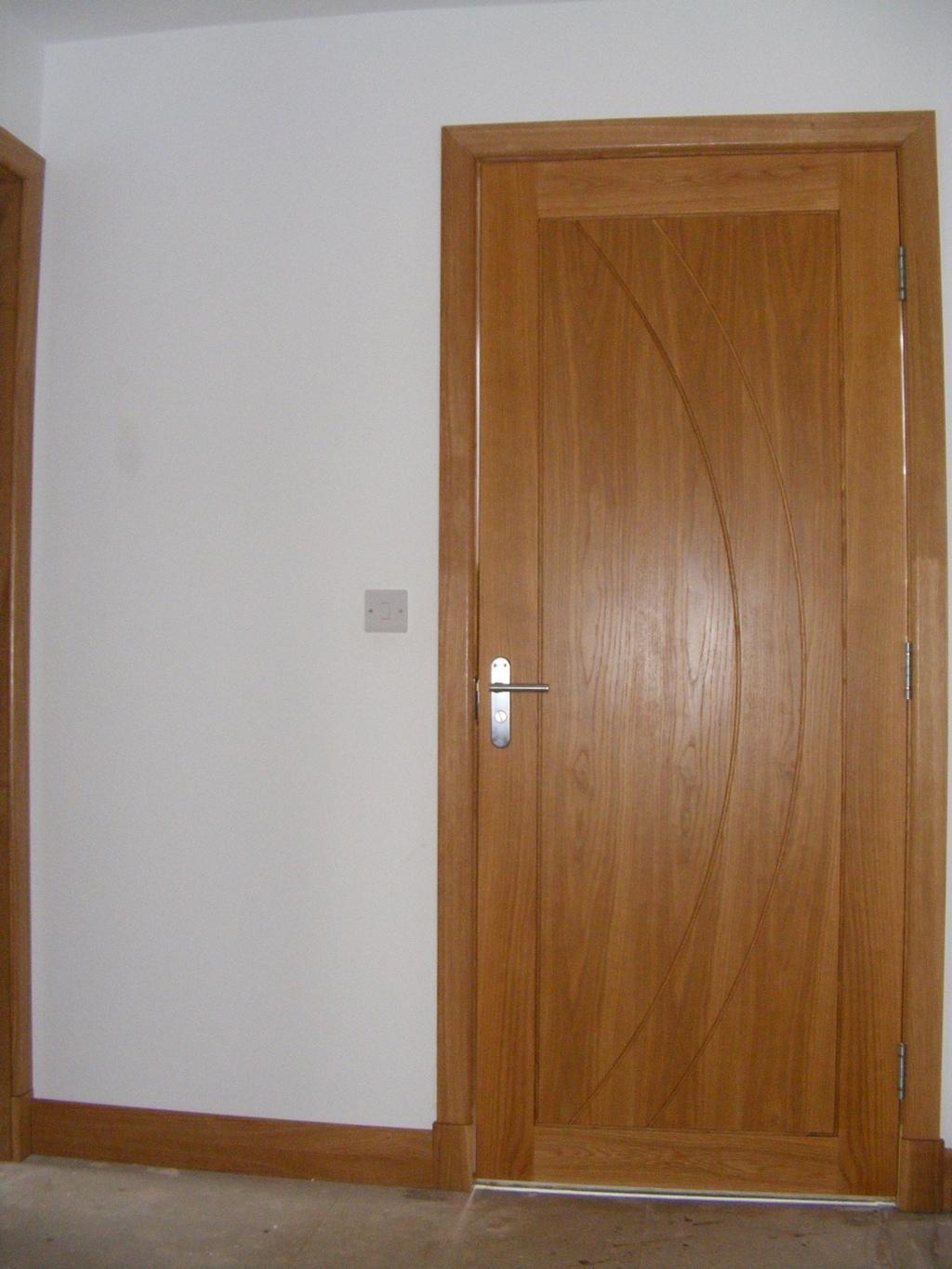
After a long wait, our expensive XL joinery Oak doors are now hanging in their frames. Time to treat them with something. Conventional wisdom and often recommended on here is Osmo Oil. But what if the first line of the manufacturers instructions says "Do Not Oil" The joiner than hung them said nonsense, he would use Osmo Oil.
-
This comes back to what we discussed a while back. Gabions. You dig out a flat at your half way point of the slope for the gabion baskets to sit on (a little lower so the outside edge of the gaboin is not vunerable to erosion in spate conditions) Fill the gabion baskets with stones. Use the excavated soil to fill in between the garden side of the gabion baskets and the lawn. you can also put your timber walkway lower down if you want. You will need to buy the gabion baskets and a lot of stone to fill them, but if you do a scale drawing and work out exactly where and how deep to put them, you should be able to get it so that dig out soil = amount of infill soil needed so no soil to import.
-
What KVA rating supply are they offering for the direct 230V option (the £35K option) and what distance does this have to travel? I found the DNO start having kittens when you tick the "heat pump" box on the form. It might be best just not to mention that, tell them you are having an oil boiler, and "change your mind" later on and choose the ASHP. There really is no problem with a modern inverter driven ASHP ours certainly has no measurable start up surge.
-
That would be easy to do on mine. When you select cooling mode it turns on output that it expects to power a changeover valve to switch from the UFH to the FCU. If instead you used that to power a 2 port valve that just enabled flow to the FCU as well as the UFH you would have what you want.
-
When I was in middle school, I remember one particular corridor where the ceiling covering was a grey fluffy material behind an outer covering resembling paper and painted. But there were lots of holes in it and as children do we used to take a run and jump to poke our fingers in the hole. Then next school year after the holdays it was all gone. That was almost certainly some form of asbestos. That was 45 years ago now, so hopefully if it hasn't got me by now I have escaped. But one wonders how many were not so lucky from things like that.
-
It won't be driving both at once. In this set up, it will either be heating DHW, heating the house (e.g ufh) or cooling the house (e.g fan coil unit) It will only do one at a time, under the control of the heat pumps controller. and suitable valves will direct the water (hot or cold) to the correct destination.
-
When I had some fence posts to put in, I just pushed them in with the digger. I took a trusting volunteer to stand there and hold them upright while I swung the bucket round........