ProDave
-
Posts
30682 -
Joined
-
Last visited
-
Days Won
424
Everything posted by ProDave
-
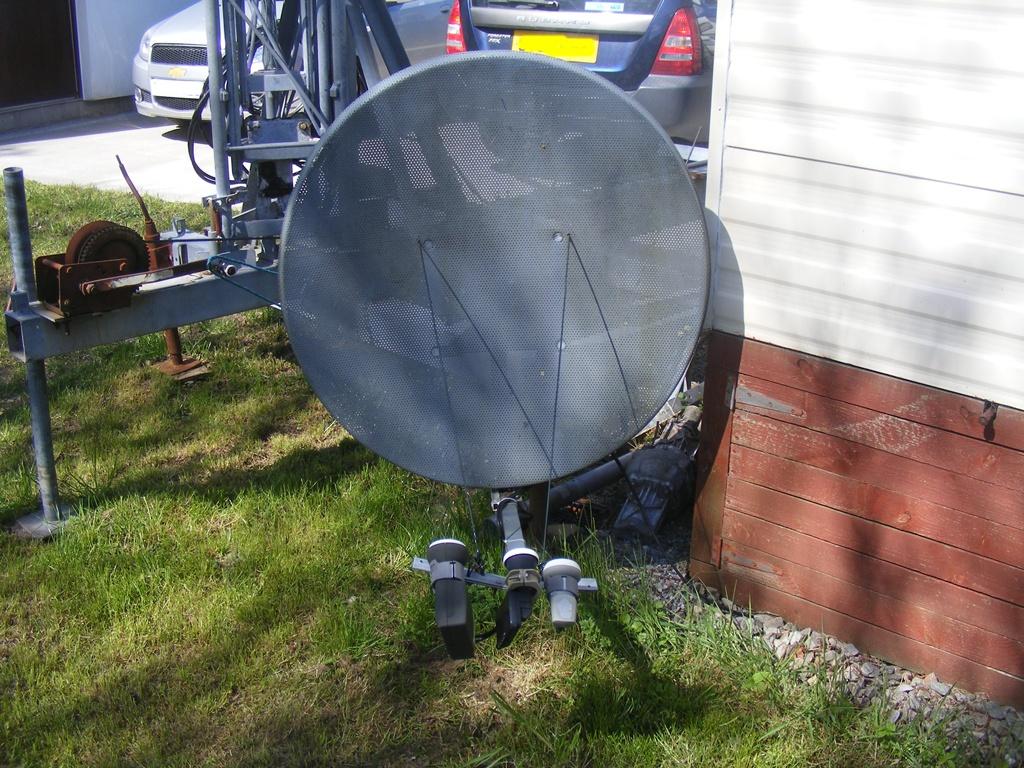
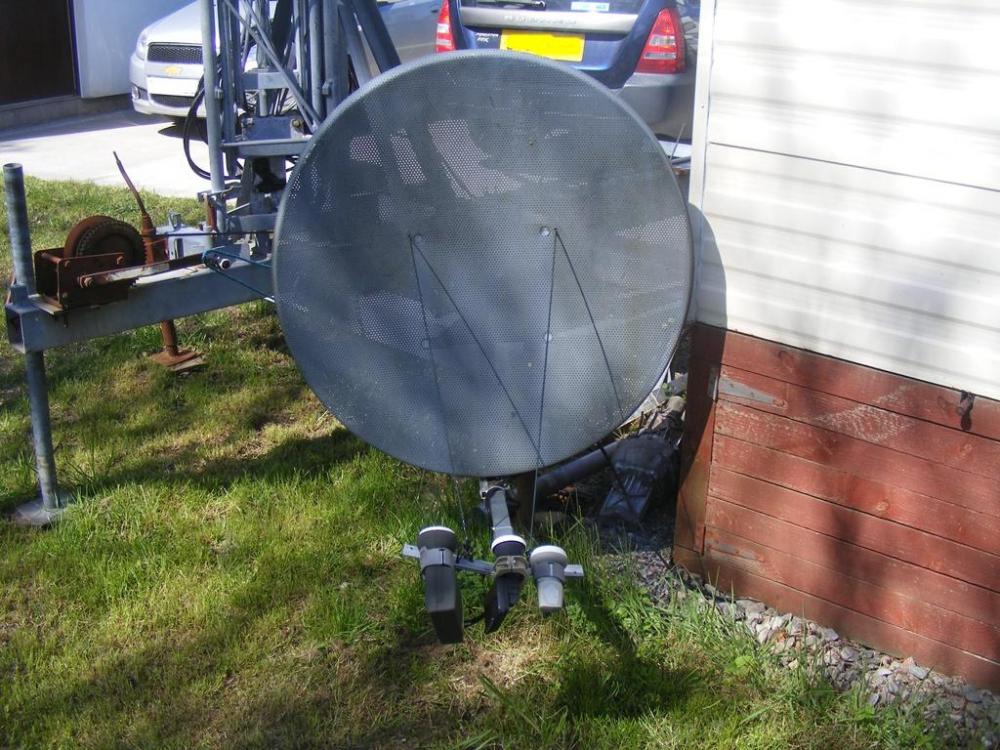
A satellite dish won't work in the loft. If that is the exact wording of your planning condition,. put the TV aerial on a free standing pole or attached to a shed, i.e. "not on the outside of the house" My satellite dish is away from the house because of the trees, it is actually clamped to one of the jacks of a wind up radio mast trailer
-
Directly connecting IoT devices to the Internet
ProDave replied to TerryE's topic in Boffin's Corner
I don't use my phone for much, mainly because I cannot abide trying to type anything more than about 2 words on a tiny on screen keyboard that is in any event taking up half your screen. It is brilliant as a "consumer" of data for applications that don't need much input. I particularly like the GPS functions. It is a satnav for the car, a chart plotter for the boat, and a handheld GPS with maps for hill walking. Occasionally I will take a photo accepting it is a poor camera. The one thing I never thought I would use a phone for though is controlling my Pi Music box. but again that does not require much input, just pushing buttons and the GUI for that has been written to work well on a tiny screen. -
Check your coverage on the digital tv postcode checker, that will advice what signal strength you have and indeed if you have it pointing in the right direction. http://www.digitaluk.co.uk/coveragechecker/ If you can't get a decent signal with an indoor aerial and don't want an outdoor aerial (why not) how about freesat? A satellite dish does not need to be high up if that is your objection to an outside tv aerial.
-
They will probably just make you test each run individually. Having sealed IC's just meant the whole lot could be done in one test.
-
Cost of complete interior renovation in old croft building
ProDave replied to sniederb's topic in Costing & Estimating
2 random example by way of comparison in roughly your search area. This one, 3 bedrooms, EPC B, nice and modern, ready to move into, with option to purchase the croft land if you want for £240K. https://www.hspc.co.uk/Property-with-Land-For-Sale-Kinver-177-Stoer-Lochinver-IV27-4JE Or this old cottage needing pretty much complete reonvation. 3 bedrooms, EPC F offers over £150K https://www.hspc.co.uk/Detached-Villa-For-Sale-269-Achnacarnin-Lochinver-IV27-4JG To those not from the area, that second one is your typical 100 year old or more "croft house" The question is, can you make the second one into a comfortable home to match the first one for less than £90K? And it will probably still be smaller, a more quirky layout, small windows and darker inside. -
Our BC officer witnessed the pressure test on the external drains early on in the build. For that the internal pipes were plugged. the risers and lids of the inspection chambers all had O ring seals and they held pressure. Later when I connected the treatment plant BC were unable to attend so just noted it as done. Likewise even later when testing the internal pipework they were unable to attend. In case they want to see it, I videod where the tester was connected and then a boring 2 minute video of it holding pressure.
-
Cost of complete interior renovation in old croft building
ProDave replied to sniederb's topic in Costing & Estimating
I use the term "croft house" to describe a particular style of house that is very common up here, even in the towns. In most cases, even if actually on a croft, the actual ground the house is on and a bit around it has been de crofted. -
That will be DP circuit breakers and DP switching on everything including lights then? (it would if done like that in the UK)
-
Cost of complete interior renovation in old croft building
ProDave replied to sniederb's topic in Costing & Estimating
I would forget UFH. I doubt you have the ceiling height to build the floor up by 100mm or more that you NEED to do to add insulation for UFH. And if you start thinking of digging up the floor to lower it to add insulation, that is where you might find the stone walls have no foundations. (I know someone who started on a steading conversion, started to dig to lower the floor and found just that. He knocked down and rebuilt.) Don't under estimate the work. I first fixed a croft house renovation in Rogart 18 months ago. The couple are doing all the work themselves. 10 months later they called me back, but not for second fix, just to move a few things around. They had barely scratched the surface. It might be a long time before I go back to second fix. -
What is the clean solution to damp in century-old buildings
ProDave replied to sniederb's topic in Damp & DPCs
I think essentially building a box inside these houses is the best you will do. The reason why most are so poor is people use such thin frames and little or no insulation. If you are going to do a half decent job, then I would be looking at a 100mm frame fully filled with rockwool / earthwool type insulation and them perhaps over boarded on the inside with Kinspan or similar. That is about the only way you will get half decent insulation, and you will need to pay a lot of attention to air tightness. I think it probably is important to keep the gap between the stone wall and the inner box ventilated. But can you afford to loose 200mm off every external wall to do that? (50mm gap, 100mm insulated frame, 50mm over sheet of kingspan, 25mm service void, plasterboard) The hard part to detail will be floor joists to keep the inner frame sealed from the gap, and that's before we start thinking of the roof and dormer windows (they are nearly all room in roof) -
Might have a major house renovation in the Assynt area
ProDave replied to sniederb's topic in Introduce Yourself
The walk up Conival and Ben More Assynt a few years ago now was one of my most memorable hill walks, probably helped by being a crystal clear blue sky no wind September day with fantastic visibility. -
What is the clean solution to damp in century-old buildings
ProDave replied to sniederb's topic in Damp & DPCs
I see a lot of these old "croft houses" in my travels as an electrician. The walls are typically 3 feet thick, stone inner and outer, rubble / dust core. Absolutely no damp proof course whatsoever in the walls and anything from poor to no foundations under the walls. That one looks pretty original with the wood paneling. Most have been "modernised" first with lath and plaster, and later with plasterboard. the mistake most people make is they line the inside with timber (usually no more than 2" by 2" and board it. Rarely do they put any insulation in, and almost without fail they leave the gap between the stone walls and the paneling open to the loft space so the gap is open to cold air. On a windy day if you remove a light switch or a socket you are greeted by a howling icy cold blast coming out of the hole. Most of these come with an EPC rating of E or F I have seen various attempts at "damp proofing" them. Some paint the stone walls about 2 feet up with bitumen, On one I installed a "device" that was a small mains powered box that connected to a thin wire laid all around the perimiter at floor level. Quite what that was supposed to do or whether it worked I have no idea. Do you really want an old cold damp house with small windows? There are better properties available or why not build a decent house, plots are a lot easier to find up here than many other parts of the UK. -
Might have a major house renovation in the Assynt area
ProDave replied to sniederb's topic in Introduce Yourself
Hi and welcome to the forum. Which Assynt is that? (a bit like people who say they are at Tarbert) The one near Ben More Assynt? (a fantastic walk by the way) -
Directly connecting IoT devices to the Internet
ProDave replied to TerryE's topic in Boffin's Corner
Nobody has yet given me a good reason why ANY device in my home should be accessible outside it. The usual one of remotely controlling your central heating just would not cut it for me. -
That is the sum I keep doing. But remember if it could store and self use £1.44 worth every day, then that's £525 per year. Of course it won't store much in the winter when PV generation is low. With my 4Kw PV system, I have so far since January only exported 97Kwh so that's just £14.35 worth of electricity gone to "waste" Lets take a guess and assume I am going to export £25 worth per year, then any battery storage system to recover that has to be damned cheap. So at the moment, beyond some silly low power hobby thing, it is a non starter for me. However if you have more than 4Kw of PV then you will very likely be exporting a very much higher percentage of what you generate and the numbers might start to be viable. About a third of my "self usage" is heating hot water with the immersion heater. It is arguable that I could make "better" use of that if I stored it and used it for something better at a different time, and just let the ASHP heat the hot water for less pence per KWh of hot water. In my case most of my export is the middle of the day when PV generation exceeds what the immersion heater can take, so typically at a rate of 600W. To ensure I could get my self usage up to 100%, any battery system would have to be capable of using 600W for probably 3 hours of the day, so a modest 2KWh of battery storage should enable me to hit 100% usage. But the number of days it would be needed to do that ensure it would never pay for itself.
-
Our burn runs in a channel 3 to 4 feet lower than the garden. On Friday it was half way up. I have only seen it right at the top once. When I landscaped the plot, I raised the ground level on the house side, but deliberately left the ground on the other side lower, so it has somewhere to flood to first without doing any damage (though it would probably wipe out my shed) The bigger danger for us, is further up the burn passes under the road through a culvert. In the 2006 flood, the culvert got blocked by debris and the burn spilled onto the road, ran down the road and into the first entrance. My neighbours house was completely encircled by water, but none got into the houses. I really should keep some sand bags handy in case that ever happens again.
-
Some delivery firms try and tell me they must charge extra to deliver to the Black Isle. (not that I am on the Black Isle, just near it)
-
Talk to @Stones and find out what transport arrangements he made to get his Rationel windows to Orkney, a proper island involving a ferry ride.
-
One of the reasons I moved to the Highlands. Add the sound of water running through the burn to the birdsong and you get the idea.
-
I had 6 quotes for my windows. Rationel were the cheapest,. and the second best in terms of U value, only beaten very slightly by Internorm but they were twice the price. I see nordan windows on a lot of jobs that I do and I would have Rationel instead any day. What is it that you don't like about aluminium clad timber? I love the un fussy clean simple profile of my Rationel windows.
-
Moving, and in particular the stress involved in buying and selling is precisely what would put me off moving again for a long time. Not only do you have to find a buyer for your house, you also have to find a new one that you like available AT THE SAME TIME. We are not all rich enoug to buy the new one before selling the old one. I wonder how many people moving are so fed up in the end they choose any house, just so they can get it over and done, because the system does not allow them to wait for the perfect house? At least buying a plot, it is more likely you can afford to buy a plot before you have sold the old house.
-
I have just done the wiring on the refurb of "the hut" It was a long thin wooden building, originally built as an office for the Forestry commision. About 30 years ago it was converted to a holiday home, and has now been refurbished as a permanent home. The owner specified it with very basic services. No cooker, just a microwave, a fridge and a washing machine completes the kitchen. There is a sink with a small storage water heater, and an electric shower for the bathroom. It is pretty small inside, I would say not a lot bigger than my static caravan. Still it is way better than it was, all the time it was a holiday home, the "bathroom" only had a WC and basin. The only heating is a WBS in the kitchen / lounge in the middle. I don't expect the bedroom at one end or the bathroom at the other to be very warm in winter. It is funny how some people are prepared to live.
-
We had a really soggy day yesterday but nowhere near the wind that was forecast It barely got to 15 knots at Inverness airport. By sunset yesterday the burn was well in spate and almost up to the highest I am comfortable with, and it was still raining. This morning the burn is down, the sun is out and wind at the airport is currently 1 knot.
-
Yes the TD is know as the towel fluffer here. That is it's sole purpose.
-
For a start, I would NOT have speced a 12A relay to switch that load, I would want something a bit larger to be sure of reliability. Some designers just do not seem to be able to design properly for high power loads. A friend of mine (the tiler) has a solar PV diverter. I forget which one, other than it is no longer made. It failed. It was much the same sort of failure, the load to the immersion was carried through PCB tracks that were woefully inadequate and the fly leads off to the heatsink mounted SSR were also showing signs of getting hot and bothered. It was not difficult to repair and reinforce the current path.