
ProDave
-
Posts
30678 -
Joined
-
Last visited
-
Days Won
424
Everything posted by ProDave
-
There is a lot of confusion here and I suspect your lack of understanding is confusing the issues. So reading that you have mains drainage (i.e. you do NOT have any form of septic tank or treatment plant) and with the old house your foul and rainwater enter a combined sewer. Modern practice is where possible you do not put rainwater into the sewer in heavy rain it can overload the system. So modern practice is SUDS, Sustainable Urban Drainage. The idea is you try and deal with your rainwater locally within your property which might be a soakaway or might be some form of tank to fill up in heavy rain and drain more slowly into the sewer. Are you drawing and submitting these plans yourself? You really need an experienced drainage designer who knows the rules in your area to draw up a design that will work within the constraints of your plot and withing your local rules. Don't try designing this yourself.
-
 This is what happens when the people that make the rules don't think it through. They want tenants to have security of tenure which translates to making it hard or impossible to evict a bad tenant. Landlords fearing getting stuck with a bad non paying tenant decide to sell up before the new rules come into force. Suddenly there is a diminishing supply of rented properties with increasing demand. Add in more regulation and cost, and requirements for minimum energy performance, and more landlords quit because they do not want the extra costs and in many cases can't afford to upgrade properties to meet the new EPC requirements. Don't blame the fed up landlords, blame the rule makers who don't think through their plans. Like some others on here, I would not advise you letting your property, I am glad to no longer be a landlord. With the cost of rent now, can "long term renters" not manage to buy their own property? (we sold our last rental to the tenant)
 -
Moving overhead power lines - advice needed
ProDave replied to Don D's topic in General Self Build & DIY Discussion
You need a more experienced electrician. The 3 metre rule is if you are relying on the supply head fuse, in which case your consumer unit must be within 3 metres of the electricity meter. For longer distances you need your own fuse protection and an isolating switch. commonly provided by a switch fuse. I use this sort, fitted with an 80A fuse so it discriminates from the suppliers 100A fuse. https://www.tlc-direct.co.uk/Products/FBFMS080.html -
You will need to insure the building, and that will have to be a landlords policy not domestic. If you get an agent to collect the rent they will typically take 10% to 15% of the rent as commission. Statutory annual checks like smoke alarms, PAT testing, EICR and Gas safe. Ongoing repairs and maintenance. During void periods YOU will have to pay utility bills and council tax.
-
I think I know that design of house, a relative used to live in one. If so the good news is the walls of the "block house" are not load bearing. They knocked through from the kitchen into the blockhouse making that all into a larger kitchen. The downsides they lost the downstairs WC and the blockhouse had almost no insulation so it was cold.
-
Site worker accommodation "pod"; costs?
ProDave replied to YodhrinForge's topic in Project & Site Management
Yes buy a caravan. Believe it or not they were designed for portable human accommodation. Either buy the largest touring caravan you can find and tow it to site yourself, or buy a static caravan which will need to be delivered. -
New broadband connection deemed non-uso
ProDave replied to Thorfun's topic in Networks, AV, Security & Automation
I share your disdain with anything OR or BT related. Speaking as someone where BT would not even install FTTC where we are. We know Fibre passed the top of our road, and a cabinet there with a short run of copper to the houses would have given a pretty good speed. But they just would not and had no plan to do so. 4G / 5G is too weak and slow to offer a solution here either. Our saviour was a private wireless network installed by a private company now delivering us 100MB up and down, and if something goes wrong, a local office to phone where you nearly always speak to the same person. FTTP would be all well, but we built a new house 5 years ago and I really don't want to dig up the garden again and find a non intrusive way to get another cable into the house, even if it was ever offered to us. Their stubbornness means there are only a handful of people using OR supplied wired connections in the village now, almost overnight their entire network has been obsoleted. I really can't see them offering us any decent new wired fibre connection any time soon. -
Left hand waste hose connector, the blue one. Is that plugged or open? Probably just wants cleaning with a bit of bleach?
-
Joinery question. how best to make stick-build frameworks.
ProDave replied to saveasteading's topic in Timber Frame
Be careful "making to panel size" for some weird reason OSB is still available in imperial size, but don't build to that or you will curse when you try and plasterboard it as that is only available in metric. -
Plastic boxes you just drill your own entry hole where required.
-
That video just describes how it works and how it is better in some ways and not so good in others compared to an UVC NO mention of reliability which seems to be the largely unspoken problem with them.
-
I need one of these!
ProDave replied to Nickfromwales's topic in General Self Build & DIY Discussion
Fun university project. In the real world, I bet you could build a good stud wall quicker than that machine "prints" that wall, and the stud wall would be easier to work with, easier for services, and won't need skimming. -
All we had for building warrant was a drawing showing where the stairs went, part of the usual construction drawings. We got ours from stairbox. I recall there was a tick box on their design page for English or Scottish regs as there are some differences e.g minimum width. They never specified the grade of wood they were using and building control never asked for it. All they were concerned with was meeting regs regards width rise and going and banisters meeting regs particularly must be vertical and a 100mm sphere must not pass through.
-
It is a long time now but we had to get the licence before BC would issue our building warrant. I don't remember it taking weeks, once SEPA had verbally agreed to allow is to discharge to the burn, I am sure it only took days.
-
New extension - air coming through electrical sockets
ProDave replied to S_P's topic in House Extensions & Conservatories
Whilst I regularly encounter wind coming out of a socket box, it is usually when i have unscrewed the socket for some reason. To blow through like that even with the socket in place is unusual. It might be worth checking if they are all like this or just on one wall? That might pinpoint where the issue is. Is there any permanently operating extract fan anywhere? -
New extension - air coming through electrical sockets
ProDave replied to S_P's topic in House Extensions & Conservatories
I assume that is a window or door reveal before being boarded up? On the face of it, it looks good with gaps sealed up with expanding foam. One can only speculate but somewhere that didn't happen or not happen properly. A thermal imaging camera is about the only thing that may help you track down where. -
Pictures? You probably need to cut the tar back a lot more than 4 inches away from the wall, dig out to well below the damp proof course and till with stones. Did the contractor not notice the DPC? did he say it would be okay? What discussions did you have about this?
-
I had that in a previous house. A 1930s semi. It did not have much heating when I moved in and still had an open fire in the living room. On a still cold ight I lit the fire. Later I went upstairs, only to find smoke everywhere. Being a windless night, the smoke was not being blown away from the chimney and it turned out the easiest way for the air drawn by the fire to be replaced, was by sucking air down a bedroom chimney down the stairs and under the living room door, and that was drawing smoke with it down the bedroom chimney. There was no proper vent anywhere for the fire, only leaks in the building.
-
My BCO signed off my self installed stove with ducted direct air intake. They were over it like a rash with a tape measure comparing clearance distances to what it said in the installation manual. Once happy with that they signed it off.
-
New extension - air coming through electrical sockets
ProDave replied to S_P's topic in House Extensions & Conservatories
If you read this forum you will find the devil is in the detail. What has probably happened, is you have a "plasterboard tent". That is, lack of detailing means the space behind the plasterboard is open somewhere to a cold space probably the loft, allowing cold air to get behind your plasterboard, bypassing all the insulation. I see this regularly with cold air from switches and sockets. The clue is they need cables and the cables have to go somewhere often into a cold loft, and the hole drilled for them is oversized and never sealed. Do you have any pictures of how the plasterboard was fixed to the walls after the final layer of insulation? -
That was a bit more polite than I was about to post. Something along the lines of "Oh no kitchen fitter strikes again"
-
With a decent plumbing install there is also an internal stopcock somewhere inside the house to turn everything off. Start by looking in cupboards etc just the other side of the wall where the outside stopcock is.
-
Insulation in window seat in exterior tiled bay window help
ProDave replied to Debbiee's topic in Heat Insulation
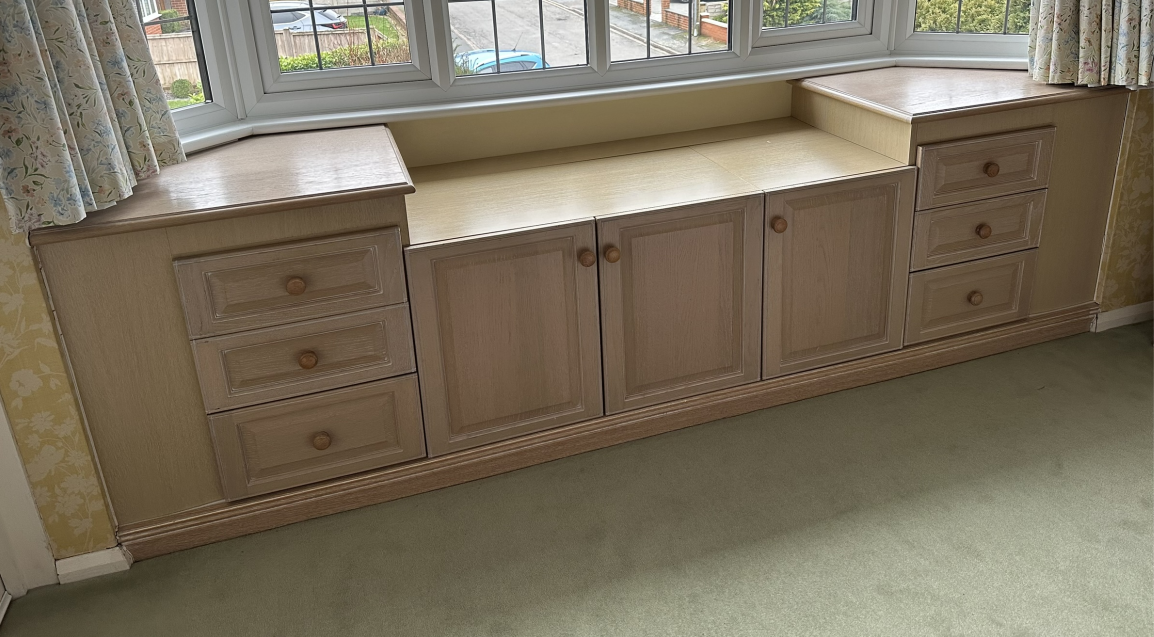
To make it easier I have copied one of your pictures and repeated it here in the thread. If you pull out the drawers or open the doors, get inside and look up and take a picture and see if the forum wisdom can work out the fixings of the top panels.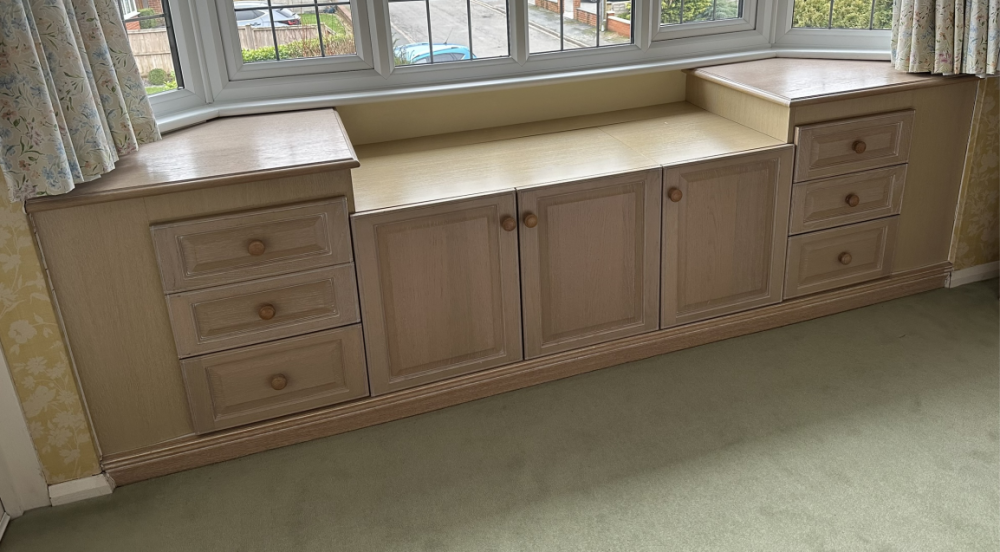
-
Insulation in window seat in exterior tiled bay window help
ProDave replied to Debbiee's topic in Heat Insulation
Thread title edited. The only real way to do this properly is remove the existing seating and storage, properly insulate and seal the wall, then put it back again. Can you at least remove the drawers and all the tops of the units to give better access? -
Insulation in window seat in exterior tiled bay window help
ProDave replied to Debbiee's topic in Heat Insulation
Is the thread title as you intended?