


MrSniff
-
Posts
86 -
Joined
-
Last visited
Everything posted by MrSniff
-

Does the UK really have the most expensive electricity in Europe?
MrSniff replied to SteamyTea's topic in Boffin's Corner
For a 3 phase 40A supply in Luxembourg we paid €227 in fixed charges last year (here they are automatically indexed every year), so €0.622 per day. Average usage costs were €0.164/kWh, which is a lot cheaper than my UK bills... -
I've watched this thread for a while, and for what it's worth thought I would try to translate some of what's been said, one layman to another... I believe it is now widely recognised that on/off blocks of heating are not the most efficient way to heat any house. Instead, the system is "always on": what were the "off times" are just set to a lower target temperature ("set-back"). For example, the thermostat can be set to a target room temperature of 16 degrees during the day and the set-back target of 14 degrees overnight. Especially important for any building that is not well insulated as heat will leak and on the coldest days may not recover to the required daytime temperature. Others can correct me, but because the heating system is "low and slow" (design, not fault) the lower set-back temperature setting should probably not be more than 2 degrees or so below the daytime temperature setting. This gives rooms a chance to reach the higher daytime target temperature. For the same low and slow reason, the target temperature should be set at the higher level a couple of hours or so before you get up; it can then be set to drop a couple of hours before bedtime for rooms to cool. For example: 00.00 - 04.00 17 degrees (setback target, not off!) 04.00 - 21.00 19 degrees (daytime target) 21.00 - 00.00 17 degrees (setback target, not off!) If the thermostat is in the warmest place in the house it will never fully impact the coldest place. If it is currently with the hot water cylinder which will leak heat, the coldest parts don't stand a chance of warming up, as it will turn the radiators off. That's why Nick and others have suggested getting the controller/thermostat moved if possible, probably to the coldest room or the one you use the most (not a bedroom), or getting a remote one which take with you to whichever room you use. That room will then define if your heating has reached the required temperature. As all the others have said, this does work, even in an uninsulated house. BUT it takes time to get to that point in the first place and yes, the radiators will be on permanently for days until the room reaches the target temperature. The reason is that the solid walls are cold and damp, and so suck the heat out of the air. Only when the walls are dryer and beginning to warm, will you start to feel the warmth in the air without having to sit on a radiator. Having the radiators on for just 4 hours per day does not give this process a chance. You can speed this process up by using another heat source alongside the radiator system. A dehumidifier may also help (comment/correction welcome on that one!). To keep costs to a minimum the system should be run this way right from the end of summer when the walls are at their driest and warmest (as already suggested). (Even our 9" solid wall 1926 semi takes time to feel warm after we've been away for a while, and I have to turn the heating on a couple of days before we go back (it's set to 13 degrees while away, and then a similar schedule to the above when we're there.) At the end of the day, the decisions I suggest you need to make, and only you can do this, are: · Do you trust that people on this forum are only trying to help (hint: yes!!), and are generally more knowledgeable than many installers (in the majority of my experience, definitely, and I have benefitted from the advice on this forum) · Are you willing to try what they suggest even if it doesn't make sense to you? I suggest suspending your understandable need to understand for now and just try! · What is you comfort to price ratio? By that I mean that greater warmth will cost more; would you be happy with, say 16 degrees daytime and 14 degrees nighttime, or spend more money for greater warmth, or less for less? Hope that helps maybe clarify a few bits: good luck...
-
We have “smartened” (is that a word, I feel it should be) our houses, mostly for security as we spend time away - lights, shutters etc - and central control does also bring some convenience, but we have kept physical switches for everything as well for simplicity of use. We don’t use smart speakers as I don’t quite trust them, only Homekit as the hub which keeps it local as opposed to cloud based.
-
May be obvious, and apologies if so, but good quality roller sleeves and brushes, and definitely a good solid adjustable pole - a lot easier to roller larger areas using two hands on the pole than one hand on the roller handle. I found a 14” roller a good compromise size wise.
-
Thanks for the reply, very helpful. The zones equate to different rooms on the same floor / manifold. We are on a district heating system, so no bypass or buffer, just a progressive valve allowing flow from the district heater through the heat exchanger to manage "secondary" water temp to the manifolds based on outside temp.
-
Hi, struggling to balance our UFH system (three floors each with a manifold, some with more than one zone; no mixing at the manifold as water temperature set at heat exchanger based on outside temperature). So, stupid question which I should know but can’t seem to get my head around: for zones I want to transfer less heat into the floor, do I reduce the flow rate or increase it? I also wonder whether it is more efficient to keep the system consistent 24 hours, or use a set-back overnight? Many thanks for any help!
-
Living in Luxembourg (working on Luxembourg citizenship), and struggling with the local way (principally German) way of doing things - does that count?
-
Conduit is used as a matter of course here (Luxembourg) in newish builds, usually flexible ridged plastic. Theoretically this means bends are swept, but the ridges make pulling cables more difficult than you would think - as evidenced by a less than enjoyable and somewhat blue air day removing a coax cable and pulling through new double barrel cable across two floors…
-
Wireless Access Points or Mesh?
MrSniff replied to YorkieSelfBuild's topic in Networks, AV, Security & Automation
+1 for Unifi access points wired back to a POE switch. This is what we have in a three story concrete built house. I believe mesh uses WiFi bandwidth to communicate between nodes, typically not a big problem, but they do need to be in range of each other. -
Can you check my PoE/switch design please
MrSniff replied to Adsibob's topic in Networks, AV, Security & Automation
Shouldn’t be a problem. The new switch should receive data only, with power supplied to the POE ports by the new switch’s power supply (unless I’ve misunderstood the setup!) -
We had a similar issue. The socket for each pin has two connectors, and in our case one got bent out of alignment so only one was in contact with the plug pin, so only half the contact and twice the resistance. A replacement socket solved to problem.
-
Always surprised me to find switches and sockets right next to a bathroom basin in Europe. But here it’s a 16A radial protected by an RCBO so presumably safer than a 30A ring final protected by RCD?
-
Sound bar placement in a corner of a room
MrSniff replied to Adsibob's topic in Networks, AV, Security & Automation
We have the Sonos Beam and two Sonos One's set up as rear speakers. All works surprisingly well, even in an awkwardly shaped room - and still confuses me sometimes to hear sounds from behind me when watching TV. And no extra cabling... -
Unifi is their WiFi range: https://eu.store.ui.com/collections/unifi-network-wireless Also available from a well known large on-line book store… We use an AP Lite on each floor of a concrete built house to allow WiFi continuity throughout.
-
We have one on the landing. No noise and useful extra natural light: glad we put it in.
-
I’ve got a few Eufy camera scattered around, including the doorbell, reasonably priced. Mostly mains powered, but some battery (and solar panel available). Happy with them so far, local storage (MicroSD cards, so if the camera is nicked so is your evidence), but sends notifications and images to a smart phone with no subscription fees. Happy with them so far… Available from Amazon.
-
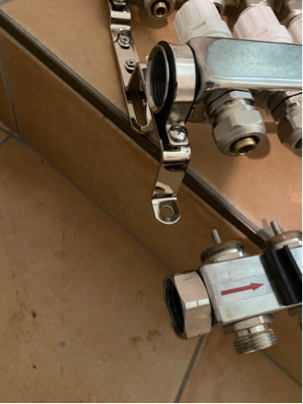
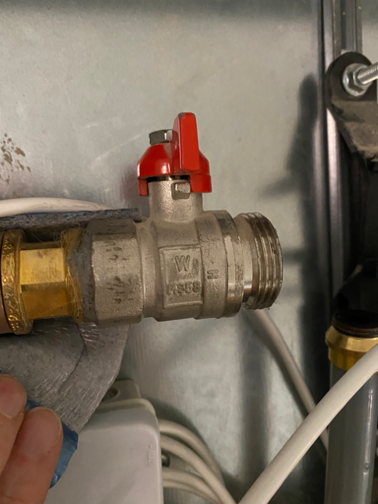
Thanks both. Seems to be a conventional thread. I will give Wunda a call and see what they say. Thanks!
-
Thanks for the response. Sadly it appears not - no hex or flats: it seem to be part of the casting.
-
After much procrastination I have started the replacement of one of the UFH manifolds with a shiny new Wunda one. Having removed the old manifold I can now see that it had a captive nut (probably the wrong term) to connect to the isolation valve - the Wunda manifold is just a fixed female fitting... since neither the isolation valve nor the manifold can be wound on to the other, I guess there must be a fitting I need but not knowing the name means a lot of searching has yielded nothing. Can anyone help me please? (Based in Luxembourg I will then need to hope whatever the fitting is translates into German and is available here - not always guaranteed...) Thanks for any help.
-
New heating for terraced house in London
MrSniff replied to Ferdinand's topic in Central Heating (Radiators)
Interesting question. No idea, I haven't tried it! I would need to reread the contract, so will maybe take a look later out of interest, but it's in French so will take me a while. I guess like all contracts, the supplier has recourse to the courts and can if necessary close off the supply to the property (no need to enter as there are lockable valves outside each). Not sure if the same protection on continuity of energy supplies applies here. -
New heating for terraced house in London
MrSniff replied to Ferdinand's topic in Central Heating (Radiators)
We're part of a district heating system. Remarkably hot water in a closed system branches into the property and is passed through a heat exchanger, heating the water in our primary system. The provider calculates our energy consumption using the difference in temperature of their water entering and exiting the heat exchanger.- 42 replies
-
- 1
-

-
- terraced house
- london
- (and 1 more)
-
Matt or gloss is a matter of taste, as long as it is designed for woodwork. For intermediate sheens there is eggshell and satin. Water-based paints tend to have a lower sheen than oil-based, but are less likely to discolour. For water-based paints a very good quality synthetic bristle paint brush is needed, as is a very light touch for "tipping off", which is very gently running just the tip of the brush over the still wet painted surface to smooth out brush marks. Water-based paints dry quickly, but adding a paint conditioner like Floetrol can extend the "wetness" time.
-
Decking finish advice req.
MrSniff replied to Pipedreamer86's topic in Landscaping, Decking & Patios
I've had good results with Osmo decking oil (colour base coat followed by non-slip coat). It does need to penetrate though which would depend on the existing covering, so a sanding may be necessary (which is what I did when redoing our decking). -
Horizontally under wallpaper - no chance of a wallpaper edge in the same place or close to the lining paper edge...
-
Here in Europe switched sockets are indeed very rare, even next to bathroom basins, something I still find bizarre. Even after living here 10 years I still prefer switched sockets.

