


Stones
-
Posts
3762 -
Joined
-
Last visited
-
Days Won
23
Everything posted by Stones
-

MVHR with active cooling
Stones replied to worldwidewebs's topic in Mechanical Ventilation with Heat Recovery (MVHR)
After working out the fairly minimal heating/cooling capability of a MVHR duct heater/cooler I had come to the conclusion that it wasn't worth installing, but as a precaution I would make provision for retrofitting one at a later date if I found it was required. From what I've read so far about fan coil units, they look ideal for what I want, and the really good news is that the pipework and wiring provision that I was planning doesn't need to change. -
MVHR with active cooling
Stones replied to worldwidewebs's topic in Mechanical Ventilation with Heat Recovery (MVHR)
Jeremy, Do you have a link to the fan coil units you have been looking at? -
Ventilated cold roof - can it ever be airtight?
Stones replied to Stones's topic in General Construction Issues
It's certainly an option worth considering, but the question for me is whether I actually need an air and vapour barrier for the cold roof. I was having a look at air tight cable grommits online and they seem pretty basic, a piece of adhesive EPDM with a small hole in to push the cable through. I have a roll of EPDM offcut, and with a roll of airtightness tape could fairly easily fashion what I need to. Around 1/3 of our roof is cold, the other 2/3 being warm (vaulted ceilings or room in roof) I'm assuming it's a non breathable roofing felt beneath your tiles at the moment? When the retrofit insulation was installed, di the fitters block up any of the existing ventilation? I suspect this is the main reason well insulated cold roofs work, as opposed to the issue you are currently experiencing. We have Proctor Roofshield membrane specified for our roof. So do you have a air and vapour barrier at behind the ceiling plasterboard? -
MVHR with active cooling
Stones replied to worldwidewebs's topic in Mechanical Ventilation with Heat Recovery (MVHR)
When I looked at this, there were two problems. The first was the limited air flow in an MVHR system, and the second was the size of duct cooler you would have to fit to get any meaningful cooling. At best I found I was only going to be able to deliver around 0.5kWh worth of cooling (or heating) through the MVHR (based on the flow temps I would be working with from the ASHP). Look at the page I linked to earlier. https://www.systemair.com/en-GB/UK/Products/Product-selector/Fans1/ They supply duct heaters and coolers and their calculator allows you to play around with input criteria - target air temp, air flow rate, flow temps etc to determine the size of unit you would need and how much kWh it will deliver. Have a search for VEAB as well. -
Ventilated cold roof - can it ever be airtight?
Stones replied to Stones's topic in General Construction Issues
Appreciate the reasoning but a warm roof (for me anyway) only tends to make sense when you are using part of the roof as accommodation - room in roof, 1.5 storey etc. I would suggest that a cold roof still makes sense in certain applications as per Tony's comments. Your comments seem generally positive towards a cold roof except for difficulty in keeping wind out of loft. What method do you employ to mitigate this? In our last house, we had a cold roof, timber sarking, breather membrane and slate. What we didn't have was soffit or ridge ventilation. 450mm of insulation and it worked perfectly, no condensation at all. -
I think you could do something very simple and avoid having to line the entire well. If you could live with some kind of water feature on top of the slab (overflowing bird bath, stone with hole drilled through it etc) all you need is a collection tray sitting on the slab and discharge that into a small reservoir, a bucket say, in which you submerge a low power pump to trickle water back up into the water feature. A cheap shower tray, trap and bit of drainage pipe could do the job nicely in terms of a collection tray and discharge. Disguise everything with cobbles and plants (using blocks and some of the metal grating you mentioned to raise the 'ground' level between borehole chamber and stone wall)
-
Ventilated cold roof - can it ever be airtight?
Stones posted a topic in General Construction Issues
Thinking back to some of our previous houses, they were built like thousands of others, with a ventilated cold roof: Ceiling plasterboard (taped and filled), earthwool type insulation, ventilated loft void, sarking (OSB when roof tiles, 19mm softwood when slates), roofing breather membrane. No VCL or air tightness membrane whatsoever. Clearly the idea is that any moisture will migrate through the permeable plasterboard and insulation into the roof space where it is ventilated away. Provided there is a clear ventilation path, then this system works, and indeed I didn't experience any problems with this form of roof build up. However, as we strive for super air tight builds, can this sort of construction still be used? Clearly plasterboard ceilings can be taped / filled or skim plastered over, and care taken around electrical wire penetrations to minimise the escape of air from internal space to loft. The problems as I see them start when you introduce things like downlights. I can well remember the standard procedure of clearing a large circle in the insulation around a halogen downlight, creating an uninsulated path for warm household air to migrate into the cold roof. With the slim LEDs we have recently discussed, there may not be the same need to create an insulation free zone, but you would still be introducing an air leakage point as these slim lights are far from sealed units. Surface mounted LED's would get you round this problem, but many of course prefer the look of recessed downlights. Is there a solution for such cold roof spaces? The only one I can think of would be creating some kind of airtight enclosure over the downlight fitting on the loft side of the plasterboard. -
Yipee, you were lost but now you are found
Stones replied to lakelandfolk's topic in Introduce Yourself
Welcome aboard the good ship buildhub! -
The theory is that on such islands it wouldn't be possible to drive any significant distance without stops and therefore virtually impossible to breach drivers hours. Local authorities for much the same reason but also because the vast majority of driving is ancillary to the role rather than its main purpose.
-
There'sa useful summary of the tacho exemptions here: http://www.ifor-williams.fr/news/tacho/index.htm It is a bit out of date, 50km is now 100km, but AFAIK everything else is the same. If you are at all unsure, contact your local DVSA office.
-
If you don't mind Jeremy, that would be great.
-
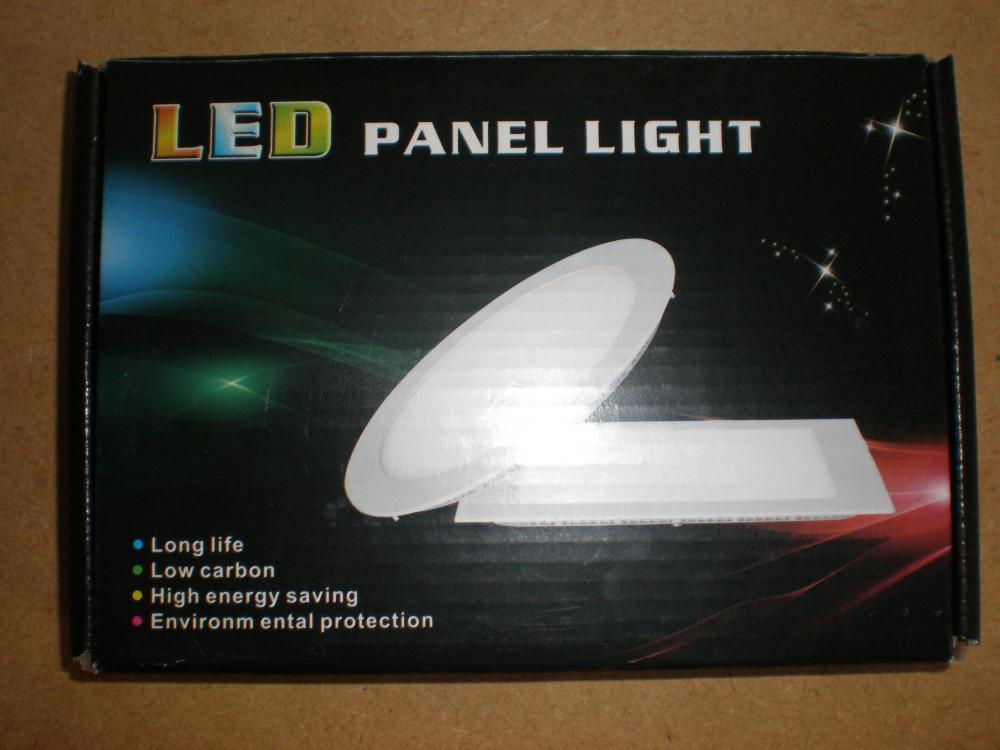
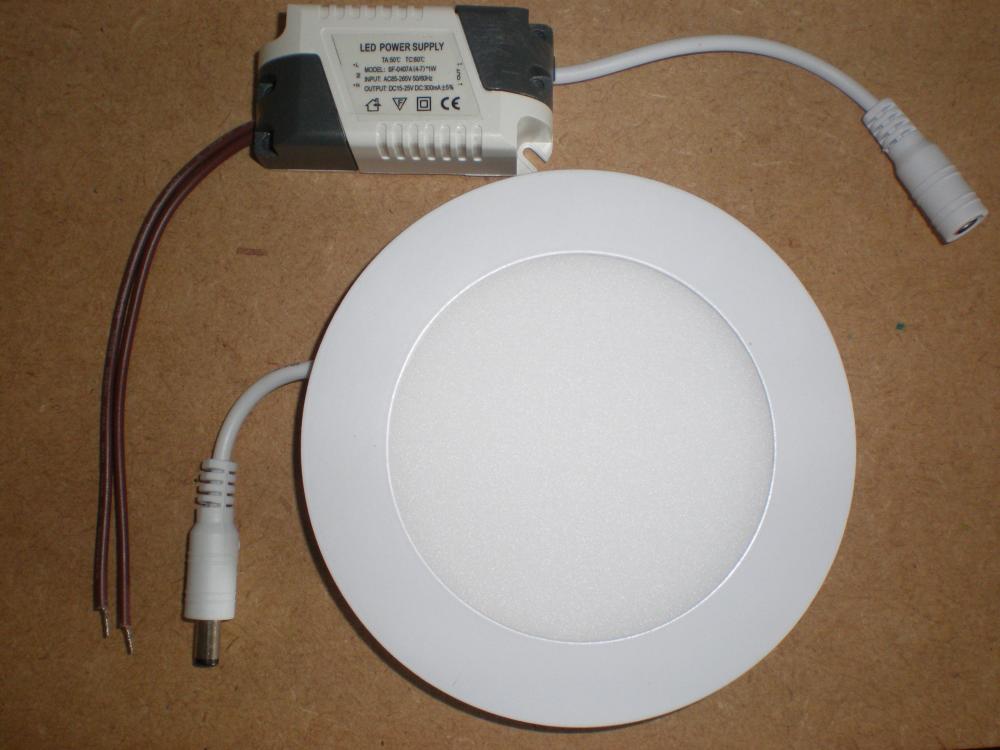
I bought my lights from this seller http://www.ebay.co.uk/itm/331607082056 I've just tested them for radio interference on three different FM radios - nothing at all. Looks like these are the ones for me.

-
This makes very interesting reading. I think I'll be looking for one of these alarms in due course, as I'm planning either a Bio-Pure or Conder aeration plant. Appreciate I missed the boat on being part of the initial project, but if it can be easily replicated by someone with basic electronic and soldering experience / skills, then that would be ideal.
-
Like Jeremy, we had a fair amount to dig out and shift, and there was no realistic way that a small digger would be a viable proposition. As Jeremy says, it is circumstance dependent, with site complexity and time being the two biggest variables.
-
Prior to the concrete pour, the guys ran the vibrating leveller down the rails to make sure the drainage pipes were just below the surface. In the picture below, you can just see the grinder used and a small offcut of pipe where one of the drains was trimmed down. All of the drainage pipes were finished with a coupling and plugged with rubber type bungs. The ducts were plugged with a duct tape covering.
-
As per my last comment, covering the drains was intentional on the part of the builders. All were cut such that they were just below the level of the rail system used for the vibrating leveller. Standing on the slab you can just see the circular outline of the various drains as they are literally a few millimetres below the surface, so I don't envisage the builders having problems locating or breaking through to them.
-
I've just done an initial quick test on two 6W lights that I ordered off eBay. Have to say very impressed with quality of light / how well they perform. However, I've yet to do a radio interference test...
-
The second picture you can see the drains just visible through the surface of the quarry dust blinding. At the moment they just go through the ICF wall and no more. All the drain runs will go in once the scaffolding comes down. In the third picture you can see what looks like a drain in the insulation, this and the white pipe beside are actually ducting for water and electric cables for the kitchen island. Ducts for BT and main electric come up next to the UFH pipes at the main entrance. It does indeed look like everything has disappeared under the floated concrete slab. Everything was capped and is just below the slab surface, 1 or 2 mm ( when you are on the slab you can see where they all are) and easy enough to uncover again. Just seems to be the way the builder and plumber do it, I think primarily to ensure the floor can be properly and easily power floated.
-
Another week of hard work by the builders and the foundations are complete. Type 1 up-fill (only 100mm or so required) was spread then compacted down with a vibrating roller. A final layer of quarry dust was added to finish the blinding. In keeping with previous comments about a clean and tidy site, you can also see the digger spreading type 1 around the foundations. Internal drains and ducts are added, DPC / Radon barrier laid and 150mm PU insulation fitted. Whilst doing all this, the concrete wagon stopped by and the strip founds for our garage were put in. The plumber subsequently put in the UFH pipework, over 1 KM of it! A track system was stuck down (black lines you can see) onto the face of the insulation and pipework clipped in. Individual clips direct into the insulation were used where required. The following day, an hour of light drizzle forecast, the main concrete slab was poured. Two wagons and just under 14 m3 of concrete with glass fibre mixed through. Again, a concrete skip and crane were used to move the concrete from wagon to foundation. You'll notice the twin (scaffolding pole) rails running the length of the foundation. They had simply been set as guide rails for the vibrating leveler to run on and were removed once the main vibration runs had been completed. The next shot shows the slab ready for power floating later in the day. Unfortunately, it kept on raining which meant a 0430 start the following day for my builder. He did a cracking job power floating the slab, which is now beautifully smooth and level. The final stage before building the walls can start, is painting a radon barrier ( the green paint you can see ) on the concrete core of the ICF block. Apart from a bit of unwanted news - 3 week delay for our windows due to a summer factory close down - things are moving in the right direction. The walls should go up this week so we are going to see big changes over the next few days.
-
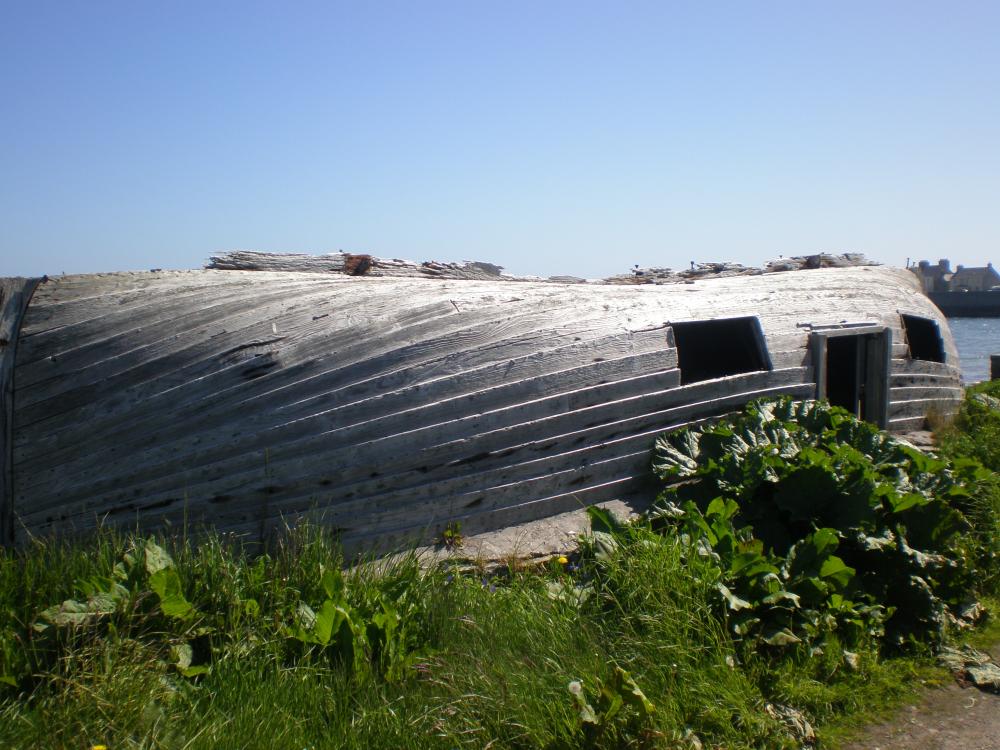
Spotted this on my travels yesterday - an upturned boat hull converted into a shed / store. I really like this, so I'm on the lookout for a suitable hull for my own garden.
-
I suppose a lot depends on how you assess the 'risks' attached to not having an annual inspection carried out. How many houses in this country will be sold in circumstances where boilers / heating systems have not been checked / serviced for years? What is the worse that can happen, a buyer insists the cylinder is inspected before completion? I can however see the manufacturer using it as an excuse not to honour a warranty. It's the insurance question that I wonder about - would /could an insurance company use the lack of an annual inspection to refuse paying a claim linked to failure of a cylinder / plumbing system? If you can do it yourself (as Jeremy describes) keeping a record seems to be the obvious thing to do to mitigate that risk.
-
Just to reiterate these are fixed speed rather than inverter driven units.
-
No particular concern, just trying to be clear in my own mind about how best to fit them.
-
Nick, I'm assuming you normally install these using flexible ducting. Have you installed any with rigid ducting?
-
+1, look like a very neat solution.



