
Stones
-
Posts
3761 -
Joined
-
Last visited
-
Days Won
23
Everything posted by Stones
-

WWHR - oh yes another set of letters!
Stones replied to curlewhouse's topic in Environmental Products
Just wondering how prone to blockage these units are? -
+1. How easy is it going to be getting a refrigeration engineer vs getting a plumber if there is a problem?
-
Non-domestic ASHP installation ( light commercial )
Stones replied to Nickfromwales's topic in Air Source Heat Pumps (ASHP)
Bigger UVC for the domestic side so you could set the ASHP to provide DHW in the 47 - 50C range? From all I hear about the hoops other people are having to jump through to claim RHI, I think its best avoided. -
£110 for a day doesn't seem at all bad when you consider the by product - wood chippings, have a value as garden mulch. You maybe should have tried a different tack and gone with the classic - "I've nearly beaten a man to death, so I'm sure I could shoot one..."
-
Another cheap 12kW Kingspan Aeromax ASHP
Stones replied to Stones's topic in Air Source Heat Pumps (ASHP)
Using the default air tightness value (15) in SAP and not bothering with an air tightness test is another. Seems to be common practice up here. -
Like you, and many others, I've gone round and round trying to settle on the optimum system. I did consider oil, but concluded it was in the medium to longer term going to cost more to run. In the end, I've decided to go with an ASHP and 300L cylinder, as this seems to be the best match to my needs / requirements, and is the cheapest to run. I was seriously looking at the SunampPV and a small ASHP for heating, but the costs were just too high, both capital and running costs. As others have said, forget about an MCS install, and get your plumber and electrician to do what's required. Mitsubishi do coastal versions of their range, which is what I've decided to go for.
-
After a bit more digging and establishing the additional carriage costs, I've discounted the Conder, which leaves the Biopure, and the late contender, the Vortex. Delivered price for the Biopure £1820 Delivered price for the Vortex £1922 Both use lower power air blowers, the main difference being the Vortex blower doesn't run 24/& so running costs are slightly cheaper. The main question now is which design is better - conical or cylindrical? There certainly appears to be a lot more conical designs on the market compared to only two (that I can find) cylindrical designs. The relative abundance of conical designs suggests that this is a proven and tested design, whereas it is more of an unknown with the cylindrical design. Any thoughts on the merits of conical vs cylindrical, pros and cons?
-
Is it not just a simple supply / demand issue, higher demand for Scottish timber for other uses (fence boards etc) or less raw timber being processed at this moment in time?
-
Despite specifying 32mm connection, and laying a 32mm communication pipe, our actual connection is 25mm off a 6 inch main. Two reasons given: 1. Too many 32mm connections reduces overall mains pressure 2. It gives Scottish Water the ability to upgrade the connection to 32mm if supply pressure is a problem. In essence, Scottish Water (in Orkney) will only provide a 32mm mains connection when actually needed to meet minimum guaranteed performance. It may well be a similar situation where you live.
-
I quite like the thought of being able to use a container during the construction phase, and on completion cladding it with timber and using it as an ancillary building / shed.
-
I would be contacting your local Planning Authority and asking them to tell you / provide you with a copy of their replacement dwelling policy. You are not asking for pre app advice, simply wanting to establish what local policy is, what it allows and does not allow. They will have a policy, it's simply a case of getting hold of it. Once you know what the policy is, you frame your application and design statement in policy terms. For example: Excerpt from Orkney Islands Council policy: " During the early 20th Century there was a shift from using local and natural materials for the construction of buildings in distinct local styles toward a more uniform system using mass produced synthetic materials. In some instances, these dwelling houses, often built of concrete block, are now in need of replacement. Throughout the Orkney countryside there also exist examples of converted wartime buildings which have been adapted for domestic use and later structures, such as blocked-in caravans, which are legitimately in use as dwelling houses, which are substandard, are impractical and are unsuitable for use as living accommodation. Potential replacement properties are not limited solely to these examples, however, and it may be the case that the owner of a property has just cause to replace a more modern building that dates to recent times. The replacement of an existing habitable rural dwelling house, or a former dwelling house which meets the test of dereliction, with a single new dwelling house will be supported where it does not feature on the Orkney Local List. Whilst there is no requirement for any replacement building to be of the same proportions or size as the original, it should be located in the same position as the building to be removed unless there are demonstrable planning benefits for an alternative location. Only one replacement dwelling house may be delivered per existing house through this route and planning conditions will require that the original dwelling house must be completely dismantled prior to the commencement of the construction of the replacement building. This option applies primarily to dwelling houses which are not constructed of natural or local materials using traditional methods. The Council recognises that, on occasion, a property which is occupied and is in use as a dwelling house is either unsustainable or is of poor quality/design and is failing as a building. In these instances it may be desirable to replace the building with a more suitable alternative, which meets the demands of modern regulations and modern living." The final couple of sentences, and earlier reference to substandard, impractical and unsuitable for use as living accommodation would be the reasoning I would use to support any application.
-
Just had a closer look at the Vortex - certainly looks to be a strong contender. Just waiting to hear back about delivery...
-
Still standing! I was quite lucky with my first build, as it came hot on the heels of my parents building their house. We used the same builder as they had, so had already seen the workmanship, triumphs and setbacks.
-
Scottish Water information about distances from tanker for desludging - http://www.scottishwater.co.uk/you-and-your-home/septic-tank-emptying/septic-tank-visits
-
I've looked at a few of these books (from the library) and like Dave, have never found them to be of much use. As we are on our 6th build, I have a fair bit of experience of where I've gone wrong and what I've got right. Preparation and planning are of course important and in this the books may have useful information, but I think there are just too many variables for a perfect or trouble free build. Having the ability to roll with the inevitable punches, adapt and be flexible are probably as important (if not more so).
-
Unfortunately, doesn't really help, as I'm paying per pallet space for that particular haulier. Just one of those purchases where I'll have to take the extra haulage hit.
-
BT/Openreach New Connection
Stones replied to worldwidewebs's topic in General Self Build & DIY Discussion
I think that's the one. I'd suggest filling it in as best you can and let them get back to you. All you're really wanting is your site registered and the contact details for the local engineer they will send you in acknowledgment. -
Your description of the differences between the two matches what I've read, although there is reference in the Biopure installation guide, that in high water areas you can back fill around the base of the Biopure with concrete to anchor it. As my builders will be installing rather than DIY, I don't have exactly the same requirements in terms of installation - we have a loadall on site so keeping it in position while they backfill wouldn't really be an issue for us. Having made a few more enquiries, it's looking like it will be the Biopure, as they will deliver to me up here for an extra £120. No TP up here (nearest Thurso), and despite me referencing your order they want £1750 for the Conder and I still have to arrange the last leg of transportation. Tried the local BM's but all they want to sell (for a reasonable price) are Klargesters. Most of the other online sellers will happily deliver to Aberdeen for free, but the onward transport costs (priced per pallet space) push the final cost up to more than the Biopure. The lower running costs of the Biopure, circa £35 p.a. will start adding up over the air blowers life time.
-
Patination Oil to lead - to coat or not
Stones replied to Stones's topic in Roofing, Tiling & Slating
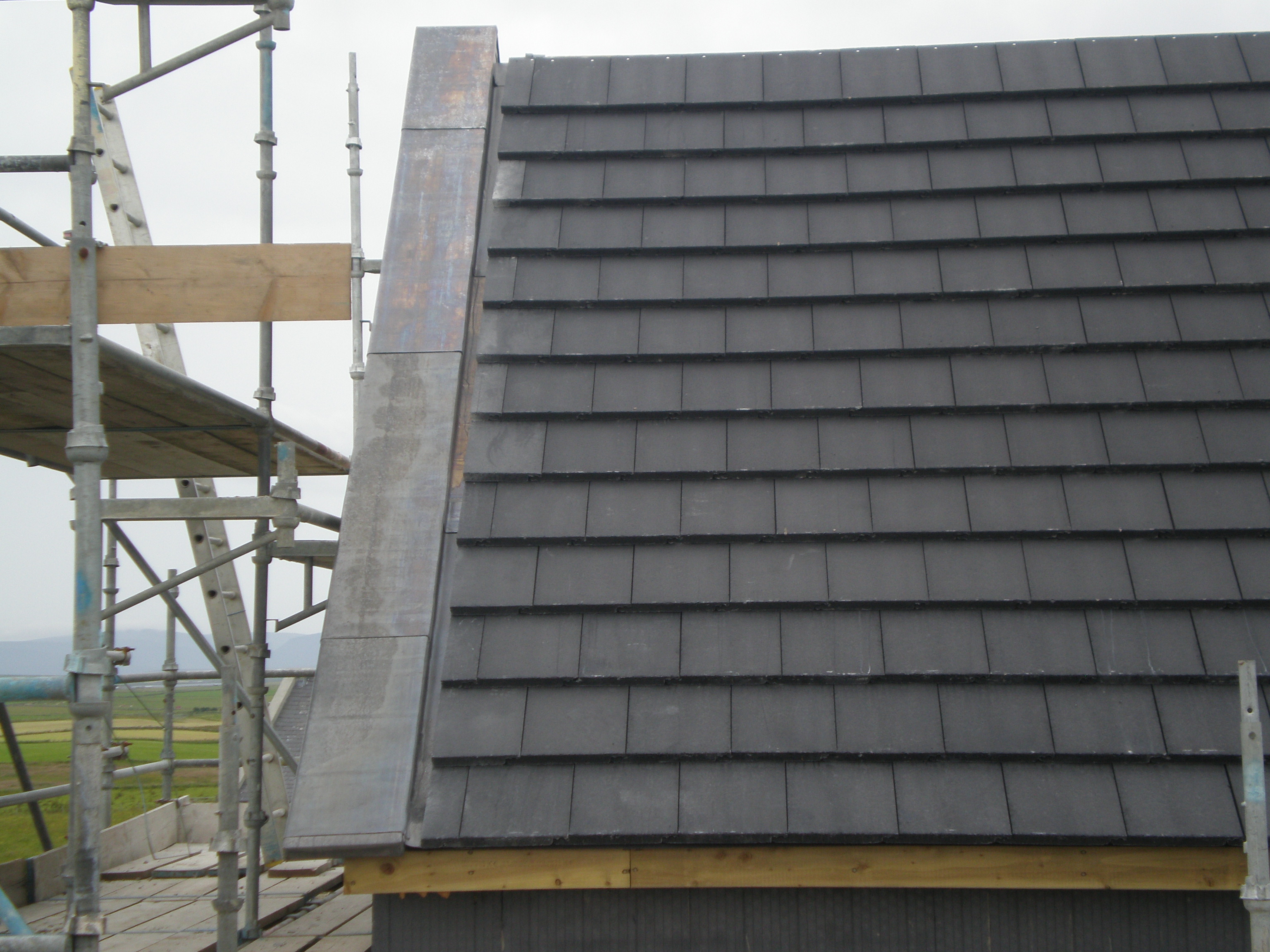
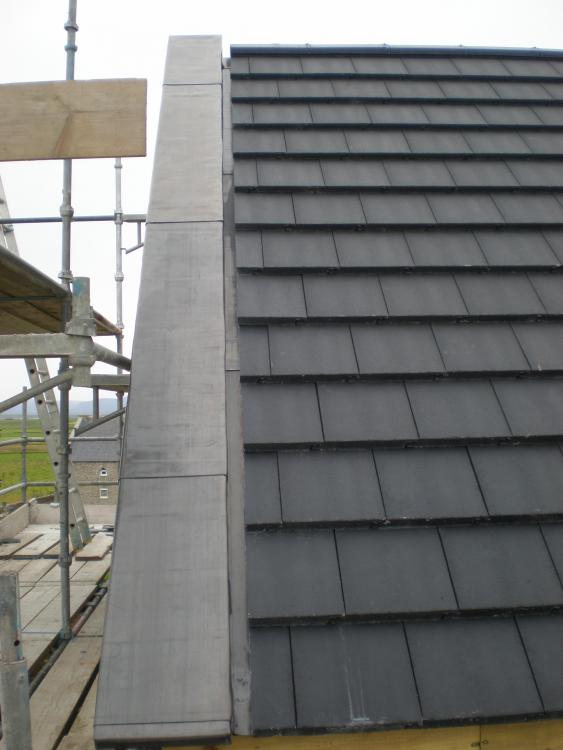
I'd read that as well, although at £10.99 for a litre, I've quite happily gone with patination oil. Following this discussion, I've treated the leadwork. A light clean to remove debris, dust etc then a coating of oil. A couple of hours work at most. Before: After: Looks much, much better. Thanks for all the advice.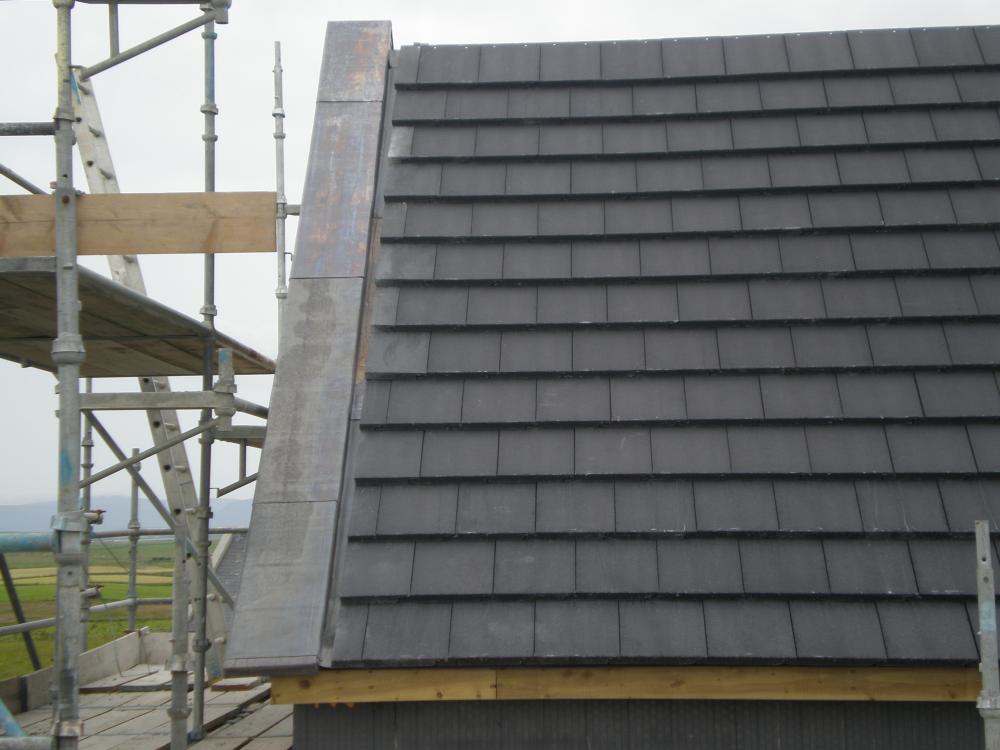
-
Out of interest, why did you opt to remotely house the pump?
-
Good to know, thanks. Having previously paid a lot of money for something which really didn't work as advertised, I'm content that the two choices I've narrowed down to meet the simplicity / minimum moving parts test. An alarm unit is in hand, as are grease traps and as we have lived with off mains drainage for many years, the consistent and sensible use of the same detergent and cleaning products. The one thing on that list I wouldn't do is house an aeration pump inside the house. We had such a pump in a garage two houses ago and it was far too noisy for me to consider having one inside. For me, it's either in the dedicated space within the unit or a housing nearby.
-
I've previously located units both within and outwith the insulated envelope. The only condensation issue I've ever had was with the exhaust ducting from the EAHP in my last house, but then that was pumping out air at -8C. I resolved that issue by fitting rigid ductwork and rigid duct insulation to the exhaust duct run as opposed to the wrap around glass wool and foil type that had previously been there. As you suggest, one option could be to insulate the unit itself, either lagging it directly, or building a PU box around it.
-
Yes, Redland Mini Stonewald (black coated)
-
It's fast approaching the point where I have to decide which treatment plant i am going to install. I've narrowed it down to either of these two, having discounted the unit normally installed locally (Klargester Biotec). The two contenders which I can easily source or have delivered up here are: Biopure - http://www.bio-pure.com/?gclid=CO2dvf2Qoc4CFUmeGwodXOoKxA also available on Ebay at a lower price Conder ASP6 - https://www.septictank-supplies.co.uk/index.php?route=product/product&path=66&product_id=597 Both seem to be in effect very similar units, operating on the same principle / in the same way. Just looking for any feedback / comments.
-
Turning my attention to the MVHR service area I have, I need to decide whether to insulate the area of loft space which will house the MVHR unit and distribution boxes as a warm space (i.e. line the attic trusses with PU boards) or leave it as a cold space (i.e. earthwool insulation between ceiling joists, with MVHR and distribution boxes on a raised platform above. Insulating over the top of the ductwork and distribution boxes is easy enough in the cold roof scenario, so it's really a question of whether there are significant disadvantages to having the MVHR unit (Vent Axia Sentinal Kinetic Plus) in a cold space. Ducts to and from the MVHR unit will be insulated and would in the case of the air intake and exhaust have to pass into cold roof space at some point. Looking inside the MVHR unit itself, it's mostly an insulated box. A cold space would certainly be easier and cheaper (as I would need 6 x 100mm PU boards to insulate the space as a warm space), but that has to be set against the increased heat losses from the MVHR unit if it is in a cold rather than warm space. Looking through the manual, it suggests insulating the unit for optimum performance if installed in a cold space, but doesn't quantify what the losses may be / how the performance would differ. Anyone care to comment / have a stab at what the likely losses would be in a cold space?