


Stones
-
Posts
3762 -
Joined
-
Last visited
-
Days Won
23
Everything posted by Stones
-
Welcome @Fredd I've built six houses over the years, 5 timber framed (4 kit one stick built on site) and the current house using ICF. I costed block built on the first four houses. For three of the houses it was marginally more expensive, and the forth the same cost. Where I currently live TF is popular because there are a large number of self builders who do the work themselves. It comes down in part to the design of the house being built (as it may lend itself to a particular construction method), the availability and cost of trades, and for self builders how much input they want to have. I could have built my own TF if I had wanted. One of my friends has done exactly that and has 'saved' a lot of labour cost by doing it himself.
-

How long waiting for window quotes
Stones replied to Lin's topic in General Self Build & DIY Discussion
Fair enough hounding them after a couple of days, but nothing at all unreasonable following up after a couple of weeks. Bear in mind that once you have quotes, you would look to negotiate and compare against other suppliers. Our windows and doors were initially quoted at just under £13K. I paid £8.5K in the end. There was a fair bit of back and forth but in the end, they wanted to secure a sale... -
Having done 6 self builds over the years, my experience is that jealousy is the main driver of such negativity. It's very easy for people to discount all of the stress and hard work involved because all they see at the end of the day is you living in a wonderful new home. The fact that they could have done the same if they were so motivated, or the fact they are going on four holidays a year etc instead, doesn't get factored into their comments.
-
How long waiting for window quotes
Stones replied to Lin's topic in General Self Build & DIY Discussion
I think it depends on their workload and order book. In the grand scheme of things, a single order for one house is going to get less attention than a large order from a repeat customer. I've had fast and slow turnaround over the years. Nothing stopping you following up with a phone call after a couple of weeks. The conversation may well be enlightening as to whether that company would be able to deliver etc within your timescales. -
Can't add anymore. As much of an issue could be caused by someone delivering to one of your neighbours houses. You've done your best asking for contact details to let them know, so I wouldn't worry about it. If a delivery was going to take any length of time, and there was a real urgency for a neighbour to get out, the delivery lorry can always move.
-
Done.
-
Like @Ferdinand I have resorted to going to their door. A nuclear option in some ways, but when I have gone down that route, communication does improve...
-
Gap to leave for integrated appliances?
Stones replied to Crofter's topic in Kitchen & Household Appliances
I would go for a 600mm gap, cut a couple of bits of timber as spacers to get everything fixed / laid out before you fit the D/W or fridge. The last house we rented, the kitchen had been built around the integrated D/W which resulted in it being very snugly fitted. That was fine until it stopped working. It was a struggle to get it out and impossible to get a replacement in as the gap was 596mm. Given you are going high end holiday let, you need to be able to get appliances in and out quickly and easily if a repair is ever needed. -
MVHR Vs Positive Input
Stones replied to TrialsLife's topic in Mechanical Ventilation with Heat Recovery (MVHR)
I think so. I've had MVHR fitted to builds that I have done so the early 2000's. Back then building regs only mandated 100mm of glass wool in the walls and air tightness wasn't even considered. Compared to a house with, night and day. You may not get much in the way of heat recovery / energy savings, but I'm sure you'll notice the difference in air quality. -
A warm welcome. Looking forward to hearing more about your project. How hands on do you intend being? Importantly, how much time (between work and other commitments) do you have to devote to the build?
-
Waste water sampling test kits for BOD/COD etc - do they exist?
Stones replied to readiescards's topic in Waste & Sewerage
I posted about this before: The kits are not cheap, although I'm sure with the right technical / chemical knowledge you could make your own pretty cheaply. -
Better filtering, as I suspect the cost of filters would be roughly the same.
-
@Barney12 our roofer used Soudall Fixall on our roof where he couldn't nail and clip the tiles. The roof has been rock solid through all the gales /worst of the North Atlantic weather which we are directly in the path of.
-
Having recently replaced the filters in my MVHR unit, I'm pondering whether it would be worth fitted additional filters in the actual ductwork to do the majority of the filtration. Something like this: http://www.justfans.co.uk/catalogues/PF150AL.pdf With an additional filter (lets assume its a fairly coarse one) there would be some pressure drop if I were to do this, which I could compensate for by increasing the fan speed. Any other thoughts?
-
Farrow and Ball paint: is it that much better?
Stones replied to ToughButterCup's topic in Decorating
Chalkiness was the only 'positive' difference I could see, but that's only relevant if that is a primary requirement of your colour / decor scheme. Even then, I wouldn't have been able to justify the price premium. -
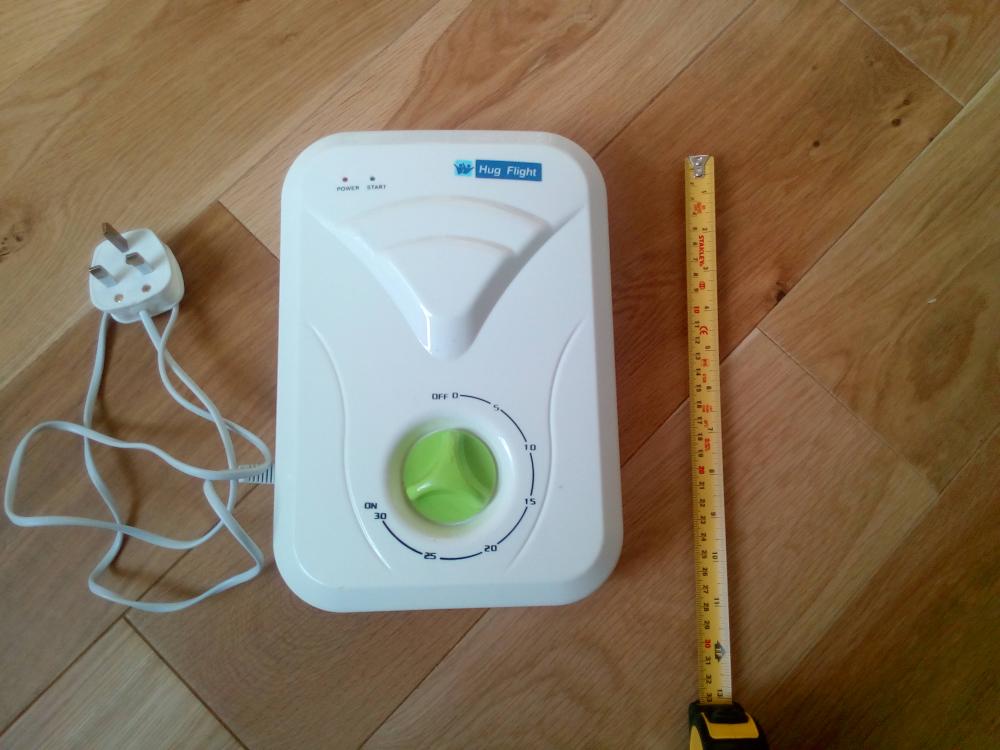
I've just updated the thread having bought and used a smallish ozone generator. For your application, if wanting it to run in tandem with the extractor, one with a far lower output would probably be required.
-
A quick update. I ended up buying one of these: https://www.ebay.co.uk/itm/Ozone-Generator-Ozonator-Sterilizer-Hygiene-Discharge-Air-Purifier-Home/232568538266?hash=item36262a449a:g:eiUAAOSwzppZ-C9q It certainly does eliminate odours and leaves that fresh post thunderstorm smell, but used for any more than five minutes, you do notice the irritation effects of the ozone. I suspect that the most effective use would be to set it running whilst out of the house, such that the ozone has time to do its job and subsequently break down prior to you returning.
-
Farrow and Ball paint: is it that much better?
Stones replied to ToughButterCup's topic in Decorating
Depends how you define better...depth of colour, chalkiness, colour range, coverage etc -
That's the system I'd considered...seeing that (and given my location) feeling quite glad I didn't have any money left to install them. Hope the claim is settled quickly. Have you been in touch with GSE to see if there is anything you can do about addressing the fixings / where it has failed?
-
Also have to think about an inverter replacement at the 10 year mark as well of the cost of getting someone to fit them (if you are not that way inclined or qualified on the final electrical side). As well as orientation, where you live also plays a big part on the output you will get. http://re.jrc.ec.europa.eu/pvgis/ is a great resource to work out what you would generate from any given size of installation. In our case, expected output for a 3.68kwp system was circa 3200kWh/yr, quite a bit lower than where we previously lived in Perthshire, which in turn was a lower figure than could be achieved elsewhere. That lower output increased the payback period for us (including the saving made by not having to import a certain % of our electricity) to the point where there was no real benefit in us fitting panels. I hope to revisit the subject int he future, but that really depends on the price of battery storage coming down.
-
@ProDave do you (or the family) currently stream video / online game / download films etc? Those are the biggest users of data.
-
@Jude1234 All you can really do is determine whether the cost of an installed system (be it MCS or DIY) and the payback period is acceptable to you. I had initially planned an in-roof Solar PV, but the local installer wanted £6.5K for an MCS install (when everywhere else in the country was sitting at £4.5K). I did look at getting an installer from elsewhere but by the time travel, ferry and accommodation was taken into account, it wasn't significantly cheaper. I worked out the break even point to be around 18 years so decided it was a non starter. I then looked at a DIY install, but even then, the payback was significant - around 17 years. To be able to get that period down, you have as @ProDave says, be able to use near 100% of what you generate. Typically, an average household will use 20% - 25% of what they generate from a 3.68kWp system over the course of a year. If you have a heat pump that figure could increase to 40%-50%. You need to be storing excess generation to maximise your useage (and therefore reduce the payback period) and the only options are for DHW (relatively cheap) or batteries (expensive). Bear in mind that in summer, even with excess generation diverted to storage there will be days when you generate far more than you can use. Some information on DIY installs:
-
Hi and welcome to the forum. Can you tell us a bit more about your build?
-
Treatment plant without power. Biorock- clearfox etc
Stones replied to albert's topic in Waste & Sewerage
I fitted a Biorock at my last house. Not a great experience. You can read my review on the old forum: http://www.ebuild.co.uk/topic/13972-user-review-of-biorock-sewage-treatment-system/ I think the biggest problem with the non electric plants is if the set up us is not spot on, they are far less forgiving than an electric aeration plant. Cost is also an issue, or at least was. The Biorock system I fitted was around £3K IIRC eight years ago, over £1K more than the aeration plant installed at our current house. -
When I've done capital and running cost comparisons in the past, I've found that if your DHW and heating requirements are below 2500kWh/yr each, then Direct electric is the cheapest and simplest way to go. As the requirement for either rises, so does the balance towards another form of heating. One thing to remember factoring in with gas is the cost of getting a mains connection AND an annual maintenance contract. The cost of the connection alone could significantly alter the equation / pay for solar PV.


