Tetrarch
-
Posts
170 -
Joined
-
Last visited
Everything posted by Tetrarch
-
Ceiling recessed blind or curtain rail
Tetrarch replied to Red Kite's topic in Plastering & Rendering
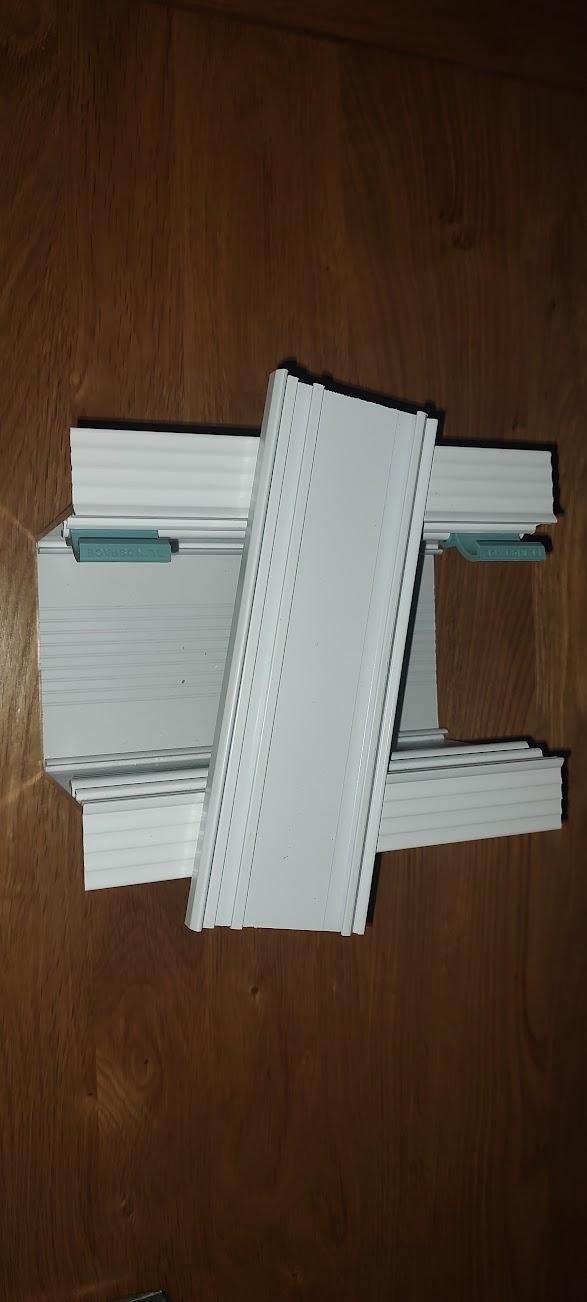
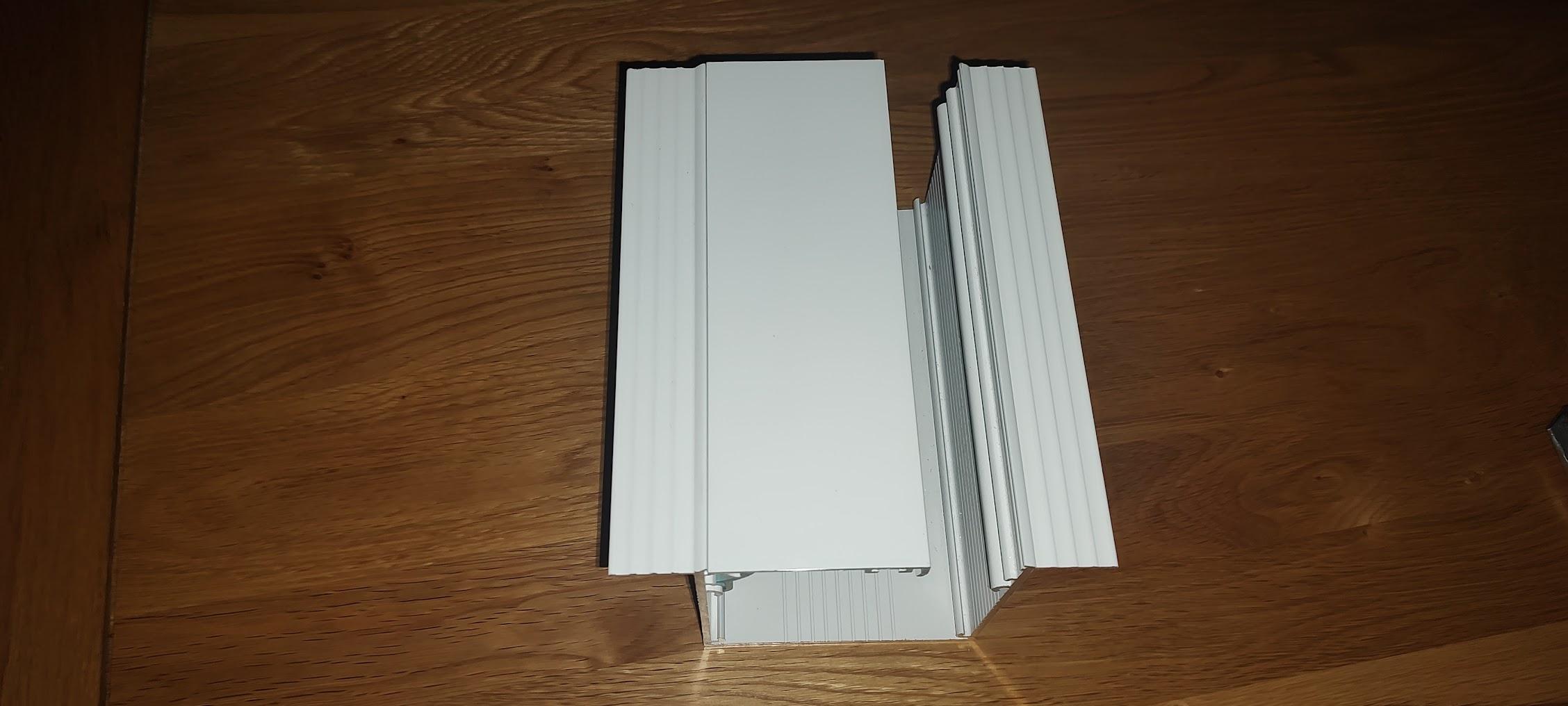
Here are some pictures of my sample. The lower fascia just clips out really easily Regards Tet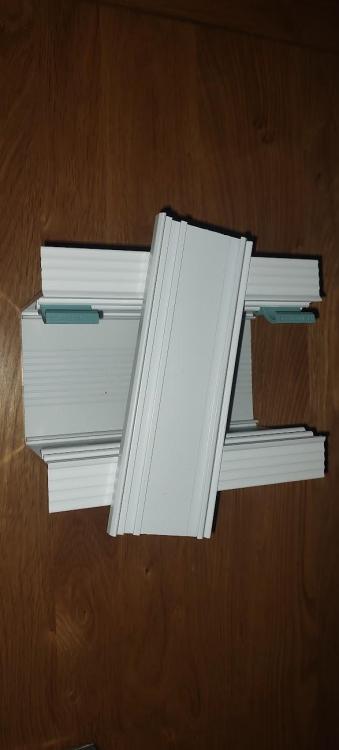
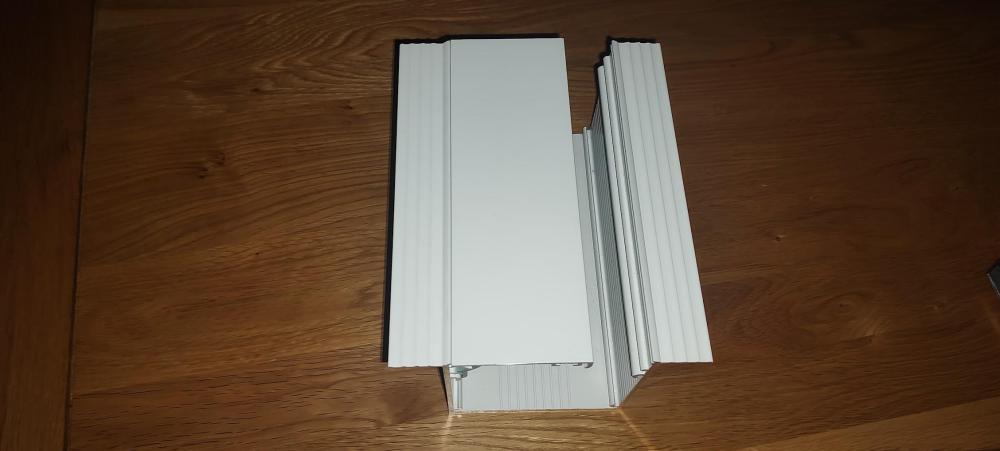
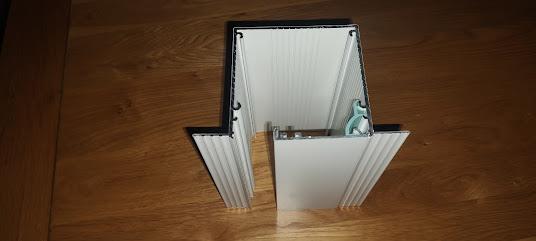
-
Ceiling recessed blind or curtain rail
Tetrarch replied to Red Kite's topic in Plastering & Rendering
I've got two of these on my shopping list for my build. One 1m and one 6.5m. They are expensive, but I went to my local supplier and was able to see it in action and they gave me a sample to take away. Very impressed butit is certainly not cheap Regards Tet -
Maximising roof height mandates minimising roofing thickness. Corrugated sheets will not help with this. Rubber is obviously the thinnest you can go for and you can chase this directly into the wall, no need for lead. My outbuidling has an (as-yet uninsulated) 15° slope, 12mm OSB and loose-laid rubber roof. The rain makes a very pleasing dull thrumming noise Regards Tet
-
You could use some cladding boards with the star shape cut out of multiple https://www.cedral.world/en-gb/cladding/our-products/cedral-click/ These are pre painted and would not need to be treated. It's even possible that the raw cut inside the star would actually look quite attractive The super-cheap alternative would be some suitably painted concrete board like an aquaboard offcut Regards Tet
-
That's really interesting. We lost our internet for a couple of hours last week whilst they changed a telephone pole.....I'll try all that TIA Tet PS Apologies to the OP for hijacking the thread
-
Very weird that this thread should pop up now. I'm having terrible trouble with one of my three Neostat v2's (connected to the old style wiring centre WITHOUT reset buttons) and a Neohub Gen 2. It ran out of batteries and since replacing them the temperature is wrong and it refuses to run correctly (kicks in and then turns off seemingly randomly). This is winter three with the Neostats and winter two with the hub. All worked perfectly last year. As it stands I've been unable to work out how to reset the connection to the wiring centre and/or the hub. Will be following this thread with interest Regards Tet
-
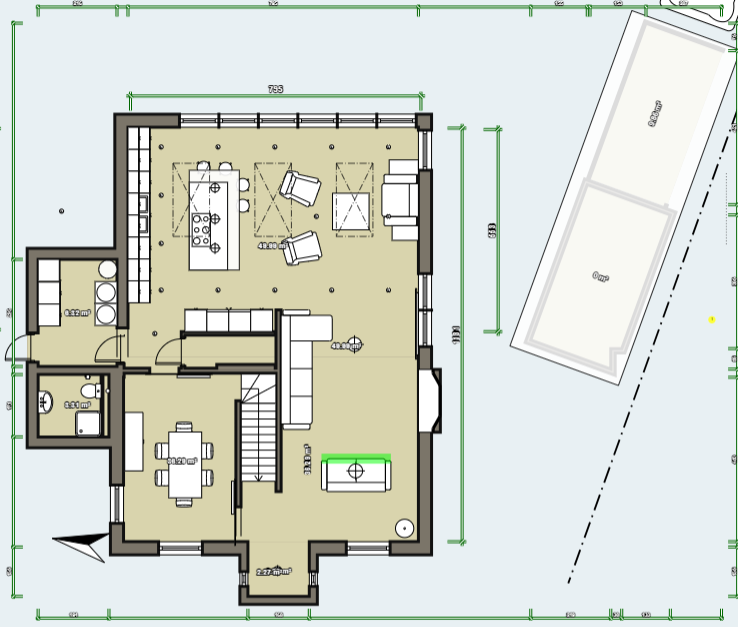
The long term plan is for all three. The project is a 1914 essentially Detached house with a large outbuilding. Not DIY but the builder is happy for me to contribute The extension is a 28m single storey extension, flat roof. The build will necessitate the removal of the entire rear wall of the house and then replacement with a steel beam over 8m span and a new timber-frame wall above. The roof will be replaced as part of the project. Work is scheduled to start in March 24 MVHR - getting MVHR into the flat roof structure might be problematic so it may be limited to a single extract in the kitchen and all the other MVHR pipework being within the original house Solar - The outbuilding has a 10m x 3m almost perfect South-facing pent roof with a 15-degree pitch so I'm looking at a quite a substantial array here My question is ordering. The Solar PV is almost a stand-alone install. I will be running some more permanent electrical cabling. The only issue is that the electrical grid connection is on the North side of the house. I assume that the MVHR would likely be an easier install whilst the roof is off, but it could be done before if it makes sense Any opinions or experiences welcome Regards Tet
-
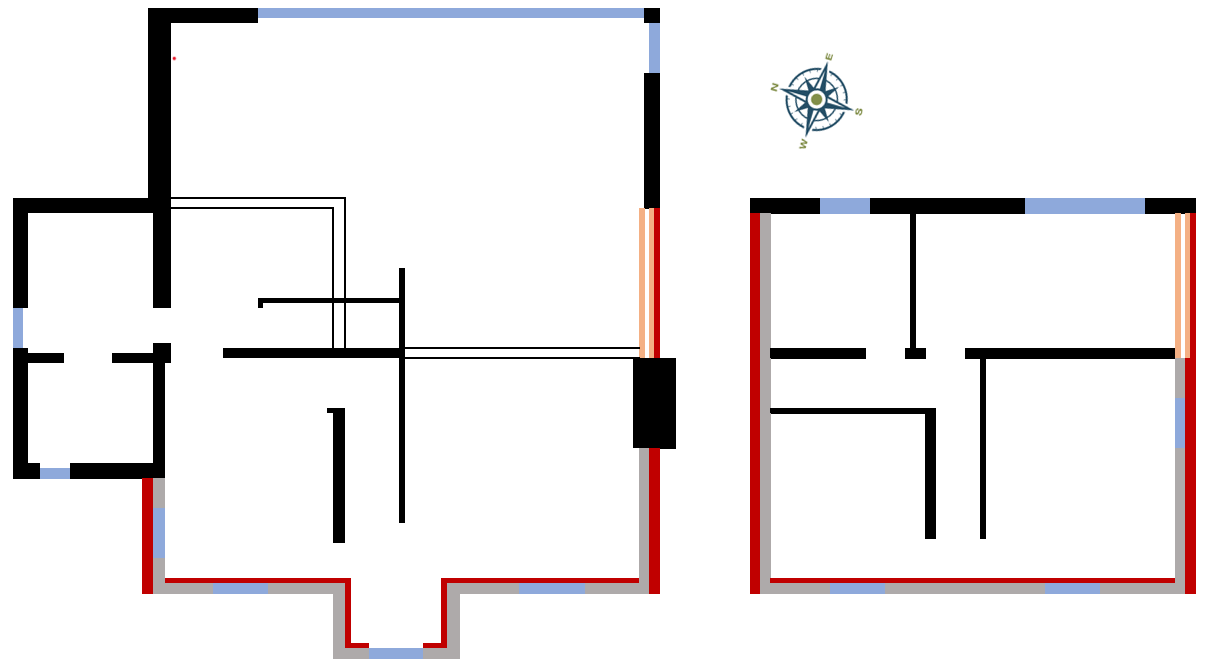
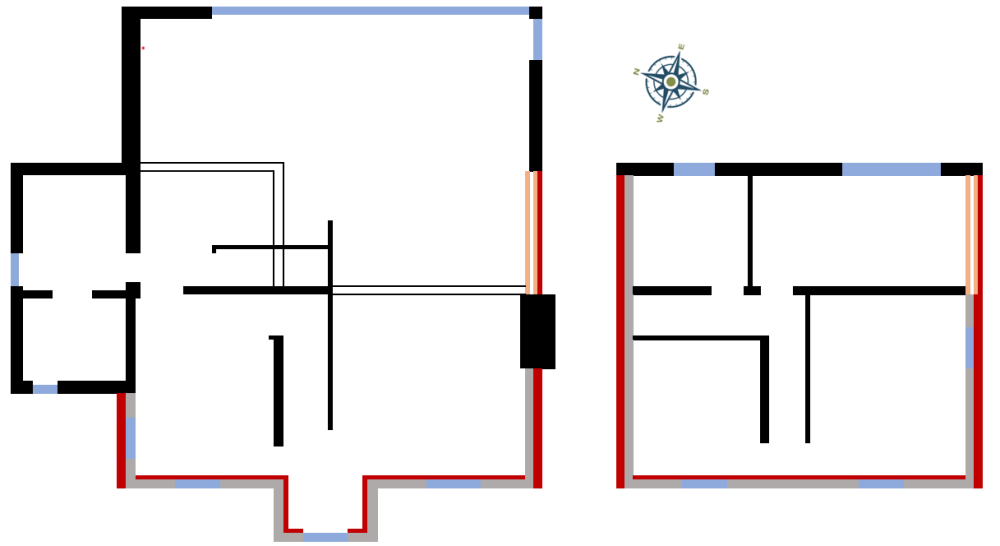
Update : Planning Permission granted so we start work in late February I will be submitting a minor planning amendment to cover the roof as well and the plan is to extend the roof slightly to deliver some broader eaves (more in line with current BR). My new insulation proposal is to have a hybrid mix of internal/external. Black is new 365mm walls Red is new insulation Orange is old 1970's cavity wall My master plan is to have the South walls (1914, 1972, 2024) lined up in such a way that the internal and external faces will be seamless and "un-stepped". This means using various thicknesses of external insulation and then K-Rendering the whole lot. The reason fo the internal imsulation on the front (West) is to preserve the aesthetic of the current sash windows My "new" question. Is it OK to just insulate and render on top of the existing painted roughcast finish? This finish is absolutely rock-hard and very difficult to remove even a small area. Regards Tet
-
Just to confirm from the Grand Designs website that the above link is correct: https://www.granddesigns.tv/northcotswolds https://roofit.solar/ "Request a quote" - I imagine they'll be busy..... Regards Tet
-
I want to put a solar array on a 3m x 10m outbuilding. It's covered by loose-laid EPDM at the moment. These looks as though they could do the generation and weatherproofing in one hit I was looking at a £13K quote (including batteries etc). I wonder if this is DIY-able.....or whether I should get the Estonians in! Regards Tet
-
Chipboard or Ply, 18mm or 22mm for Bathroom LVT
Tetrarch replied to Tetrarch's topic in Floor Structures
I'm afraid that I can't remember. I bought it from the same place that I bought the Amtico, but either I bought it by post and/or my email account doesn't go back far enough. I do remember that it was highly potent stuff and I had a raging headache after doing just 5 sq m Regards Tet -
Ceiling hob extractor - recirculation
Tetrarch replied to phatboy's topic in Mechanical Ventilation with Heat Recovery (MVHR)
MVHR is also the way we're planning to control humidity and ventilation in the house and we were planning to have a ceiling mount for our island. I say "were" as we've now decided on a different solution. I partly blame Bake Off but we're now committed to hide-and-slide ovens and the Neff ecosystem. Have you considered a downdraft extractor? The in-hob one compromises the hob cooking area a little and the glass downdraft is very expensive but haveing seen them in action (or their same-factory Siemens equivalents) I am extremely expressed, more to the point, so is Mrs Tet Regards Tet -
Location of steels and insulation
Tetrarch replied to Tetrarch's topic in House Extensions & Conservatories
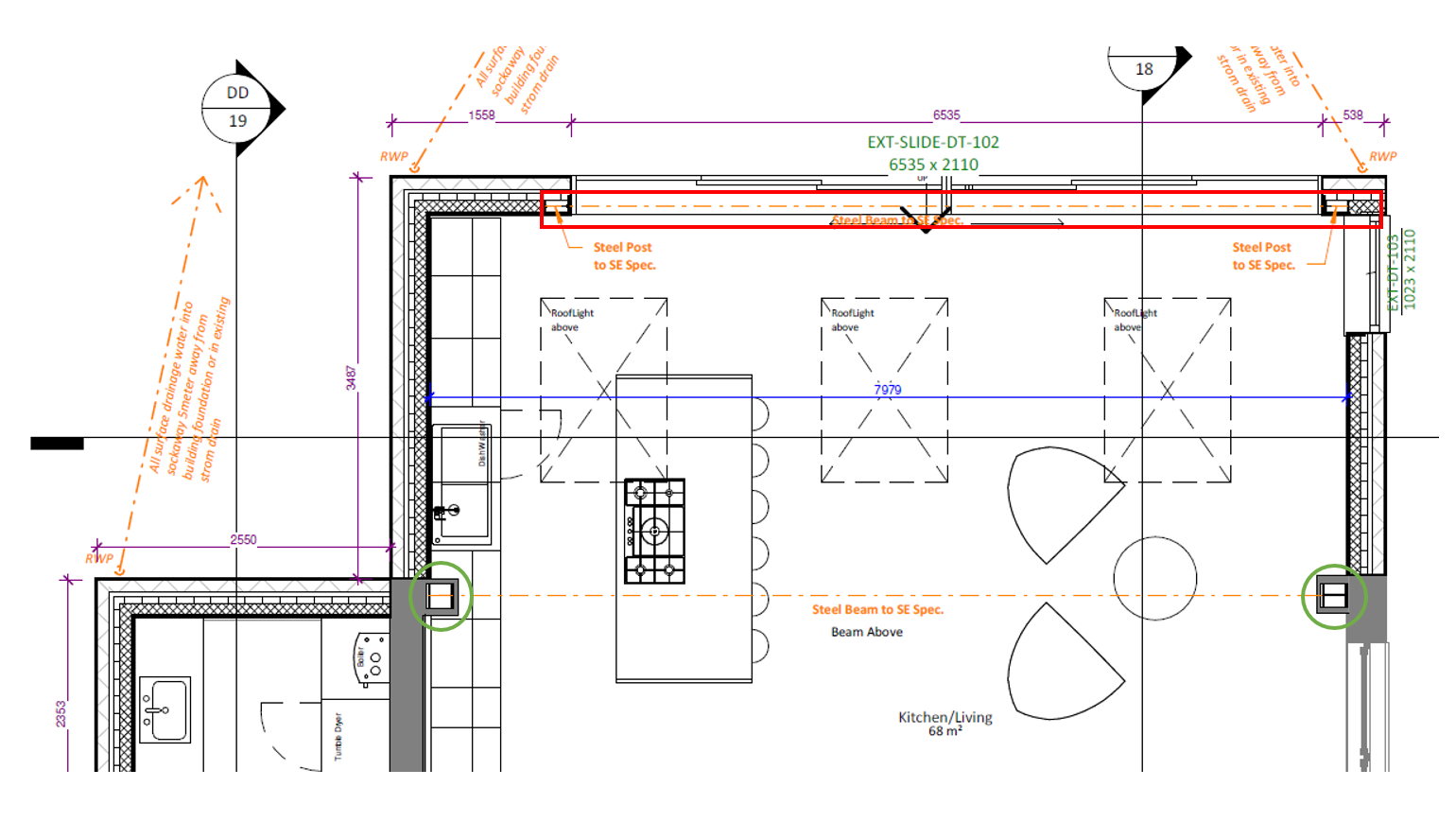
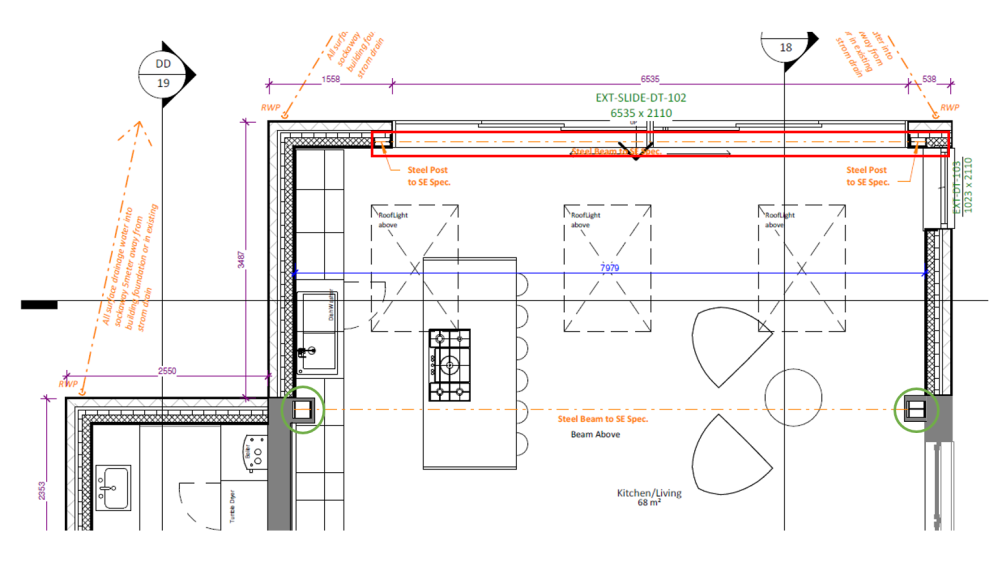
Thank you for all the replies. The rear is a new build single storey extension 3.5m x 8m with a 6.5m Vistaline slide-and-stack Door that hangs from above and weighs 35kg per sq.m (so 475kg is total) - we'd ideally likely stack this to the right so that is a lot of weight on that outer corner I'm waiting on a few extra drawings and I'll share when they arrive that will show the rear elevation and the new planned roof Regards Tet -
I'm not sure if this belongs here or in the insulation section. My architect has prepared my BC drawings: I would like: The rear horizontal beam (outlined in red) to be closer to the rear facade The right rear corner to be smaller in cross-section The internal cross beam supports (circled in green) to not intrude into the room. I can live with the right if required, the left is a real problem with the kitchen units. Notes: The grey wall on the left is solid brick and on the right a cavity wall (from a 1970's extension) My architect has replied to all of these with "possible condensation through the steel because insufficient steel cover". Do I have any choices here that I might suggest to my architect? Regards Tet
-
We took some time to see as many doors as we could from several suppliers. We saw some truly deadful doors that were stiles and rails with foam filled cavities. If you open and close these doors next to their solidly-built equivalents. We went for a solidor in the end, primarily for one of the same concerns that you raised - scratch resistance. What we were told (assuming true) is that solidor's outer shell is through-coloured and very tough (described by one salesman as the same as a lego brick. This was a major consideration when we selected what turned out to be a quite expensive door Regards Tet
-
Kitchen Downlights Layout Help
Tetrarch replied to richo106's topic in Electrics - Kitchen & Bathroom
These are looking fabulous. Do you have a picture with it lit? Regards Tet -
rounded stones to delineate garden space on driveway
Tetrarch replied to johnhenstock83's topic in Driveways
You could use 100mm granite setts that are very easy to lay in an arc down to small radii Regards Tet
-
It sounds like you have lucked out on two roofing companies. Delaminated is absolute nonense. Unforfunately, many traditional flat roofers are absolutely committed to felt and/or GRP. This guy has not even recognised that this is an EPDM (rubber) roof. So much for roofer #2 As for installer #1. It's really difficult to tell. Though recommended, you can loose-lay EPDM. The belt-and-braces approach is to glue down the EPDM. If they did put a "thin" layer of ply over it then walking on it probably isnt recommended. That said, as long as the EPDM isn't actually perforated, then you really shouldn't have any real worries I would try and get a third roofer involved, preferably one who actually knows something about EPDM. They'll give you a quote for your new job and hopefully an opinion about your previous Regards Tet
-
Pitch for EPDM + Green Roof + Skylights
Tetrarch replied to Tetrarch's topic in Skylights & Roof Windows
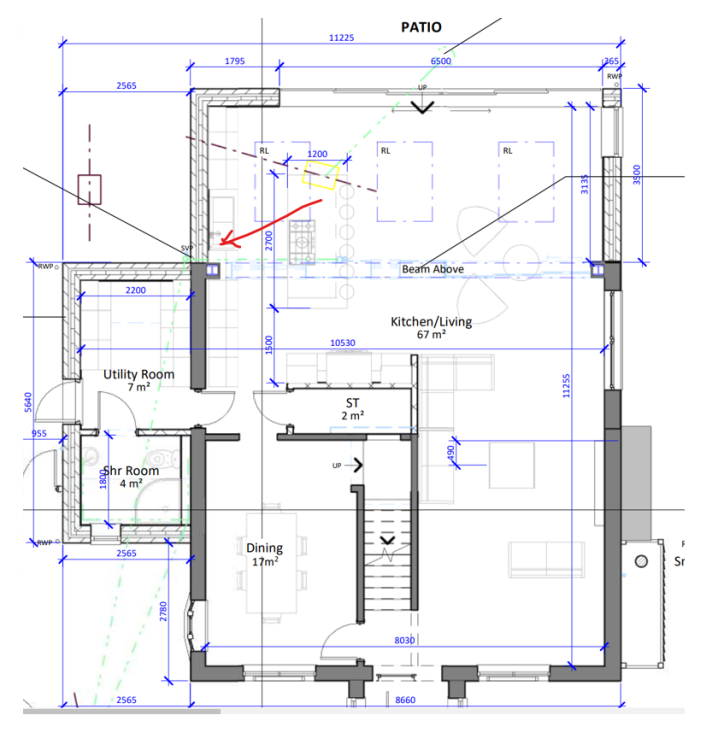
Exactly that. Apologies for not being clear. I am proposing that there is a gap in the parapet wall (at the point of the red arrow) to allow drainage The reason for a green roof is mostly aesthetic. The Master Bedroom is directly above the extension and has lovely views of the back garden and beyond. To be frank it is the reason that we bought the house. Though I am a huge fan of EPDM it is a little disappointing as a major part of your view - hence the green roof. the only practical benefit is the reduction in noise when it rains Sequestering carbon and cleaning the air fall somewhere between "zero" and "bugger all" on my "Scale of care" Agree with drainage requirement. I was really enquiring what would be an optimal fall to cope with the green roof and how much water would I be designing for. Regards Tet -
Looking at an East-facing 8m x 3.5m extension with 3 2m x 1m rooflights. Is it possible to slope the whole roof to simultaneously satisfy the drainage requirements for the single-storey flat roof itself (EPDM),the roof lights and a green roof as a single pitch. The plan is for the rear elevation to have a parapet with no drainage and for the runoff to exit in the direction of the red arrow below. My thought process was that an appropriately pitched roof would make construction of the upstand simpler (and therefore cheaper) as it would need no slope to be created. I've been looking at the sealed units from Roofmaker, ID Systems and EOS Systems so far as, even though higher priced, they are modular and therefore quicker (= cheaper) to install with fewer things to go wrong Notes and requirements: Non-opening rooflights Triple-glazed 70/30 solar-control glass or equivalent Regards Tet
-
If that is the desire then make that the requirement. Virtually any house can have 300mm of roof insulation installed at a (relatively) low cost. Tying landlords to a riduclous EPC-derived* standard was always insane as many properties would not be possible to upgrade under almost any circumstances. Regards Tet * - EPC's are genuinely insane. I currently live in a property with an official EPC of 4
-
You could terminate in a socket with an off-the-shelf cable and the remove the wires if you want to avoid "wasting" a plug Regards Tet
-
I looked back throught the previous threads and this question hasn't been asked for a while How do you find a reliable (hopefully local Kent/SE London) supplier and installer? My extension build starts in February but the bulk of the MVHR will be in the fabric of the old building so there's no reason it can't start sooner Regards Tet
-
Mind you, that 8 weeks for approval is after: Feb-21 - Application 1 - Refused (day 56) Jun-21 - Appication #2 - Refused (day 56) Oct-21 - Appeal - Refused (Nov-22) Apr-23 - PD Application - Granted (May-23) Jul-23 - Application #3 - Granted (day 56) Regards Tet
-
External - We have limited scope to install external insulation due to the constructionof the roof. The roof is pitched with low eaves (slopes on all four sides of the house) and the soffit is only ~120mm. We are having a new roof, but we are in green belt and will need PP. You have now made me think about how I could increase the soffit by lowering the pitch of the roof a little - thank you. I could definetely put external insulation on the North side of the house with no real aesthetic cost Wall - Wall of the original house (yellow shaded) is solid brick. Render is a very solid roughcast MVHR - The MVHR will manage the humidity levels in the house. This has dew point and water transmission implications. I'm not any kind of expert on this, my biggest concern is damp avoidance. My current theory is that by sealing the house drum tight from the outside then I only have to control internal humidity to manage any potential damp issues. You can make the bulbs smart-controlled or the power wiring smart-controlled. I've been playing with a few solutions with mixed success. Power cuts seems to be the bugbear of one solution. British General sockets and Shelly bulbs seem to be OK See - above I'm now even contemplating both. It's "only" the old part of the house, so there is an element of diminishing returns as well Regards Tet