Tetrarch
-
Posts
201 -
Joined
-
Last visited
-
Days Won
2
Everything posted by Tetrarch
-
Frameless Glass Balasturade and Building Control
Tetrarch replied to murat's topic in Windows & Glazing
I cannot recommend FH Brundle highly enough. Their custoner service is the best I have EVER come across. Not just the sales guys, but the logistics people, the delivery guys and the staff in the warehouse who allowed us inspect a product (from a high shelf) before we committed. https://www.fhbrundle.co.uk/handrailing-and-balustrade/frameless-glass-balustrade?via_sb=true My (side-mounted) internal stair balustrade is fixed to a 10mm steel plate bolted to a floor joist. The floor-mounted balustrade from FH Brundle may well do what you're looking for and at a fraction of the price Regards Tet -
Thanks for the feedback. A direct feed would have been an excellent idea, but I have been in touch with Stovax, unfortunately it is not retrofittable. And 8.1kw IS big. It's that size because it fits the fireplace, not because the output is required - especially since we have sealed and heated the rest of the house! Regards Tet
-
Hi All, The reno is basically finished. Our Stovax Riva 66 8.1kw Wood Burner was installed in 2021 and only subsequently has the house been completely revamped and made (relatively) airtight with MVHR.... I need a final BC sign-off, but I'm thinking that we won't be complient with Part J and that we'll be looking for an open vent in order to comply. Our fireplace is actually an external brick structure affixed to the house and I am extremely loathe to punch a hole anywhere else. Part J says: "Permanently open air vents 1.10 Permanently open air vents should be non-adjustable, sized to admit sufficient air for the purpose intended and positioned where they are unlikely to become blocked. Ventilators should be installed so that building occupants are not provoked into sealing them against draughts or noise. Ventilation openings should not be made in fire-resisting walls other than external walls (although they should not penetrate those parts of external walls shielding LPG tanks). Air vents should not be located within a fireplace recess except on the basis of specialist advice." (bold mine) Where do I go to get this "specialist advice" in order to get the vent placed within the fireplace? This would very much satisfy the "not provoked" and be the shortest and most direct source of air possible. Is it just a matter of "finding" the right expert? Regards Tet
-
I'd agree with the "don't do it twice" advice. You state that youn can't afford to take the wall down, I assume that this means that it's structural. What you could do is to leave everything as-is but employ a builder to make a huge hole in the wall and put in a lintel (you can probably get a second-hand steel from somewhere) We had exactly the same thing done for precisely the same reasons. We had a 10ft supporting wall knocked down and a pair of 8x2's acro'd in. This "temporary" fix was supposed to be for a few months whilst our planning went through, but this eventually took three years! It did, however deliver the open-plan we were looking for and got us used to the space before the extension went on. I attach some before and after pics below: It only took a day and cost me two man-days and some timber First pic is after the floorboards were removed. Bizarrely I don't have this pic before this stage! Regards Tet


-
Between a Roof and a hard place....
Tetrarch replied to Mulberry View's topic in General Self Build & DIY Discussion
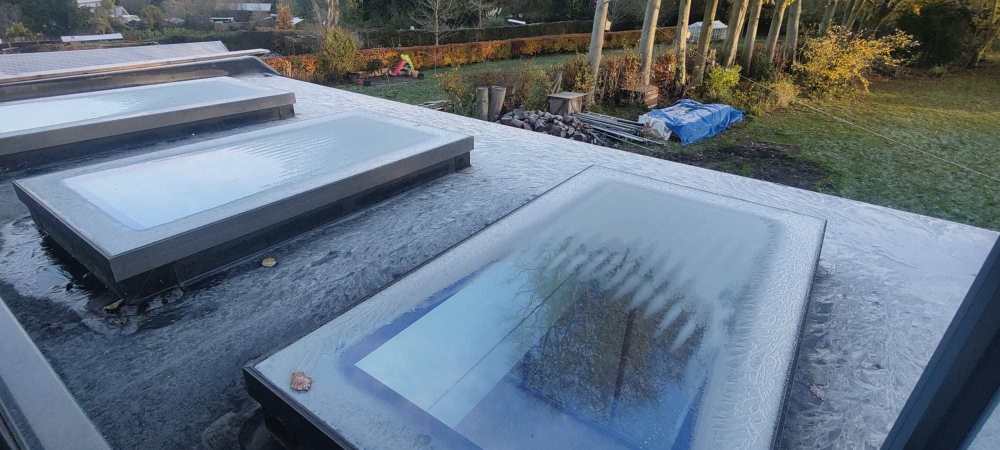
https://idsystems.co.uk/roofs/rooflights/ I was really impressed with ID Systems. We visited the factory twice and bought their beautiful Vistaline tilt-and-slide doors as well https://idsystems.co.uk/slide-and-turn-doors/ The Vistaline doors were actually the first purchase, we added three rooflights and two static windows to ensure that fit-and-finish was the same. Apologies I thought I had taken some better pictures, but all the ground floor windows are ID Regards Tet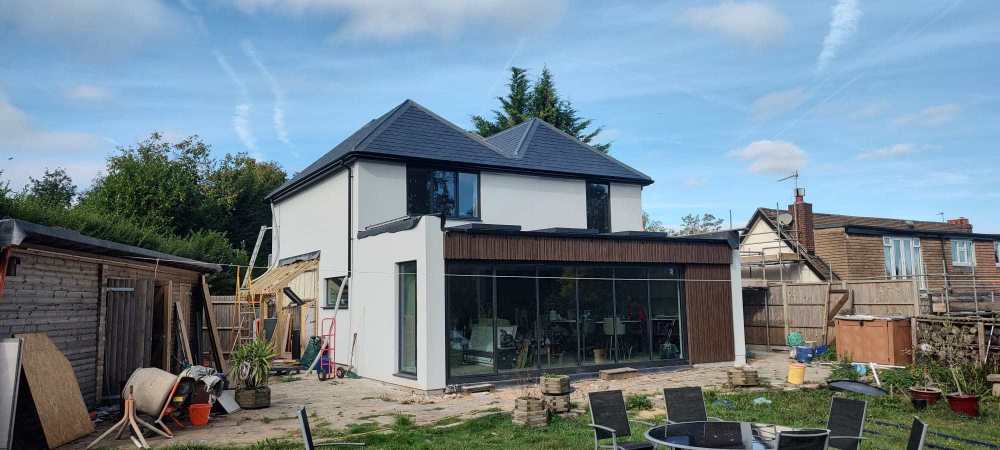
-
Between a Roof and a hard place....
Tetrarch replied to Mulberry View's topic in General Self Build & DIY Discussion
I've got 6 sq m of rooflights and MVHR. I haven't yet gone through a summer, so time will tell, but I've noticed that the MVHR is very good about maintaining fresh air throughout the whole house. We went for (quite expensive) sealed unit rooflights that "drop over" our timber upstands. They make a great seal and then the only join that matters is where the upstands poke through the roof material. In our case it's a rubber roof so I was massively obsessed with the way that these were constructed. I'll open our patio doors if things get too hot! Regards Tet -
Between a Roof and a hard place....
Tetrarch replied to Mulberry View's topic in General Self Build & DIY Discussion
Just an personal observation. Opening veluxes to allow accumulated heat to dissipate seems to be an expensive and inefficient method (though aestetically I love the idea!). Have you considered some kind of mechanical ventilation as an alternative? You don't need MVHR as your use-case seems to be a solution to insolation so a simple extractor fan set at the highest ceiling point would achieve the same result - and a lot more quickly Regards Tet -
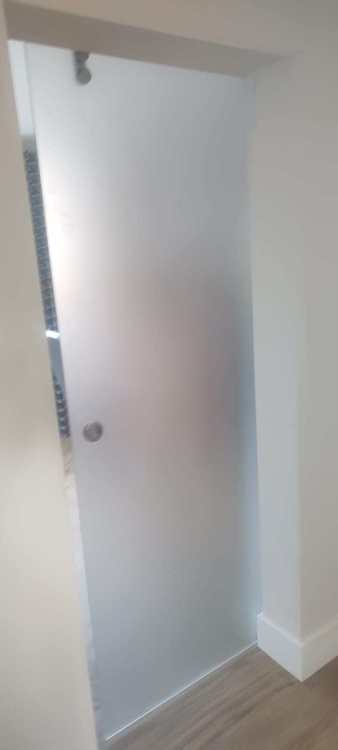
I specified shadow gaps in our refurb but actually moved away from the idea for a couple of reasons: Effectively "removing" the layer of plasterboard would expose the steel frame and void that would compromise the internal insulation and make airthightedness more difficult to achieve. Good though my plasterer was, shadow gaps are extremely difficult to get perfect and any discrepancy would stick out (as previously noted) Getting a really good intersection around door frames would be a challenge and would likely place for cracking in the future I went with a "shadow gap" architrave, which I am satisfied with, the bonus is that using the same profile with thicker architrave made decorating exceptionally easy Regards Tet

-
We had 110 sq m of Amtico laid, it took 30 bags of Mapei Self-levelling Compound to get a finish. My Amtico guy was a joy to watch, it was a privilege to watch him work After the SLC he was meticulous going across the whole floor looking for any bubbles or imperfections that he sanded out. He used a primer to key the surface. As a tip for the install, he laid down every plank dry and marked where they would land. He worked in about 12-plank increments. He obviously knew exactly how much adhesive he could manage and he spread it out to the markings. The thing that surprised me most was that he also trimmed back the underside of the leading edge of every single plank to ensure that there was a perfect join. I cannot find fault with anything he's done I have done amticof mysel in a small bathroom. I did an OK job with the planks but failed to prep my plywood properly and ended up with a a small bump where the planks butted each other. That house is now someone else's problem but I wish that I'd had a pro do it Regards Tet
-
Our porcelain tiles are still in the process of being installed. They are not at all slippery when wet, but as we may have been a bit conservative with the fall, the ice is quite treacherous. I can see that they will get dirty easily (even when the building site transfer is gone), but pressure washing little and often is my plan. I have a load of broken slate left over from my roof, the plan is to use that in the French Drain around the building Regards Tet
-
Height to start rendering
Tetrarch replied to Lincolnshire Ian's topic in General Construction Issues
We had our silicone rendering start just above the DPC. We still don't know whether to paint the lower plain-rendered parts black or the same colour as the textuered silicone-rendered part We're still not finished yet Regards Tet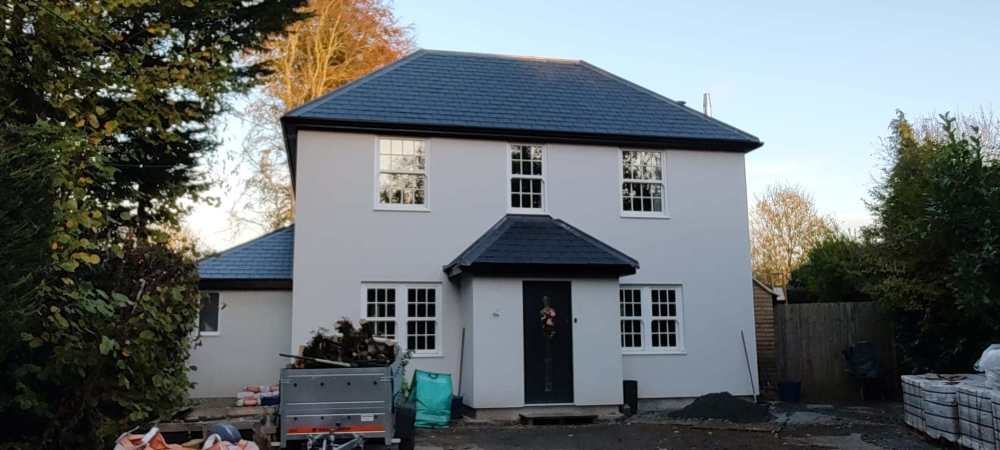
-
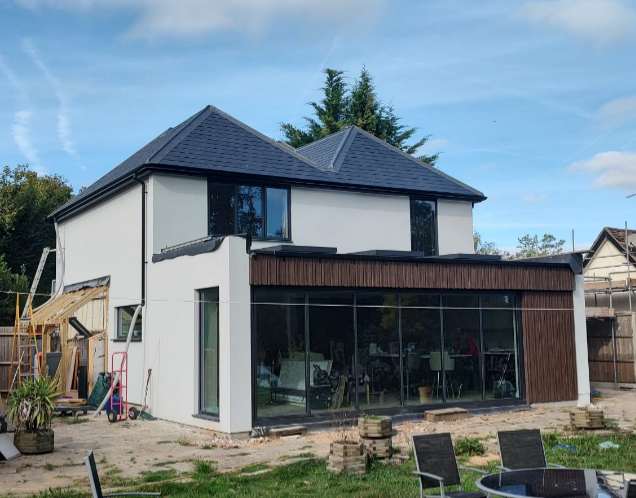
I see you're in a fictional town in Kent. It really can depend on your LA (and if you're in Sevenoaks then buckle up). We had a three year fight with ours but all's well that ends well... We are in GB and the rule that our LA used was a 50% uplift from the 1948 footprint. Our initial plan was rejected because it was too much of an uplift ~28 sq m After a failed appeal we applied for a really ugly PD plan with an uplift of 31 sq m that was duly approved We then reapplied with a (slightly different) 28 sq m extension using "less harmful to GB than PD" as our Special Circumstance that was duly approved It can be done, but be prepared for a fight. Regards Tet
-
Advantage of an induction hob.
Tetrarch replied to SteamyTea's topic in Kitchen & Household Appliances
I'm no cook, but Mrs Tet LOVES her Neff Induction with the afore-mentioned puck control. The combination of something more positive and tactile with the ability to remove it completely for cleaning make it a great option Regards Tet -
I'm not suggesting that roofs "snap in half". I would expect that boats are made to a higher standard and using better materials than an average roof. My (admittedly limited) experience is that that formed overhangs of GRP roofs become brittle after exposure to sunlight and weather. I've not seen a problem with damp penetrating a sheet of GRP but I have experienced two occasions (one is a commercial property I am responsible for and once in my own home) where a formed GRP edging cracked and split (in my own home less than 3 years) and allowed water to penetrate and rot the sub decking from the edge inwards. On the commercial property an old (15 year) seam in a GRP roof also failed Regards Tet
-
I'm not a fan of GRP. My main gripe is photostability. In my (limited) experience GRP tends towards brittleness as it ages. Regards Tet
-
The Alumasc stuff looks nice but it is very expensive. I have two 3500mm x 400mm parapet walls to cap and I'm looking at over a grand in Alumasc which seems very punchy. I'm in Kent too and looking for a recommendation for a local fabricator. I had fascia made, but the end caps probably need to be fabricated to get a good finish Regards Tet
-
Sourcing tall windows.... 5m x 1.0m without splitting into two?
Tetrarch replied to fatgus's topic in Windows & Glazing
I recall watching a TV programme in the last couple of years where a couple wanted a two-storey window by a stairwell, rather like the one you describe. My memory is leading me towards "Your Home Made Perfect" and I think it was the beardy slightly weird guy that had the plan. I have tried looking for it but it must have been series 1 or 2 and they are no longer on iPlayer. My recollection is that Building Control kiboshed the plan and they ended up having to split the window in two. I apologise that I can't be more definitive, but maybe it might jog someone else's memory Regards Tet -
LPAs playing around with 'validation' timescales?
Tetrarch replied to Alan Ambrose's topic in Planning Permission
Would you kindly tell me what the process actually is and what I am apparently misunderstanding? If the approved application (per the council's website) is identical to the original submission then is there any excuse for the validation not to have been backdated? Regards Tet -
LPAs playing around with 'validation' timescales?
Tetrarch replied to Alan Ambrose's topic in Planning Permission
You are incorrect. The application was absolutely unchanged from its submission on 30th January. No corrections, additions or queries. It's only upon checking my emails that I realised that my architect sent a chaser on 20th Feb. The validation email was expedited the same day and not backdated Additionally, every single one of my numerous applications decisions were advised on day 56, with one exception which was day 55 Regards Tet -
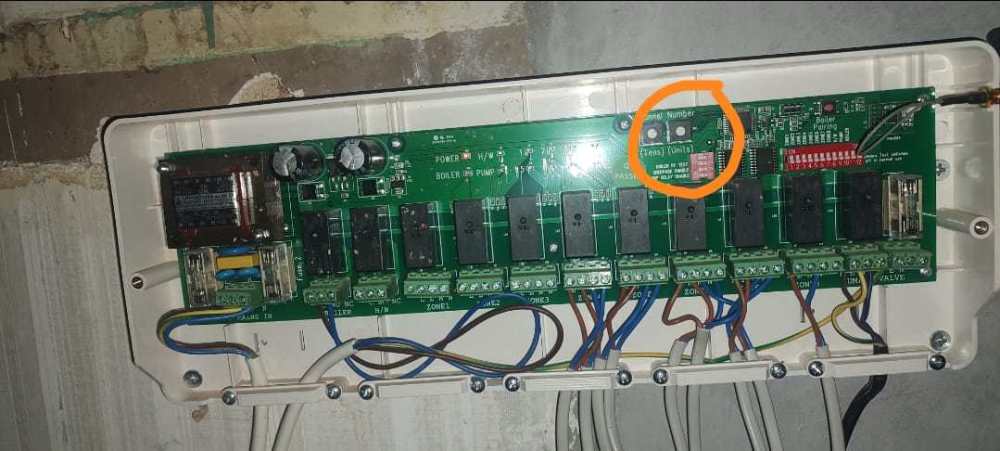
Can you send a pic of the inside of your UH8? Mine is below with the dials indicated. Regards Tet
-
LPAs playing around with 'validation' timescales?
Tetrarch replied to Alan Ambrose's topic in Planning Permission
This is incorrect. From my own planning applications Received: Tue 30 Jan 2024 | Validated: Tue 20 Feb 2024 | Status: Granted -
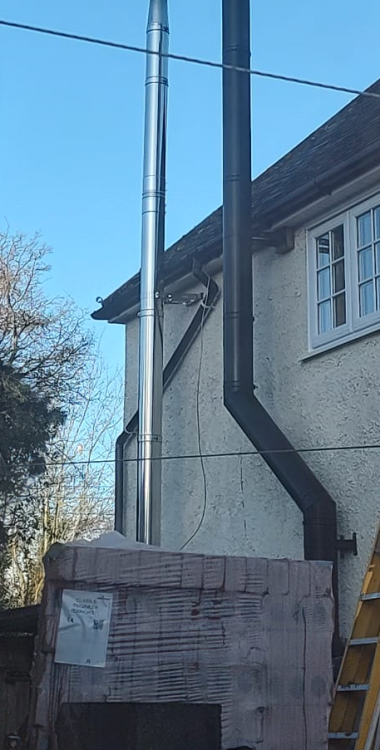
I have two external flues - one for a pellet boiler and one for a log burner The picture above shows the install before the upper floor was demolished and the window removed. I am combining the boiler "house" and the external fireplace inside a single structure with a proper roof. I have some flexibility as to location of the flues and was wondering what the rules are regarding how close together they can be Regards Tet
-
Stairs, and banisters - what are the regulations?
Tetrarch replied to Tetrarch's topic in General Self Build & DIY Discussion
The other end is an L-shape. I have two of these channels and the neatest way to finsih the glass panels would be to mitre the two, necessitating the reduction in the length of the channel. The alernative is to butt the two channels, but then the glass join will be less neat. These channels will be bolted to a steel plate that will itself be affixed to the 8x2's that form the edge of the hallway Regards Tet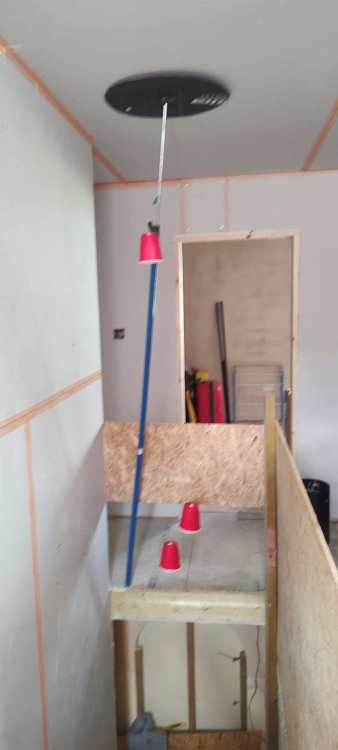
-
Stairs, and banisters - what are the regulations?
Tetrarch replied to Tetrarch's topic in General Self Build & DIY Discussion
Hi Dave, Thanks for taking the trouble to reply. I obviously didn't explain myself properly. I have annotated the picture a little, What I was asking is about the regulations concerning the distance from the edge of the stairs at which the banister may start i.e. the distance between the red lines. In a perfect world the banister would extend to the very lip of the stairs, but with planned install I am about 70mm short of achieving this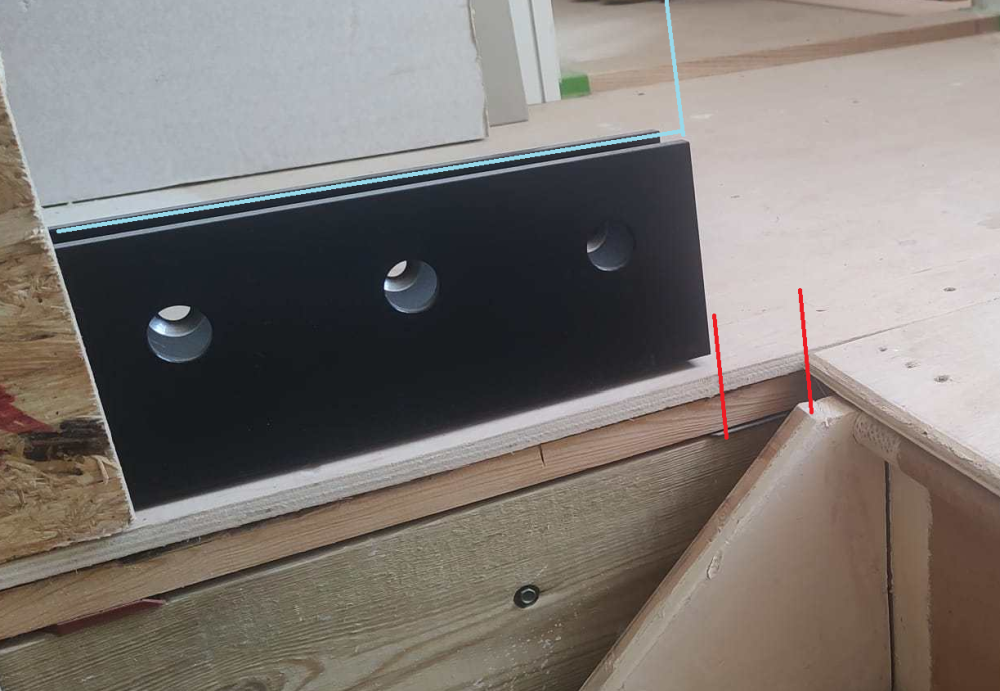
-
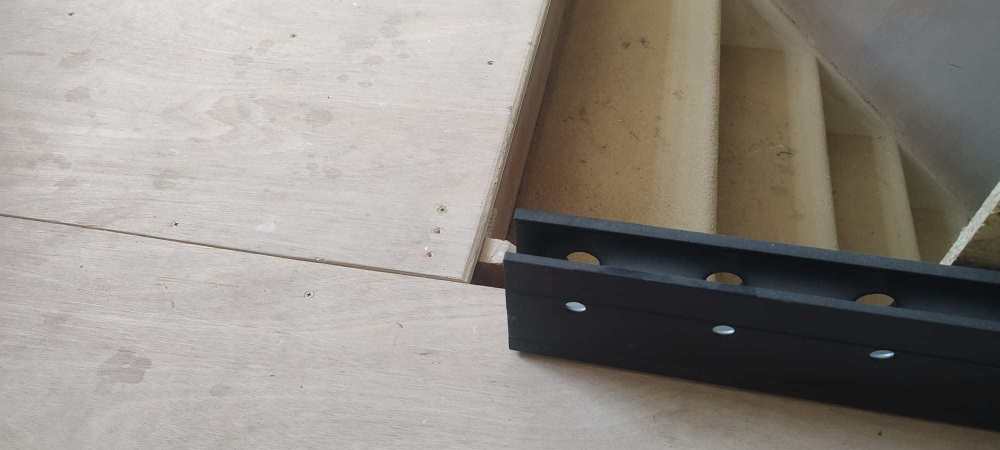
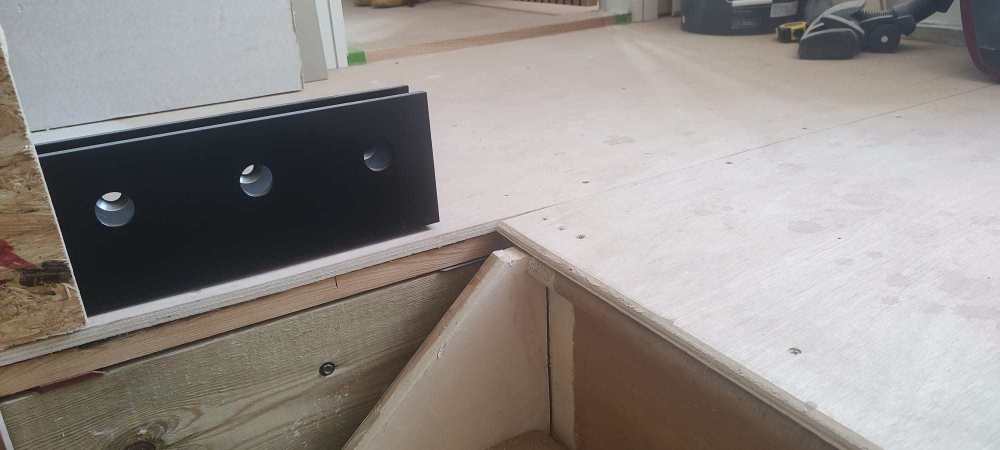
I want to install an L-shaped glass balustrade. My problem is that I have bought a 2.5m glass balustrade side-fix channel and if and when it is mitre-cut it will shorten the overall length by ~70mm This will leave the actual glass banister short of the top step on the landing. I attach a couple of photos of the channel in its final (longitudinal) position. How do I find the regulations as to what is permitted regarding banisters/newel post positioning and what are th consequences for not complying with said regulations should this prove to be the case? Regards Tet