


JohnMo
-
Posts
13292 -
Joined
-
Last visited
-
Days Won
200
Everything posted by JohnMo
-
 I was thinking "not fit for purpose" it's not a ventilation unit as required by building regulations. So therefore not compliant with BR or manufacturer installation instructions. Several reasons as you have detailed before, recirculation of smells, high humidity etc.
 -
We are a similar size to you with 7 circuits. So there us plenty of room to reduce the number of loops. I wouldn't have dedicated loops on hall and certainly no loops in a pantry. We have one loop per bedroom 3x, 2x in lounge, one loop ensuite, another loop does main bathroom, then does hall area near front door and then kitchen diner. I would simplify to a single manifold - post your design and get it reviewed? Manifold can go anywhere, but you have a lot of pipes (36 at the moment) to bring down the walls, if upstairs, the pipes are likely to need insulation as the area will get very warm, also you will need a deep service void - I would find space central downstairs (airing cupboard) then run flow and return to manifold.
-
Dumb Ubbink questions
JohnMo replied to Alan Ambrose's topic in Mechanical Ventilation with Heat Recovery (MVHR)
I used a mix of manufacturers to get what I wanted (all 90mm). If an adapter is available or doesn't suit nm it another manufacturer Zehnder etc. Ubbink 90mm duct to Zehnder adaptor
-
best way to exploit 'Cosy' tariff?
JohnMo replied to Post and beam's topic in Air Source Heat Pumps (ASHP)
Best way to really exploit Cosy is with a battery. Without it, I would look to program the heat pump off in the expensive store at tea time as a first step. Some only run HP in cheap slots, at elevated flow temp - batch charge floor in 3 periods, but if HP is well sized for house this may not yield a good result, as it cannot output enough energy to satisfy 24 hrs house energy demands in 8 hrs. But a downside if you could, without some sort of look forward (weather forecast) and the energy needs, it's easy to overcharge the house with heat and use excessive energy, that's not needed. You may also get a yo-yo of house temperature. I also tried running at an elevated flow temp during cheap periods and WC the rest of the time, didn't really work for me. The other downside of making the HP run harder, in cheap periods, is of the 2 slots, are when it's the coldest parts of the day, so defrosts are likely and CoP can be rubbish. So low and slow may be cheaper overall. The downside of high outputs, in cheap periods, without careful control, you actually use way more energy that you actually you need. Have a play with settings and see what you get out of it. Would say careful tuning and optimisation of the installed system my yield better results. -
Solar cable runs from roof space to plant room on ground floor.
JohnMo replied to jimseng's topic in Photovoltaics (PV)
For me if the house was on fire and it's a sunny day, would a firefighter be able to make safe the PV array without entering the house. If not, I would add a suitably rated external DC isolator in an accessible position. If the inverter is outside and accessible and has an inbuilt DC isolation switch, you really shouldn't add an additional one, according to the rules. That's my view, may different from others. -
Tog values affect flow temp, you really need to get the system up to temperature. Leave for 24hrs and then assess if rooms are not getting hot enough. I would wind the thermostat(s) up to a little warmer than normally set, so it doesn't affect results too much. If all room are getting to temperature job done. If all room are not warm enough trim flow temperature up. If you get to temp really quickly and it overshoots trim temps down a little at a time. If the odd room is too warm decrease flow temperature of loops in that room - opposite in cool rooms.
-
So no buffer which is good. But insulation around the cylinder is rubbish, can you take a photo of behind the heat pump where the pipes are and show how it's been insulated? But you didn't answer this question?
-
Solar cable runs from roof space to plant room on ground floor.
JohnMo replied to jimseng's topic in Photovoltaics (PV)
Well there you are then -
You can get them for different thicknesses of board and double board.
-
MCS 020 queries - guidance please?
JohnMo replied to Barca99's topic in Air Source Heat Pumps (ASHP)
That's as clear as mud. I installed a 4 bar wooden fence in front of mine, about a metre in front, but the amount of defrosting that occured after installing made me remove the fence a week later, be careful with air being recycled. -
Air tightness (gues)stimation
JohnMo replied to timhowes's topic in Mechanical Ventilation with Heat Recovery (MVHR)
An English video by same person, but doesn't mention anything other than humidity activated? You do need to watch the mm² area, no use putting a small vent in each room, follow building regs for sizing. In Scotland they are pretty huge. -
They still grow, not as much, but our resin grout is all covered moss at the moment, if you pressure wash at a high pressure the resin based grout can also lift out. So you have to be careful.
-
New build equals low flow temperature. You can use what ever floor you want. We have ceramic tiles in wetrooms, oak floor in lounge, hall and office all bonded to the floor. Carpet in bedrooms - carpet kills performance at low flow temperature. Not sure I would do wood in a kitchen, one spill and it could be time to get a new floor! We are 5 years since the wooden floor was laid, with no issues.
-
Solar cable runs from roof space to plant room on ground floor.
JohnMo replied to jimseng's topic in Photovoltaics (PV)
I would bring the cables to a multi pole DC isolator on the outside of the house, for ease of access in case of a fire. Then run the rest of the DC to your inverter. Run cables in service void but I would want something to you or someone else drilling a holes later and hitting a DC cable. So in save zone with metallic shield so something like https://www.screwfix.com/p/deta-tte-37mm-galvanised-steel-channel-2m/826VT?tc=TA5&gclsrc=aw.ds&gad_source=1&gad_campaignid=22599672207&gbraid=0AAAAAD8IdPyi10Bx2zrVz5Z9Lr6xcezkw&gclid=CjwKCAiA_orJBhBNEiwABkdmjHstK7DySAtkOoGd1V-4dnj9I9QLc64xIKDU339IXlACKlvaonv5AxoChkYQAvD_BwE -
New Build & Refurb - Roseland Peninsula, Cornwall
JohnMo replied to BohoMT's topic in Introduce Yourself
Think they have become, a little (or a lot) full of their own self importance, so many become a Think I would be sitting down with a solicitor to see what I can and can't do, before I spent a penny on any planning or remedial works. Is the building a listed in any way? -
Air tightness (gues)stimation
JohnMo replied to timhowes's topic in Mechanical Ventilation with Heat Recovery (MVHR)
I have also found these through wall inlets look a bit nicer. https://store.beamcentralsystems.com/collections/mechanical-ventilation/products/dcv-intake-air-valves -
Air tightness (gues)stimation
JohnMo replied to timhowes's topic in Mechanical Ventilation with Heat Recovery (MVHR)
If you don't need to airtest I wouldn't, you end up boxing your self into a corner. Especially if you live in Scotland? I would progress the way you are planning. Tried a couple of dMEV fans in our summer house - Greenwood were head and shoulders better than other fans I tried. And cheap enough on eBay. Remember you need to have all internal door under cut at the bottom for dMEV to work correctly. I would add a co2 sensor to main bedroom as well so you can fine tune your system. -
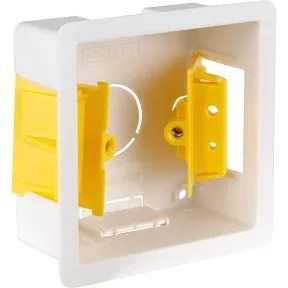
Aren't you using this sort of back box with plasterboard, so no additional supports are needed?
-
Got to the bit where he started drawing and lost the will to live, fast forwarded now and sorry yes opentherm.
-
First on Google, video on page as well. https://heatgeek.com/articles/articles-home?p=choosing-the-best-smart-thermostat Pay wall is for AI features, but who needs them?
-
That's just an on off thermostat he is installing. Why bother spending good money to a fancy looking thermostat that had the functionality of a switch?
-
You'll have to look for yourself, think it's a video of that helps
-
Heat Geek did a review of various thermostats, that run opentherm and Tado came out well or top with best control algorithm when using opentherm. Is just on off - Wiser and Tado (if you buy the correct one) can run opentherm so your boiler modulates instead of switching on off. On off thermostats, really belong in the 1960 parts bin, no place with a condensing boiler - which became mandatory several decades ago.
-
We have sun today, for the first time in weeks
-
Some general basics about how heat pump performance is affected. High flow temps, require the heat pump to work harder and results in a reduced coefficient of performance (CoP). This means you use more electricity for each kWh of heat delivered. The use of weather compensation (WC) maximises CoP as you will flow the lowest temperature you can at all times, if set correctly. You say you have a thermostat in the living room is this actually doing anything if so the WC course set too high. To test reduce the hot end (cold outside - hot flow temperature) of the WC curve 2 degs. Does your house still feel ok? Do this once every 24 hrs until the house feels a little too cool, then add on 1 Deg to the WC.




