


JohnMo
-
Posts
13292 -
Joined
-
Last visited
-
Days Won
200
Everything posted by JohnMo
-
Is it aerosol 2k, professional spray gun isocyanate 2k as they are different things.
-
That could well be your issue. You need to get rid of the zones, if your smallest zone is the only one asking for heat because the other thermostats have had their demand met, the flow will be too small for the ASHP and it will short cycle. Plan of actions. 1. Have only two zones one upstairs one down stairs. Wiring center will need to be modified, use a central thermostat as the controller. You want all the loop actuators opening and closing at the same time, ideally all staying open. Sort that in step 2 2. You need move your thermostats to say 24 degrees, so they do not affect anything. Slowly reduce the flow temperature 2 degrees per 12 hours until your house (main living space) no longer gets hot enough. You mentioned 19 degrees was your set point. So keep reducing flow until your temp is only getting up to 18. Then increase the flow temp up by 2. degree. 3. Now some rooms will be hotter or colder than others, to increase room temperature your UFH flow needs to be increased, if too cold reduce the flow. The flow gauge on the UFH manifold turn anticlockwise to increase flow. Move it a half a turn, leave it for 24 house. 4. Your thermostats are now to limit room temperature instead of control it, so set those to 20/21. The above should reduce flow temperature, which will in turn increase CoP. Short cycling in where the boiler/heat pump does not run long enough to fully heat up, the heat up cycle is the most inefficient, so short cycling is running for a few minutes, stop for 10, repeat. A CoP of 1 or could be less may be seen.
-
As above and your new thread, without this information no one can help
-
CoP depends on outside temp and flow temp. In your last post I asked your flow temp but you never replied? It also makes a big difference if the heat pump starts and stops, so how the house is zoned makes a difference.
-
It may not be as simple as just turning down the thermostat temperature. You should be turning down the flow temperature. Turning the thermostats down may just be driving the heat pump into short cycling. With a heat pump, your thermostats should be treated as limit stops (set 1 deg above the room temp you want) not used to control house temp. You need to reduce flow temp to increase CoP. A badly set heat pump could have a CoP of 1 a well set up one a CoP of 4.
-
heat pump no different from car aircon, how many cars have you had or been in where the aircon doesn't work, normally a easy fix, failed seal, something come loose.
-
Are you sure your heat pump is the only issue, is the supply to the heat pump metered? Example we are on a borehole with 40 lt/min pump. We had 2500 plants installed on two slopes, installed 200m of drip feed pipe, turn on the two outside taps to water the plants and left it on for about a week. Looked at my meter and nearly fell over I had used so much electric. Took a while to realise where the electric had gone. Now only water when PV is active. Anything that uses electric 24/7, ventilation, treatment plant compressor etc, use small amounts in watts, but the kWh soon stack up. masked in the summer if you have PV, short days in winter no longer masks this usage.
-
A new leader of country will fix it - not!
-
Like many on here I installed the PV, no grants, no payment for export. In fact I want to install loads more PV, but to that I either go fast track G99 and have to limit export to 16amp. The system is rubbish, the generation infrastructure doesn't really want our PV.
-
So explain your heating system What does your EPC say your heat demand is? Or if you're got heat calculations what does that say? Flow temperature? Return temperature? UFH or radiators? How are you controlling your heat pump, thermostat in each room, or something else? Running all the time or short cycles on and off? Pipe sizes if you know them? What are they quoting to fix?
-
Not sure North sea gas is 1kWh = 1kWh. Firstly offshore they use gas compression to push pressure up to get it onshore, then when onshore it is further cleaned, re-compressed to get into the distribution network, on it way to England could be re-compressed a couple of times. 1kWh is 1kWh +++. Also LNG, uses huge amounts of energy, plenty of gas compression and refrigeration to get it from its gaseous state to the liquid state. If you heat your water with gas, using PV via an immersion directly displaces gas use from the grid.
-
Doesn't "now TV" have everything that sky does but just through the internet? As you said and Dave mentioned get the dish fitted yourself, Sky around here just make it look like a bodge job.
-
We I did a bit of a trial. Normal summer use buffer cylinder (180l) acting as a pre heater for combi boiler. With immersion connected to PV diverter. Trial 1. Combi boiler directly connected to buffer hot water coil. Daily gas usage one day at zero, mostly 2 to 4kWh Trial 2. Solar diverter valve between combi and buffer hot water coil. Daily gas usage zero, 2kWh kWh, but mostly in the region 0.5kWh. note had an issue when outlet from buffer is above 45 at start of shower and goes below 45 during the shower and water is diverted to combi, shower would run cold. The fix for this to to turn combi water temp to max. Which seems to work. Trail 3. Closed the central heating lines out of the buffer and used the central heating side of the boiler to heat the buffer to around 55 deg. Solar diverter valve installed and PV diverter active. Heated buffer to 55 deg. Typical daily usage 4.5kWh. Buffer would get to circa 60 - 65 during the day, we would shower and it needed to be recharged to get it back to 55 the next morning. So as it stands the best method for me, is preheated water from solar PV via a solar diverter valve. A bit more PV would bring the summer usage down to zero all summer. Or move house and views to England for more solar intensity, from NE Scotland (no).
-
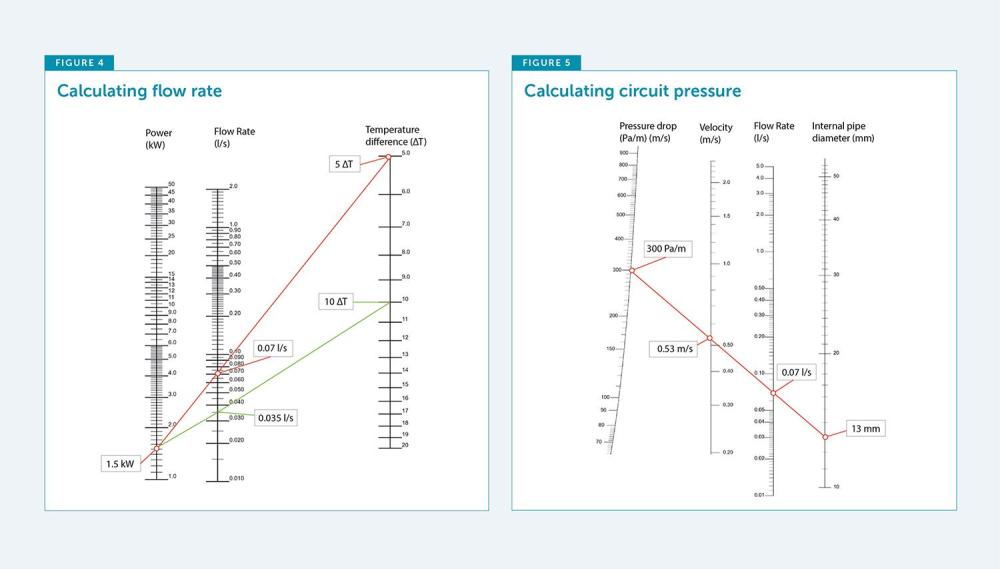
We have a 32kW combi boiler it's min turndown is 6kW, hence the big buffer. But with our set up we can do multiple showers at the same time and back to back and never run out of hot water. For context, we have 193m2 of UFH. Our walls, floor and roof have slightly better u valves than yours, but we have lots of glass (triple glazed), one of our windows is about 21m2, so our heat input is about the same as yours on a cold day. The 12kW ASHP, looks to be well over sized, your problem will be getting it to turn down low enough not to short cycle when in heating mode. It's not the coldest days that are the issue, it's at any other time when the heat pump isn't being asked to work that hard. Only requiring a couple of kW or less for CH. Big heat pumps come with big pipes, high min flow rates, so bumps cost up and are less efficient doing there job. With a heat pump you need one the right size. I would see the central heating being on all day at very flow temperature, a 2 to 3 setback at night, so boiler is just sitting there with nothing to do, in the night charge the large cylinder with hot water, while not on central heating duty. People on here seem to have around 300l cylinder with a heat pump for 2 to 3 person house and store the water at around 46 degC. So cylinder sizing is something you need to get right. Based on the numbers I have seen on this thread, 5 to 6kW ASHP would be a better size. Have a read of the attached. One is the MCS heat pump guide, Heat-Pump-Guide.pdf, the other you would out water flow rates for UFH. If you do look at a gas system boiler, make sure it can run two temperatures one for hot water and for heating, something with weather compensation built in will be able to do this. Then you can run in condensing mode when on central heating and get better efficiency. Heat-Pump-Guide.pdf
.thumb.jpg.e6f5b10749b0a8b28a782f83356b9791.jpg)
-
Depends on the end user, how far they want to go. As many say insulation is a one off cost, your heating bills are for ever and with the high prices of energy now, and with no end in sight, who really knows when diminished returns start or stops.
-
Or just get a 240v relay, timer with override switch used to switch the relay on, relay takes care of the amps.
-
I'm on gas combi boiler, and last heating season was not very good, as I had a lot of short cycling of the boiler, three designs later I have where I need it. Basically a re-plumb of buffer and adding a big plate heat exchanger on the boiler side in addition to the buffer heating coil. First two months of heating boiler was in continuous short cycle trying run at very low temperatures with a buffer heating coil that was way to small for those temperatures. Used lots of gas while I got my head around the issue. These are issues no one tells you about building low energy homes. Learned loads in the process though. End of the heating season I was batch charging the UFH for around 6 hours at a time, using 20 to 30kWh a day. I was heating for half of April and the gas usage was 500kWh for heating and DHW. The last three months with 3.1kW of PV, my DHW has mostly been taken care of by PV. Bills on the region £15 to £20. Last month I used 60kWh of gas, 20 of those in two days, no solar production and doing a trial on the water heating system.
-

How to decide between ASHP or Gas boiler for New Build
JohnMo replied to Meabh's topic in Air Source Heat Pumps (ASHP)
We have 3.1 kW PV, offsets electric costs, diverter, supplies most of the DHW in the summer -
As it stands your heat loss is just slightly over ours, with slightly bigger floor area. 5kW ASHP or small system boiler would too large on anything else but the coldest day for central heating - UFH throughout, balance the system so when your living space is 19/20, your bedrooms are 18 degrees. Bathrooms at 20-21. Run as a single zone on weather compensation with a 2 degree setback at night. Your biggest demand will be keeping up with hot water, if your bedrooms are being utilised, which would drive a large cylinder and bigger boiler/HP, and a buffer on the central heating.
-
The man delivering gravel this week also does concrete, he was saying lots of self builds are being put on hold, doing enough to initiate the project for building control and then stopping, they have lots of recent cancellations.
-
Steel post installation design. Help needed
JohnMo replied to Marvin's topic in Landscaping, Decking & Patios
I was told by materials engineer that it is best seal tubes. Any atmosphere (oxygen) inside the tube is used up and cause a small amount corrosion, once that process has happened the atmosphere is inert, so no further corrosion occurs. An open vent tube gets replenished with new oxygen so corrosion can continue. -
Your wall insulation is pretty pants, can you do anything improve? But as it is, your UFH will have no issues heating the place. So to get a heat pump or boiler to work, do a heat loss calculation. Good one here Then you'll know what your working with. Do the calculation and post your results. From that you flow temp and flow rate can be calculated.
-
Drainage Engineer Needed
JohnMo replied to bob the builder 2's topic in General Self Build & DIY Discussion
Your architect should have to deal with sort of thing on a daily basis. Ours had a go to man, your should have the same. -
Let's start with basics. Have you done a detailed heat loss calculations? What are your U values for floor, walls, roof and windows? We have a 6m high lounge and all other rooms go up to about 3.5m, we don't struggle to heat the house, with UFH. A heat pump heating system is fine as long as you design for low temperature heating.
-
By EWI do really mean external roof insulation? Or something else. Are you building a hybrid roof? If so have you done an interstitial condensation calculation? If you panel over the whole lot, then add additional wood below. All would be secure, knowing everything is held in place correctly and you will end up with the same effect. I think if your not careful something could land on your head in 10 years time.




.jpg.87d6d75adaec59a22c40fcf0ea8d2464.jpg)