


JohnMo
-
Posts
13296 -
Joined
-
Last visited
-
Days Won
200
Everything posted by JohnMo
-

New member - stuck for what to do next to warm the house
JohnMo replied to Sparrowhawk's topic in Introduce Yourself
As said new boiler will be leaps an bounds better as far as kWh used. If you are replacing consider the rest of the system at the same time. A 25 year old system will be full of debris from corrosion etc. You may be better do a full re-plump or at least a power flush, then while you are at make sure the rads can heat your house at a low flow temps circa 30-40 degs. That will make the house heat pump ready, and you will benefit with even better boiler efficiency. You need a boiler that has two different flow regimes, one for hot water, the other for central heating, most can do this. But gets plumbed and wired slightly differently. Not sure doing a delta of 30 on radiators makes much sense. Most modern boilers will manage the delta T, by modulation of pump output at high flow temps mine will give a delta T of 20, at low temps a delta T of 4. -
So walk us through the heat pump Do you have a buffer, plate exchanger or low loss header, or are you connected direct to the heating system? What is the flow temp out of the heat pump in heating mode? What is the flow temp going into the floor? Are all zones switched on or just one or two. How long does the heat pump run for before switching off?
-
Freezing weather finally breaks
JohnMo replied to nod's topic in General Self Build & DIY Discussion
Almost tropical here also - 9am this morning, still looks the same tonight. Currently -3 and due to drop to -6.
-
Think you may be missing the point of UFH, it doesn't need to feel warm. A radiator feel is hot, because its small surface area needs to be hot to transfer heat to the room. UFH area is the size of the room, to transfer the same amount of heat to the room it can be cool in comparison. In some cases almost the same temp as the air temp at the end of a heating cycle. Your bedroom on radiators benefit from heat transfer from the downstairs as well as getting heat from the radiators. The upstairs heating is being supplemented by the downstairs heat. Your downstairs is using 40kWh not for 2 hours heating, but really for 24 hrs, because its only on for those hours. You are really putting an average of 1.6kWh in to the floor when averaged out. Your upstairs has an average of 1.25kWh. So the same heat as a small electric convection heater for up and downstairs combined. Don't think that bad, looks quite good to me, its not a spring day, its been well cold outside. As I said two way to operate, long and slow or blast with heat, your doing the latter and as you have to run your boiler at the temp you do, its working ok for you.
-
How is the buffer heated - is a pressurised one heated direct from the heat pump, or are you heating via a coil in the buffer. If a coil what size coil is it?
-
UFH running is down to how much insulation you have below the UFH pipes and how you operate. So 150mm is good so not down to that. Heating 10s of tonnes of concrete takes quite a bit of energy, so there are two fundamentally different ways to operate the heating regime. Throw a load of heat at it over 4 to 8 hour period, just like a storage heater, then let is trickle out. This is pretty much what you are doing. So it uses a bunch of kWh in a short period. Doing this wrong you can get thermostat overshoot, which is waste full and will use more energy. The other way is a gentle flow of heat into the floor, so heat in, matches heat out, the heating period is pretty much 24/7, this entails using a lower flow temp. If coupled with weather compensation this operation can be automated. Otherwise, it can be done with a little bit of fiddling manually with the UFH mixer. As a comparison our flow temps at -5 are about 30 degs - yours 45 degrees, ours is running 24/7. Either way will use a similar amount of kWh other a couple of days. If you can reduce boiler flow temp, there are small gains to be had, as you will be condensing more.
-
If you install the system around a flow temp of 30 at -7, so a well insulated UFH, there is no reason it should cost more to heat your house. A Media 6kW monobloc at -7 and 30 degree flow temp will give a CoP of 3.4. Gas boiler at low flow temps so a like for install should give a system efficiency of about 97% (that is what is currently running at). So a heating day uses 100kWh (nice round number) going in to the floor. Gas 100 / 0.98 =102 kWh Cost = 9.78p kWh = £9.97, plus standing charge of 27p = £10.24 Electric 100 /3.4 = 29.4 kWh Cost = 33.068p kWh = £9.72 So gas is slightly more expensive but pretty close But at 7 degrees instead of -7 the CoP goes up to 5 at the same flow temp, so costs reduce for electric by 32%, then gas wins by a good margin. A poor install costs you more (45 degree flow the CoP drops to 2.4, so cost 30% more to run). A good one can cost you less.
-
The floor is unlikely to be much warmer than the room, so will feel cool to touch. If it was hot, your heat loss from the house would be higher. Ours is also cold to touch, but house is warm. We have a very similar house floor area, 192m2, but single storey, the ground floor area is 192m2, all vaulted ceilings and an outside surface area of 624m2, so twice as much area to leak heat. If on the coldest day your thermostat is clicking off, you could be flowing at too higher temp, that means there are gains to be had by reducing flow temp, which will increase CoP and use less kWh. Also review your domestic hot water flow temp and set point. Another thing to check especially if your flow temps are high or if you are close to capacity when in heating mode, do any immersions kick in, controlled by the heat pump? Your heat pump could be asking for them to work as well as the heat pump.
-
Is there an issue with the heating? Other than the flow meters reading high? Have you tried turning your pump down?
-
It does sound big, they are only there to reduce short cycling, when min output from heat source and min load required and small system water volume would lead to a short run times. They also act as hydraulic sepereration between various pumps. So your heat of pump should turn down to about 5kW. So have run some run-times calcs, that show the following. With a minimum CH heat demand load of 1kW. System volume 300 plus 100, 400L in the ch system, run time 28.mins, off time 111 mins. Reducing the total system to 145 incl a buffer, would give a run time of 10.1 mins and off time 40.4 mins. Which isn't short cycling for an ASHP. Increasing you min heating load to 2kW gives a 13.5 min run time. So for run times and eliminating short cycling a system volume of 145 L is fine, you may already have close to this without a buffer.
-
My take on flow rates is. All bedrooms have people in them and bedrooms have the doors shut at night, go will building regs flow rates. Anything else, passivhaus rates or above.
-
Assume when you say manifold you are talking UFH manifold. The temp on the manifold will never be the same temp as the buffer. Why, because there is a mixer on manifold, the mixer will alway mix a percentage of the return water with the incoming water, the gauge on the manifold represents a mixed flow temp. There is an issue with most mixers, in that they like to have set temp, 10 degrees lower than the supply temp into it. Because they operate with a fixed minimum mixing all the time. So if buffer is set to 55 it is unlikely you will get more than 45 on the manifold. Have to say having to heat a large buffer to 55 with a heat pump, doesn't sound the most efficient way to heat a house. If you are having to run UFH at those high temps sounds like you would have been better with radiators.
-
No don't think so, enough other jobs to think about. MVHR is all sorted setup and running nice and quietly.
-
It surprises how much over thinking that goes into a ventilation system, which designed to run at a constant rate, except when on boost. Set to building regs or passivhaus flow rates, or somewhere in-between. Push the boost button as you go for a shower, job done. Manage the filters as deemed by the manufacturer.
-
3 way valve, or if you have 2x 2 ways, the one for the cylinder has stopped working?
-
Scot Gov to change to passivehous for new build homes
JohnMo replied to Tennentslager's topic in General Construction Issues
Various trades I had on site, all confused by airtightness and insulation in general. But the best comment I had was when they saw how much insulation was going under the floor, told me straight I was stupid, and wasting my money, as heat only goes upwards, not down. -
Brink Flair 400 preheater.
JohnMo replied to Russdl's topic in Mechanical Ventilation with Heat Recovery (MVHR)
Depending on how efficient your heat exchanger is, in UK temperature they are not needed, maybe why it's not coming on. We had -9 the other day and the antifreeze function never even came on, as far as I could see. -
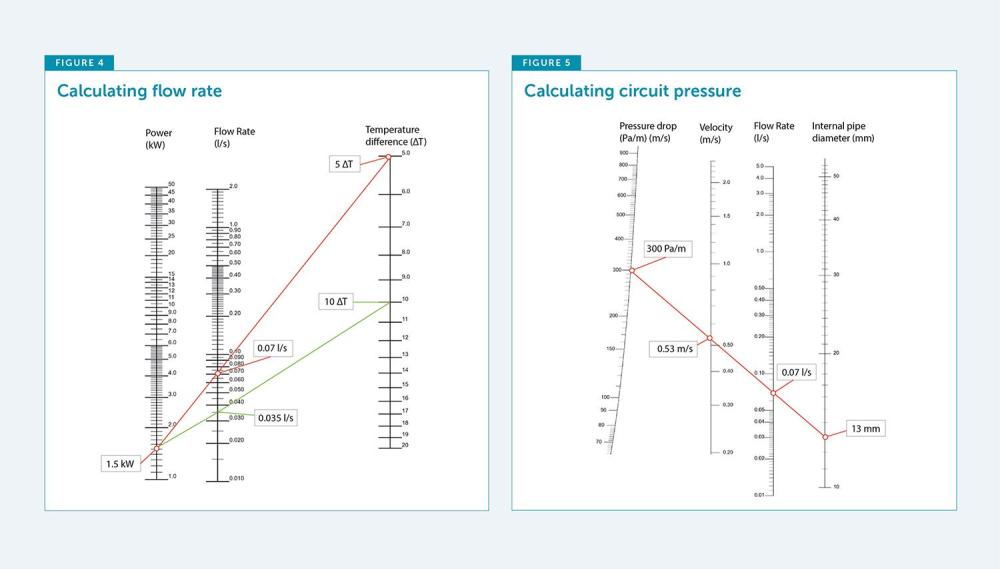
If you use no buffer, make sure you water volume is acceptable for the heat pump manufacturer for warranty purposes, don't zone it to death, one or zones only. Some charts attached
.thumb.jpg.e6f5b10749b0a8b28a782f83356b9791.jpg)
-
Scot Gov to change to passivehous for new build homes
JohnMo replied to Tennentslager's topic in General Construction Issues
The training needs to be more like that in Europe, you have to do a set number of years and qualifications, then work for a company for a further number of years. In the UK, can walk past a time served guy and then set up shop as a building firm. -
Scot Gov to change to passivehous for new build homes
JohnMo replied to Tennentslager's topic in General Construction Issues
Not willing to hold a breath for that to happen. Nothing special about Scottish building Regs. My heat loss is less than half the demanded rate for the same house built to Scottish building regs. And I am not even to Passivhaus house standards due to the shape coefficient less than efficient. So architects will all need more training, builders and all other trades, will need more training also, big builders will all push back. The unaware population will either switch off the MVHR or not change the filters, unaware what its for or why they have it. Then complain to the press that new house is full of black mould, government will U turn shortly after. -
The 5 kW Vaillant does 6.7kW at -3 and a flow temp of 35 and 6.1kW at 45 degrees. Just make sure the install includes a buffer to keep the heat pump happy on a 10 degree day when heating loads are low. You also have a good margin available to do hot water on the coldest days. On full heat demand, will be nicely down its modulation curve, so happy and quiet. The alternative is 3.5kW unit, which is rated at 4.6 and 4.3kW, but that could end up running flat out just doing the heating, and being at full load may make more noise than you want.
-
Just turn the flow down, run at mid to high 20s, much better for CoP
-
I moved into a house years ago, who ever did the foundation measured wrong and it 1m longer than it should be. Brickie, just followed the foundation line. Everyone assume it was correct including building control. Great for me, a longer garage than expected.
-
UFH overshoot/undershoot. Thermostat issues
JohnMo replied to Roger440's topic in Underfloor Heating
Salus ones also fit a single wall socket Can be wired or wireless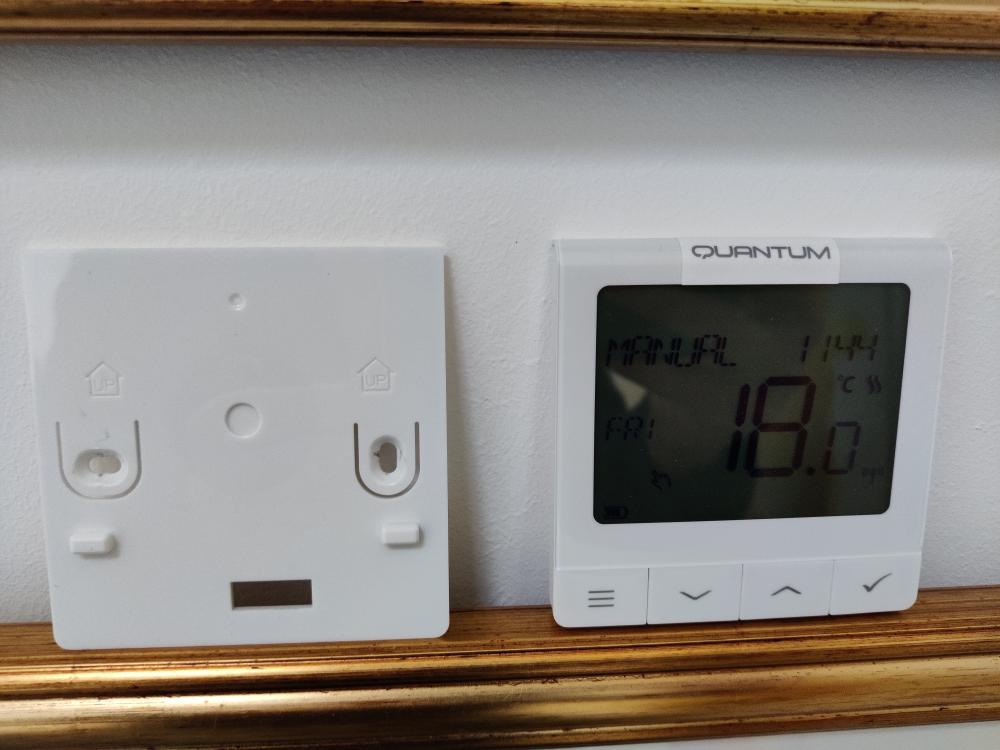
-
DHW, Domestic hot water - Heating your cylinder.







.jpg.87d6d75adaec59a22c40fcf0ea8d2464.jpg)
