JohnMo
-
Posts
13308 -
Joined
-
Last visited
-
Days Won
200
Everything posted by JohnMo
-
Seems a good choice for a stairs.
-
Dulux trade paints for me, every time. You will now get almost every alternative paint available, so good luck. Why I like Dulux trade, very high pigment content and covering power, you can get it easily (B&Q etc).
-
Save your time and effort, just buy this and follow the instructions. It's pretty harmless to use. https://www.fertan.co.uk/product/fertan-rust-converter/ Or as @Onoff says.
-
More rubbish costs for the tax payer to cough up, and pay some company to manage. More upfront costs for a heat meter and dedicated heat pump electric meter that read and record in almost real time, so CoP and SCoP make sense - all of this kit has to be paid by someone - either the tax payer or the person having the kit installed. "If your Scop was actually 3.0 you would only have paid £1,165 and you're actually "made" £235" but the metering system just cost £600 installed. The OP install and many others on here show the cost of install doesn't need to be high, or cost prohibitive. Fact is a new full price heat pump isn't much of a cost premium over a good quality system boiler. And because the installer system see a cost benefit for the consumer in the way of a subsidy for a piss poor install, the consumer will still be ripped off. Sorry don't believe any government money spent on these schemes, is money well spent. A couple of years after the grants were abandoned on PV, costs have dropped like a stone.
-
Why? That will just be abused by the unscrupulous. A heat meter records negative heat output when cooling, so anyone could make the system look like it's got a poor CoP, even if fantastic during winter. Just make all plumber training mandatory on low temp systems - then what issue? A simple low temp system should be getting a SCoP 3.5 min in the frozen north and 4 and above especially in the moderate temperature zone called southern England. Stop grants, they are just getting rich quick schemes, the general public carry the tax burden front end, and as a consumer with shoddy practices and poor workmanship at the end.
-

Free CAD software recommendations please?
JohnMo replied to marno17's topic in New House & Self Build Design
I just made all my changes in a pdf viewer. Had to move a boiler and a few other things. Cut, copy and paste various bits from the original drawings on to new locations. -
Can you use stainless steel screws with a Dewalt torque driver ?
JohnMo replied to Siadwell's topic in Garages & Workshops
That's what I used for the fence. With no torque adjustment, just have to be careful with the trigger finger. I used SS ring grooved nails for the cladding, several thousand. -
Can you use stainless steel screws with a Dewalt torque driver ?
JohnMo replied to Siadwell's topic in Garages & Workshops
Depends on size of screws and at what torque you are driving too. I just finished a fence all SS screws, nothing pre drilled and had not a single screw issue. I used ones with a square drive hole and corresponding drive bit. This is what I used https://www.toolstation.com/deck-tite-plus-a4-countersunk-screw/p35337 -
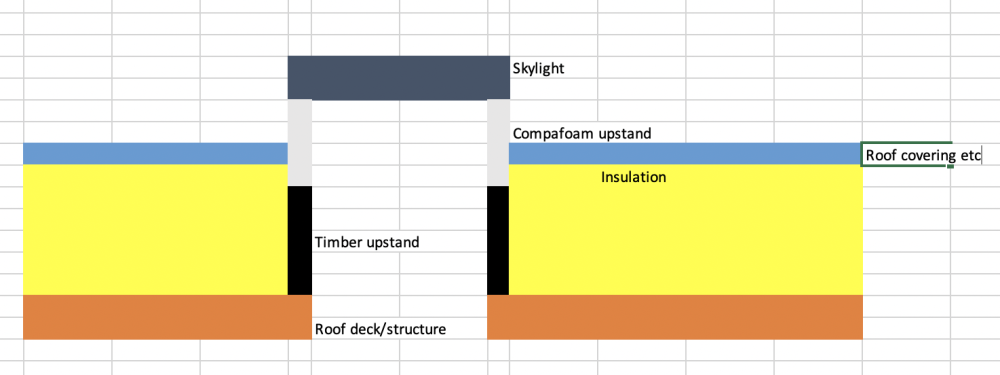
No Compafoam goes above the wooden frame would have similar dimensions to the Compafoam upstand. The opening shown on my last sketch is the aperture for your skylight. So is showing the left and right of the aperture. You would line the aperture with 25mm PIR then plasterboard or what ever you want. So nothing like your drawings.
-
Have done hopefully a clearer sketch
-
Think you have missed my point. If you are charging every day you are not fully charging the battery every time. It's little and often. If everyone has 200kWh batteries bang goes the time of use tariffs as well, because peak time becomes night time - premium rate, so we don't get grid collapse.
-
Habito, Fermacell, OSB & Plasterboard, Ply & Plasterboard, or…..
JohnMo replied to G and J's topic in Building Materials
So overall just like dry lining with plasterboard. Dry lining done properly has zero issue with knocks or bangs or scruffs. Personally I am not sure I would use anything else other than plasterboard. Use the correct fixings you can hang whatever you want from plasterboard. We are using 12.5mm plasterboard and have big mirrors hanging from it no issue. Same mirrors were in the last house - no issue in 10 years. -
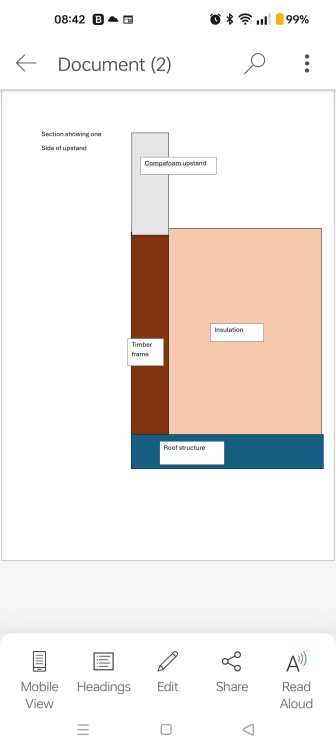
Making the wooden frame and having it shorter in height than insulation gets rid of any possible bridges. So if you have 200mm of insulation above the roof make the timber upstand about 170mm, the Compafoam then is 150mm plus 30mm, plus any boards on to of the insulation and your roof finish, so about 200mm high Compafoam. Yes
-
Fully agree, but the government investment, is really the tax payer investment. Should just stop the install grants, spend the money on plumber compulsory, low temp heating system design and installation training - do as part of Gas Safe and or G3 training so little or no escape. Heat pump is just a heat source, it's system design that is important bit for ASHP, GSHP and condensing boilers. The system shouldn't look or act any different, irrespective of heat source.
-
Using zinc yellow passivated torx screws on a shed build cladding
JohnMo replied to Siadwell's topic in Garages & Workshops
If using larch use stainless fixing. We have larch cladding on house all stainless not a black streak anywhere, our garage was done by others, and they insisted galvanized fixing would be no issue, black streaks everywhere. Don't compromise you will regret it. -
Does this make more sense?
-
I would build a wooden frame from the roof structure and around the aperture, to a height just below the top of insulation, so the roof insulation has something to butt up to also, use this framing to secure the Compafoam too. Then build up in two layers of Compafoam to get the correct height you need. Glue and screw the layers together to form the upstand
-
Yes it was, I read it. First thing I thought, our van and car never get refueled at the same time and it's several weeks between refueling generally. Even if you did charge both cars every night and you did a 1000 miles in each car, every month, the charge time each night (for each car) would be 0.8hrs using an 11kW charger assuming the car is doing around 3.5kWh per mile.
-
Yes the whole upstand is made from pieces of Compafoam, it looks like polystyrene, is light, but like a stone for hardness. I used 75mm x 100mm, screwed through directly in to the roof structural timber, with a mastic in-between to seal. The roof light is then screwed directly to the Compafoam with mastic to seal. Sorry never got any photos.
-
I gulped at the cost of Compafoam, but took joiner all of about 15 min to do two roof lights upstands. So overall good value.
-
Roof maker, do a Passivhaus approved one, it's got a U value of 1.0. don't pay for there upstands they are naff. Sit them on Compafoam CF200 upstands to get thermal bridge free install.
-
Well done, looks tidy. Now all you need is the cooling chip, read up on here, the one they uses in gas boiler for some other reason is the same and a 1/10 the price.
-
First question is what did the structural engineer specify? That should be your first port of call. If you haven't had any structural engineer involved you should. Would have thought they would be on hangers built into the wall. Handbook here https://www.google.com/url?sa=t&source=web&rct=j&opi=89978449&url=https://www.pasquill.co.uk/wp-content/uploads/2019/01/posi-joist-technical-handbook-2019.pdf&ved=2ahUKEwjQhdOhup-IAxW0WEEAHa8QNB8QFnoECB4QAQ&usg=AOvVaw30F2fl_4HxO29xMSPYJ6bu But having said the above - these are good. https://www.screwfix.com/p/dewalt-aerated-concrete-anchor-nylon-60mm-50-pack/454HT?tc=TA5&ds_rl=1247848&ds_rl=1241687&ds_rl=1245250&gad_source=1&ds_rl=1245250&ds_rl=1247848&gclid=Cj0KCQjw_sq2BhCUARIsAIVqmQvplppZTIs9pnhfHl1drL8qml8jhlOHJ2sxVX3WU1QsF5v912lcgHkaAtUGEALw_wcB&gclsrc=aw.ds You install them one turn in half a turn out until they are driven home. Or the other option is a chemical anchor, such as this https://www.screwfix.com/p/rawlplug-r-kem-ii-styrene-free-polyester-resin-300ml/32863
-
My thoughts on the whole thing, if you need to draw more than 23kW (100A) at a time, you need to step back and really ask your why - especially in a new build. Most people on this forum seem to want to build low energy houses on one hand, while on the other want a dedicated power station feeding it. Who needs 69kW, who wants to pay a bill that warrants that electric demand.
-
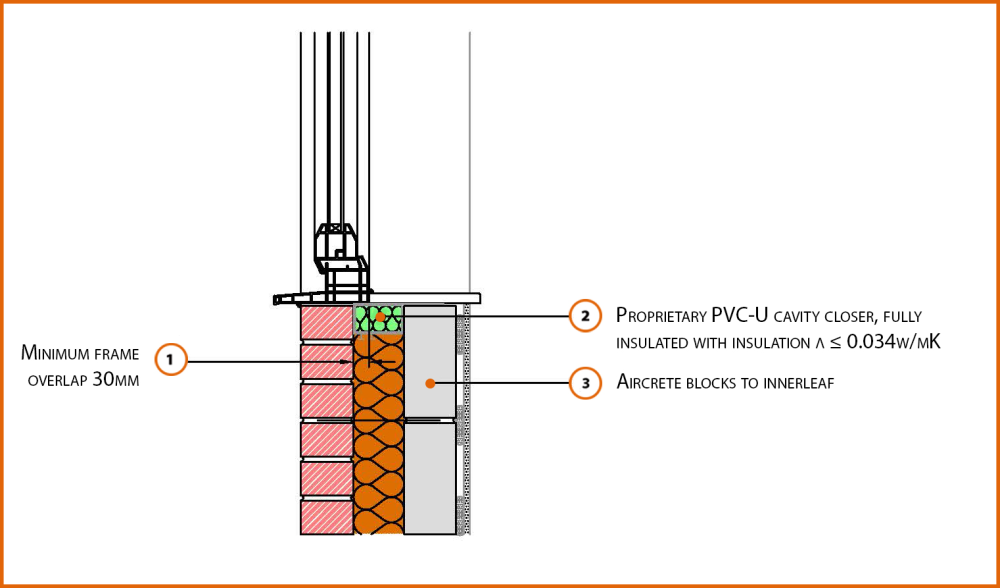
The example from the OP is a twin skin block and brick with insulated cavity. The external skin is isolated from the building by cavity insulation first, any openings in the cavity are blocked off with cavity closers. Windows and doors straddle the insulation, so as not to compromise or generate a new thermal bridge. Example