


JohnMo
-
Posts
13299 -
Joined
-
Last visited
-
Days Won
200
Everything posted by JohnMo
-
I am starting to steer towards. One thermostat (with opentherm) for boiler, such as a Tado (Euro model). Just time to boiler run when HP is expensive. Then another for HP. HP one would do heat and cool. @Beelbeebub could then just configure the existing boiler to do DHW cylinder heating via the existing and not used cold and hot DHW outlets. Add a pump, filter expansion and pressure relief. Then zero interference with CH system.
-
You need to consider risk v reward. Flours get wet during a build, how much drying you will get done with an unsealed house... Frozen pipes in floor, you need antifreeze in the water. You need to set system up exactly as you would when it is normally active. So, Expansion vessel, pressure relief, filter/strainer, then ASHP directly coupled to UFH is fine, you don't need mixers etc anyway.
-
I have two shelly relays and a single automation in Home Assistant so doesn't need to be costly. Would prefer a control system that was totally offline through.
-
+1 For total flow rates they are easy enough. Just total floor area, multiply by room height up to a max of 2.5m, multiply by 0.3. apply same to extract and supply. You need an air test to see if you benefit from MVHR, 3m³/m² at 50Pa. Will cost £100 to 200. But I would dump PIV and replace with dMEV (Greenwood CIV 2 or 3) and have self modulating trickle vents, only on dry rooms, seal and vents in wet rooms. Easy to do, very little in the way of heat loss, as it's all done on demand with very low background flow. Whole system for pennies to the pound compared to MVHR.
-
Why bother, gains are not worth the bother. Most mvhr will have a setback mode. This reduces the fan speed from current to about half current speed. I just put ours on set back during the winter, to stop the air drying too much. Then in spring put the speed back to normal.
-
Hooking things together is pretty easy, if you have two pumps hydraulic separation is needed. The other bit that occurred to me was how has he rigged the current setup? If S or Y plan he will need to rearrange to something like X or W, a PDHW plan. Or convert the combi to a 4 pipe boiler. So the existing DHW side of the boiler directly connected to cylinder coils, with pump (call for heat starts pump), expansion vessel, pressure relief filter. You can then easily run independent flow temps or WC on the CH side and fixed flow temp for cylinder. The other way to connect boiler and HP is in series. Run both with the same WC curve. HP curves stops at say 4 degs outside and the boiler curve continues to -10. Boiler would automatically pick up heating duty as HP flow temp flat lined. So you have a temp range where both hp and ASHP run together, then the ASHP would naturally switch off. Complication is DHW. Control My hp has the controller built-in for hybrid, but found it wasn't really doing what I wanted, so switched that side off. So heat pump is not aware it's running hybrid mode - used home assistant instead. Have 2x generic thermostats (home assistant), one for boiler and one for heat pump, and a schedule (home assistant). Rigged up an outside temp sensor within HA. So optimised based on likely running costs based on OAT and E7. Then set up decisions based on OAT and tariff to make either HP or boiler run. DHW is done in pure hybrid mode with both boiler and HP running, this is just hard wired and a dumb relay. If internet falls over have a normal thermostat to pick things up on ASHP only, just need to move setpoint (20) up to 20.5 and normal service is resumed. Boiler is then off for heating, but stays hybrid for DHW (all hard wired). You can thermostats that do all the above in the USA, but the same thermostat in UK is designed for S plan, so doesn't do much for you.
-
Have had mine running hybrid mode when we had cold spell. Can see two issues Two pumps running without hydraulic separation. I would choose which you want as master so the one that runs most the time. The other introduce via close couple tees. If you are running WC the circulation pump will run all the time and circulate through the system when either heat source runs. The next issue is when one heat source is running the other never gets permission to start as the return temp is always to high. So you have to be careful with settings.
-
We have stove in house which has a balanced MVHR system (supply and extract flows equal). The stove is fully room sealed with external air supply supplying both primary and secondary air. The lounge is fitted with two supply terminals. Have carbon monoxide alarm also in room. Fire is fully serviced yearly and also monitor thermal camera to check for any small leaks when on and when off. MVHR is serviced every 6 months, and we have extract filters at every extract terminal to ensure ducts remain clean.
-
Why would you do that, even in a passivhaus. Opening windows can be draft free so no impact on an air test @Gordo text attached that was provided to hetas to do their note on MVHR. Doesn't say running an unbalanced MVHR system, as seem to keep saying. RVA_position_on_MVHR_and_open_flue_appliances_Final_4th_July_2022.pdf
-
Your fridge is trying to move heat from the inside to the outside. The back of the fridge will already be a warm(ish) area so have warm pipes there also may be making the fridge work harder that is designed? Or maybe it all the fridge magnets messing with things?
-
4.8m tall rooms, is that correct? How airtight is your house?
-
Yep Where does this requirement come from?
-

Flow Rates to Approved Doc. F
JohnMo replied to Marko's topic in Mechanical Ventilation with Heat Recovery (MVHR)
You also need to look at the wet room and kitchen requirements and then balance extract and supply at the worst case (highest rate) -
Sorry what is your source information. Or are just making this up as you go?
-
Heating / Construction type.
JohnMo replied to Ryan 2023's topic in General Self Build & DIY Discussion
Or you build with Durisol ICF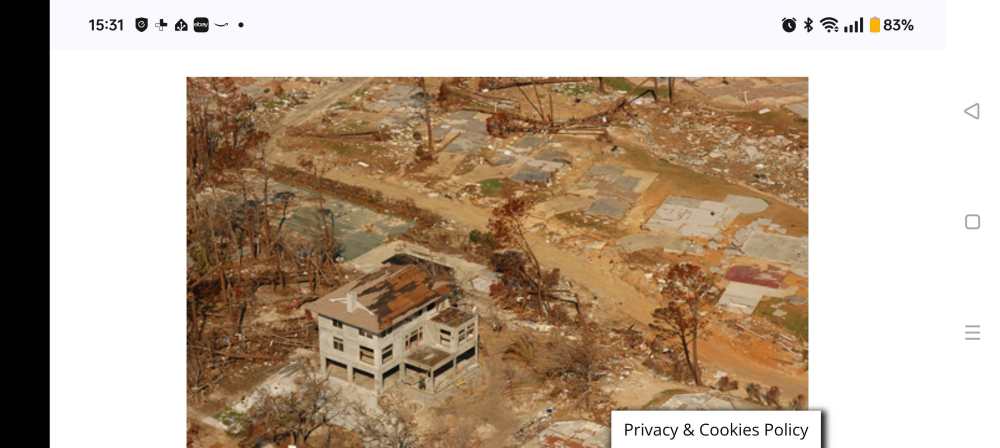
-
Sorry - no bubble been burst here. Mine is balanced, will stay balanced. Not sure where you are getting your information from, but maybe helpful if you actually start quoting building regs, because I cannot find anything that supports your thought process. Should you have an open flue appliance in a house with MVHR? Does that comply with common sense, let alone build regs? Open flue equals a requirement to permanently open ventilation when better than 5.0m³/m² at 50 Pa!
-
Maybe been on the pipeline of development for the last ten years, and no-one bothered revaluation of the costs - too much head time gone in to the development, so became a must do, instead of a could do project.
-
Heating / Construction type.
JohnMo replied to Ryan 2023's topic in General Self Build & DIY Discussion
First obvious measure, is build a smaller house. Unless you are a family of 10 why do you need to build so big? Look at form factor, that is shape, the nearer your building is to a cube the less heat you loose for a given floor area and room height. Then airtight and insulation. MVHR to recover ventilation heat loss. Heating method, generally ASHP is cost effective. Coupled with PV for shoulder season heating cost offset. A battery and smart meter allow you use time of use tariffs for lowest cost per kWh. Radiators, fan coils or UFH is down to personal choice. -
Why? You will always get less heat recovery!
-
You should have structural drawings from roof supplier or approved ones by your structural engineer. If you have neither get them done ASHP. Nothing so far mentioned wind loading, roof overhang etc
-
Are you sure? Residential building are 7.5% while roads are 11.8%
-
Every time the boiler starts and stops. Short cycle time affects gas consumption in a bad way. So an on/running time of about 6 mins or less isn't good. Cannot answer that, you would have to try and see what happens.
-
Sorry this is incorrect. The MVHR in and out flows, are balanced - same is taken out as brought in, so house is neither pressurised or depressurised by MVHR. MVHR also slowly decreases house temp (assuming colder outside) as the efficiency of the heat exchanger within the MVHR unit will never be 100%. Ventilation heat loss will be based on approximately 10 to 20% of the overall flow rate of the MVHR unit, plus natural ventilation heat losses based on house airtightness. So airtight house, ventilation losses are almost all losses produced by MVHR, leaky house plus MVHR, are MVHR losses plus natural air leakage losses.
-
Are you room warm enough is your boiler running without too much cycling? dT is all to do with flow rate, if you moving too much water through the system dT will be low. You could turn down your circulation pump. But if circulation pump speed is controlled by boiler then the boiler is happy with the dT so don't mess with it.
-
In theory it may be ok, but heat loss is best guess, and the -2 is unlikely to stay constant all day, so could be correct, but may not be. At that temp outside you could have a bunch of defrosting happening also to confuse things.



