JohnMo
-
Posts
13296 -
Joined
-
Last visited
-
Days Won
200
Everything posted by JohnMo
-
Welcome Heating UFH in main areas, would do fan coils in bedrooms. Design to run for heating and cooling unvented cylinder. ASHP to heat and cool. Ventilation If you go for a good airtightness MVHR (airtightness of 2 or better), otherwise conditions based MEV or dMEV with humidity activated trickle vents. High ceilings - YES. We have vaulted ceilings all room they are great. NO to both. I would either do twin stud timber frame, with either cellulose insulation or rock wool insulation, ICF or block work with big cavity and poly beads insulation. Bungalow have a poor form factor, which means they need way more insulation to have the same heat loss as a good form factor (a cube shaped house), so U values - floor aim for 0.1, walls better than 0.14, roof 0.14 or better. Glazing, triple glazed. Fireplace no, stove with external air for primary and secondary air.
-
Think you have two options 1. Rip it all out and do it correctly - may not be easy unlikely to be cheap. Could grow arms and legs, from a planning perspective and construction scope. 2. Do a good thermal underlay and good carpet. Pretty cheap, a warmer feeling to the floor, very constrained work scope. If you are concerned with damp, you could do a liquid DPM, which is basically epoxy paint, paint one day underlay and carpet the next. Option 2 and move on with my life, would get my vote.
-
Is a viable option. An example of a 40m² garden room (first I found), could easily be configured to be suitable, add insulation and heating to make it usable 365 days. https://summerhouse24.co.uk/large-garden-office-hansa-ii-40m2-70mm-4-x-10m/
-
Sorry to be blunt - if you can't build bigger than a postage stamp, don't build. The space allocation is small as defined by the minimum allowed. Your first topic mentioned 37m², but not sure if that was foot print or living space, but by any standards is very small - have you considered building a summer house, which is more size appropriate or find a suitable site to allow a proper sized bungalow. Or build down and or upwards.
-
Just buy really good high tog underlay and carpet. Trying to Is just too much like hard work. Engineered wood will not help the cold feel compared to decent carpet and underlay - something like this https://www.carpet-underlay-shop.co.uk/collections/wool-felt-underlay/products/56oz-heat-insulation-wool-carpet-underlay Don't go with anything that says reflective as reflection doesn't work in close proximity to the carpet, it needs an airspace - regardless of what they claim.
-
Still have ours - not been switched on for a few years. But being plasma I could possibly heat the house with it.
-
Really depends on how many times you cycle the battery, if charge and discharge 3 times a day, the batteries likely to last 1/3 as long compared to a battery charged discharged once a day. Laptop and phone start off great, the longer you keep them, the worse they get for battery life. No You really need to assess your life style, energy and usage patterns. A battery makes great use of excess PV and it's great for any time of use tariff. We are on just E7 and our average cost per kWh in March and April was 5p. So based on our usage we save £150 by having battery and PV in one month. This year so far is just over £500 saved. 10 years time, would hope battery technology has moved well past current tech, so who knows the price. My first flat screen TV was £6k, similar now £200.
-

Trying to understand Heat Loss and UFH options
JohnMo replied to yellowbert's topic in Underfloor Heating
Yes I would do it all as a single zone. Not a fan of UFH in bedrooms as it's too slow to respond. Fan coils change fan speed to modulate room temperature. With fan off zero heat output so may as well flow all the time. When designing UFH in bathroom do quite close centres for the pipes as you don't really have much floor area to room volume. Or use a fan coil in there also. Cool Energy have them with towel hangers designed for wet rooms. -
Trying to understand Heat Loss and UFH options
JohnMo replied to yellowbert's topic in Underfloor Heating
Yes then it makes it way easier to balance the whole system as a big single zone. It's just small tweaks to flow to get room temperature as you want. So when doing heat loss calculation for each room have the heated room figure you require. So a bedroom is unlikely to need 21 degs. Remember when you do the heat loss calculation it's for 1 or 2 days a year, the rest of the time it's warmer, so heat loss is lower, I would target design flow at about 30-32 and that gives you room to have a working weather compensation curve for when it's say 9 degs. The other thing I found on my ASHP, even though I can do 25 degs, the heat pump would only do one heat cycle then get stuck. There is a restart hysterisis built in to the controller. So if I target 25 the restart hysterisis is 6.9, floor temp would need to go lower than 18.1, which will not happen as that also means in reality the room temperature is also at that. Not all ASHP are the same though. My WC curve runs from 25 flow at 20 outside to 32.8 at -9. Reality is over 10 average outside, no heat is required for the house, so the WC curve automatically inhibits ASHP at anything warmer than about 12. So over the last day and half, even though 7 overnight and 12 currently heat pump hasn't run, except for a short period yesterday on excess PV which is force operation at a higher flow temp. House is currently sitting at 21.5 degs. -
Trying to understand Heat Loss and UFH options
JohnMo replied to yellowbert's topic in Underfloor Heating
I was thinking about that, you can cool the downstairs with the UFH (and blinds or curtains) even with pretty big solar gains. But it doesn't help upstairs and a need for sleep when it's hot. Fan coils are great at cooling and heating, even if you put one oversized one central in hall upstairs (or in your bedroom) - I would put electrics in the bedrooms so a panel heater can be added when or if you decide to sell. -
Trying to understand Heat Loss and UFH options
JohnMo replied to yellowbert's topic in Underfloor Heating
Is "really" the correct word? -
Trying to understand Heat Loss and UFH options
JohnMo replied to yellowbert's topic in Underfloor Heating
Welcome, ideal is to size room array to suit it's heat loss. to have no heating upstairs you have to borrow heat from downstairs, so the UFH will need to give enough energy to satisfy the whole house requirements. Closer pipe centres do reduce flow temperature to a certain point, but you will always have a minimum flow temperature acceptable to the heat pump. So heat output will be 3550÷132, so average output is 27W/m². In simple terms yes, if you can improve even better. Wouldn't reduce screed depth, as that gives you options thin screed doesn't. Simple graph that shows UFH output, just draw a straight line pipe centres and 27W/m² and project to mean flow temp. Mean flow temp is the average of flow and return temperature. So a flow of 30 return of 26 would be a mean of 28.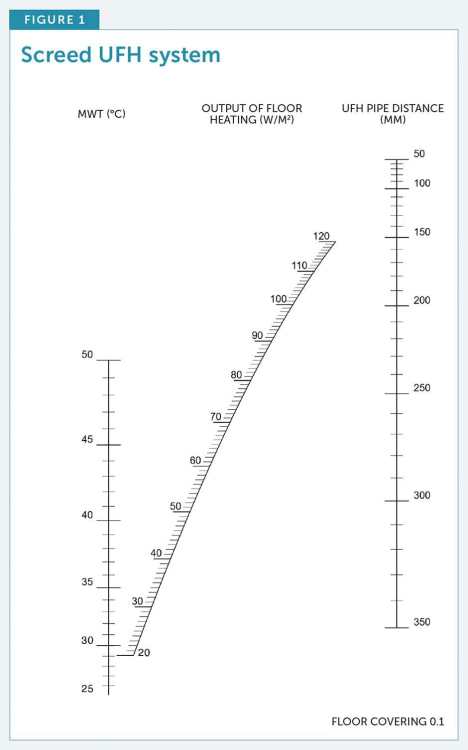
-
Escape windows - can they be lockable
JohnMo replied to Lincolnshire Ian's topic in Windows & Glazing
What does building regs say - that will be where the source information comes from. -
Portaloo - hot water
JohnMo replied to Lincolnshire Ian's topic in General Self Build & DIY Discussion
Yep - who says hot water required. One school of thought is for cleaning hands well cold water is best, as the pours stay open, so any nasties get flushed out. Hot water the pours close and the nasties hide away. But believe, research actually shows there is no difference between washing hand in hot or cold water. As long as you effectively wash your hands. -
Yep - not sure I would be complaining. If you aren't actually paying national insurance you get most services for free, the normal working person pays it all for you. But still they they whinge. Did the same for years, no way would I feel hard done by. Directors - not governed by minimum pay requirements, so Pay your wage at NI threshold, all the benefits of paying NI, but zero cost to employer or employee Pay your self a dividend, loads of benefits there with tax credits, pay money in to pension get full tax relief. Downside you have to do a tax return each year, but lots of upsides from a tax perspective
-
Point was more they are not F gas. So a heat pump (A2A) with propane isn't an F gas appliance
-
R290 is propane, so isn't an F gas. So really comes under the same legislation as a camping stove, soldering torch for copper pipes, barbeque or patio heater.
-
So on your own income - you are (or should be) paying the best part of zero tax anyway. If you are not you are not running your company and your pay structures efficiently. You should or will be paying the best part of zero employees or employer NI, the only real tax paid will be on dividends. If you have employees that may be different.
-
Percolation test. Draining too quickly
JohnMo replied to flanagaj's topic in General Self Build & DIY Discussion
Haha - missed that.😁 -
Percolation test. Draining too quickly
JohnMo replied to flanagaj's topic in General Self Build & DIY Discussion
In red on the file you attached. -
Percolation test. Draining too quickly
JohnMo replied to flanagaj's topic in General Self Build & DIY Discussion
That's for a rain water soakaway site? So back to document I linked and you say have read, you don't record the time for 300mm of water to disappear for example like you have. You are not reading the building regs documents, it's all laid out and easy to follow. Will bow out now -
Percolation test. Draining too quickly
JohnMo replied to flanagaj's topic in General Self Build & DIY Discussion
You just read the rules and blindly do what it says. Hit and miss maybe, but a standard hit and miss for everyone. But as I said, result isn't that important you are already going to install a treatment plant so secondary treatment part gets a tick in the box anyway. Core sample is just bonkers, you pay for someone to come along to do core a sample, then a lab to analyse, then kiss a couple of grand goodbye. -
Batteries like to be not hot or cold both dent performance. So insulation a good idea. If it's going to be hit by loads of sun it could bake in there, so some mitigation required.
-
Percolation test. Draining too quickly
JohnMo replied to flanagaj's topic in General Self Build & DIY Discussion
Test is fill with water, leave overnight, do perc test one next day. Fill leave overnight, do perc test two next day. Fill leave overnight, do perc test three next day. It takes three days. Random filling here there everywhere is rubbish. You aren't doing the test correctly. Crap in, crap out, using an intended pun. -
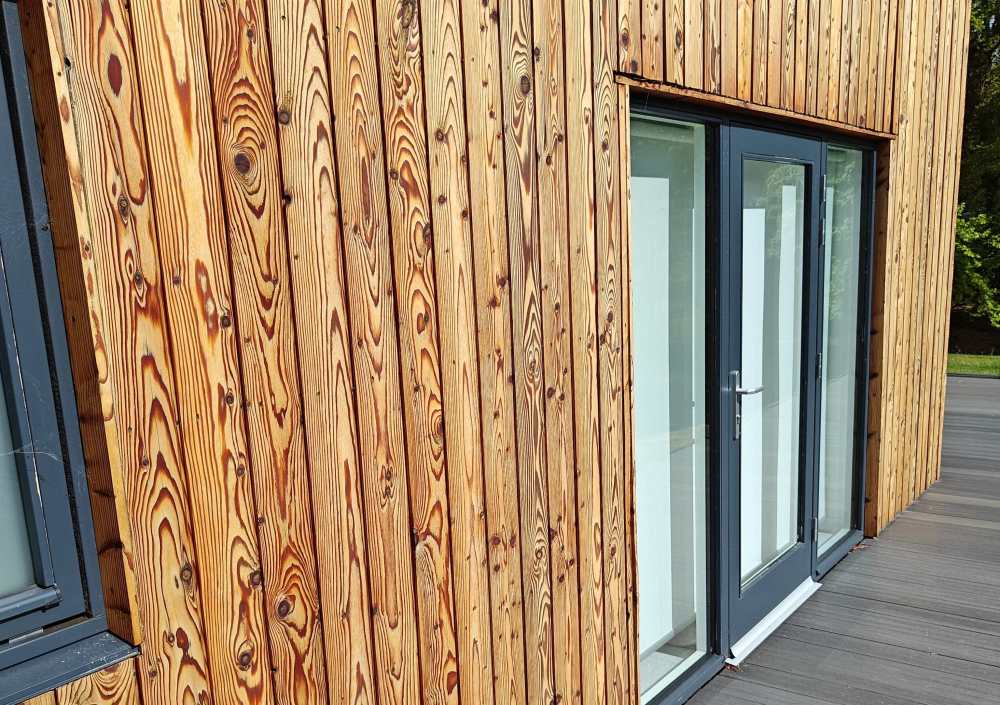
Our south facing wall, been there for 4 years, 2 coats of ceder oil only basically after a year then at 3 years. Single coat each time. Photo taken today