


JohnMo
-
Posts
13296 -
Joined
-
Last visited
-
Days Won
200
Everything posted by JohnMo
-
We have larch, but don't want it grey. So coat with ceder oil.
-
Decent uPVC, not wood grain. Look identical to our spray paint wooden windows.
-
I choose my battles, then worked out the easiest and fastest route to a good finish. MDF or wooden fascia boards and the upkeep after, no thanks, there is enough upkeep with the larch cladding. 80m of fascia and soffits took two of us under a week, doing other stuff when we got bored doing that. We do have some external MDF around our lounge windows steel frame, we just got the window manufacturer to supply and install those and they came factory sprayed to match windows. Internal plasterboarding was too much like hard work, so got the professionals in for that, they were joiners, so got a good flat finish suitable for Ames taping, again that was a big job, all rooms high ceilings between 6m and 3.5m high, so the right person was employed for that also. Choose your battles, get finished enough to move in.
-

Any recommends for long lasting Skylights?
JohnMo replied to Beau's topic in Skylights & Roof Windows
We have fixed Roof Maker skylights. These are the passivhaus spec ones, but just about frameless.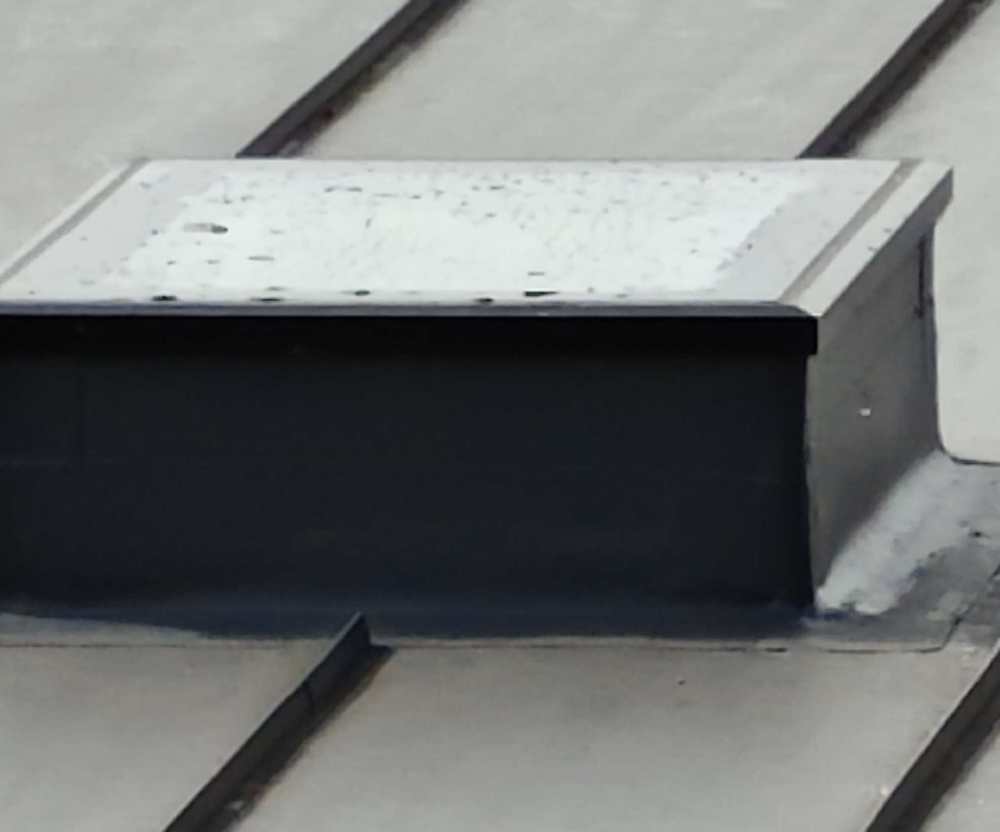
-
Welcome, you will find everything you need on here. We started by going around all the show houses in the area, looked at room sizes and layout to see first hand what we liked and didn't like. Then finding a site, doing plans via architect etc. We started our journey based on a quick prefabricated building route, until we got the prices. Then moved to much more "self" build, as in me doing lots of the work and management of others where needed. Don't get carried away with size, sense check room sizes to make sure they not huge or too small for your real needs.
-
Any recommends for long lasting Skylights?
JohnMo replied to Beau's topic in Skylights & Roof Windows
No they do not. Condensation is general due to cold bridging, which is pretty much a thing of the past with decent design. Velux, roof maker are all pretty good. -
Percolation test. Draining too quickly
JohnMo replied to flanagaj's topic in General Self Build & DIY Discussion
The rules are written around a base case assumption of a septic tank - a treatment plant provides primary and secondary treatment (so built in bulk separation, and treatment of waste water prior to leaving the plant). A treatment plant isn't a septic tank (page 30), if you fail a perc test you are not allowed to install a septic tank tank (base case) you have to install a treatment plant which is the primary and secondary treatment system. So if installing a treatment plant, it really doesn't matter if you fail a perc test, but planning I assume would want to see test results, so you need to test correctly? You are already doing the prescribed next step of installation of secondary treatment i.e. a treatment plant for a failed test. -
Percolation test. Draining too quickly
JohnMo replied to flanagaj's topic in General Self Build & DIY Discussion
Your first post said treatment plant, if that's what you are actually referring to and not a their septic tank or cesspool. The soak away is exactly that, an area to soak away cleaned water that exits from a treatment plant, it's not for secondary treatment as it would be from a septic tank. If you are proposing a septic tank, you need to put in a treatment plant if your perc test fails. Big difference in Scottish rules is treatment is the only solution allowed, septic is a no. -
Percolation test. Draining too quickly
JohnMo replied to flanagaj's topic in General Self Build & DIY Discussion
As I said read the document, "alternative form of secondary treatment is provided to treat the effluent from the septic tank" A treatment plant IS NOT a septic tank, so read page 30 for an explanation. It's all laid out for you to follow, but it requires you read the rules. -
Percolation test. Draining too quickly
JohnMo replied to flanagaj's topic in General Self Build & DIY Discussion
We have a treatment plant and a bigger than usual drainage field. Ours was done to Scottish rules. But read page 31 of this. https://assets.publishing.service.gov.uk/media/5a80cf9ded915d74e33fc8ae/BR_PDF_AD_H_2015.pdf Make sure you did the perc test correctly - you did not - you need to repeat 3x. So fill leave overnight, then do a drain away test. Repeat 3x, so the tests should take at least 3 days. Then if the answer isn't what you are needing read 1.38 "Where Vp is outside these limits effective treatment is unlikely to take place in a drainage field. However, provided that an alternative form of secondary treatment is provided to treat the effluent from the septic tanks, it may still be possible to discharge the treated effluent to a soakaway." Your treatment plant is a secondary treatment I believe. -
Sorry a bit confused are you looking at MVHR or PIV? Unless you are going to make a serious effort on airtightness MVHR would be a none starter for me, you are just adding additional ventilation heat losses. I would also ditch PIV, you are effectively blowing in cold air in winter and hot air in the summer at an almost constant rate. I would do either dMEV or MEV. Either would be run based on air condition, so humidity based. The inlet to the system would be self modulating either trickle vents or though wall vents in the dry rooms only. Extract would be either ducted (MEV) or through wall/eaves fan (dMEV). Pretty simple to install, minimises heat loss.
-
Percolation test. Draining too quickly
JohnMo replied to flanagaj's topic in General Self Build & DIY Discussion
We're in sand and our permeability test drained way to quickly. You just follow the rules for the permeability being out of limits. -
No more bizarre than So you pay a bit more tax, that will hopefully get us away from the crap services, the last government left us with.
-
We just used flexible tile adhesive. Concrete expansion with low temperature UFH is very limited
-
If you can afford to move abroad, you obviously can afford the tax. We should be more like USA, if you hold their passport, you are due their taxes, wherever you live in the world.
-
Not sure how a wooden structural element can be allowed to be in a chimney? Are you not asking for a fire, or the end of the glulam to burn away? You may need to provide a drawing as what you are saying doesn't sound right.
-
What will remove this paint?
JohnMo replied to ennogs's topic in General Self Build & DIY Discussion
But if cause you fill the gaps with concrete - listed building control will never notice 😕 -
U value Calculations for timber frame wall construction.
JohnMo replied to Croccy's topic in Heat Insulation
Why go minimum U value standard? Go 70mm PIR, almost nothing lost in room size, not much more expensive, but less heat loss for years to come. -
You only really need allow the 400kg of water (plus bath weight), two adults would displace their volume in water. We are mostly water, so 100kg person should displace around 100l of water.
-
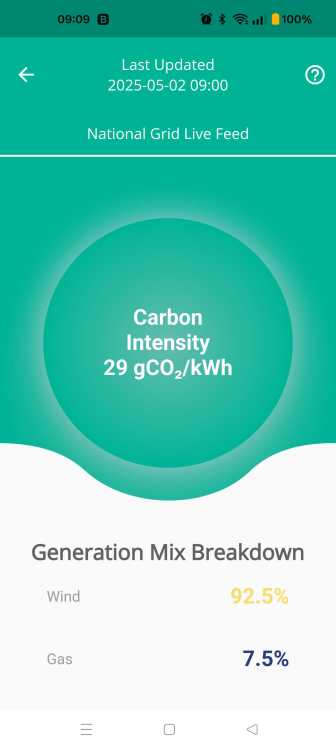
Just had a look today, so our local energy mix - NE Scotland. So mostly wind Then looking at UK as a whole Very different story, comparing local grid to UK wide.

-
Even shows the drawing in building regs. Took me two minutes to find it.
-
Sorry that is nonsense. Where are you getting this bad information? 3.28 Percolation tests should be carried out to determine the capacity of the soil (see Approved Document H2 paragraphs 1.34 to 1.38). Where the test is carried out in accordance with Approved Document H2, the soil infiltration rate (f) is related to the value Vp....
-
Attenuation is required - or you end up with a big gapping hole (sink hole), is what you are saying. So building regs state soak away for a good reason. Or spend your life savings building a house, and have it fall in a big hole in 10 to 15 year time. Wouldn't like to have that conversation with the wife.
-
Yep. Got a heat pump, but also got a 520hp twin turbo Alfa, was on my 2 stroke enduro motorbike today. Yes net zero, should mean - No overseas travel, little or no imported stuff, we all seem to live on, No one states it has to be this, so nearly all isn't, it's the same stuff as a hundred years ago, so concrete; CO2 intensive to produce, gives of CO2 while going through the curing process. Etc etc... not net zero compatible really. By no stretch is it going to be a few compromises.
-
If building regs says you need one - you need one. It does say that, so you do. Why waste effort trying to push against the tide?




