


Brickie
-
Posts
634 -
Joined
-
Last visited
Everything posted by Brickie
-
Designing for blown beads at the cavity bottom.
Brickie replied to epsilonGreedy's topic in Heat Insulation
If you have access to the cavity,you can lay timber on the DPC tray & pull it out at the end of the shift or in the morning. Can be used also to push dropped mortar to the coring holes (the bricks left out for cleaning.) -
Ever venture into Sneinton?
-
If that’s a single skin wall all the way round then I’d say it’s not substantial enough to retain the load within. You could possibly add some buttressing but I’d get some pro advice from an SE before building anything else on top of it. None of my business byt are you sure you want your garage that far back in your garden? Why not adjacent to the house?
-
Advice Needed - Cold Bridge Behind Full Fill PIR Insulation
Brickie replied to Johnny Jekyll's topic in Heat Insulation
Is it yourself or the bricklayers installing? That top sheet needs to come out,the snots cut off flush & cleared & then reinstalled tight. From here on,tell them you want the cavity side of the inner leaf pointed AND brushed off,as if it were face work. When they object,tell them you’ve no choice but to insist on it as,left to their own devices,they give you the work you’ve shown. -
Advice Needed - Cold Bridge Behind Full Fill PIR Insulation
Brickie replied to Johnny Jekyll's topic in Heat Insulation
I can’t imagine the stress you’re under at the moment-can you post some pictures to see if there are any hacks we can suggest to achieve better performance from what’s already built? -
Advice Needed - Cold Bridge Behind Full Fill PIR Insulation
Brickie replied to Johnny Jekyll's topic in Heat Insulation
I’m confused-if you can pour sand down behind any given board can you not lever it back tight against the inner skin? -
The fireplace which is redundant really needs to be ventilated-a Louvre or air brick should be fitted. Is the height of the decking roughly the same as your internal floor height? If so,rain splash up will be affecting your walls above DPC.
-
Sand & cement shrinks as it sets. I’d suggest a weaker mix (1:5 cement:sand) and to put the material in as dry as is possible (but obviously still mixed properly.) Dry the muck out on a piece of timber whilst prepping if need be. If possible,inspect the work the day after and touch in where needed.
-
Advice Needed - Cold Bridge Behind Full Fill PIR Insulation
Brickie replied to Johnny Jekyll's topic in Heat Insulation
If taking down cannot be done,how about isolated removal of individual blocks on the external leaf to allow access to the affected areas? ‘Full fill’ in this scenario is a commonly used misnomer & Id say the retaining clips definitely are required for the system to stand a chance of working. Im really not a fan of it,to be honest. The real world installation just never tallies with how good it looks on paper. -
Are the internal chimney breasts removed? If still present,are they (or have they in recent times been) still in use?
-
I’m fairly certain your property wasn’t always end of terrace-I think the rendered wall was previously the Party Wall & is 99% definitely not face (attractive) brickwork behind that render. Might still look nice,just not going to be as neat & tidy as the front as it was never intended to be seen. The erstwhile neighbours side of your chimney stack appears to be capped & unventilated-this might not be the cause of your problems but is undesirable & requires attention.
-
How many are going to have the same issue?
-
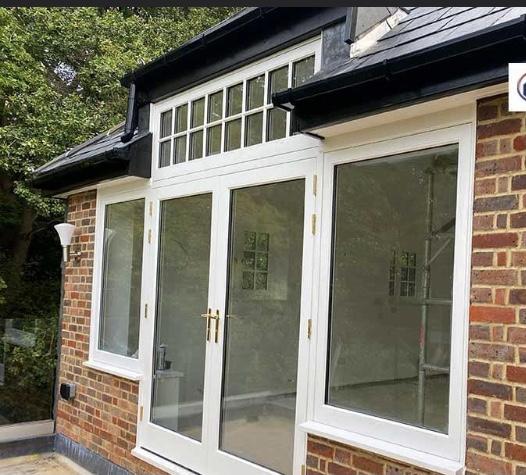
A bit like this? Ive no idea on the engineering/design practicalities but it seems you’re having headaches solving the lintol/depth issues & at the same time losing height & light from your window.
-
I’ve been put in this scenario myself-it’s an absolute #**#ache. As Declan said-blown in beads or full fill cavity batts are the practical solution. Otherwise,you’ll end up with an improperly inststalled,underperforming insulation system. If the PIR has gone up in price & is still packaged,would you not get the majority of your money back?
-
What width is the window shown? Would it be feasible to sister up the trusses either side,have the head of the windos as an upstand (kind of like a dormer) and trim across to suit?
-
No idea-why?
-
Don’t. Trust me. I grew up in the next town towards London.
-
…. when Murdoch got his hands on The Sun.
-
I’m referring to the positioning of the tray in terms of coursing,as you look at your drawing. The height of the lower (outer) part of the tray would usually be at DPC level (which is usually the same as FFL.) If it helps,visualise the substructure walls all built up to the height of the (as yet uninstalled) finished floor. Now,one course of blocks is laid on the inner skin, the tray is installed and lapped out & down so going from DPC plus 225mm internally to DPC height externally.
-
That is a Cavity Tray,yes,though it would normally be lapped out FFL. Is this your own drawing or one you were supplied with?
-
Yes. It’s only a cavity tray if it’s described as such,and would continue around the perimeter of the build,and would also normally lap out at at finished floor level (I.e. the standard DPC height.)
-
Because DPC should be at least 150mm above ground level & the assumption is made that your entrance will be a ‘level threshold’ (level-ish with your internal finished floor level to allow wheelchair access) and therefore a secondary DPC is required in this zone to prevent rainwater splash up saturating the superstructure wall. This secondary dpc should extend the specified distance past the raised ground level & then step down to lap into the lower dpc.
-
Are they approachable,would you say?
-
Just pull them on it & ask for the joints to be kept full in future. Let’s bear in mind that everyone can have a bad day people,before we erect the Gallows,eh? @Faz your lads want to bring the insulation right up to the reveals-bit short in places there.
-
A ‘specialist’ may be overkill but,in your shoes,I’d want someone with experience of lime,preferably having built something similar. Speak to the rep of whichever company you’re planning on buying the line mortar from. Ask for common pitfalls (how high shoulda wall be taken in one hit? How long to cover with hessian in cold weather?) to help you gauge if a potential contractor knows their stuff or is just blagging it. The rep may even be able to give you a number or two.
