




Onoff
Members
-
Joined
-
Last visited
Everything posted by Onoff
-
Here you go: https://www.screwfix.com/p/ph2-drywall-screwdriver-bits-ph2-2-pack/6623V?
-
32mm fine for 12.5mm board to the battens. You'll need longer like 45/50mm for putting the insulated pb on. 27 or 30mm insulated pb will make no difference. Not trying to spend your money but a plasterboard / sheet carrier is a Godsend if working on your own. Buy or make from scrap. Know any metal works mates? This is mine: https://www.axminster.co.uk/axminster-panel-board-carrier-950130 Screwfix/T'station both do a Roughneck make heavy duty plastic version for the same money.
-
Well 12.5mm is 25% heavier to handle...but more resistant to damage... With a bit of experience you should be able to handle getting the boards on the wall on your own. A diagonal prop of some sort might help. Nothing worse than standing a board up and getting distracted and turning around for a second. That "Oh shit!" moment as you feel the rush of wind and the board falls and breaks. You have to hold the board up with one hand and have say a stool with your drill and screws on close at hand. I even mark on the boards in pencil the centres of the battens before I put them up. Most I guess hold the board up and get in one or two screws at random near the top - you get a rough idea as hopefully you've marked the ceiling and floor with the batten centres. Then project your pencil line up and if really anal mark your 150mm centres.
-
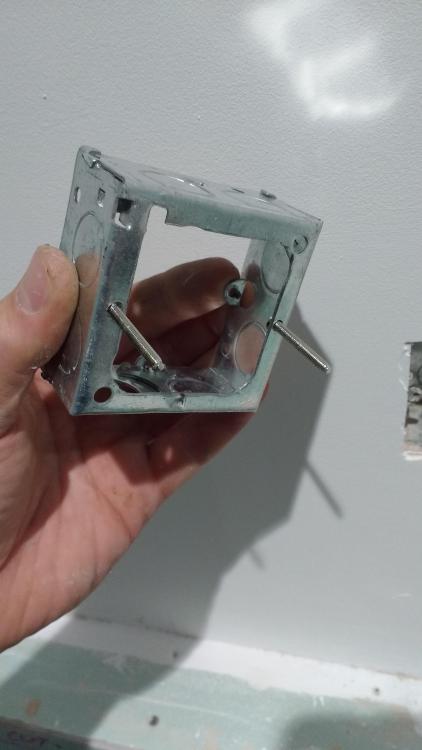
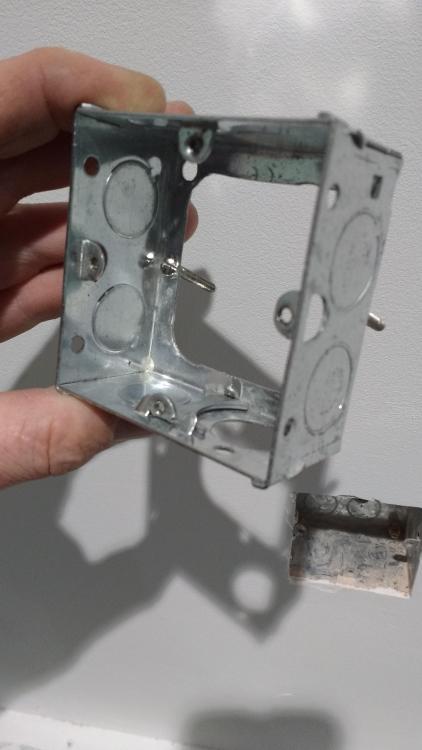
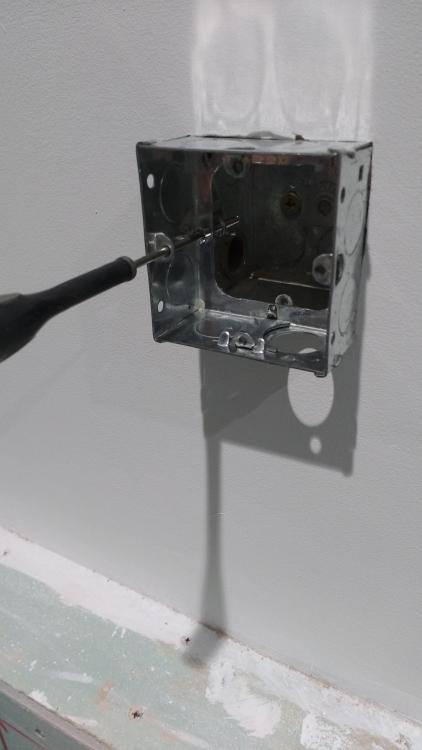
Don't encourage him ffs! The whole grinder thing came about from my drunken post making an extension box. Jigsaw would have been impractical as the blade would have hit the screw lugs!
-
I reckon being a newbie at this you might drive the screws too deep to start with until you find the right torque on your cordless. That special bit I linked earlier should prevent that though. 32mm long should do you at 150mm centres. A little bit of extra length & grip won't hurt if you're having to "spring" some boards in. So allow about 20 for every vertical batten I think and you should have enough left over for the horizontals. A decent retractable, metal bodied Stanley knife for cutting boards and a pack of blades. A little surform plane is useful for taking down rough edges and easing boards to fit. Screwfix part number 20388 is a handy tool for this. You should though with practice get to cut cleaner edges with just the knife. As to whether 9mm pb is any good...if you have penetrating damp it won't matter what thickness the pb is! Why not 12.5mm? Much more forgiving when screwing.
-
As SWMBO often reminds me there's "pointy" screwdrivers for making holes in things like flower pots or hitting with a hammer if trying to put a Rawlplug in. You then get "flatty" ones. Ideal for any scraping job and getting tin lids off of paint. Either type can be used for stirring paint...
-
How come you only went half way up the wall and didn't do the ends then? And that was Mapei?
-
@Nickfromwales I think knows this lot...discount? https://www.bhfunlimited.co.uk
-
With the CORECT blade...and there are multiple types... ...plus gloves, goggles or full face mask if working up close etc. Really not a toy... A&E job or worse if you get it wrong.
-
I'm doing another £40 on the extra 7.5m2 tanking and that's it!
-
Yours looks much thicker than mine... Was that on mrpb?
-
What's that tanking membrane make then? Grey is it?
-
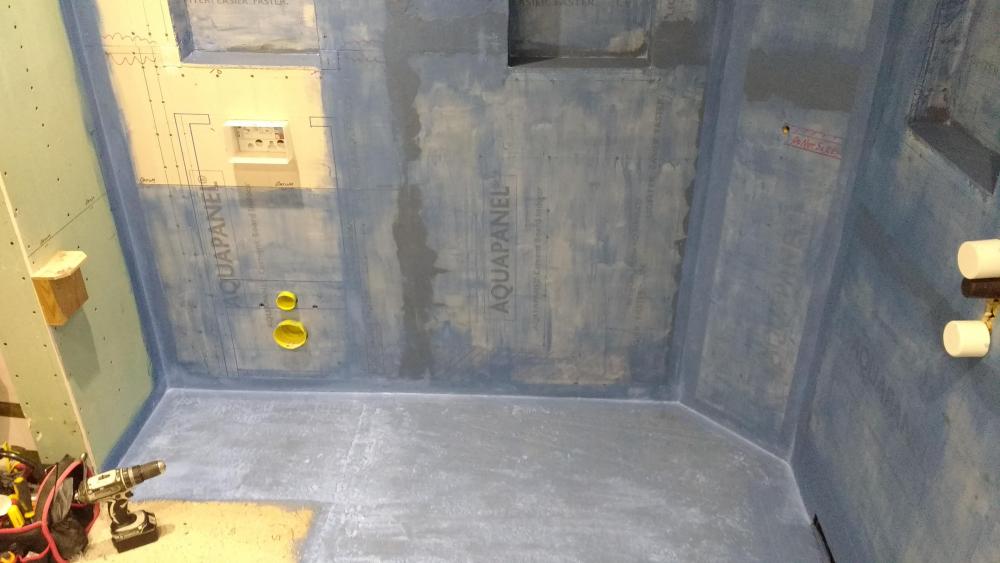
I don't get it tbh. I've done two coats over about 7.5m2. It's gone nowhere except on the wall and floor but it doesn't look that "thick". First coat I used the new 3" brush that came with the kit. For the second coat the 3" was too stiff despite being washed out. I used then a 2" brush. Pretty sure I read somewhere it doesn't appear to have "covered" but in fact has.
-
Erm...in your drug adled state DON'T take my tongue in cheek post about making your own extension boxes as advice ffs!
-
Sitting down to watch Designated Survivor on Netflix tbh... Hoping the missus will join me on the sofa as the kids have nicked the cushions and I can lean on her instead!
-
@zoothorn, if like some on here you lack social skills, struggle with interpersonal relationships, have a mild drinking problem and tbh generally prefer contact with tools rather than people then you might like to have a go at making an extension box out of a standard back box: I really can't recommend the use of a 4 1/2" grinder 6" from your nose though. I'd take a bid longer too deburring the cut edges than this bloke did and even consider a grommet strip! Don't either try it either, in the dark with a failing head torch and after 2 pints of Shipyard Pale Ale or you too could be sporting an L shaped burn on your leg from a dropped, hot back box...
-
@Nickfromwales, just realised, don't you usually apply tanking strip over the shower valve? I was going to then thought what's the point as most of it will be cut out anyway. Now I'm not sure... Bit confused tbh as sure before you've said don't cover it completely in case of future access needs. Also you said about putting an inverted U of Sika flex around it with the bottom open to allow drainage. Ditto the hose outlet on the mitted wall, any need for a square of tape over that? Cheers
-
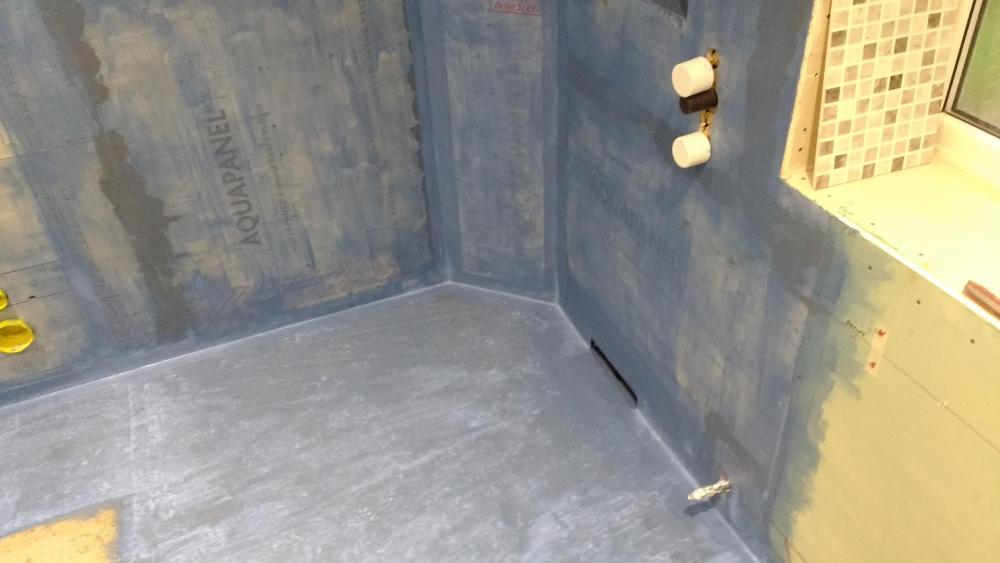
A couple more shots after 2 coats. Instructions reckon it wants to be 1mm thick... it's NOT...?
-
No more primer and just a little tanking membrane left. Waiting on the new 7.5m kit. Going to do the whole room I think.
-
@zoothorn, did you check your Notification Settings within your account?
-
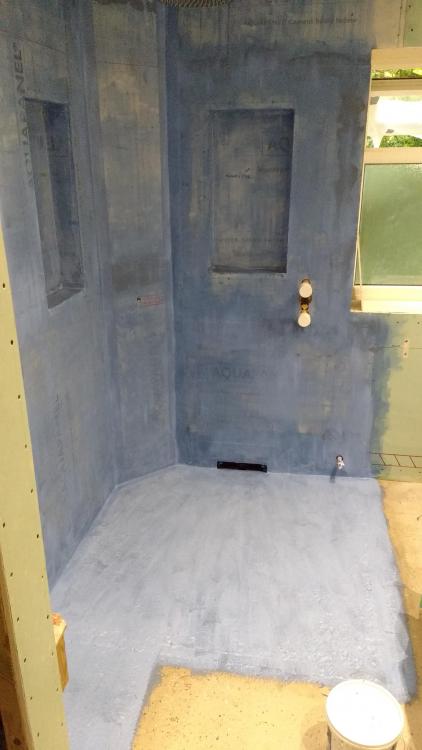
It's getting "bluer": No.1 son complaining of the smell so has retreated upstairs to his room which is unheard of!
-
Nothing wrong with box extensions. They're the right thing for the job. Better than screw extenders. The screws that fit face plates to back boxes are "M3.5". Same ones that fit extension boxes onto back boxes. Available in different lengths if buying separate. When you buy a new face plate you generally get two new screws with it clipped in the back. Sometimes they have a fancy finish to match the face plate. You need to make sure when putting the screws in, if a bit long, you don't nick or squash the wires behind. You can cut the screws down if necessary. There exists the cheapest of cheap tools that claim to be wire strippers/bolt cutters and crimps all in one. Basically this: http://cpc.farnell.com/duratool/d03190/wire-crimper-stripper/dp/TL19441? As a stripper they're OK 'ish. As a crimper they're utter shite, verging on dangerous imo. However...as a cutter for shortening M3.5 screws they do the job. Simply wind the screw in to the desired length and cut. If you want a basic crimper then this: http://cpc.farnell.com/duratool/d03009/ratchet-crimping-tool/dp/TL08620?st=Crimping tool The CPC site btw is good and cheap. If you f**k up an M3.5 screw hole you can generally rethread with one of these: http://cpc.farnell.com/kamasa-tools/55821/re-threader-3-5mm-x-0-6mm/dp/TL16988?st=M3.5 Look how cheap this stuff is! If you REALLY f**k up the thread you might need to reach tap a size up, M4 with one of these: http://cpc.farnell.com/draper-tools/37924/rethreading-tool-m4-0-x-0-7/dp/TL04580?st=M4 tool Both sizes no doubt available also on eBay etc. You'll of course need an M4 screw to suit. Available in little packs if desperate from B&Q etc.
-
Disagree if there's any chance the edges of the knockouts could cut the cable if no grommets or if the cable could be otherwise crushed. Assumes too the box will come out easily, mine don't. @zoothorn, how about these? From Toolstation: https://www.toolstation.com/shop/p79641? I even found this: Tbh I don't like them as the tendency is to use them at their limits and the socket often ends up wobbly. I also like having a back box up near the socket to fill around. The "40mm" forward one sounds like it's already surface mounted? Maybe just ease forward on the screws & pack a little at the back with some penny washers (or timber / pb) so the back of the face plate is level with the face of the pb.
-
12.10 yesterday and on Thursday I posted up links to box extenders! Click on the links we post and try and take it it eh? Hopefully then 3rd, 4th? time lucky with @CC45 & @newhome's contributions above. I'm a bit worried in all honesty whether you're capable of safely extending the cabling. Happy to do an idiots guide. Get the power off and photograph inside the boxes that need extending.
-
I give up...you've beaten me! Measure from the edge of the existing metal back box(es), the ones in the wall to the face of the new pb and get an EXTENSION box, not a standard back box, nearest to that dimn, ideally a mm or two under and fit that. The one you show is for surface mounting.