



Onoff
Members
-
Joined
-
Last visited
Everything posted by Onoff
-
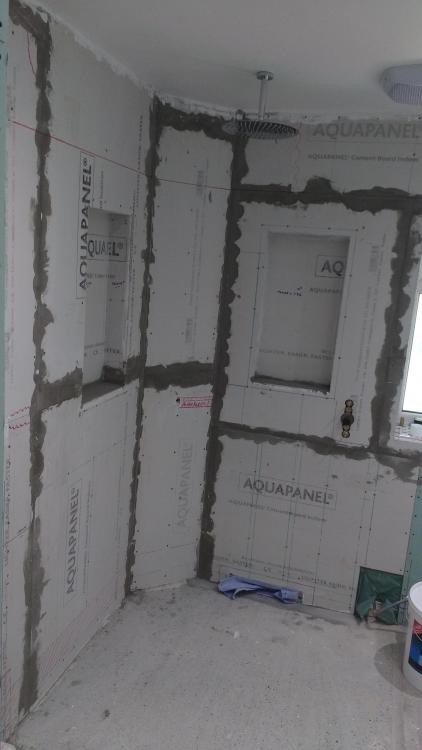
I've calculated that if I stop the tanking 2.1m up the wall (below the red line) I should have enough in the 7.5m sq kit to do all the walls pockets and floor area. Just got to make sure this towel radiator loop is holding pressure and I can get that bit of board on round the pipe and tank! Going to start from the red line and prime working down then onto the floor. Tbh if I run out I'm going to finish off with SBR before applying the membrane. I've also ordered another 7.5m2 tanking kit for around the bath etc.
-
1500 included angle I make it:

-
Then he needs to decide on what is happening sill wise & project some levels across!
-
Assuming he brings the concrete infill level with the top batten then he needs to know where 27mm of insulated pb + wood sill or tile will come in relation to the window. That's a fixed window anyway isn't it?
-
I'm thinking you'll need 35mm extension boxes for those sockets. Thinking 25mm batten + 3mm pack + 9.5mm pb = 37.5mm so the box will be a couple of mm under. Are you using 9.5 or 12.5mm pb? You might be best getting from a local electrical wholesaler rather than suffering the postage cost if ordering on line.CEF, Edwardes, Newey & Eyre are names to look for. Some bigger builder's merchants might do them too. Typical online supplier: 1-gang: https://www.ukelectricalsupplies.com/norslo-extension-box-steel-1-gang-35mm.htm 2-gang: https://www.ukelectricalsupplies.com/norslo-extension-box-steel-2-gang-35mm.htm?
-
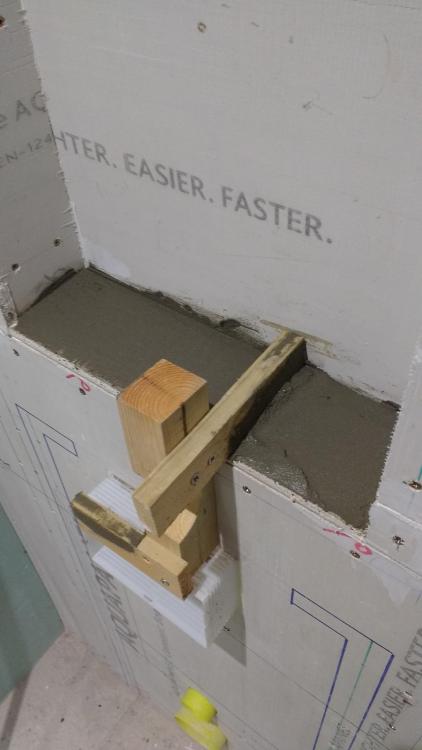
Just seen your latest pic with the extra batten. Cut two short bits of batten and make a tamping tool like mine. Use the height of the double batten as the "wall".
-
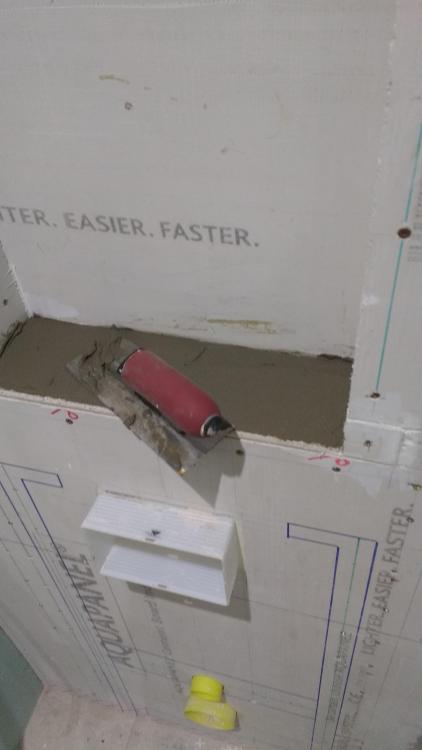
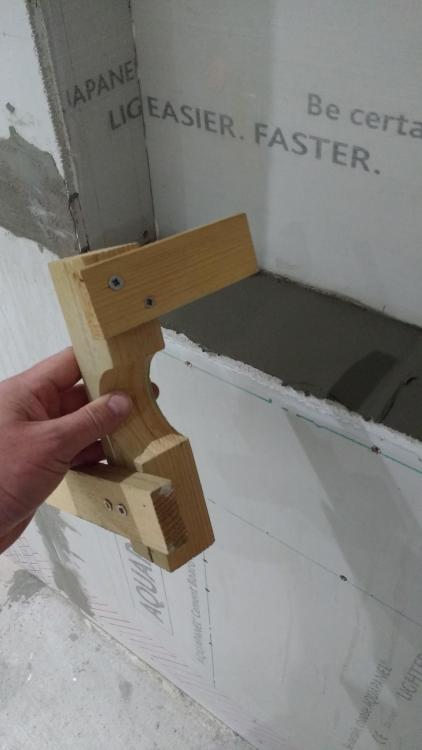
You COULD use a short level atop a piece of timber as a tamping board. Tbh I've even used my short box level to tamp without the wood and cleaned it off well. Or..... Make up a right angled tamping tool like I did (without the slope like mine of course). Repeated here as you probably won't have read my other thread! :) Put the muck on: Knock up something like this: Drag/tamp. I know you haven't got any pb on yet but you could screw on a board temporarily across the battens to act as "wall": Crack a tinny!
-
What did you prime with, the stuff that came with the kit or SBR? & how the Hell is 1L of primer in the kit supposed to cover 7.5m2 it's just not possible?
-
I used the corrugated bitumen sheets from Wickes years ago and they were utter crap. Never, ever again. BiL used them on his woodwork shop too, same result. Not much of a slope tbh on either roof. They just sunk between the roof beams leaving like soggy washing up bowl sized depressions that then split. Can't remember the centres on my roof but I put extra angle irons in to have the distance the sheets were spanning. Think it ended up 18" maybe 2'. I always wondered if a ply deck first would have helped.
-
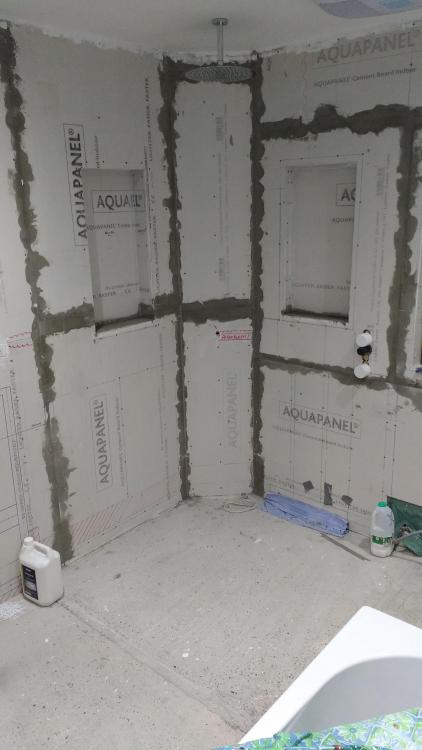
I was originally intending to, at a minimum, tank the wet room corner floor, nom 1.3 x 1.3 AND all the walls including the pockets above this area - roughly straight up in line with the SBR container on the left and milk container on the right: As said before if I do that, the 7.5m sq. kit isn't really enough to do this which works out as below. I wonder if I could maybe do the higher section of the wall in SBR? Wet room corner floor is 1.3x1.3 so 1.7m2 The mitred wall bit is 1m2 Each wing with the pocket in is 2.47x1.3 so 3.2m2 x 2 = 6.4m2 Over 9m2 just there!
-
How did you apply the primer and did it go far enough?
-
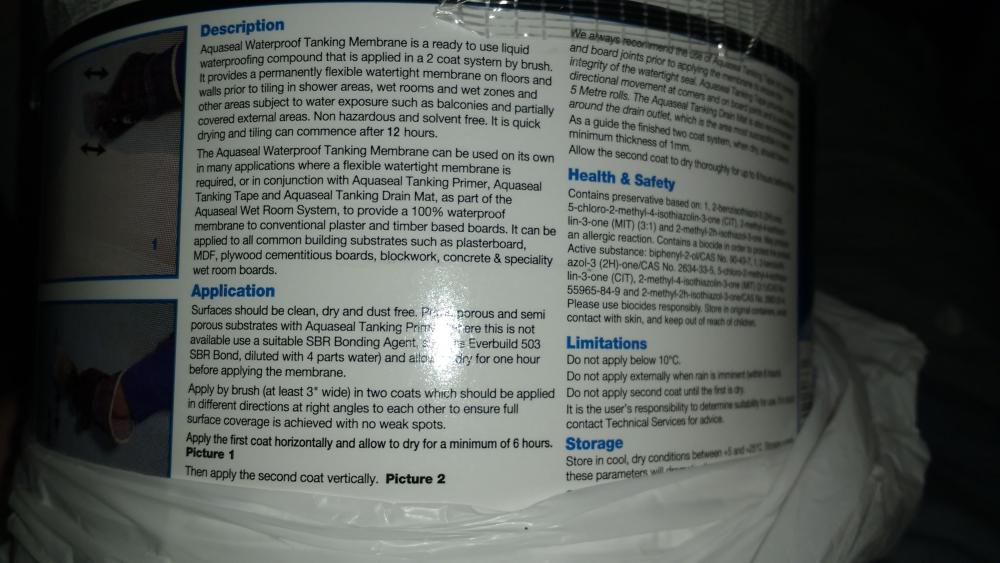
Interesting that the label on the membrane container says that Everbuild 503 SBR Bond can be used as a primer if the actual Aqua Seal primer isn't available:
-
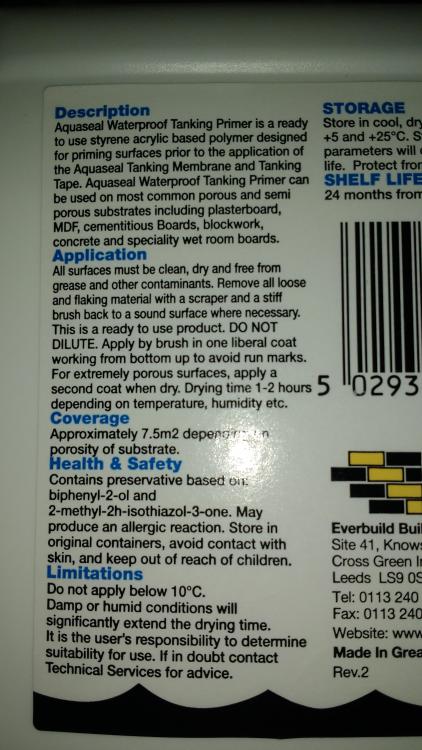
Says on the primer label that it can be used on "cementitious boards...and speciality wet room boards". Does that not suggest ALL the Aqua Panel needs doing not just the joints?
-
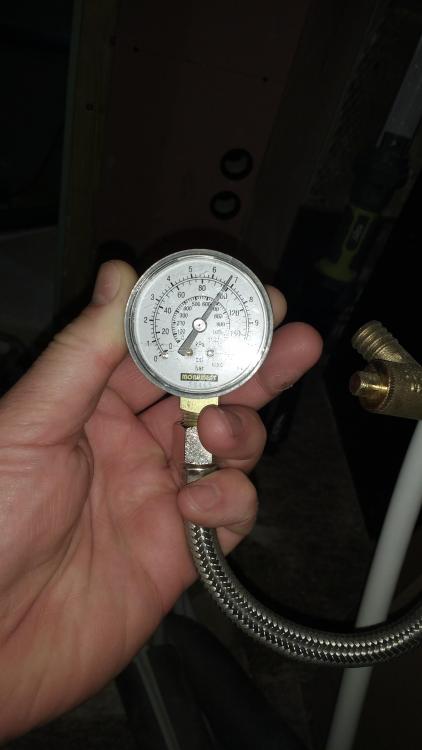
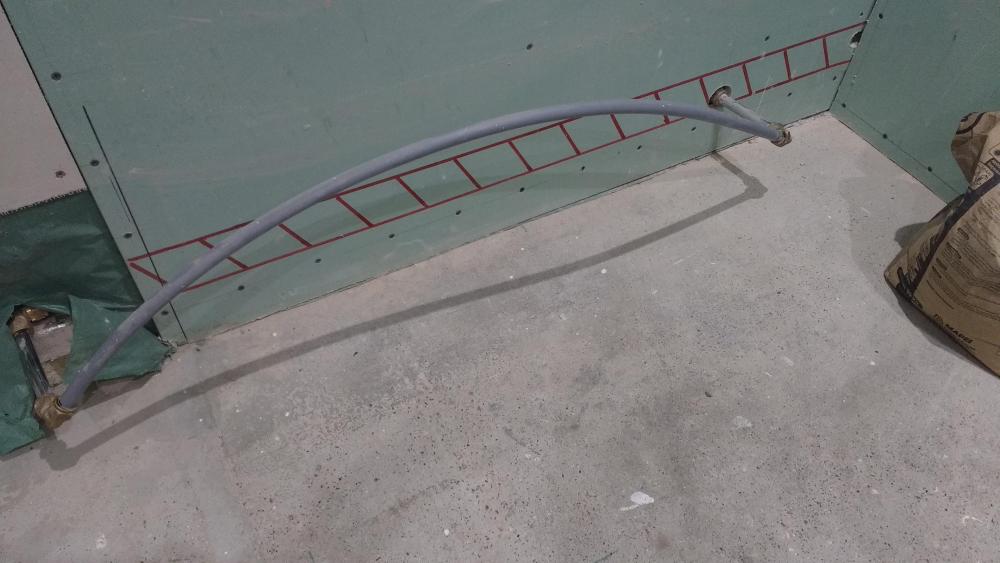
Pressure testing the towel radiator loop over the last 24hrs and it's dropped by a bar. Can't see any leaks though, at least at the testing end or 6 elbows! There's one hidden elbow on the RHS in the wall that's straight onto Pex-Al-Pex. Nothing on the floor though. Ambient has dropped massively though. Could that be it? I bled it pretty well I thought too. Via the drain valve one end of the loop until it ran bubble free.
-
My one loop for the bathroom UFH held 3bar for months...in fact years!
-
It'll be fine. Mortar is soft sand and cement. Concrete is sharp sand + aggregate + cement. When you buy "ballast" to make concrete (by adding cement) then that's just sharp sand and aggregate mixed together. The aggregate is often up to 20mm diameter. Concrete is stronger. As I said the bag linked has aggregate to 10mm max diameter. Add water just not too much.
-
Jesus no! Like drinking Fairy!
-
As Boy George said I'd rather have a nice cup of tea!
-
How about a cheap concrete or mortar mix then like this? 20kg but cheap & mix as much as you need. 10mm max aggregate size too so as long as your "trough" to fill is deeper than 10mm it'll level up nice. https://www.diy.com/departments/blue-circle-multi-purpose-ready-to-use-concrete-20kg-bag/135767_BQ.prd? You could put some Rawlplugs and screws into the brick to help grab the muck.
-
Your post yesterday at 19.14hrs showed the top of the inner leaf? Expose that and your "muck" will bond to that. Been there mate! Slipped disc. Tramadol & Naproxen mix. Nerve issues meant No.1s & 2s were fun. Never sure if I needed to go...or already had!
-
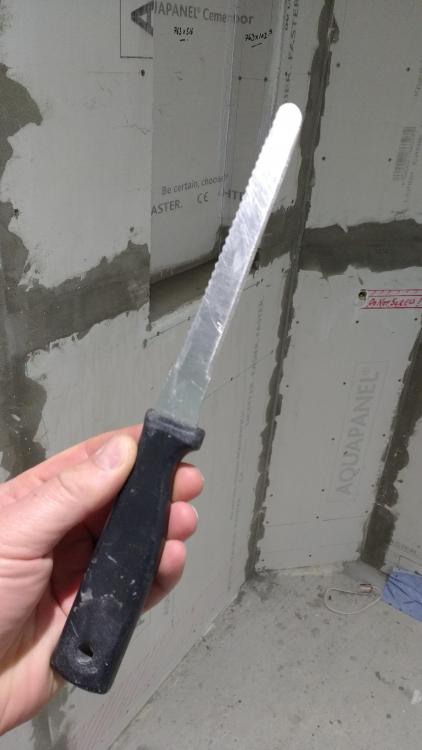
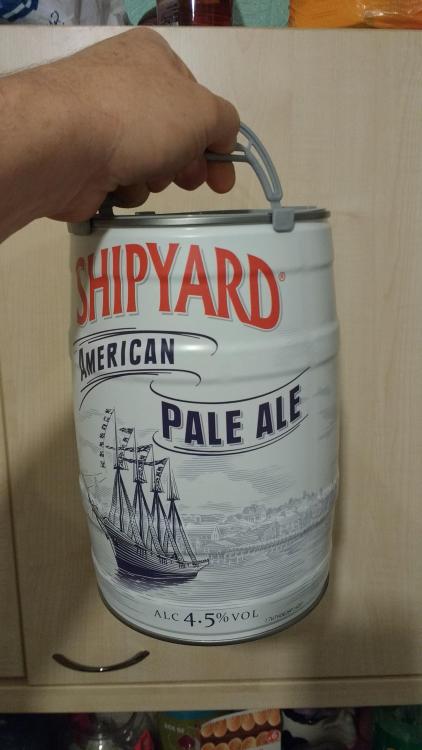
My weapon of choice for trimming foam. Old bread (?) knife. Wavy one side and serrated the other. I seem to remember it was forked at the end at one time. It's seen use for weeding before! And my other weapon of choice. Reminds me of the Party Sevens as a kid! A winning combination!
-
No idea. She wants white I want grey!
-
Honestly it's looking good. Hand on heart you could stick insulated pb down to the brick with low expansion foam. If you're really set on doing something more solid though... Put another batten in then to form a lip. Your 27mm insulated pb will sit on that at the front and screw to it. Screw from the side thru the other battens as @PeterW says. Pilot drill it so the wood doesn't split at the end. Then stick it as best as you can along the wall with some No Nonsense stuff. Let it go off. Dig out some foam to expose the "bricks" . Give it a Hoover. Soak with pva (or sbr) mixed 5:1 with water. Kid's craft glue if you're stuck even. Mix up a strong sharp sand / cement mix say 4:1 using the same 5:1 pva mix. Not too runny, and pack it in and level off. Have a beer. With the drugs you're on it should be a ride! When the cement has dried loose fit your 27mm insulated pb. Try and make sure it sits level to the window horizontal lines. Blob with No Nonsense grab adhesive and weight down. Have a beer!
-
Right then I'm going with Larsen tile adhesive products. NI company, products get good reviews. If anyone knows any different let me know! This acrylic primer: https://decoramic.co.uk/larsen-acrylic-primer-tub-primer-5l?search=larsen And this adhesive, I'm assuming I use grey adhesive with grey tiles? For some reason grey is cheaper than white..... https://decoramic.co.uk/larsen-flex-standard-set-single-part-adhesive-20kg-grey?search=larsen I'm going with a 6mm bed on the floor as it's so level. They reckon 4-5m2 per 20kg bag so that's half that coverage with a 6mm bed? I've got just over the 5m2 typically so I'm going to just get 3 of the 20KG bags to start with and see how I get on with it. Any left over can start the wall tiling. A question.....the tanking kit comes with "acrylic primer" would that be similar stuff to the Larsen gear? Cheers
-
Put a 3o taper on the pockets. Primed with 5:1 SBR then used my special tool. You can't buy this in the shops! Does two different depth pockets: They'll do!