Ian
-
Posts
751 -
Joined
-
Last visited
-
Days Won
3
Everything posted by Ian
-
@Pete I used a decoupling mat (Ditra 25) on my own build which was approx 70 sq.m of tiles. The 100mm concrete slab was reinforced with a light guage mesh and our UFH pipes tied to the mesh. Why take a risk with that much tiling. The main purpose of the mat is so that any cracking in your slab won't go straight up through the tiles. At 270 sq.m it's likely you will need movement joints in your tiles - can you locate them in doorway positions where they will be less obvious?
-
Timber and treated timber: what goes into treatment?
Ian replied to ToughButterCup's topic in General Construction Issues
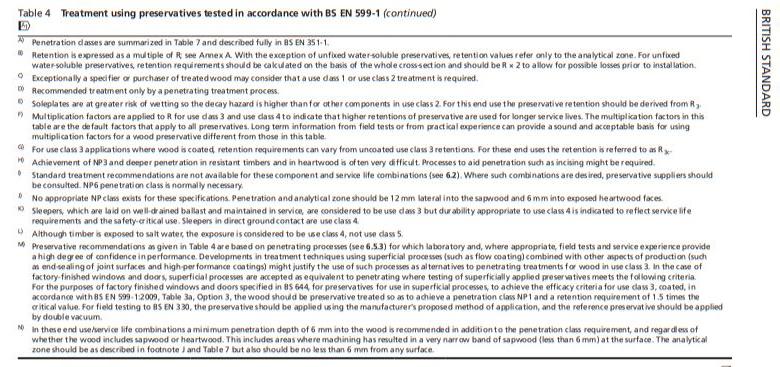
@recoveringacademic The relevant British Standard is BS 8417:2011+A1:2014 Preservation of Wood. It takes a risk based approach. Quote: "To determine whether a timber component needs preservative treatment, the following should be assessed: • the biological hazard indicated by the use class; • the likelihood and consequence of failure; • the inherent natural durability of the wood to be used" The standard then looks at the different service situations where wood is used based on 5 "use classes" with 1 being the least risky and 5 being the most risky. The example given for use class 1 is "All timber in normal pitched roofs except tiling battens and valley gutter members; floor boards, architraves, internal joinery, skirtings; all timbers in upper floors not built into solid external walls" The example given for use class 5 is "Marine piling, piers and jetties, dock gates, sea defences and ships hulls" In the risk based approach that the standard takes these use classes are then assessed against a set of service factors based on risk of failure where factor A is a negligible risk if the timber fails and therefore preservative treatment is not necessary to factor D where failure of the wood would result in injury or death. and therefore treatment is essential. Desired service life is also considered. The table attached below is just one example from BS8417 - there's other tables for the various types of timber treatment. Let me know if you need to know the preservation recommendation for any specific situation in your build. Ian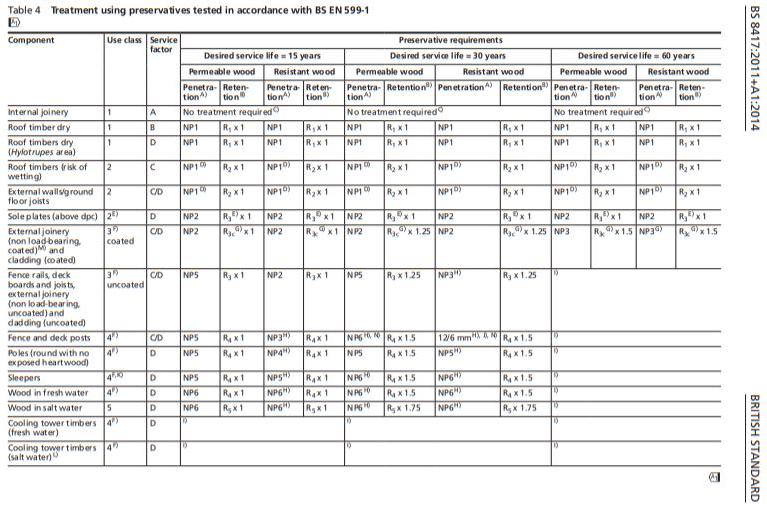
-
what about some cheap pond liner. It would probably need some holes along the bottom unless you're planning on growing bog plants.
-
Estate Car to carry house doors inside, flat
Ian replied to Ferdinand's topic in General Self Build & DIY Discussion
+1 With all this lovely weather we've been having snow seems like a distant memory but the photo below was taken in February this year on the Yorkshire moors. AWD Mondeo with winter tyres - the performance in snow is amazing.
- 77 replies
-
- 1
-

-
- estate car
- load capacity
- (and 2 more)
-
What about “eggshell” instead of satin?
-
It happened to us with a small Velux roof window. Fortunately I wasn't underneath it when the glass broke as the broken shards of glass came down onto the seat I normally use. The glass was normal plate glass when it should really have been toughened. A Google search showed that Velux were (still are) offering to make repairs for free even though the window was about 15 years old. They ended repairing the one that broke and changed the glass in another similar one. The problem only occurs with their smaller roof windows and was caused by gas escaping from between the 2 panes of glass. Edit: I found the Velux info: "The pane codes affected are only those with the reference 00UE, 59 or 34, in combination with the number 8 or the letter Y. The size of the pane is 39cm/15.5 inches or less. These panes were produced and sold between 1997 and 2003."
-
toughened glass is the usual answer
-
obvious cause would be a slow drip from the radiator
-
@Paul Stevenson Thanks for the info. I have a few questions if you don't mind? If using Nulok in a 'warm' roof build-up using the 0.5mm galv sheet, is the Nulok recommendation to also ventilate below the galv sheet? (If there's no ventilation it's putting a lot of reliance on the integrity of the vapour barrier on the warm side of the roof build-up.) Are you able to offer a condensation risk analysis as part of your service when Nulok is used with the galv sheet underlay in these low-pitch situations. The reason that I'm asking is that BS5250 :2011 which deals with condensation risk in buildings states the following: Quotes: "Ventilation should be provided to any void which occurs beneath any impermeable layer placed on the cold side of any thermal insulation. Ventilation paths should remain unobstructed during the life of the building; particular attention should be paid to ensuring air flow paths are maintained at changes in roof slope, and at details such as penetrations and abutments or fire break walls." "Where the external covering of a roof consists of fully supported sheet metal, there is a risk that interstitial condensation will occur on the underside of the metal, which can lead to corrosion; to reduce that risk, a vapour diffusion layer should be provided immediately beneath the sheet metal." "Warm pitched roof with HR underlay In roofs with an HR underlay (Figure H.4), whatever form of external covering or ceiling is provided, there is a risk of interstitial condensation forming on the underside of the HR underlay; to avoid that risk, an AVCL should be provided on the warm side of the insulation, and ventilated voids should be formed between the underside of the underlay and the insulation. Each void should be at least 25 mm deep and be vented at both high and low level."
-
I agree with @PeterW Consider blown bead insulation. Glass wool batts will be a disaster with a cavity that varies as much as yours.
-
Foam in the ventilation space: do I need to trim it off?
Ian replied to ToughButterCup's topic in General Construction Issues
@recoveringacademic Quick question as I'm not familiar with the Nulok system that you'll be using for the slates. Do you need to ventilate the gap between the breather membrane and the u/s of the slates? -
Foam in the ventilation space: do I need to trim it off?
Ian replied to ToughButterCup's topic in General Construction Issues
No you don't as it's all below the level of your breather membrane. -
@jpinthehouse Yes, as @ProDave said, use a breathable membrane. Also, depending on the product that you choose for the final roof finish you might need to ventilate the gap between your membrane and roof tile/slate. Generally, loose fit slates don't need ventilation underneath but close interlocking tiles do need ventilating.
-
for the rooflights Velux do a low pitch flashing (min 10 degrees): https://www.roofingsuperstore.co.uk/browse/pitched-roof-windows/velux-flashings/velux-low-pitch-flashing.html
-
As far as I know you can't get a normal interlocking concrete or clay tile that is okay at such a shallow pitch. These kind of interlocking metal roof tiles in the links below can work at pitches as shallow as 10 degrees so should be okay on your roof. They need venting below the sheets btw. Also, I wouldn't use this type of coated steel roof sheet in locations next to the sea due to corrosion issues (aluminium versions would be okay) https://www.metrotile.co.uk/tile-profile/roman/ https://www.roofingsuperstore.co.uk/product/corotile-lightweight-metal-roofing-system-charcoal.html
-
Approved Plans
Ian replied to GrantMcscott's topic in Self Build VAT, Community Infrastructure Levy (CIL), S106 & Tax
it's the drawings that are numbered in a list on your Planning Permission approval document(s). -
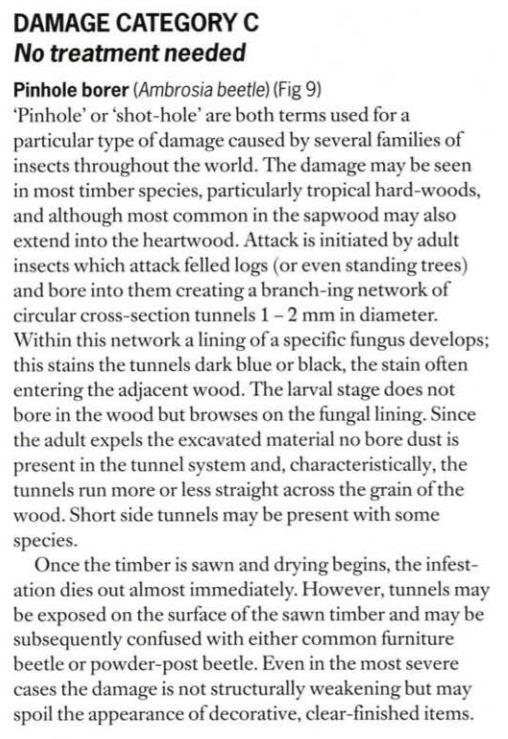
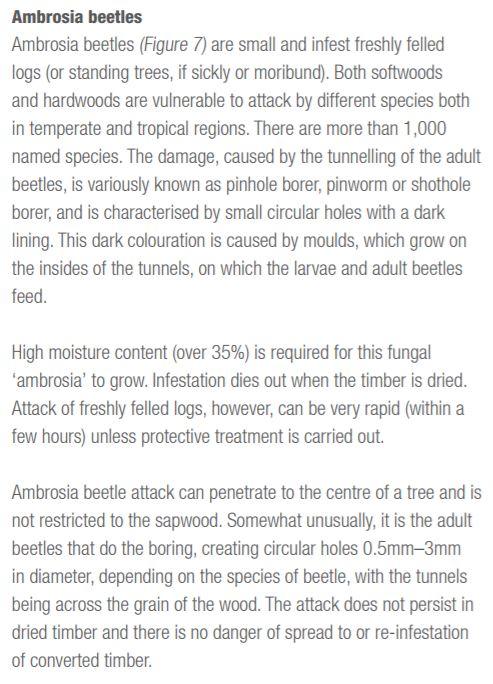
@JSHarris No problem. Attached below is another extract; this time from a TRADA document confirming that the pinhole borer (Ambrosia Beetle) is not a risk to dry timber and there's no risk of spread or re-infestation
-
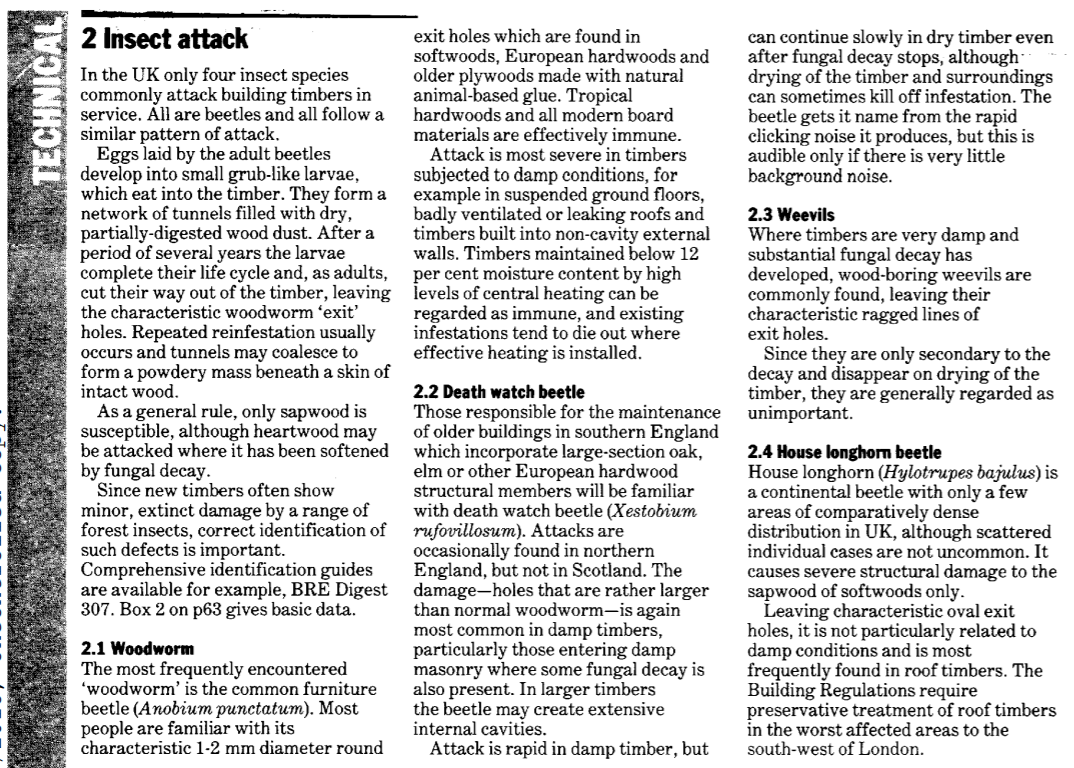
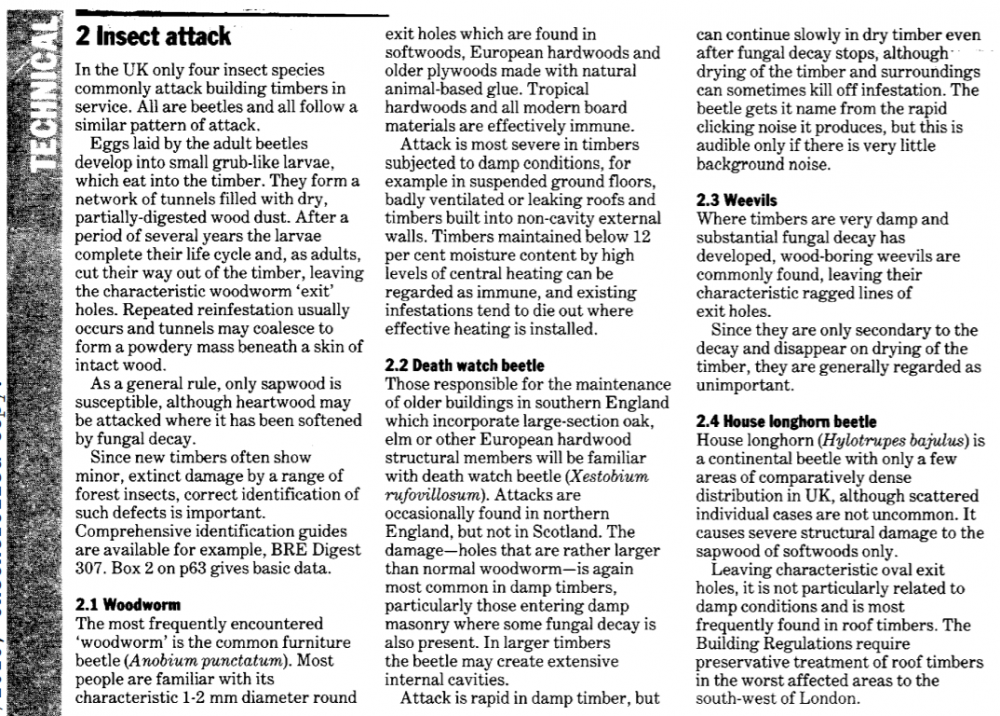
and an extract from another paper which talks about insects on imported timber:
-
The risk is completely insignificant and nothing to worry about. Extract from a BRE paper on the subject:
-
Our halfway point in costs was a weathertight shell c/w insulation, windows, roof and cladding. Also included was the u/f heating
-
Naaah mate, roofers round here don't use that....
Ian replied to ToughButterCup's topic in Roofing, Tiling & Slating
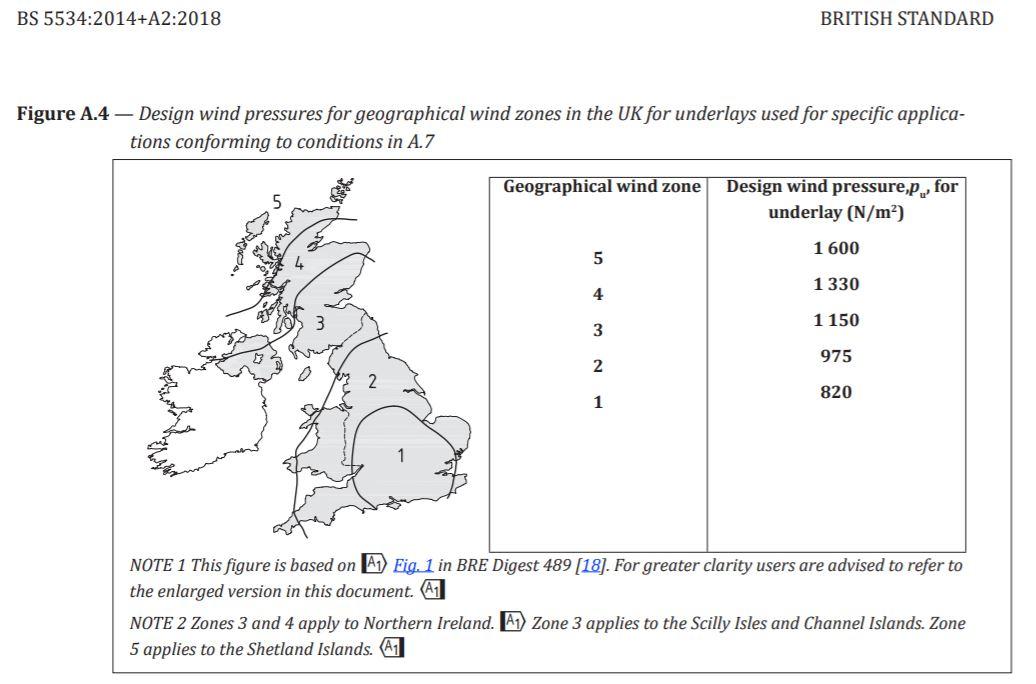
and your site is zone 2 so even with local topographical anomalies you're nowhere close to the wind pressures of zone 5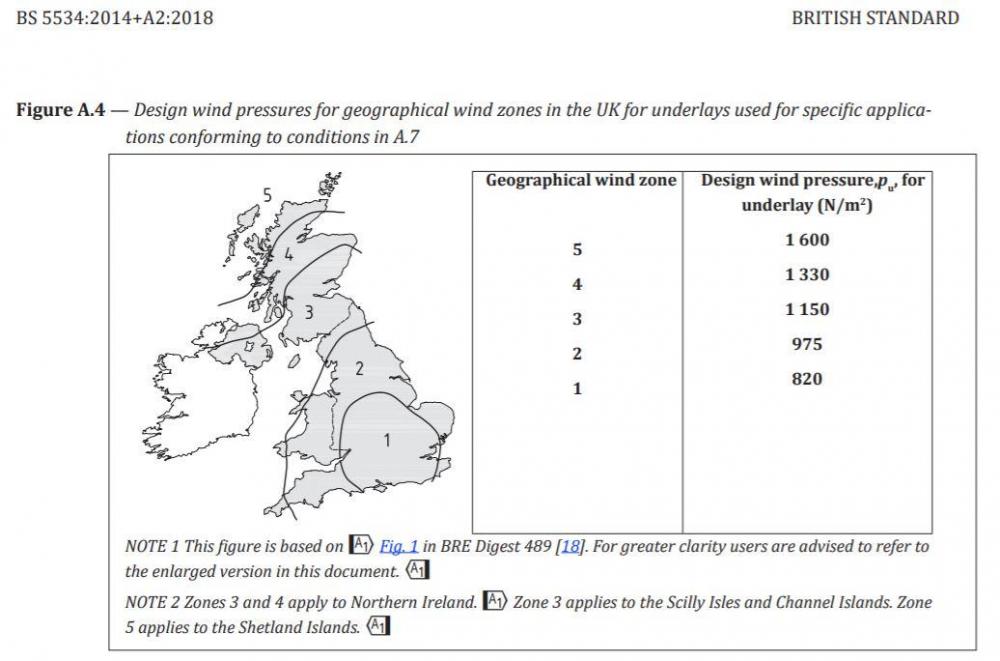
-
Naaah mate, roofers round here don't use that....
Ian replied to ToughButterCup's topic in Roofing, Tiling & Slating
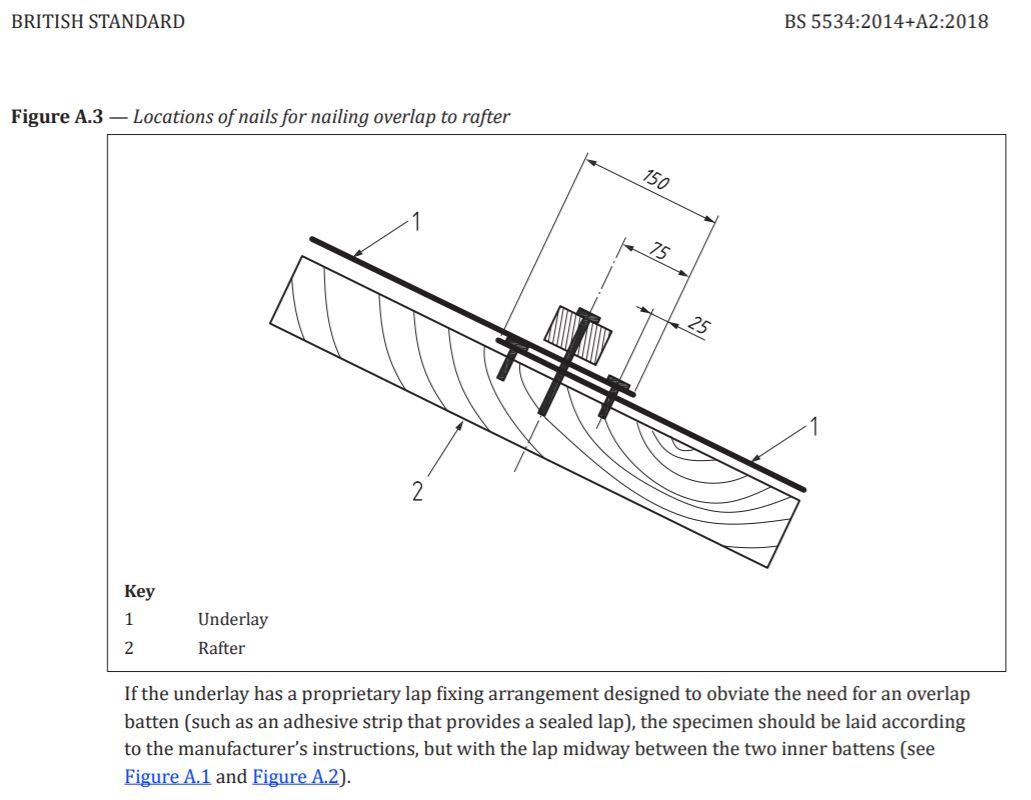
Edit to above comments: I'm guessing that the tape can be used instead of using a batten at the overlap position. Extract from BS 5534:2014 'Slating and tiling for pitched roofs and vertical cladding — Code of practice'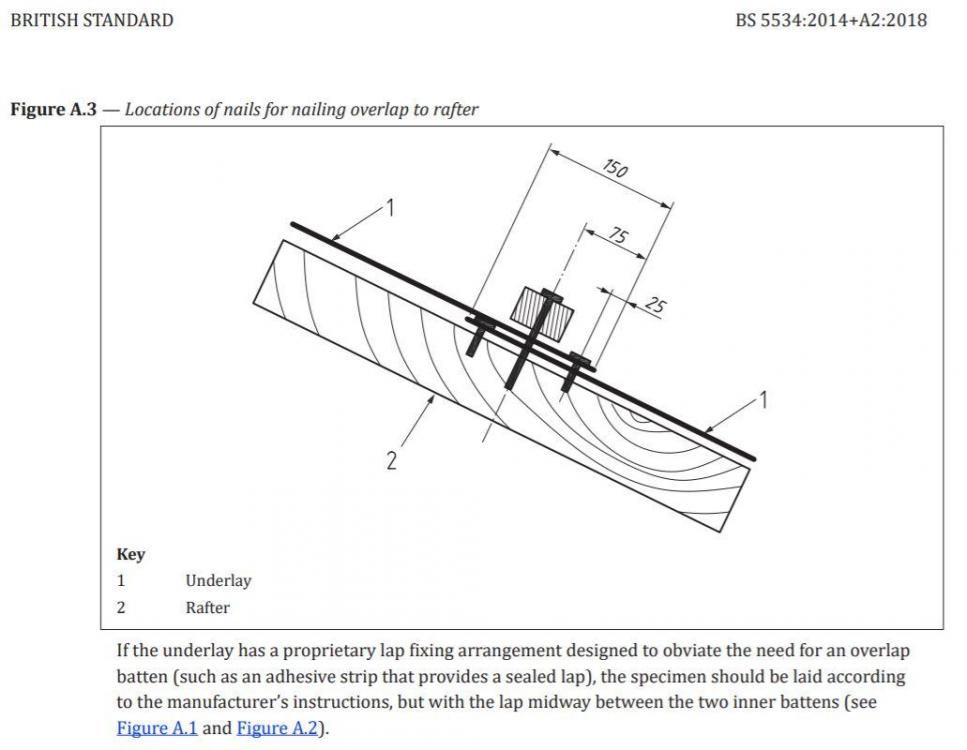
-
Naaah mate, roofers round here don't use that....
Ian replied to ToughButterCup's topic in Roofing, Tiling & Slating
I would say that you definitely don't need to tape the overlaps unless your Permo Forte is also acting as your air-tightness layer. Roofing underlay performs 2 main tasks: 1) It acts as a secondary barrier to rain & snow 2) To reduce the effect of wind uplift on the roof For neither of those tasks would you need to tape the overlap joints. Normally the overlaps are dealt with by battening the lap joint. The guidance with regard to overlaps for the product is in the BBA certificate. http://klober.co.uk/media/uploads/573ef4e58dbd2.pdf Relevant extract below: Note your product is the Permo Forte NG (not the NG SK2). The SK2 version has an integrated tape and is the type of underlay you would use if you are using it as an airtightness layer.
-
Unfortunately any advice given here won’t be worth much as it’s your Building Inspector who needs to make the decision. The easiest route would be to ring him/her and ask what they’ll accept. If the corridor will form part of a fire escape route then you won’t be able to have opening windows and any glass will need to be fire rated and probably fire insulating.