Russdl
-
Posts
1783 -
Joined
-
Last visited
-
Days Won
6
Everything posted by Russdl
-
That’s a bit like me with CAD software. I’m a God with Sketchup I’m a Dog with CAD. But I’m determined to get there.
-
When you get it. You get it. It’s brilliant.
-
I would say it’s pretty bomb-proof if you do it yourself, it’s very easy and you’re more likely to take greater care than most pro’s.
-
I’m with @Jolo on this. I think a coarse filter of some description should be part of the package, if only to keep spiders and fly’s out. Either way, it’s been fun messing around making something that does the job and does it well it seems.
- 100 replies
-
- 1
-

-
- mvhr vents
- filter
- (and 1 more)
-
I was quite taken aback by how dirty it got in what was a relatively short period of time. I suspect the farming going on close by may have contributed significant dust. It’ll be interesting to see what the new filter is like in three months time with very little farm activity.
- 100 replies
-
- 1
-
-
- mvhr vents
- filter
- (and 1 more)
-
Likewise.
-
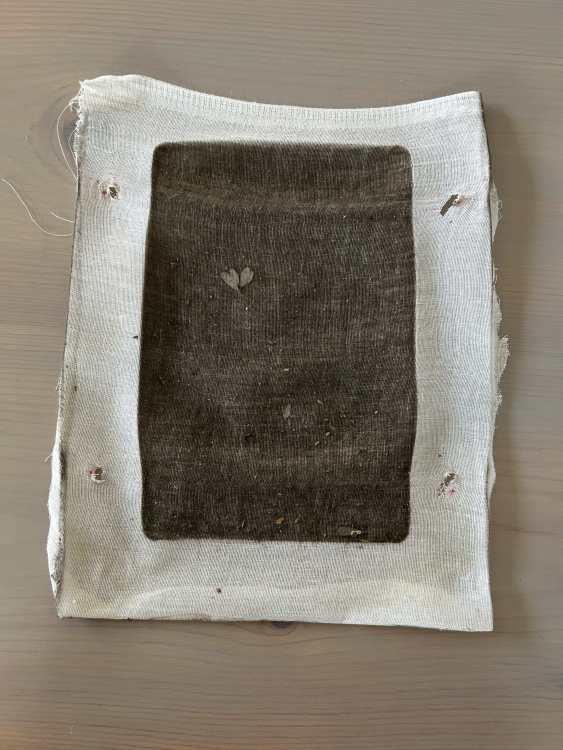
3 months after commissioning the new and improved Mk2 Pre Filter box it was time to change the filter material. The muslin seems to be doing a grand job and the increase in useable filter surface area is being fully exploited by dust and flies.
- 100 replies
-
- 6
-
-
- mvhr vents
- filter
- (and 1 more)
-
And I think very necessary. Previously it was just some thin foam on the inside (and not very well attached, definitely not airtight). I’m hoping the new set up will improve performance thermally, waiting for some proper cold days so I can check the temperature of the boxes, the Mk1 was definitely getting cool last winter.
-
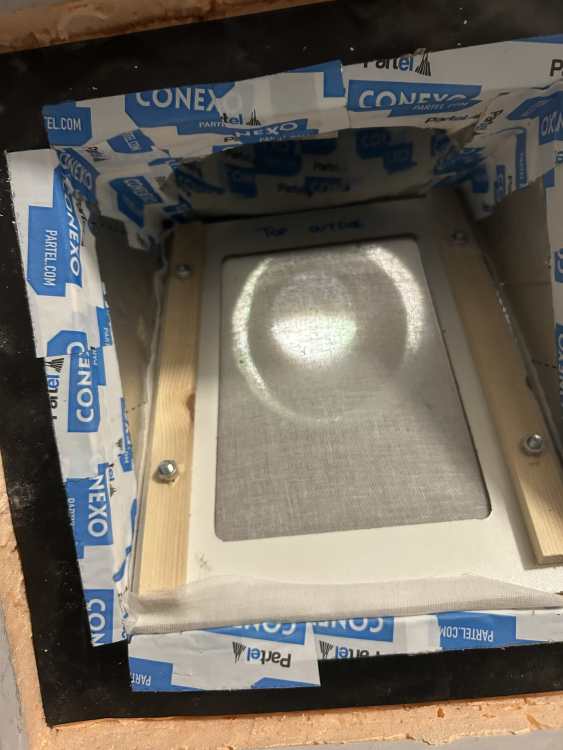
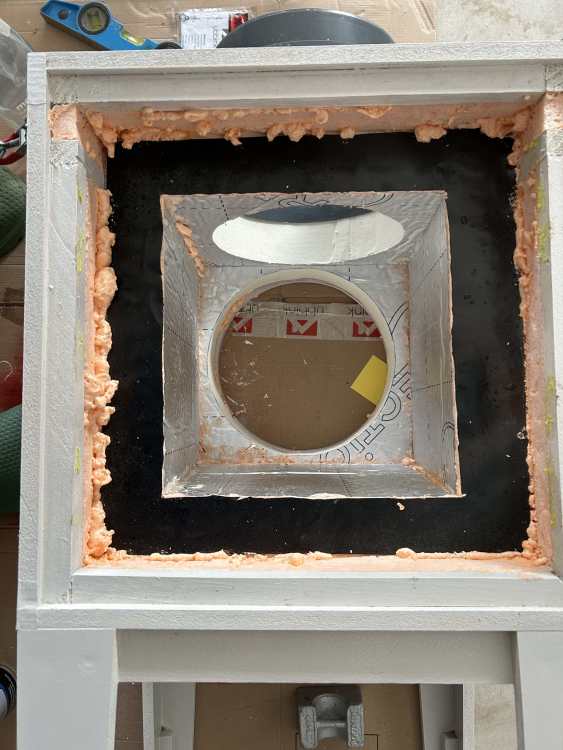
As it happens, that is exactly what I did during the mid life refurb! It is so much better, shame I couldn’t work it/you weren’t available when I made the Mk1! I’ve also increased the insulation and air tightness with some left over bits and pieces. My pre filter material is now some fine mesh muslin material that costs pence and works like a charm.
- 100 replies
-
- 1
-
-
- mvhr vents
- filter
- (and 1 more)
-
@JoanneP We moved in 4 years ago. Hugely stressful. Hugely rewarding. We had no prior knowledge of the building trade and no idea of what we didn’t know. Community Infrastructure Levi is probably the first ‘gotcha!’ waiting in the wings. That will suck huge amounts of cash out of the unwary so make sure you look into that as a starter for ten. Find out as much as you can about every aspect. Treat the professionals with an abundance of caution until they prove beyond doubt that they are actually professional. You won’t regret self building, well, when it’s finished you won’t regret it but there may be wobbles en route. Good luck, almost unlimited knowledge and help is available from the good people on BuildHub.
-
Boiling water tap - Quooker alternatives
Russdl replied to canalsiderenovation's topic in General Plumbing
That all sounds like a top plan to me. Let us know how it goes. -
Boiling water tap - Quooker alternatives
Russdl replied to canalsiderenovation's topic in General Plumbing
Certainly looks to be, that may be just what you’re after, and cheaper than the Combimate 👍🏻 If you install a water softener, over time it will remove the limescale that will already have built up in your system, my guess would be that a phosphate dosing water conditioner will not however I suspect that will not be a big issue for you now the Quooker has been descaled. -
Boiling water tap - Quooker alternatives
Russdl replied to canalsiderenovation's topic in General Plumbing
Actually, I should have done the above myself. I wonder why I didn’t 🤔 I think it may be because I knew about water softeners and knew I would need one and then at a later date discovered the Combimate by which time the softener was firmly fixed in my plan and I lacked the bandwidth to rethink everything. -
Boiling water tap - Quooker alternatives
Russdl replied to canalsiderenovation's topic in General Plumbing
As it happens, I believe it can do the whole house and it would be a far cheaper option for you. Perhaps look into fitting a Combimate to do the whole house and see how it goes, and then if you want to add a softener later on you could - but keep the Quooker on the Combimate. -
Boiling water tap - Quooker alternatives
Russdl replied to canalsiderenovation's topic in General Plumbing
Yes. And, as @-rick- reposted above, to prevent all limescale formation in the house we have a salt softener for the whole house (non electric) and a Combimate solely for the Quooker. The feed to the Quooker is a hard feed that goes through a water conditioner (Combimate in our case) before it gets to any of the Quooker gubbins. The Combimate phosphate doses the hard water which, in a nut shell, gives you hard water that can not form limescale. This combination has worked flawlessly (regarding limescale prevention) for 4 plus years, I thoroughly recommend it. -
The flow rate at the shower is around 12 l/min, the incoming mains supply is 15 l/min (and 3bar). I can’t compare it to an UVC as we’ve only had a Sunamp in this house. We have two showers and when they both run at the same time there is perhaps a small drop in flow but if you didn’t know you wouldn’t know. We have an accumulator that helps when both showers are running as our mains supply is a bit meagre.
-
@Workerbee Not recent experience as such, we’ve had our Sunamp UniQ eHW 12 up and running for about four and a half years. A thermistor string failed shortly after it was commissioned and that was promptly replaced. Other than that it just sits there quietly doing its thing. If we suffer a major failure in the future (which I guess must be on the cards) I’m pretty sure we’d get another one. There was/is clearly a risk being an early adopter with any new technology but it was a risk we were comfortable to take. The arguments ‘for’ are thin and there are plenty of arguments ‘against’ on here but we’re still firmly in the ‘for’ camp.
-
BANG!!! There goes another Sunamp....(number 2 for me....)
Russdl replied to oranjeboom's topic in Energy Storage
Oh Lord. All things being equal they should replace it sharpish but would you want a third one? Ours is still doing what’s it’s meant to do without any dramas, long may that continue (well at least, may it continue until we are close to, but not beyond, warranty end). -
I guess piano hinges is going to be the best option. It’s got to swing out legs to support the leaf and they wouldn’t get past a piano hinge so I’d have to put the hinges in 3 sections so there are two gaps for the legs to swing through. Thanks all for your input.
-
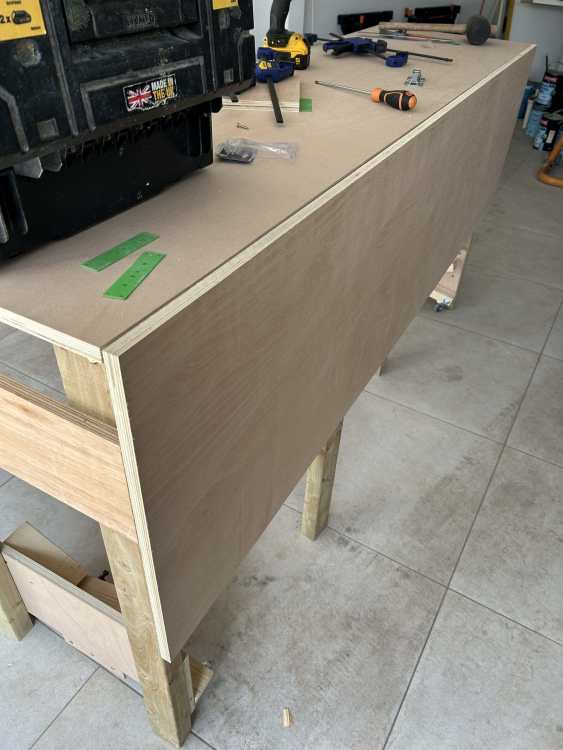
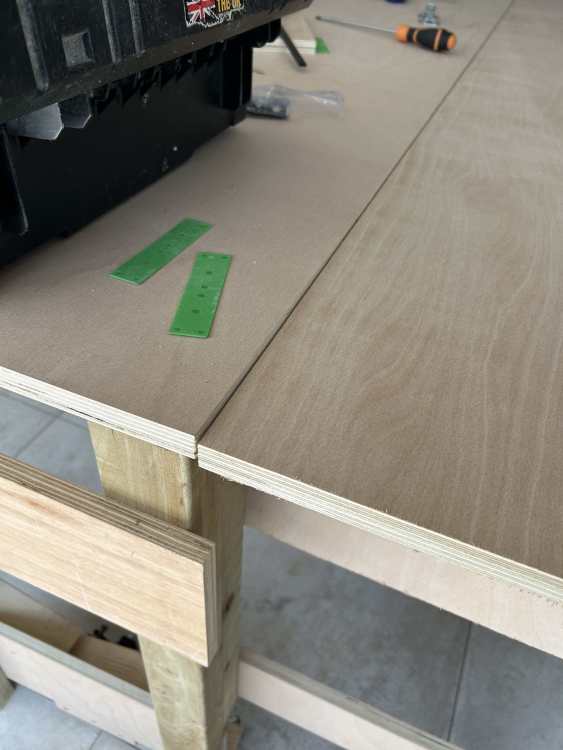
I’ve build a wheeled work bench with a ply top, cut the ply down the middle so that I can fold it in half and then wheel the bench out of the way for easier storage. I had some little cupboard hinges left over so without much confidence in their ability to take the weight, I gave it a go. They hold the leaf well enough in the folded position but can’t take the weight of the leaf when it’s up, leaving a step in my otherwise flat workbench top. Does anyone know what sort of hinge would be up to the job?
-
Boiling water tap - Quooker alternatives
Russdl replied to canalsiderenovation's topic in General Plumbing
A Combimate solves the potential problem of drinking softened water whilst still keeping lime scale at bay. (There are probably other water conditioners out there but I don’t know of any). -
As it’s a new build do a warm roof, put the stairs in and floor the loft. VAT back on all that. Great easy access storage space and then stud walls and windows at a later date if the mood takes you.
-
Boiling water tap - Quooker alternatives
Russdl replied to canalsiderenovation's topic in General Plumbing
As well as the Combimate for drinking water we have a MiniMax (aka Harvey) Water Softener for the rest of the house. These water softeners do not require a mains connection, but do require the block salt being topped up every few months. I highly recommend the set up for an effective defence against hard ‘as nails’ water. None of it is cheap in the short term, but even factoring in the salt/phosphate refills I reckon it’ll end up a very reasonable price to pay in the long run to keep the lime scale away. -
Boiling water tap - Quooker alternatives
Russdl replied to canalsiderenovation's topic in General Plumbing
@canalsiderenovation I’m guessing you don’t have anything to counter the hard water? As it seems you have a working Quooker/Cube combination for the time being and their after sales service is pretty good perhaps you should tackle the hard water issue first as that is going to kill any replacement boiling water tap you install. We are in a very hard water area as well and we have a Combimate in line before our Quooker. So far have had zero scale issue in 4 years (but we have enjoyed Quooker’s after sales service for numerous other faults - we’re on our third Cube already!!) If you were to go down the Combimate route and still decide to replace the Quooker then at least the replacement tap wouldn’t be killed off by the hard water. The Combimate can do the whole house or just one appliance, as in our case. If it’s just for the one appliance then you only need a half fill of the Combiphos balls every 12 months which would cost around £17/year at current prices. -
What could possibly go wrong? (I’m delighted to report that somehow nothing went wrong)