
Conor
-
Posts
4165 -
Joined
-
Last visited
-
Days Won
12
Everything posted by Conor
-
I'd contact your water/sewer provider and tell them there is a leak but you cant investigate and you don't know who owns the asset. Do you know where your water supply comes in? I think I can see your meter box just to the right? In that case your rising water could be a blocked storm sewer, that other MH could be your foul sewer.
-

Avoiding steel wind frame with portal I-joist frame
Conor replied to thaldine's topic in Timber Frame
Steel will likely end up being the easiest and most cost effective solution. That's why it's used so much. Do you have an SE that can looks tit for you? -
Nope. Must remained sealed. We had a blocked drain about a year after moving in. I pulled out a load of mortar and stone that had gotten in some how.
-
How is the basement ventilated?
-
It's for covering small areas that are difficult to tape or membrane, not painting rooms. It's more like a liquid rubber.
-
Alu Clad Northern Ireland Options
Conor replied to North Coast Self Builder's topic in Windows & Glazing
mostly KF310, one is a 410 I think as it's bigger. All white on the inside, tilt and turn, no trickle vents. We also have solarlux bifolds. Full alu. We have an AT410 aluminium front door. -
That looks like corrosion. Combination of no inhibitor and a leak that's been letting oxygen in. Combine that with high temperatures, and things corrode very quickly. You'll need to a do a full power flush of your system.
-
Methods for setting up & using site datums?
Conor replied to Alan Ambrose's topic in General Construction Issues
Highly recommend that when you have an initial site survey done, that you have a couple (ideally three) bench marks setout around your site. A nail driven in to a hard surface is best. Allows you to easily check vertical levels in the future with just a laser level and tape. Ironically, me, as a surveyor didn't do this and when setting out made a 250mm error -
Alu Clad Northern Ireland Options
Conor replied to North Coast Self Builder's topic in Windows & Glazing
Internorm from Feneco. Very happy with ours. -
Why are you with ecology and not a residential mortgage company if you have completed works? You'll get a much better rate, at least 1.5% lower.
-
Still hard to see without a drawing. Some observations. The proposed door won't work. The area at bottom of the stairs isn't wide enough for an opening. So I think you'd have to rely on your existing space. I assume gor floor you're thinking something like 100mm PIR and floating chipboard on top, then something lino as a finished floor? As you're keeping it as storage space and not adding heating, I dont think building regs apply. Maybe somebody else could comment. Otherwise looks straightforward job.
-
GSE tray fixings for gutter adjacent location
Conor replied to Greeners's topic in Photovoltaics (PV)
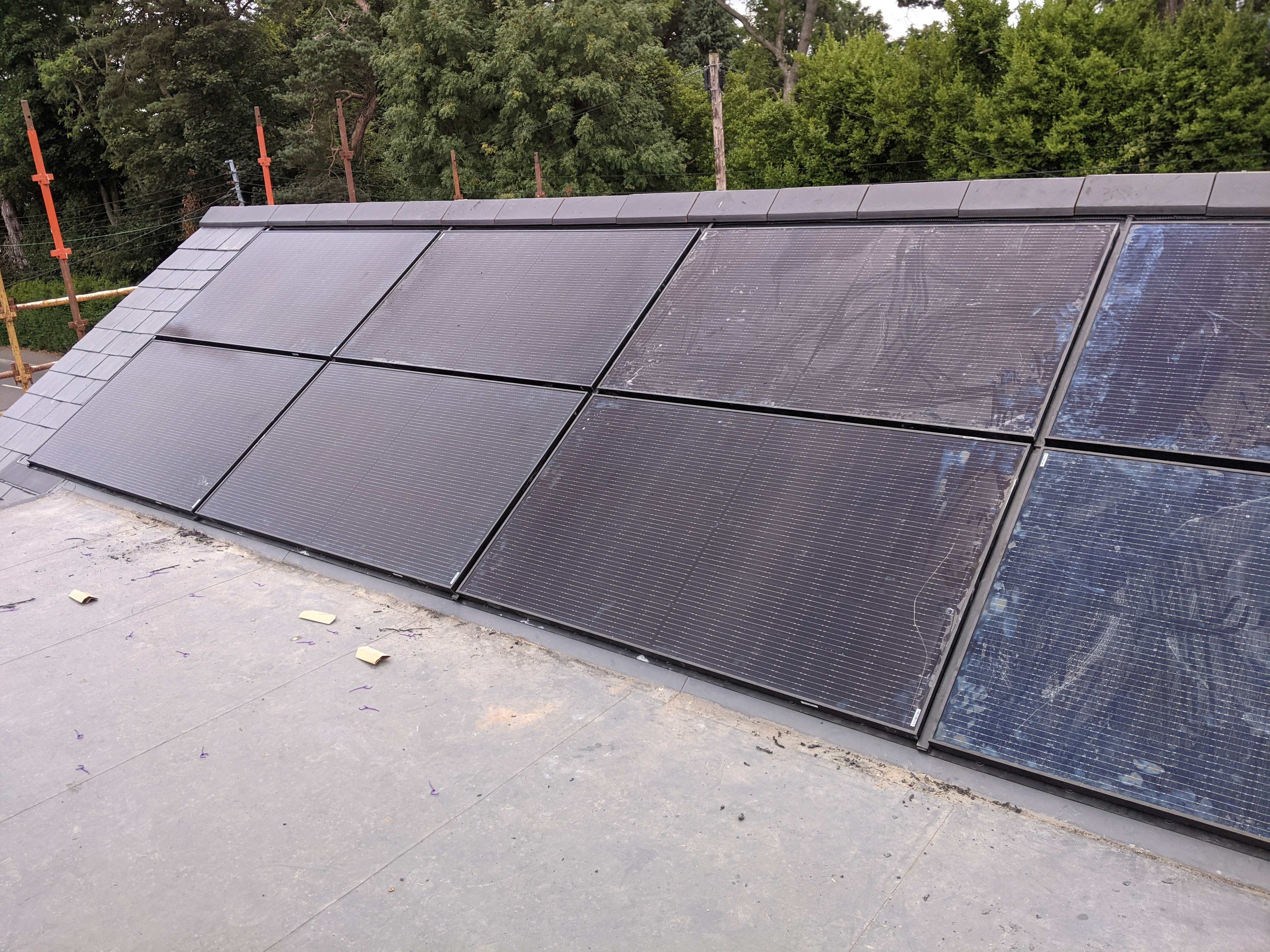
MCS comment is for on-roof systems, presumably. The manufacturer instructions trump other guidelines anyway. I ran ours right from the ridge down to the flat roof valley. At ridge I ran the GSE trays up and under the ridge flashing, and at the bottom I had an aluminium upstand made to go under the flat roof covering and under the GSE tray. I'd avoid the flexible GSE flashing for your gutter, use rigid instead. Remember you can lay you panels in landscape. I don't quite follow your pattern. You don't need anything other than what comes with the GSE kit. Just extra 100mm battens for the fixing points, as per instructions.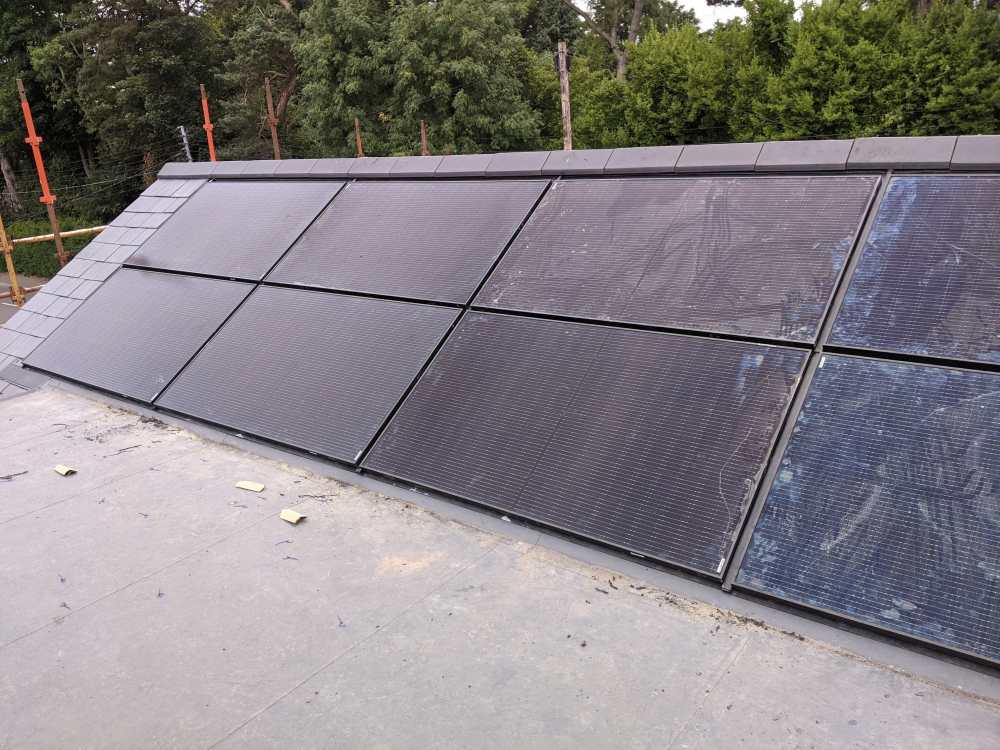
-
How to safely link our own spring water with the mains supply
Conor replied to DavyH's topic in General Plumbing
Why are you ditching the mains water? It'll be more expensive to runs and maintain your own supply. If you want to use your own water, you'll need a properly designed treatment system with backups and failsafes. Check / non-return valves can (will!) fail. So you can't be connected to the public water supply at the same time, unless with an air gap and procedure for flushing and chlorinating. Overall, it's a bad idea. -
How to waterproof a brick built manhole
Conor replied to jfb's topic in General Self Build & DIY Discussion
You cant. It needs to be drained to a lower level. Even then it'll eventually silt up. Just the way it goes. Just block up the ducts properly. -
We used thermo house. All good.
-
You don't need EPS on the outside, it won't support the drain anyway. Your dpc doesn't make much sense. You want it to go right up the back of the door block and lap over the dpm. Put a 50mm screed floor down with UFH. Anything else is inferior.
-
Kingspan / Insulated Panel Store - Fire ratings
Conor replied to jeli's topic in Building Regulations
I think we all know how much we can trust Kingspan datasheets. 🔥 -
If you ever have a burst under there, you'll need to lay a new pipe around the house. I'd replace it with 25mm MDPE and place in a 100mm duct under the footing.
-
Here in NI, 7.3kn blocks are the standard stock, 3.6kn would be unusual.
-
Pallet forks for excavator, that's a thing?
Conor replied to Alan Ambrose's topic in Tools & Equipment
Really needs to be coupled to one of those 360⁰ heads. But damn handy. -
We've ours set to 35c. Translates to about 30c at the manifolds. Design temp is 28c so works well .
-
We used three cheap dehumidifiers. Dried the air and warmed it. COP of 1.5-2. Had a couple blow heaters for when it was very cold.
-
Fixings for MF to block and beam ceiling
Conor replied to Thorfun's topic in Bricklaying, Blockwork & Mortar
Our boarders used a nail gun. Don't know if it's the best, but fast and nothing has moved they were something like 20mm nails with a plastic sheath, fired from a massive gas gun. -
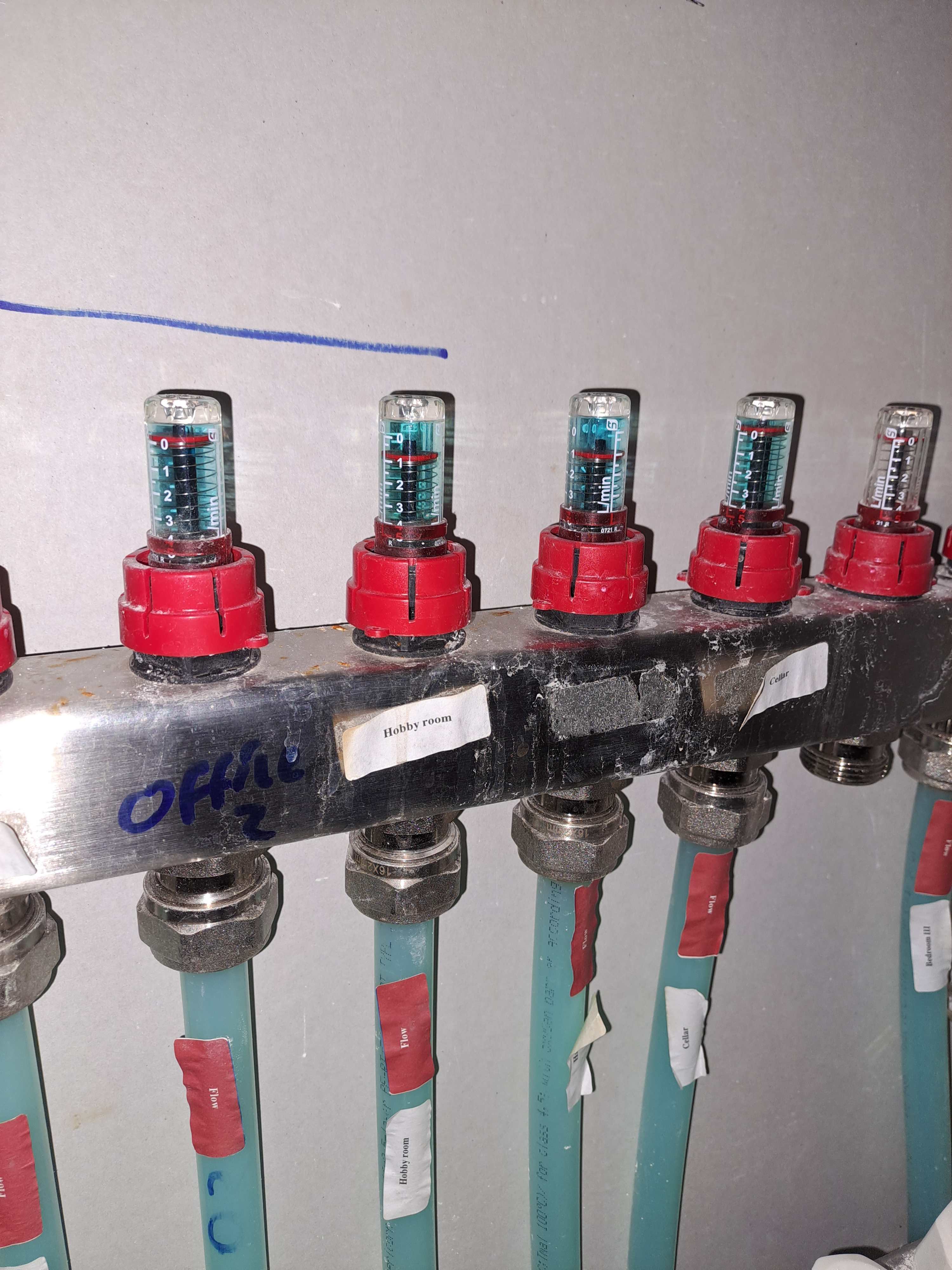
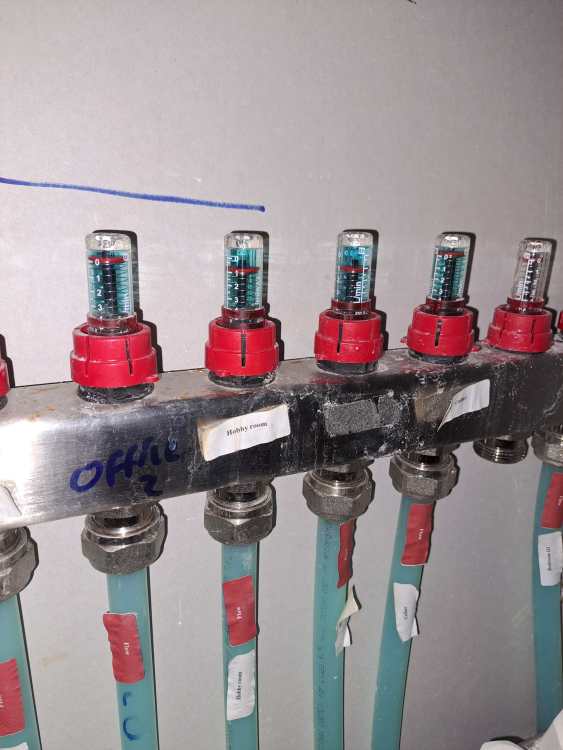
All of the flow indicators on one of my manifolds are stuck. No matter how I adjust the flow, they don't budge. Other two manifolds are just fine. Any easy way to free them? Pic taken with everything off!
- 1 reply
-
- 1
-

-
There's usually a simple form that you fill out the rating of each appliance and calculates it for you. Unless you have a lot of PV, I'd be surprised if it'll dictate a three phase when you add up. Our house with two ovens, induction hob, EV charger, heatpump etc only came to 50amps or so. Well under the 80amp max.