
Conor
-
Posts
4165 -
Joined
-
Last visited
-
Days Won
12
Everything posted by Conor
-

SAPs test. Do we need this before we can progress to building regs?
Conor replied to K44's topic in Building Regulations
You need a design stage SAP to submit along with your drawings to building control to get initial approval to proceed. -
I did the opposite, thermal blocks, treated sole plate, then studs. Directly on the slab, no trench underneath. This was because most of the walls were being built in block, so made sense to build the studs off the same first course of thermal blocks. That was the ground floor... For the other floors, the stud frames were built directly off the floor structure (concrete planks) and boarded, before screeding. If you leave your stud walls till after the screed is down, you'll have an almighty amount of cleaning up to do of the screed before flooring.
-
Coming to this topic a bit late. Don't panic. You've just dumped a load of moisture (plaster skim) in to the room at the coldest time of year. Keep it ventilated and dry out for 6 weeks before considering doing anything.
-
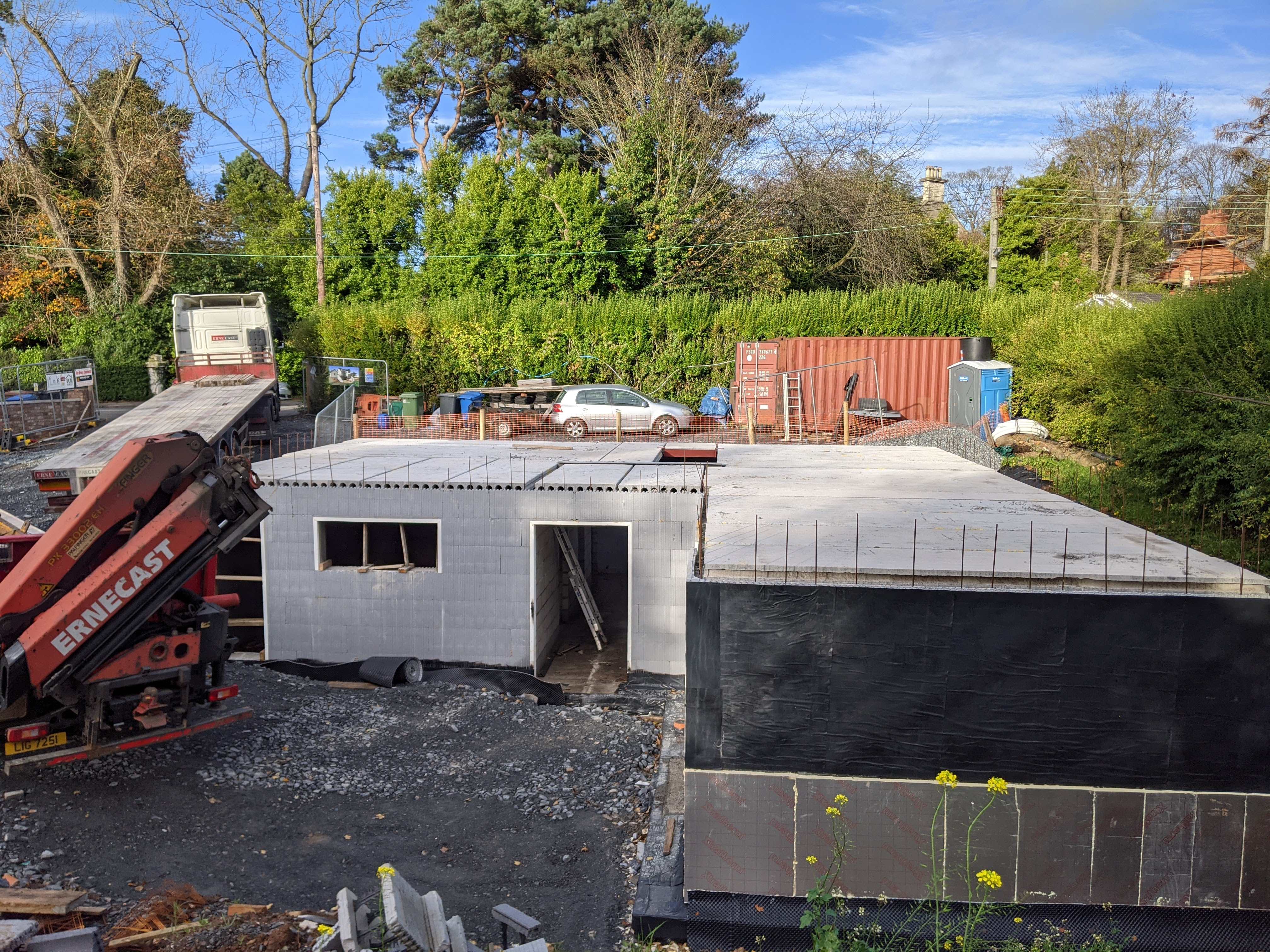
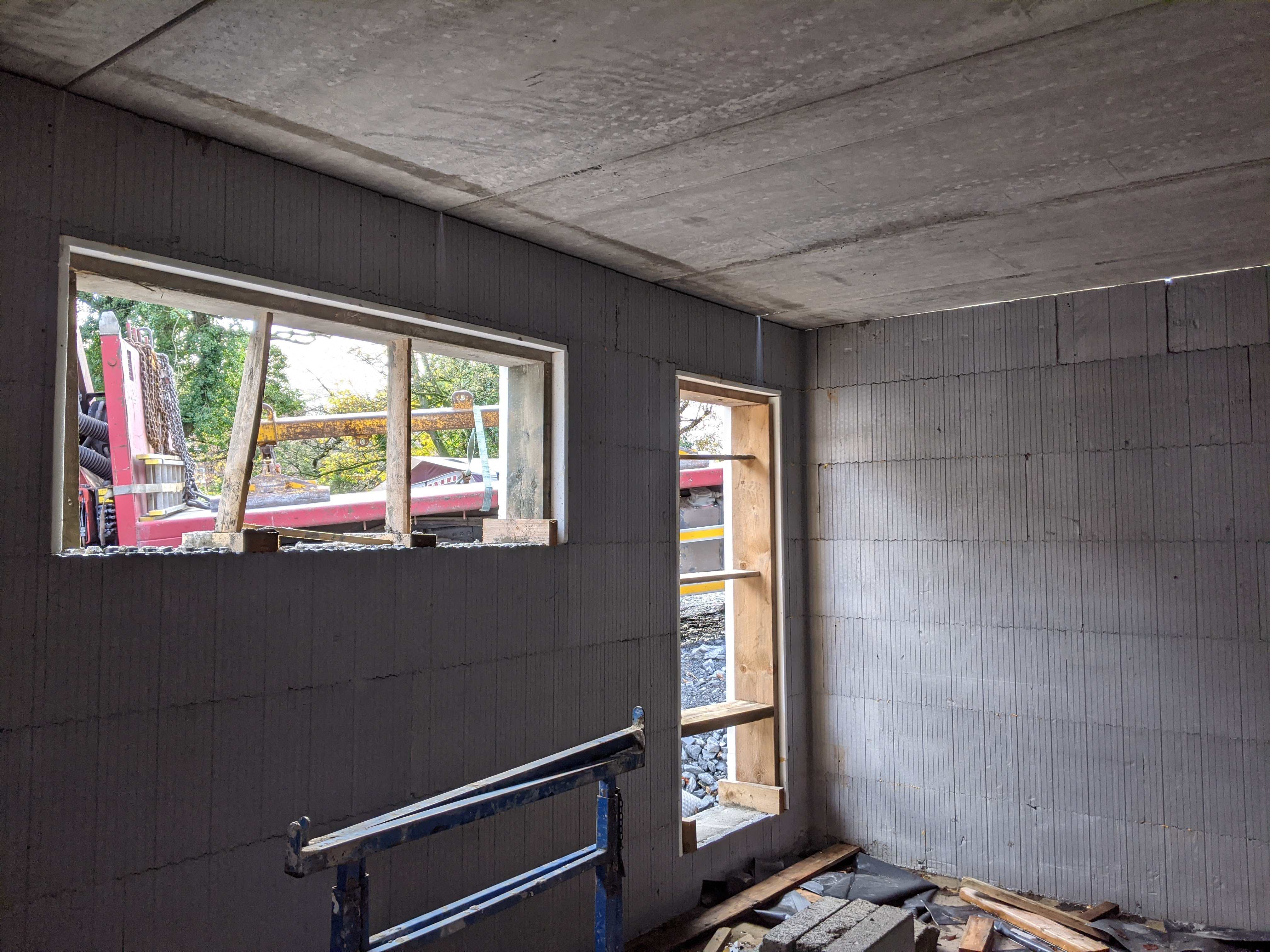
Ours was a locally made 150mm thick hollowcore tensioned slab, 1200mm width, length 4.5m. 115m2 installed in a couple hours, directly off the lorries. You carry a lot of extra risk using any system that doesn't have local expertise.
-
Architects, ballooning fees and estimates
Conor replied to Drellingore's topic in Costing & Estimating
One of the reasons we went with our architect was that his fees were based on a rate /m².... So we knew exactly how much each stage would cost. And, yes, architects are in a reasonable place to provide a build cost estimate, but they are not experts. -
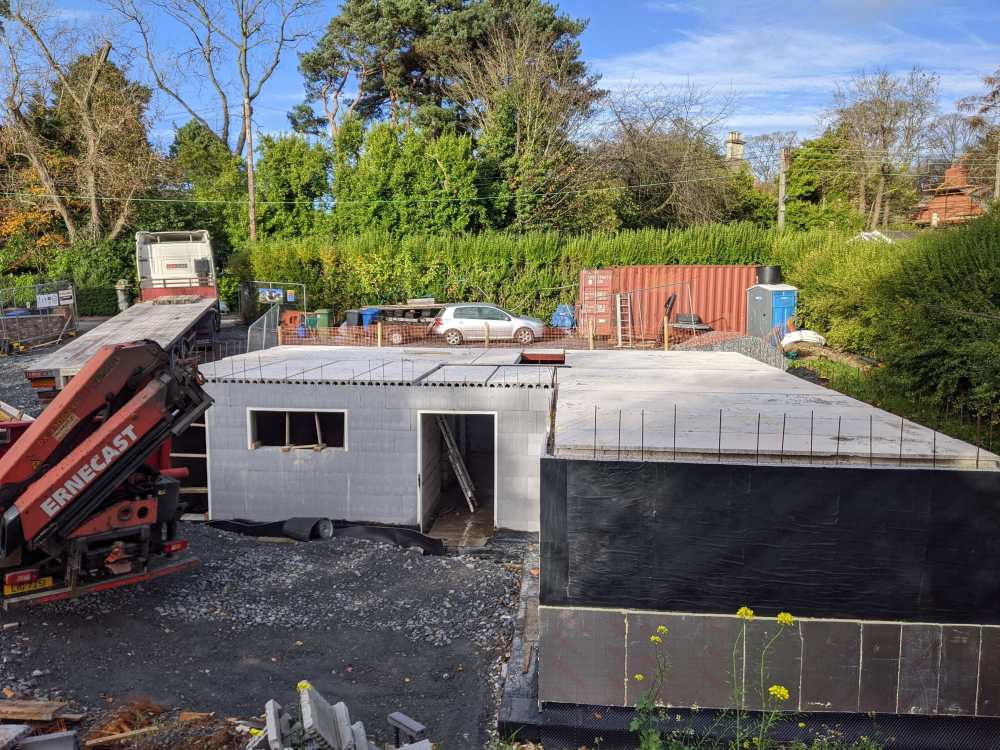
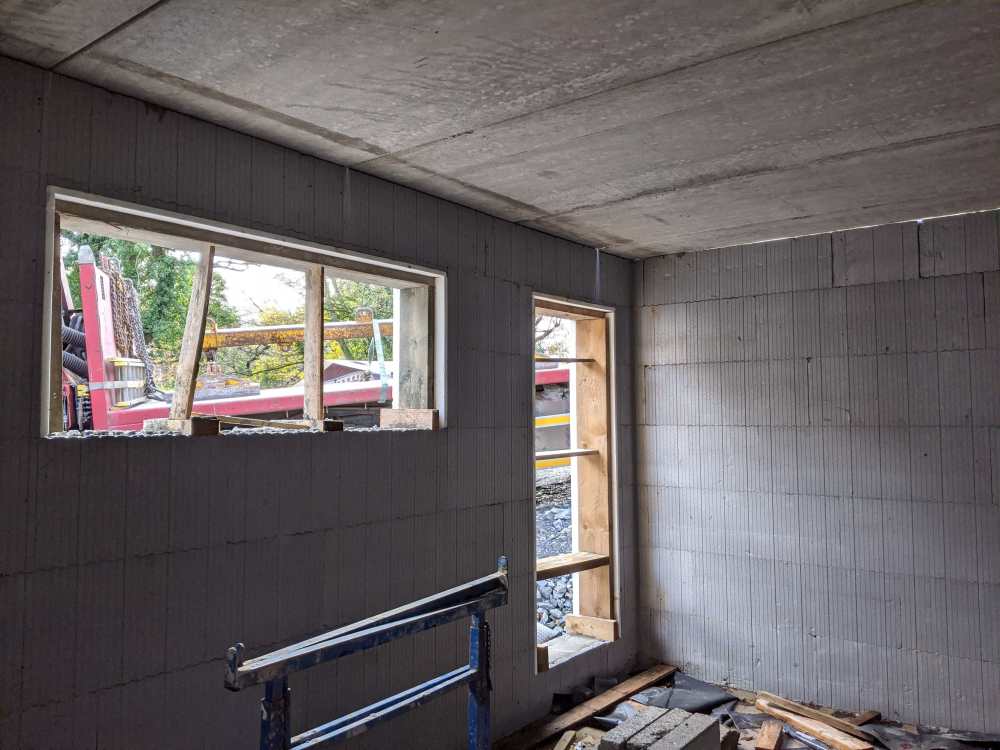
In Europe you'd always be adding a suspended ceiling underneath, otherwise you wouldn't be compliant with a raft of regulations. Above, also normal to grout, then insulation layer then screed. So flushness of top or bottom not really relevant. Ours were so uneven, we opted for liquid insulating screed, rather than attempting to level with sand and lay down boards. You have the curve of the beams to contend with anyway. You also have the human factor, the neatness of installation. We used precast hollow concrete planks for our build, 1200mm wide, 5m long. These were smooth top and bottom, interlocked together, in theory leaving a narrow beveled grove to grout in. In reality, beams were slightly different shape, the supporting walls weren't perfect, some beams were slightly the wrong size. A lot had to be persuaded in to position. Result being a fair bit of unevenness, top and bottom, and lots of grouting needed on top. So, do not expect a perfect finish by any means. Esp if this method is unfamiliar to those working with it.
-
First timers attempting an ICF and Oak Frame house in Devon
Conor replied to MCoops's topic in Introduce Yourself
Hi. Welcome. Lovely looking site! What do you mean by oak with ICF outer? -
Garden room under construction - ventilate or lock up to reduce humidity?
Conor replied to plockhart's topic in Damp & DPCs
ventilate. The building is producing moisture, it needs to escape. -
Usually there will be a benchmark / datum set on site, and everything will be referenced off that. The datum then usually has mao coordinates associated with it, so all subsequent dimensions can be calculated to the map grid, e.g. ridge height which would need to be known for planning purposes
-
You need to allow a ~150mm service void (gap from underside of block beam floor to the suspended ceiling system) On that note, you'll need to use a metal suspended ceiling system - metal brackets, hangers, channels, where plaster board is then screwed in to.) are such systems readily available in Bahamas? I really do think you're looking at the completely wrong solution for your build.
-
Crack in a Rafter, do I need to worry about it?
Conor replied to LLL's topic in Roofing, Tiling & Slating
It's nothing, wood cracks and twists all the time without losing much strength. -
Crack in access alley between two properties
Conor replied to Jawbkk's topic in General Structural Issues
It's nothing, ignore it.- 1 reply
-
- 1
-

-
Hit it really hard with a lump hammer. Or, phone your water company, say you've a leak but can't access your stopcock. Someone will be out sharpish. We did this, and they installed a new lid then and there.
-
I remember a detail on our drawings showing that steel mesh should be spot welded on top of beams where blocks were to be built off. Not sure if that applies to galvanised lintels tho.
-
how to discern which walls are load bearing?
Conor replied to apricotandpearjam's topic in Building Regulations
The beam and piers highlighted pink will undoubtedly be holding ceiling joists and any partition walls above. But, anything is possible, with enough money. -
Different scenario, but when I worked for a survey company, we had a min fee for turning up on site. Was £250, our half day rate. Didn't matter if the job took 10mins or 4 hours, it cost the same. My electrician is the same at £100 for showing up with his ugly face. Lots of trades do this because they have to plan in jobs and allow enough time to get them done. This does sound a bit harsh at £200 tho.
-
Which pipe is doing what? Please don't tell me the waste out pipe for the lot is that Flexi thing going UP at the back of the image?! If it is, then the whole thing needs to be replumbed properly so there is adequate fall after the trap. Can you provide any more context? Was this done recently or been like it forever? Where is the main sewer in relation to the photo? How does the 40mm waste pipe connect to the main 110mm sewer?
-
Passive House toilet Cistern condensation consideration
Conor replied to Attey's topic in Bathrooms, Ensuites & Wetrooms
You won't get condensation on your cold pipes or cisterns, you cannot compare a static caravan to a passive house. Move on to the next problem 😃 -
Feck sake I've more walls to do and some patching and need it all to match! If you hear of any stocks let me know as I'll need a tub of the acrylic white
-
We've bought and sold many windows, doors and a conservatory on gumtree. Expect about £50 for your £400 window tho....
-
We laid our LVT down on 2mm foam underlay. Still had to do a fair bit of scraping and prep. Feels great underfoot
-
Cooker hood with its own MVHR?
Conor replied to YodhrinForge's topic in Mechanical Ventilation with Heat Recovery (MVHR)
Just get a recirculating hood. The mvhr extract point in your kitchen will do the best. It works really well and I do not miss a big extracting hood at all. If air quality is a big concern, get an induction hob rather than gas (get one anyway as they are better!) -
You don't want something with lots of fines. It will move about and the fines will washout. You want big stones. We used 100mm crusher run. We'll be skimming it with 50mm of 0-32mm stone, then gravel grids, and then granite gravel as the final drive.
-
Done. Quick feedback. The question regarding how much extra you'd be willing to spend on eco features could be broken down into sub categories, e.g heating, insulation, glazing. Also response based on a % value rather than absolute. You can then derive the value from the previous response on the building project value range.