
Conor
-
Posts
4165 -
Joined
-
Last visited
-
Days Won
12
Everything posted by Conor
-

Grout for marble - which colour? Help...
Conor replied to Bored Shopper's topic in Wall Tiles & Tiling
Never white grout. It doesn't stay white for long at all. -
Yep, that's the thing with a home buyer's or structural survey... they are completely non-invasive. The guy that surveyed our purchase didn't even go in to the attic as there were no floor board. Luckily what wood worm was there was mostly around the loft hatch so was picked up and got us a couple £k off. along with a drainage problem and rotten fascias. So if something doesn't present at the surface, it may be missed.
-
Floor Insulation in straw new build 2 storey barn
Conor replied to Strawman's topic in Building Materials
98% air tho. It's certainly not as bad in terms of composition as phenolics. Second your comment tho, would have though an opportunity for something like sheep's wool stuffed between joists? Or blown cellulose? -
Nice location. Looks ok to me at a glance. Looks like block work construction? What height is is at its highest? Are there any obvious cracks in it? Signs of water penetration? If it's not adequately drained at the back and protected from water ingress, water can cause damage over time. Would be stoned behind and ideally a damp proof membrane behind the wall of it's block construction. Should also enquire as to owns it... Does is belong the the property or shared with the bounding land?
-
Not really. What an SE does is calculate loadings and forces on various parts of the building. They'll take the architect's drawings and, for example, calculate the loadings on the foundation and determine the slab and trench requirements. For a basement, the spec of the retaining walls are particularly critical. Re payment, you normally pay based on the number the number of calculations and drawings required. Site visits not normally included and you'd pay extra for that along with SI works. If you have a garden room in your design, you'd pay for the calcs for that design. If you have later additions or changes, you'll have to get these done as well. It's not big money in the grand scheme of things..I think our total SE fees are £800, and that included a redesign for when we found a well right under the proposed slab.
-
Was thinking the same thing. Quote for our 100m², 250mm slab with two layers of mesh is £6500.
-
Get an SE straight away - you'll need all your beams, slabs etc calculated anyway for building control drawings. I'm a designer, and it's never too soon to get data and surveys, and you can never have too much info. Get them on a fixed price basis. For ground investigation, you'll get a mini digger in and dig down a couple metres somewhere close to where you are building. The SE will climb down, grab a handful of muck and go "hmmmm" and take it from there. They'll then say if you need further investigations, boreholes etc. For basement design, they'll always assume worst case scenario, i.e saturated, low modulus soil and high hydrostatic pressure. I'm pretty sure our walls could be 50% thinner and have half the amount of steel... But I'm an environmental engineer, not a structural!
-
15sqm Permissible Dev, interior floor space?
Conor replied to Mike_M's topic in General Self Build & DIY Discussion
Gross floor area, so internal floor area, inclusive of voids and walls. -
They are lots of fun. Had a go in a 15t (big digger) and a 5t (larger mini digger) last week or so while ground works we're going on. Surprisingly easy and get the hang of. Then you hand it back to the owner and you see how it's done properly! Fun, but also dangerous and destructive. Telehandlers are the same. Even with the safety limit gear, it's easy to tip or roll a digger or handler. If you go for the likes of a C3X or other backhoe, you have the advantage of being able to fit forks to the front bucket. Not as versatile as a handler, but certainly handy for lifting a pallet of insulation from a lorry. They wouldn't be as manouverable as a mini dinner.
-
Please report back if you find anything that doesn't look like a shop front shutter or cost a fortune!
-
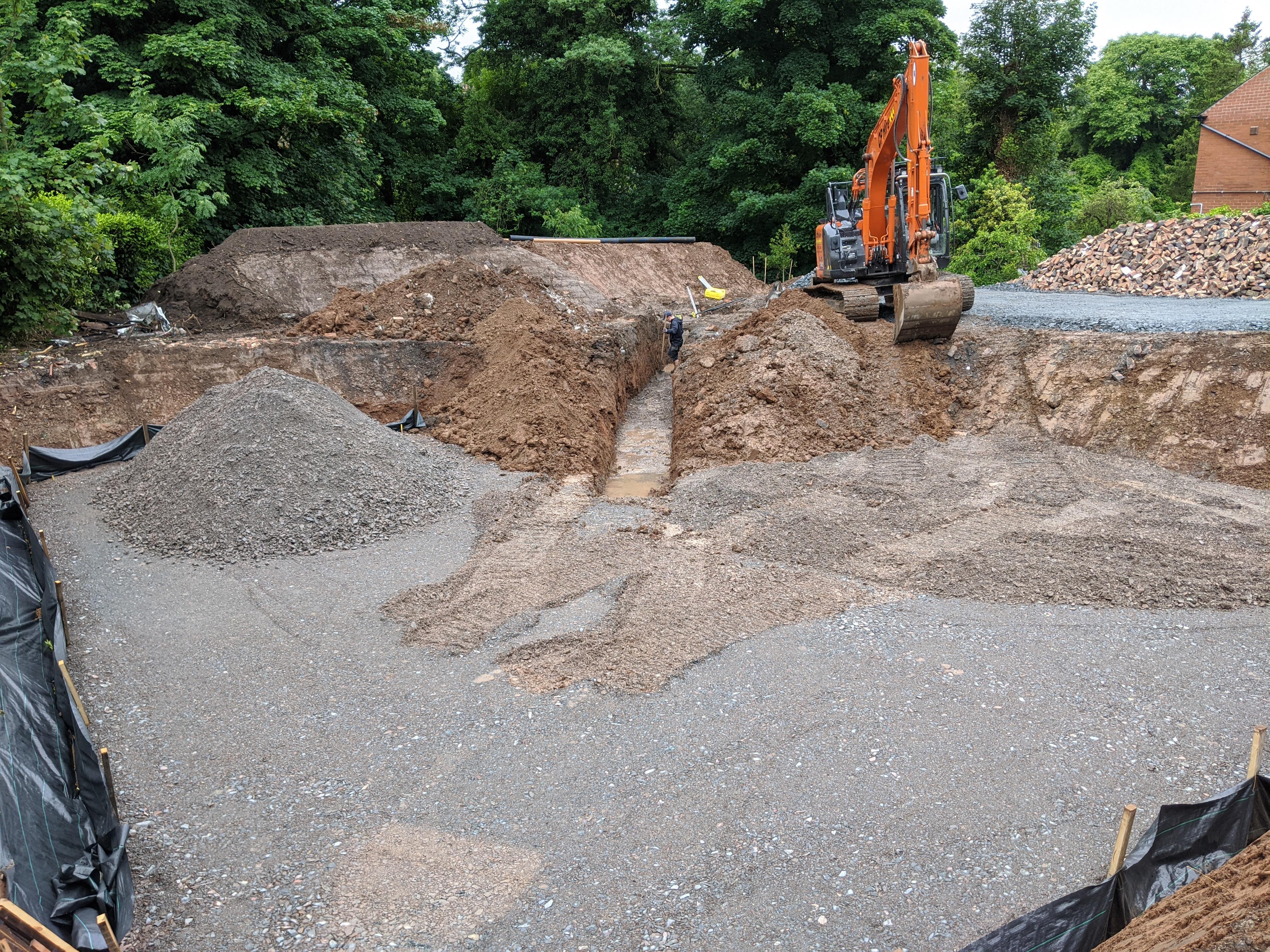
You could do a lot better with the ground works. Best looking for a local small firm or self employed digger driver. We got a place about 10miles away to take clay away at £150 per load. Think we ended up to 20 loads. We're on a sloping site with a fair amount of space... So we're able to store about half the excavated material on site. May end up having to get that carted off eventually! Wee also a sloping site which makes things much easier.... I'd guess out £14k cost would double if it were a full basement. Tanking is expensive.. makes up £15k of our £40k quote.
-
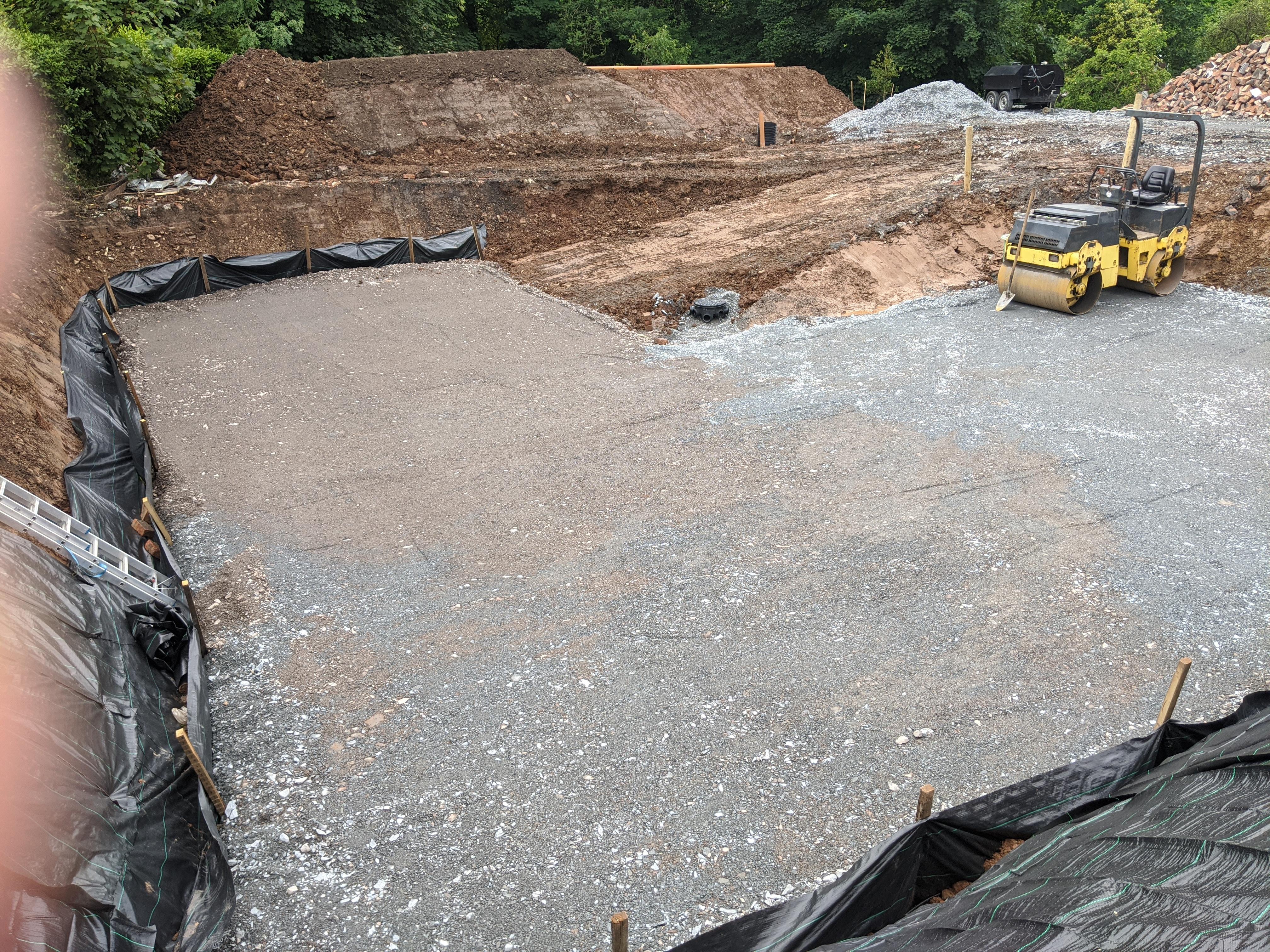
So, we got final tenders in last week. The winning tender has £39,500 for a 100m² basement. That includes: 200mm ground bearing slab and tanking (ground works done and compacted stones laid already) All steel reinforcement ICF walls up to ground level Tanking for ICF Perimeter drain, backfilling with clean stone Fyi our ground works: site clearance, excavation, main drainage works, muckaway, under slab stoned with 150mm type 3, access road and working areas stoned, is coming in at about £14k. Still waiting for the final bill. That was basically a man with a digger @ £40/hr + materials. What exactly is included in your 40k quote?
-
We have been setting out this last week or two. I setout two corners using a GPS unit with 25mm accuracy (hire ran out before we got all the setting out done). We did the rest of the corners and slab penetrations with tape and a site laser. I thought I'd do some checking with my laser level.... And tbh it was useless. Even though it was quite dull and overcast, couldn't see more than about 4m. The site level with detector is the only way to do it tbh. The guys were flying around checking levels, it beeps according to position of the beam and it's very easy to get an idea. No squinting at a bit of card looking for a feint line.
-
While I welcome any grants or schemes to get our terrible housing stock to be less terrible, I always feel they fall short. In Ireland, they have/had the "Deep Retrofit Grant", which meant you only got your cash back after meeting the SAP requirements. By no means perfect, as only made sense along side other renovation works, but at least guaranteed that the work done made a significant improvement. Seems a more effective way rather then just throwing money at loft insulation jobs. And expect the cost of a loft insulation job to rise from £500 to £1500 ? https://www.bbc.co.uk/news/business-53313640
-
We've just done 200mm compacted type 3 under the main slab and 100mm under the load bearing walls (to bear 200mm and 300mm of concrete slab). There will be a blinging layer of sand to protect the tanking membrane. Building control guy was surprised we had stone down and was wondering why were weren't going directly on to the clay!
-
Self build offgrid strawbale house in Scotland
Conor replied to Pord67's topic in Introduce Yourself
Love it, fair play to you, some amount of work in that. No roof lights? One or two small ones would bring in loads of light and not a huge cost. -
Sounds idyllic. I hope that your architect is experienced in designing low energy and passive homes. We're doing something similar (but not pushed on the certification as doesn't add value) , but the "annex" is our basement for my parents (they don't realise this yet, sssshhhh!)
-
Thanks guys. We're setting out the courtyard MH now, will see what the levels are like. I'd assume I'd be best sacrificing a bit of fall for the main run for the 12m length to the sewer? Combined system, so will also be carrying roof drainage so high flow. As you can see, tricky enough job. If we get it wrong, there's no second chamce.
-
Ok. I'm not a waste water person, and my ground worker is only used to road drainage. We have our main sewer connection at the bottom of the garden, with the first inspection chamber from the house (courtyard) 12m upstream. Main sewer connection and manhole has been done. I'm aiming for a fall of 1 in 40 from the courtyard chamber to this one. We've very little cover to work with under the slab area. Looks like most falls will be around 1 in 40 to 1 in 60. That has the crowns of the pipes pretty much at the surface of the compacted stone. We have the main foul stack coming out, along with a drain for shower and basin in bathroom, a drain for a utility, MVHR condensate drain, and finally a 5th drain for a possible future kitchen. I'm reading Part N and can't quite figure out the min and Max falls. For "branch discharge pipes" the range is 1 in 18 to 1 in 90. Is this what I should be sticking to for these under slab pipes? What's the ideal fall for the main vented stack that's comes out? Min fall for a combined sewer according to table 3.2 is 1 In. 40, which matches my design, so all good there? Setting the courtyard MH at about 10am so no panic on the replies....
-
@magutosh yeah, get the asbestos survey in asap. Few hundred quid well spent. Also, be aware they are not full proof - we found asbestos drainage pipes that were missed. Now safely buried under about 2m of clay!!!
-
Keep an eye out for my next blog!!! Professional demolition companies aren't interested in small residential jobs - I got two quotes - one for £10k and another £20k. Completely made up "we're not interested" numbers. A typical builder, or man with a digger will not have demolition insurance. I couldn't get self build insurance to cover demolition either. So be careful how you approach it. So... I ended up demolishing the house myself. Started from the inside out, removing timber, pluming, insulation etc. Then stripped the roof and kept the slates. Pulled the chimneys down with a long chain attached to my car. Rest of the walls came down by hand. It was a small bungalow so relatively easy. Reason for doing it this way was the bricks - 20,000 clay bricks worth 50p-£1 each. I had planned to hire a telehandler with a bucket to make the job easier, but wasn't an option as the COVID restrictions hit.
-
We submitted ours at the same time as the main application, and was approved about a week after the main application was - had to go through some extra approvals apparently.
-
They have no firm rules like that - they'll analyze all your finances they state whether they can offer you a loan. For us, the total we were looking for was 3.5 our gross incomes. No issues.
-
Overkill spec on reinforcement- suspended slab, basement wall
Conor replied to Tony C's topic in Foundations
Our basement slab is 200mm 40n with single layer of mesh. Thickened to 300mm around the external load bearing walls, and extends out from walls between 350 and 600mm, depending on loading. Walls are 200mm ICF, not sure on the amount of reinforcement. She originally had it as a 100mm slab with lots of rebar, asked her to change it for mesh + more concrete as labour costs are much lower, and concrete is cheap here so works out £1000+ saving. -
I work as a PM on large infrastructure projects and spend my days preparing contracts and scope documents 100s of pages long. I got our architect to do our tenders. It was three pages, plus the costing sheet which had 6 line items. All the details and requirements are on the drawings. Nobody reads contracts, anything you want priced and done to a spec, should be on the drawings, it's the reality of how these guys work. They will also get your BC approval before the process is handed over to the contractor (onsite inspections after your drawings have been approved). It's sounds like a big whack of work, and recommend you pay the little bit extra for these services.