Declan52
-
Posts
4449 -
Joined
-
Last visited
-
Days Won
10
Everything posted by Declan52
-
That's going to need acrows on the ground floor holding up the first floor and then more acrows on the first floor holding up the roof.
-
What's above the wall?? Is it supporting another floor or the roof??
-
When the birds Make a mess on mine I hit them with the hose. Maybe another 2 times a year depending on what way the wind blows when the combines are throwing up loads of dust. I think I got mine from the same crowd so will wait patiently for the phone call.
-
You need to do a list of everything in your house that will need to have a duct. Showers, baths, toliets,sinks, washing machines all need to get rid of water and other stuff!!! Then you have your electric,bt,gas, heating pipes, power to outside gates or shed etc. You use these for the water bits. https://www.screwfix.com/p/floplast-long-radius-bend-87-5-110mm/81100 Everything then gets put inside these or connected to them. Water, waste water , toilets etc. The blue water pipe will just be pushed up the inside. For electric it will need to come via a black duct . It will depend where you meter box is going so might need one of these if it's a cavity build. https://www.meterboxesdirect.co.uk/electric-meter-box/meter-box-hockey-sticks.html Telephone cables will be via a grey duct like these https://www.draindepot.co.uk/plastic-underground-ducting/bt-ducting.html I have seen telecoms put in everything from sewer pipes to the proper grey ducting though. Only thing is make sure you put in some draw rope to pull the cable from the out side into where ever you want the cable to go to. Same goes with the electric cable duct. It's up to you to get the ducting from your house to the edge of the site to the location of the water main, bt box etc so make sure you put draw rope in the ducts. And this is very very very important measure and measure and then get some one else to measure and check each and every position of every duct before you pour any concrete. Will be a few mins to move a duct then. After the concrete is in its a major pain in the arse.
-
It doesn't really matter how long it lasts all you need to do is start the build. That could be just digging a part of the founds and pouring the concrete, you don't have to dig the complete foundation . You could ask your local planning person what they class as the start of the process. Once it's started then you can take as long as you like. If you don't want to start then you have 3 years after which you need to reapply.
-

Designing Mvhr in/pricing
Declan52 replied to eandg's topic in Mechanical Ventilation with Heat Recovery (MVHR)
They are designed so the filters are a 2 min job to remove and clean or replace. Even the removal and cleaning of the heat exchanger is an hour at most because you have to dry it off. https://www.bpcventilation.com/ Have a look at these guys and send them your plans for a price. A maintenance contract is definitely some one taking the piss. -
If the weather is that bad then block with a cavity is your easiest option. If you built a single skin wall up to wall plate height on the 2 nd floor it would be a wobbly mess. It wouldn't be much fun putting the roof on constantly waiting on the wall to push out and you hit the ground. As for your quote he will have priced it up according to what you asked for. What exactly did you ask him to price up.
-
Send your plans out to a few timber frame companies and they will work it out for you.
-
Possibly but you will then be putting all the insulation in the inside of the building plus you will have to counter batten the walls and use some kind of a membrane to stop insects getting in behind and setting up home. Even at that it would need to be a block on its flat to give you enough strength to take the roof and floor joists. By going a block on its flat you will use the same amount as a cavity so why not just build it in block with a cavity. And you might have to plaster it to seal it up incase any rain gets through or use another membrane to act as a rain screen. Which all adds up to not keeping it simple. Why the need to go for cladding if you have planning passed for a rendered finish???
-
No matter what you build it will have to be to the building regs so will have to have some quantity of insulation. With block the easiest is in the cavity and the easiest and best method is to get it blown in. With timber frame the insulation is in between the studs. This can be pir cut to suit, Rockwool or you can get different types sprayed in. Your choice on the type but it has to meet the regs. With timber frame your going to need something to keep the rain out. You can build a skin of block or use something like a cement board and then plaster this up. Once again your choice. You can go for cladding but your permission is for render finish so unless you go back to them and reapply then you have to stick with what they have passed.
-
You can build a single skin block but it will be a standard 4 inch block on its flat so you will end up using the same amount as you would with a cavity. Plus as you will have no cavity to help keep the rain from getting into the inside you have to use a certified waterproof system to plaster and seal the wall up. With a cavity you can just use a sand cement mix and rub it up and leave it. Let it sit a few years then fill any cracks and paint it whatever colour you like or just leave it grey. With a single skin then all the insulation will be on the inside so isn't as easy to put in place compared to a cavity. You need 10 standard blocks for each sqm. So work out how many sqm you have then X 10. This will give you how many you need so you can phone round and get a price. Once you know how many blocks then you can work out how much motar you need. A bag of cement and 3 sand will build about 30-35 blocks depending on how much you drop. It's time to be realistic. Can you build block or can you get some one who will but won't charge you plenty. It would be my preferred option as , being realistic time again, do you think you can make a set of timber frame panels up that will be to the right size and shape and square.
-
I removed your mobile number. Anyone interested can contact via pm.
-
Door aperture width in a masonry wall, a tad urgent.
Declan52 replied to epsilonGreedy's topic in Doors & Door Frames
Leave the opening 910mm for a workshop door. -
Zoot's Extension- advice needed.
Declan52 replied to zoothorn's topic in New House & Self Build Design
Ok I'm a bit lost and I have read this post 3 times. What is the wall build up your going to use. Option 1. Timber frame with cladding on the outside Option 2. Timber frame with block, plastered or clad Option 3 block and block You need to pick a route then we can advise the best method of doing that particular type of build. -
You could build the garage as part of the heated space, with insulated walls and floors, and if needed then it's only a garage door that needs swapped for a set of sliders to give you another room.
-
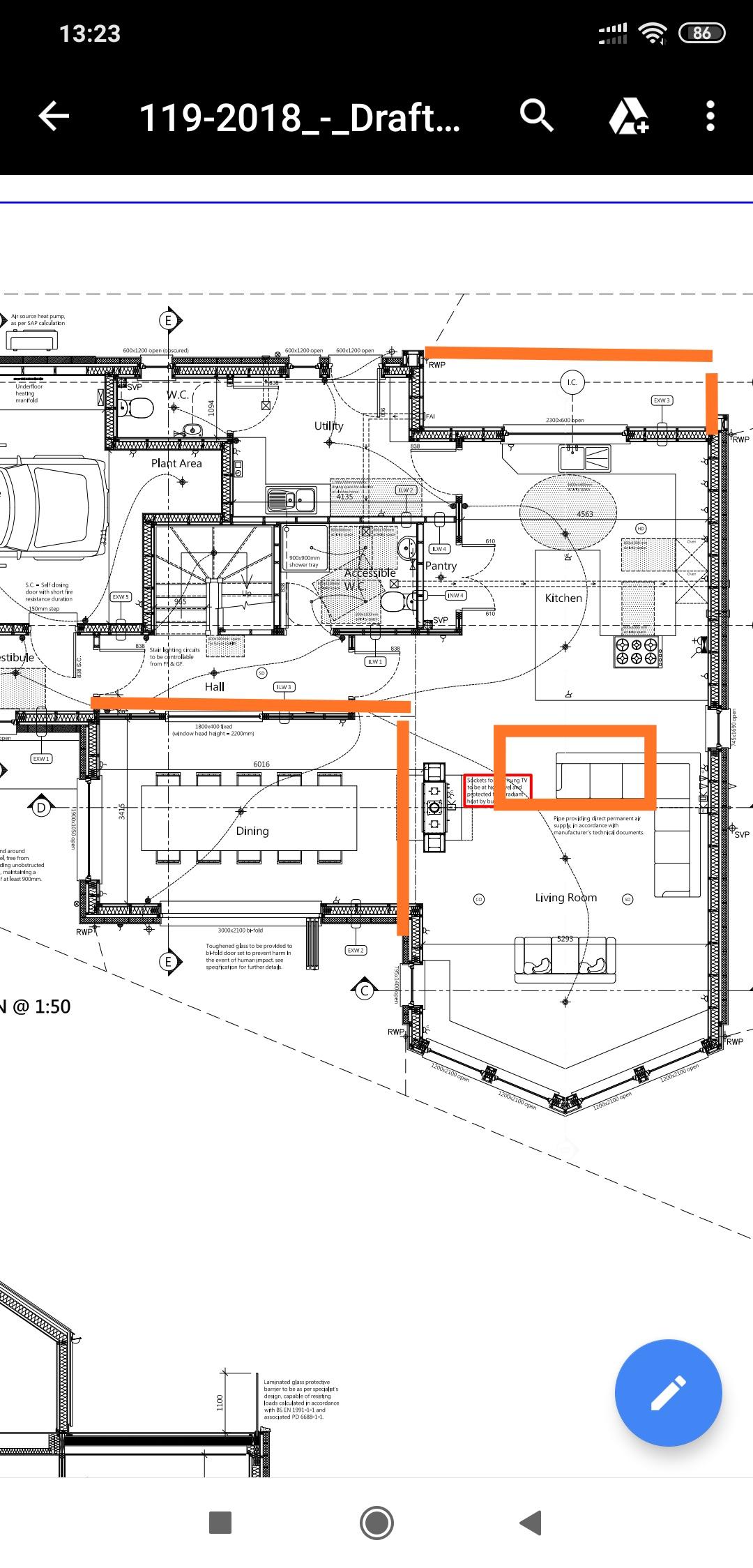
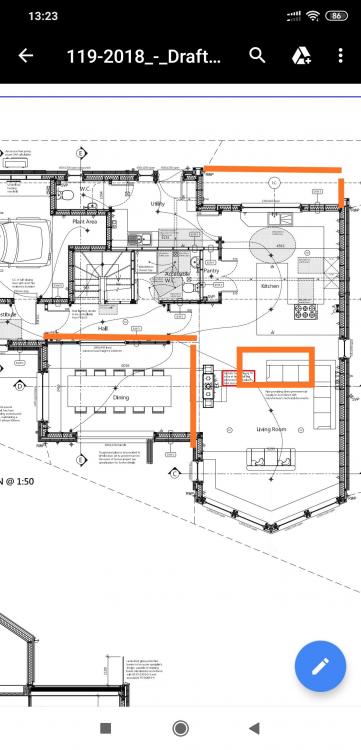
Think if your going to get it built for your budget your going to have to make some hard decisions. The most obvious is the size. You could easily take 500mm of the length and breadth and not cause much heart ache. Two out door seating areas is for your budget 1 too many and maybe even 2. Your in the same position that the vast majority of us have all been. Every one has all these plans drew out with the wish list and then once you start to price it up you soon realise the budget dictates your final look. If you remove the dining room and extend the kitchen so the back wall is straight and extend the front another 500mm-1000mm this will let you get the dining table in between your kitchen and seating area. This having made the back wall straight will make the roof easier to do. I know it seems a pretty drastic step chopping a section of the house of but your going to have to weigh up do you want a formal dining room or do you want the out door seating area or the nice Windows at the front. The amount of glazing at the front will certainly cost plenty so you might have to either redo the size and shape or make other savings else where that allow you to have that very very nice frontage.
-
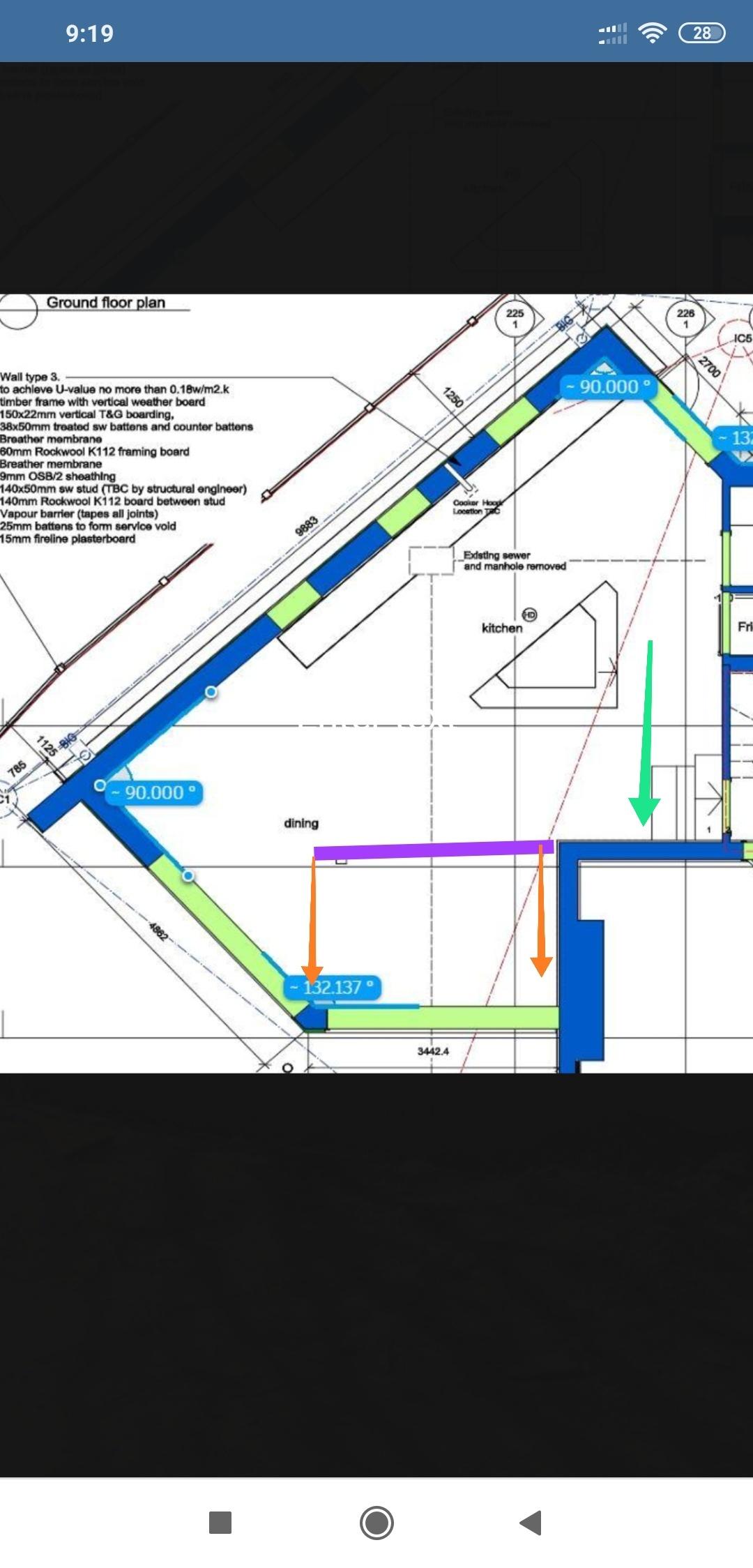
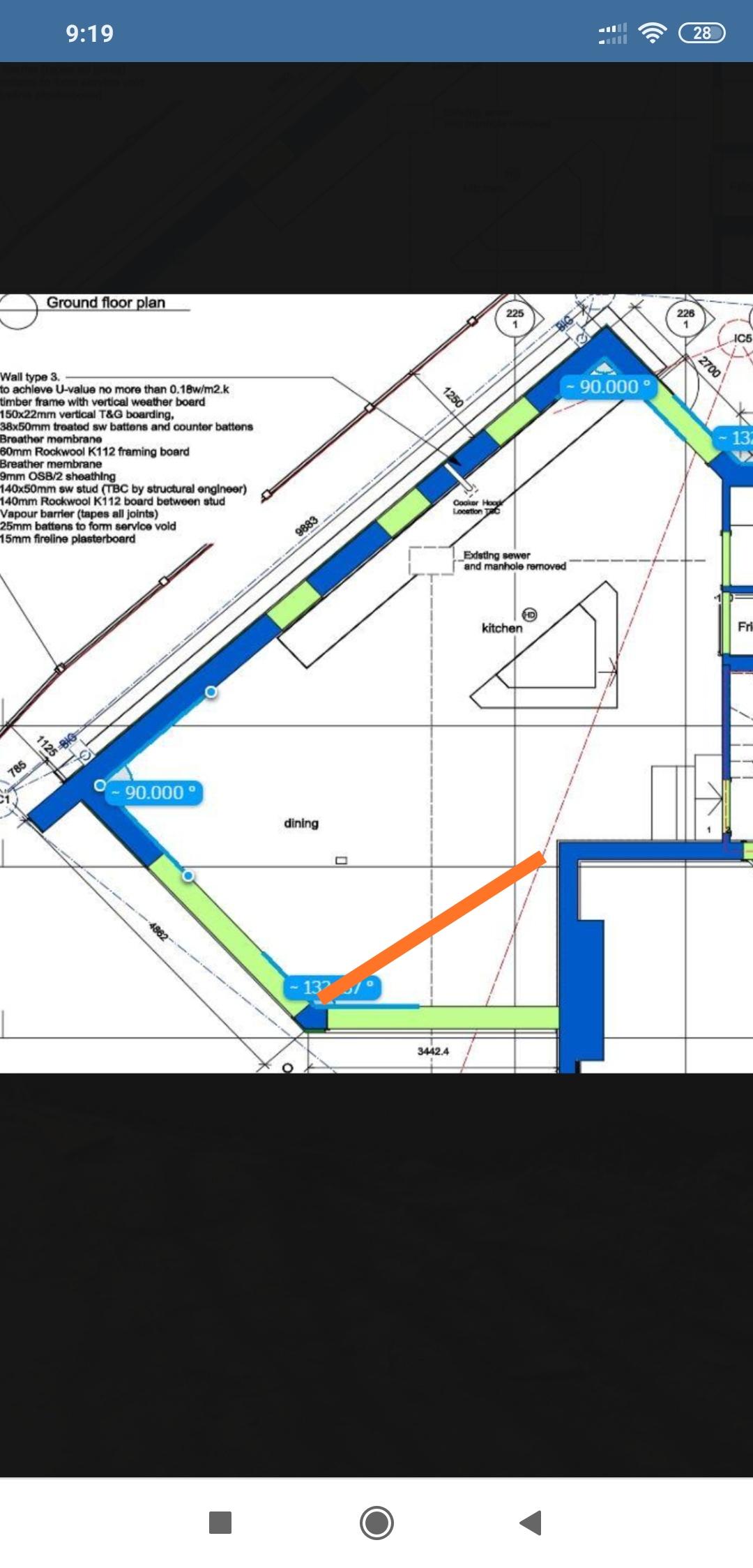
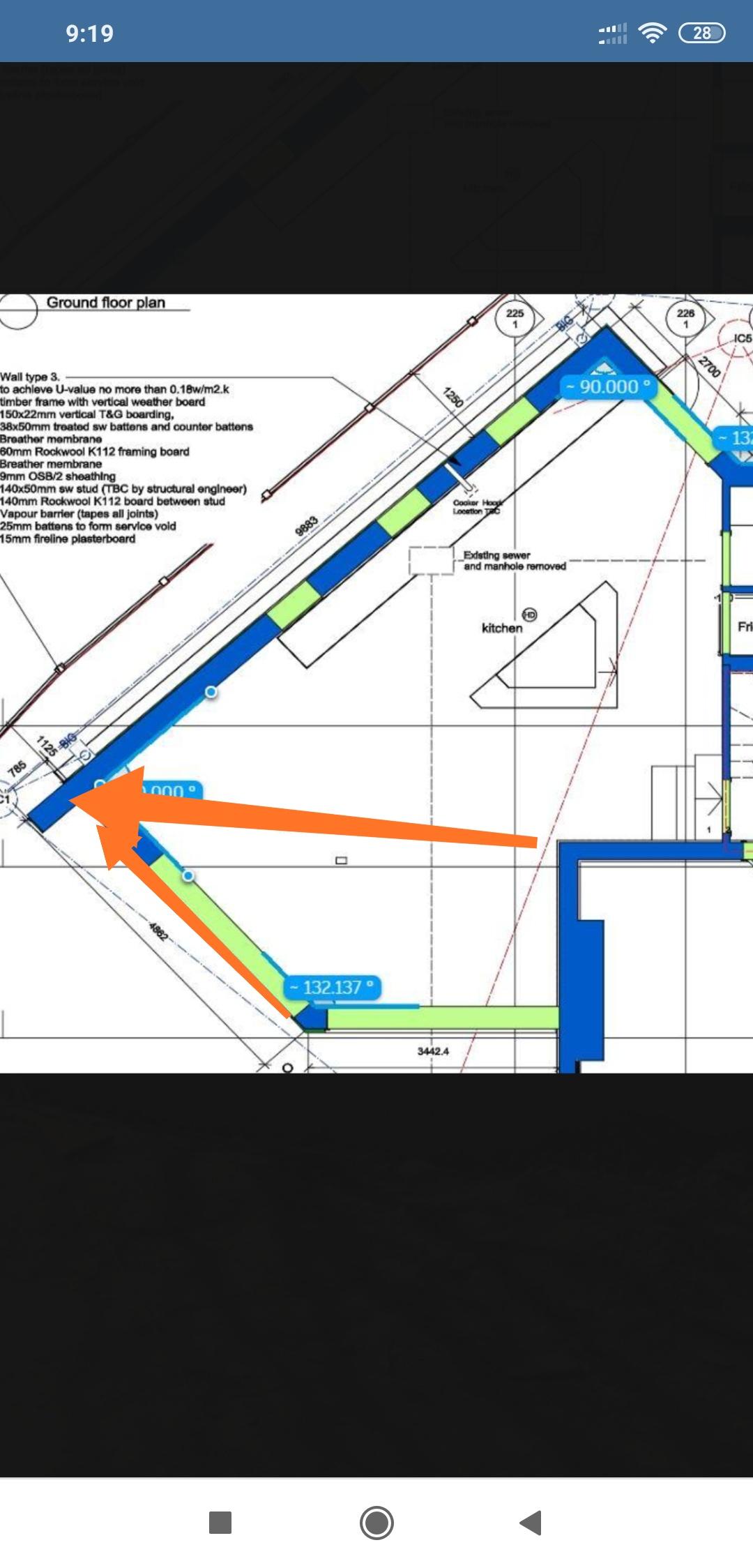
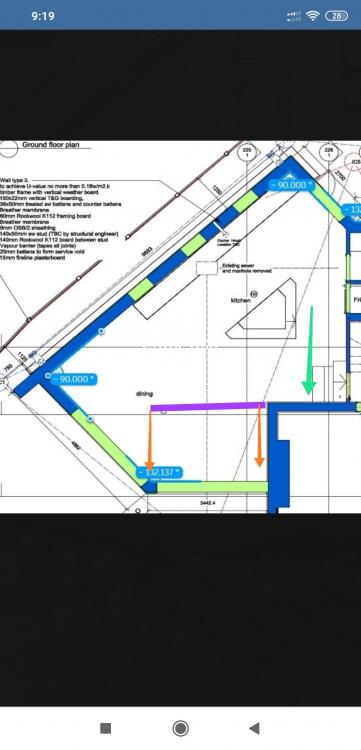
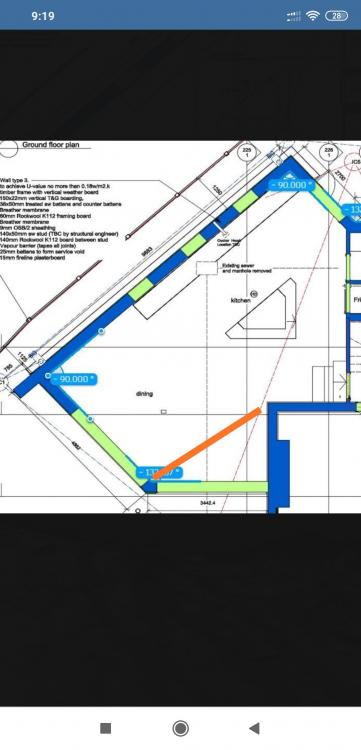
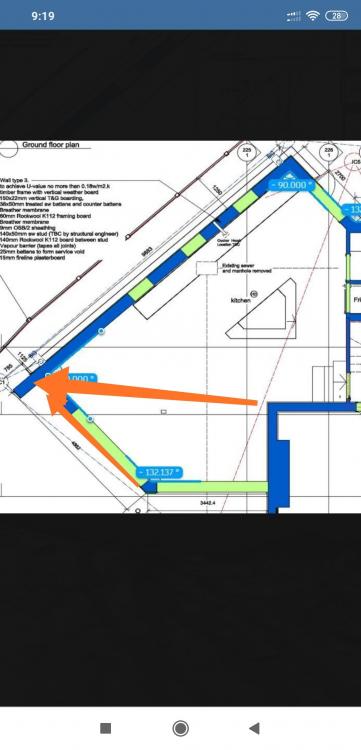
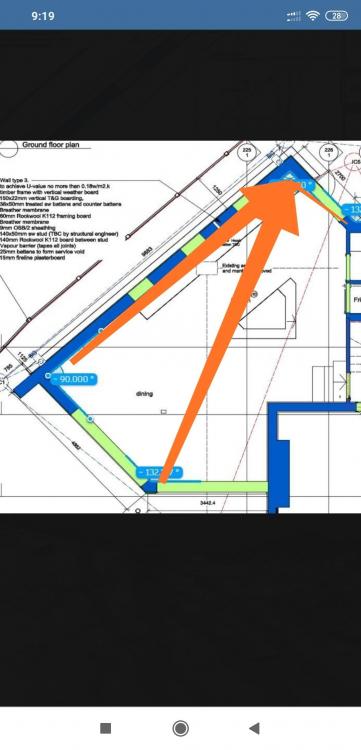
You will need a 3 wooden pegs, string, metal tape, nails and a scale rule. Continue with a bit of string line across the bottom wall with the green arrow to give you a line parallel to the first corner. You then use Pythagoras to work out the small triangle. Check and check again. Drive in a peg with a nail on top. From this new corner and the inside corner use a scale rule on your plan and work out the distance to the next corner. Peg again. Then use your scale rule and get the distance for the other corner. You will have 3 points to measure and check from now. Peg again. You will now have 3 pegs at the 3 corners. If you have 2 long tapes it will be quicker to check and move it slightly if needed. Go round each and check and check and check again.
-
DIY ICF Construction - Bracing
Declan52 replied to Conor's topic in Insulated Concrete Formwork (ICF)
Did you go to the self build show in Belfast and get a list of potential ICF companies. The next show isn't till September in Dublin if you didn't. -
DIY ICF Construction - Bracing
Declan52 replied to Conor's topic in Insulated Concrete Formwork (ICF)
What about a combination. Use ICF for the more difficult aspect in the basement then get a tf company out to measure up and do you a frame. Then with the frame up you can finish the job yourself by doing as much as you can and then source the rest of the materials and labour that you can't do. -
DIY ICF Construction - Bracing
Declan52 replied to Conor's topic in Insulated Concrete Formwork (ICF)
Is moving on-site and living in a caravan an option. Would save you a fair bit in your monthly outgoings, plus you would be on-site every day. Is ICF the chosen route no matter what or is there any option to price up a timber frame or block build. -
DIY ICF Construction - Bracing
Declan52 replied to Conor's topic in Insulated Concrete Formwork (ICF)
Have you got a price from nie and ni water for connecting up their bits??? So is there no ICF companies here in Ireland that will just let you buy the materials and you do all the work, seems a bit strange. Have you contacted any in the rest of the UK to see how they work out cost wise. 250sqm is a good size of a house so obviously you could reduce this to 230-240 sqm and see what impact this has on your room size. Might have no real world impact apart from saving you vital money. -
The easiest solution is to make your house smaller. But then you get to the point of is it even worth doing if it can only be X sqm. You say your husband works away from home so how often does he get home. As in if you decide to manage the job yourself how much help will he realistically be able to give you. Skype and similar apps can help with contact and him being able to see things but it's not the same as actually standing in the build and thinking about things.It's a hard job to do on your own so you will need help. Post your plans and we will all have a look at things that could save you enough money.
-
Another solution would be to build your deck of a base of some concrete blocks. You will only need to scrape the top soil of to get it level drop the block in then your post sits on top. No real digging and no concrete. I used to do decking when I was younger at a caravan park so I wasn't allowed to sink the posts into the ground so built them off blocks. If the block sinks any you get your car jack out of the car and lift that section take out the block, pack it up then replace block and lower it back down. It's a 2 min job to do.
-
You can either dig a hole and sink a post or dig a hole concrete it then have a post sit on top. If you sink the post then you need to measure and measure and measure and use string if you have a line of posts so they will be inline. If the post is sitting on the concrete pad then you will be able to move it slightly which will help lining them up. Once your frame is constructed it will rely on its weight to keep it place. Or when finished a few L shape brackets fixed to the posts and pad will stop it moving. And like in your pic above use bolts to fix the posts to the joists, not nails or screws.
-
It's just dried out to quick in the sun. Should have put a hose on it as it went in keeping a mist on it. Hack of any lumps and a few bags of self leveling and no body will be any the wiser.