


joth
-
Posts
2918 -
Joined
-
Last visited
-
Days Won
5
Everything posted by joth
-
Just to check, this topic was previously about floor build up, but you're asking about internal walls now? Not that I have any thing to add, but /interested
-
 I'd make the studio part of the house CU circuits and dimmers then, for minimal penetration. and put a 3phase SWA to the garage ready for EV chargers, and a couple of CAT6A for whatever you might need in future.
 -
"The only 3 phase battery available at this moment is solax.." You can always install 3 single phase hybrid inverters with batteries, one per phase. Probably works out a lot more expensive though. Alternatively you can do a single phase AC coupled battery independent of the PV, but then you'll need to navigate G99 or G100 rules on export limits.
-
What airtightness goal are you going for? How many times would the cables need to cross the boundary? How long are the cables? As I mentioned, I did the sub-main option, and am advising that for another build I'm helping with. But that's largely driven by airtightness strategy in both cases. (and actually in both cases the meter head is in the outbuilding making it a no brainer)
-
I still don't understand, why would you need a second miniserver?
-
FWIW I think this is fairly independent of your Loxone wiring design. It's perfectly feasible to have one Loxone miniserver control 2 different areas like this. The main constraints are: - if you're having mains dimming then obv a single phase dimmer can only work for lights on that phase. But this applies to a single building with multiphase, regardless of the annexe - if you want the annexe lights on circuits from the annexe CU, they'll need their own mains dimmer or relay board. - if you have one miniserver control multiple dimmers, you need to respect the line lengths for the control protocol (Loxone Link or DMX), and take care about accidentally exporting 'earth' between buildings via the bus shield or dedicated earth. To the question, assuming the annexe isn't miles away, the main benefit of the sub-main approach you propose is it minimizes penetrations in the main house airtightness layer. Will the annexe habitable rooms have their own airtightness / thermal envelope, or part of the house? FWIW I did something similar in reverse (DNO meter head in garage, SWA feed from their to a "sub main" in the house). I found no dimming required in the garage (it has garage + outdoor lights) so I just use simple shelly devices for the garage, controlled from Loxone that lives in the AV cupboard in the house. (Shelly make dimmers too, so I could extend the principle, although I hate using wifi to control "main" living areas for reliability reasons. In the garage I have a hard-wired switch to override the state in the shelly even if wifi is down) BTW if seriously thinking about a granny-annexe, consider potential future accessibility needs if putting it upstairs above the garage.
-
I think the key thing required for PD is it's installed to MCS noise limit standards. (Which is a system design as much as install task but whatever) The real problem is if you find someone to do just this bit, getting the to document it, and persuading the solicitor of whoever eventually buys said house to accept said documentation. If you don't intend to sell, then unless you have particularly pernicious neighbours or it's highly visible location, you'll probably be fine to install it regardless and no one would be the wiser about this requirement.
-
In principle this is quite possible but suitability will depend on a lot of factors. The normal way is to install PV high voltage cable inside flexible steel conduit like https://www.tlc-direct.co.uk/Products/LFLS20slash10.html How many cores will depend how many strings are being exported to the other building.
-
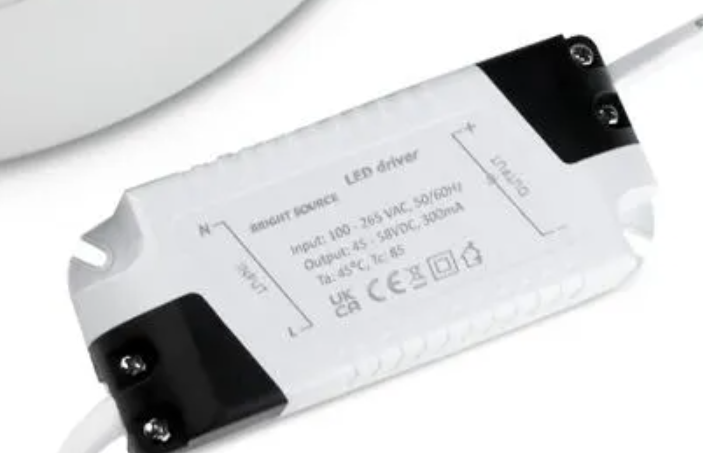
These panels generally need a constant current driver. Looking at the one you found online, it's a 300mA 45-58V driver. A 250mA driver would probably work too. I think I have a few kicking around in a box somewhere. btw never connect the driver while powered. Our electrician blew up 3 of the panels doing this to test them.
-
Passive House, storms and power cuts
joth replied to Russdl's topic in Energy Efficient & Sustainable Design Concepts
I mean, to be liveable they require active lighting, active cooking, active fire detectors and active security if you're into that. The "passive" is just with respect to satisfying the heating demand, and the MVHR is not technically required for that: turn off the MVHR and the passive house aspects will actually perform better. -
Rainwater Header Tank in Warm Loft Space
joth replied to John Jackson's topic in Rainwater, Guttering & SuDS
Is that even possible? I thought WRAS is just for potable water; they require an airgap between anything carrying rainwater and anything being WRAS compliant, and the rainwater pieces are not WRAS compliant by definition. -
@Kelvin @Thorfun I'm actually working on some loxone designs and doing installations for a couple other people now, taking my first steps to see if this is something I want to go into in a much bigger way. (Full disclosure: VAT registered company already setup for this, as that's fairly necessary for anyone providing services to new-builds, but I'm a good way from it being a serious profit making enterprise) So there's a few different ways I may be able help out. Certainly happy to share pointers on here, as I've learnt so much from it. (And I generally need to level up my documentation game). I'm also curious if there's scope for skills trading. If anyone here is good at pipework and plumbing, I have a bunch of modifications to my ASHP install I really need to make before summer but I'm just to chicken to drain down the system and do them. (And seems impossible to find someone I can pay that I would trust to do it). If anyone is in the South East (ish) and would like to spend a day helping me with that, I'd be more than happy to spend a day or two on your site helping with cabling or any of the fiddly aspects of getting LXN installed or programmed.
-
We decided against SIPs in the end purely based on price and friendliness of supplier. They're doing stick build 100mm insulation all around so hopefully close to SIPs performance. As I say it's a gym so insulation (at this point) not crucial: the whole reason we're building it is the renovated house has been far too hot to work out in over this winter!
-
The energy market is a mess, but I'm not sure denying them a few "free" kWh per month is going to change anything. Paying more upfront to install a less efficient system in order to deny this export feels like sociopathy.
-
Sorry slightly orthogonal, but do the doors/windows not have trickle vents? (Are you doing this for fear of insufficient ventilation, or actual experience of damp/condensation build up?) I am installing a garden room, and thought I'd just leave trickle vents in although in principle I'd rather buy windows without them, that's generally more expensive and hassle and didn't seem worth it. (We'll be using it as a indoor cycling gym but when working out no amount of trickle / extract vent helps, gotta be windows open and a fan on full blast)
-
I've been running proxmox on a NUC for several years and wouldn't go back. I can spin up new VMs, create snapshots and backup to NAS with a single click or on schedule, migrate VMs between machines all with super low hassle . Each VM gets its own IP and hostname so moving services around between machines is transparent to anything configured to use them. I now have a second almost identical NUC and considering setting it up as a hot spare. The proxmox cluster replication feature needs minimum of 3 nodes (to run election protocol) which seems overkill for a home installation but I might tinker with it just for kicks My only gripe is proxmox licenses are fairly expensive for enterprise users and they don't have any option for home users to pay a smaller amount, so I just use the free version. It does all I need, but I actually like to support software that works
-
Someone on this forum made a great explanation why cooling via radiators basically doesn't work: the inlets and outlets are at the bottom of the panel, so the cold water just flows along the bottom of the rad and the majority of it just sits there at room temp. If the inlet is at the top of the rad it might have a bit more chance to work.
-
So I guess in about, I don't know, 20 years RICS will start suggesting surveyors could review and advise buyers based on this documentation. 🙄
-
Totally agree, this is why I almost fell down the stairs when the estate agent who visited us to make the valuation said he'd had punters walk in off the street asking if they had any more passivehauses for sale, like ours! That was 2021. When we bought the house from that estate agent in 2018 (pre retrofit), I had only just heard of passivehaus myself, and they certainly hadn't! So things are changing, and probably even more rapidly with events of the last 12 months
-
Sure, but this is happenstance and orthogonal to whether a certified house commands a higher resale value than an otherwise apparently identical uncertified house. In theory it should as you have independent assurance all the invisible things the seller claims (insulation thicknesses, airtightness detail, thermal bridge free) really did get done during the build. Fwiw I personally know a couple people that specifically sought out and viewed or bought already built passivehauses. (At least one built by a developer)
-
I found two potential benefits of certification: 1 it's a good stick to beat any contractor or supplier with that that tries to cut corners on their service after agreeing a price. 2 it's potentially helpful to negotiate a better selling price. #1 happened to us with windows: they supplied double rather than the triple we paid for and the supplier tried to fob us off with "you won't even notice the difference". They backed down when we reminded them they were supplying to a PH build that would now fail. Without certification I'd still have demanded they put it right, but it would have been an even harder 4 way blame game to get them to edit fault. SonI'd recommend telling every supplier you are planning to certify even if you don't end up doing it. #2 was the view of an estate agent that revalued our house, depends a lot on chance and is questionable, as passivehaus is not a trademarked name people can use it (or "near" to it) anyway.
-
I'm curious why you consider grid export a "luxury"? To achieve the same level of utility, an off-grid inverter will cost more.
-
Battery inverter and immersion heater divert together
joth replied to BMcN's topic in Energy Storage
If you have a ASHP, you may do better to remove the iBoost solar divert completely. Run the ASHP at times of max solar and rely on the battery to smooth out the supply to it, and you'll get the benefit of the ASHP cop. (With current pricing plans, where import is only twice the price of export, this logic can now apply even without a battery) -
Samsung 8kw R32 Monobloc Air Source Heat Pump
joth replied to Ceridunn's topic in Air Source Heat Pumps (ASHP)
The advice here sounds a bit like someone being told they don't need four wheel drive, so they only put two wheels on their car. Our (ecodan) ASHP install manual mandates many additional components, e.g. filter, pump, flow sensor, drain valve, expansion tank, PRV, temperature sensors, diverter valve (for DHW), blending valve , safety isolation switch, etc etc etc. Just because someone says you don't need X doesn't remove the need to read the manual and find the list of all the other stuff you do still need. -
While the other replies are technically correct In most installs, there's no such thing as "actively" choosing to send it back to the grid. You connect the "grid tied" inverter to the consumer unit, and it generates as much AC as it can from the solar radiation available. The inverter doesn't care where that goes, whether it's either into your kettle or your neighbour's. At the end of the day all the sockets and appliances on your street are directly wired to one another via the mains supply down the street. The only way to stop energy export is to have a non grid tied inverter (meaning your household electrics are not directly on the grid) or install active export limitation. Both of these require most equipment (so more installation cost) than just hooking up grid tie and letting excess go out to the grid. But yes, if you do this the unused solar power goes same place as it would have if you didn't have PV panels in the first place.

