joth
-
Posts
2918 -
Joined
-
Last visited
-
Days Won
5
Everything posted by joth
-
@Fonyt do you have a buffer tank? It could be the controller is configured to expect one but there isn't one. So it keeps the pump running trying to get a non existent buffer up to setpoint+5° or something like that, that it will never achieve
-
It's fine that they're including IR panels in their experiments, but this stuck out: Two competing heating systems are being tested inside: an electric-based system utilising infrared panels, some of which are disguised as ceiling coving, as well as a water-based system that uses heated skirting boards combined with an air source heat pump. “As we put these really warm coats on to our homes, we don’t need as much energy to heat them,” says Novakovic. “So the big question we’re asking is, do we do it with heat pumps and hot water or with electricity?” Aside from the fact that both ASHP and IR panels are "doing it with electricity", it seems ridiculous to bill this as the big question that justifies the £16M project... Once again the main story about fabric first build quality has been lost in the debate around which bit of fancy tech we can add on top to heat an already low enery demand building.
-
Plug it into a trailing socket lead? Edit: sometimes the US or EU version of the transformer is much slimmer profile, so hooking one of those into a trailing socket has been a trick I used on occasion
-
Fairly common to pay something to the supplier as well as the DNO, nominally for early termination of a fixed term contract, or a fee for them to retrieve their meter. I.e. made up costs, just because they can.
-

Loxone Music Server - how many Spotify users
joth replied to BartW's topic in Networks, AV, Security & Automation
To add the obvious, just because you use a Loxone miniserver doesn't mean you have to adopt their audio server too. Sonos integration is possible too, if that's what you prefer -
Wish I could do this, except the only time I need a buffer tank is during cooling season (FCU too small for the ASHP) so using the UVC to stash extra cold water isn't going to end happily
-
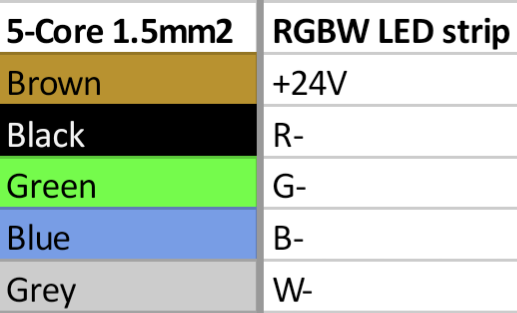
Works perfectly for me. One core +24V and the other four for RBGW negative returns. My wiring scheme, fwiw. Random mix! Some cat6a, some cat5e, a couple are even on 8 core security flex. I'm using ESPhome rather than the Loxone 1wire extension fwiw, so if needed can add multiple gateways around the house at very little cost. I used trirated cabinet wire from TLC for must things, but stripped out twisted pairs from cat6a cables for anything using the little pushin wago 243-211 blocks that need solid core. Savvyspaces actually sell tri-rated solid core hookup wire if you want to be completely regs compliant (but the depends what regs your building to, init). I'd probably not bother myself, it's not like the external wires entering the cabinet are tri rated so seems overkill to insist all low current/low power internal wires must be
-
This link seems unreliable source. Try planning portal: https://www.planningportal.co.uk/permission/common-projects/solar-panels/planning-permission-stand-alone-solar-equipment-panels-not-on-a-building-but-within-the-grounds-of-a-house-or-a-block-of-flats That makes it clear these rules are only for panels NOT mounted on a building (and does not have the rule about minimising the effect on the appearance of the building). If your gazebo can be considered a building then I don't think this applies. (But also +1 to nick try it and see, really)
-
No, this is not possible. You have no idea about energy loss through air movement (drafts), energy gain from solar and other gains (people, cooking, equipment, etc) , and depending on the definition of "blip", how much energy is going into warming up internal heat capacity (dealing with thermal mass) vs lost through the external envelope. Also, knowing the heat input during the blip is pretty tricky as even "boiler on full heat" does not account for efficiency of the boiler on that day or losses in pipework exposed directly to outside, etc You can get a good empirical model of the overall losses by monitoring long term steady state input needed to maintain a level temperature in the face of varying external temperatures, as @ProDave says above, as @TerryE had done and extensively documented on this site, and pretty much every AI-powered heating controls innovator is trying to automate.
-
Thank you autocorrect 🤣 Subset of loads
-
Yes That's what I mean by "a sunset of loads".
-
Smash a long masonry nail through the wall in the place you least think the pipe will be. Guaranteed to locate it. You could try running the gas appliances on max and then using a thermal camera. It may show a cold line. If you're covering the walls in cabinets you have scope to make some exploratory holes through the finishes to locate it. It'll all be covered up anyway. Love how electrics have safe zones that ban random 90° bends but a gas pipe you can put wherever you want. I don't suppose there are any sockets on that wall and they're lined up to share safe zones of the pipe? Not sure if that'd be legal but on one level it does make sense.
-
Mandatory Electric Vehicle home charging points.
joth replied to Marvin's topic in Electrics - Other
By pressing the factory reset button. -
In this case it must have been an MCS install so follow the complaints steps on https://mcscertified.com/complaints-compliance/ Even before you get MCS involved, you should follow their steps and ensure you have record of the complaint to the installer etc
-
Flats and terrace houses. But yes, terrible idea for serviceability if access was only from the outside. I think the idea is this is a loft installed unit, that just happens to protrude and vent out through the pitched roof a bit like a skylight frame would. I'm extrapolating from this: "Installing an air source heat pump within a loft space is a bold move" If it can combine fresh air ventilation (MVHR) and summer time passive or assisted stack cooling it might be onto something
-
Mandatory Electric Vehicle home charging points.
joth replied to Marvin's topic in Electrics - Other
I'm honestly surprised there isn't a silly EV charger installer club already. Vast government subsidies and risk of death, it ticks all the boxes for some new paperwork generation. -
Mandatory Electric Vehicle home charging points.
joth replied to Marvin's topic in Electrics - Other
Or just turn off the settings to disable the smart/timed functionality. The legislation is saying the equipment installed must support these features, not that you're law bound to use them. Just like a heating system must support a timer and zone thermostats. You're under no obligation to use them. -
The enerphit standard is 25kWh/m2/year so if you're doing that you have to achieve that, not some other number. You can aim for 35 if you prefer, but that's not an enerphit. (People discuss like they're going for a 1st class honours degree, by renegotiating what score is required to pass)
-
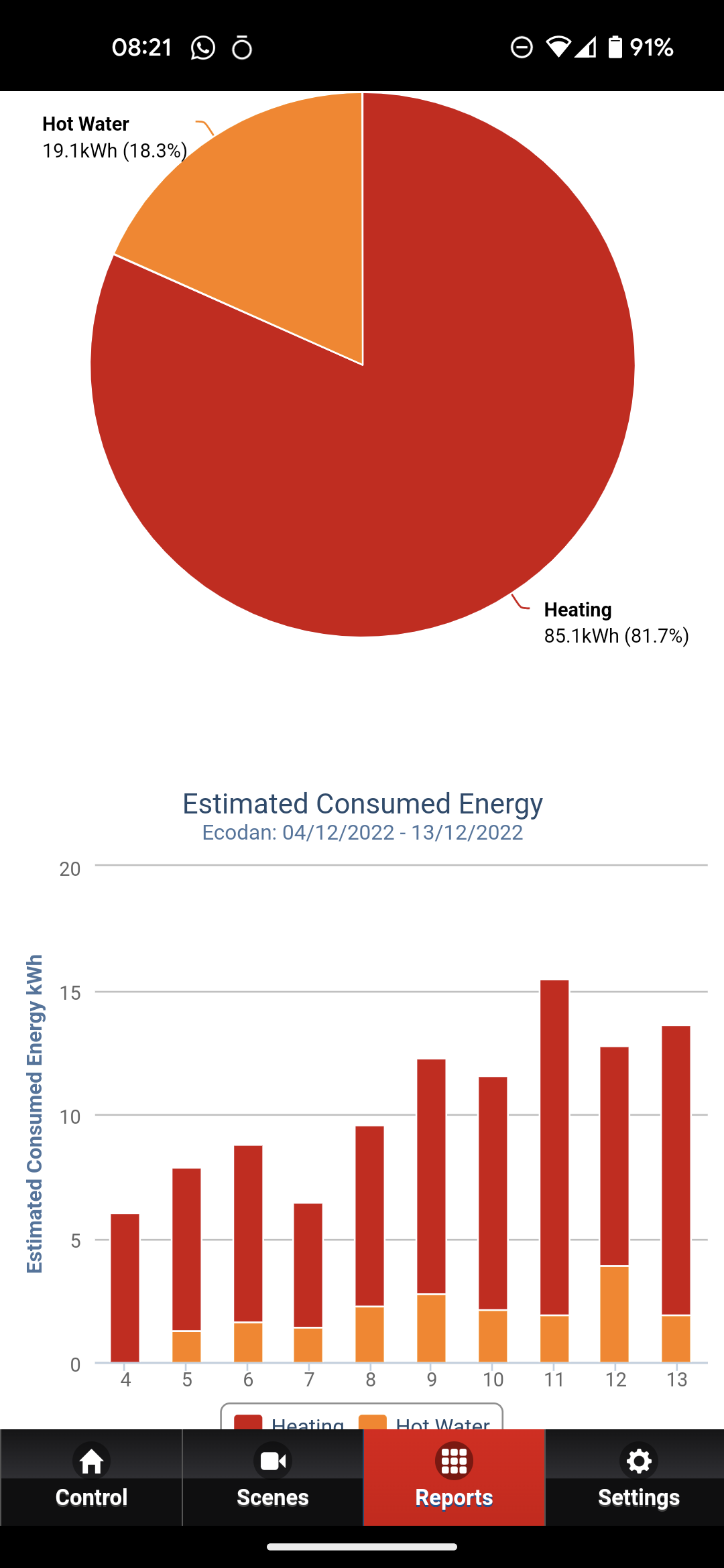
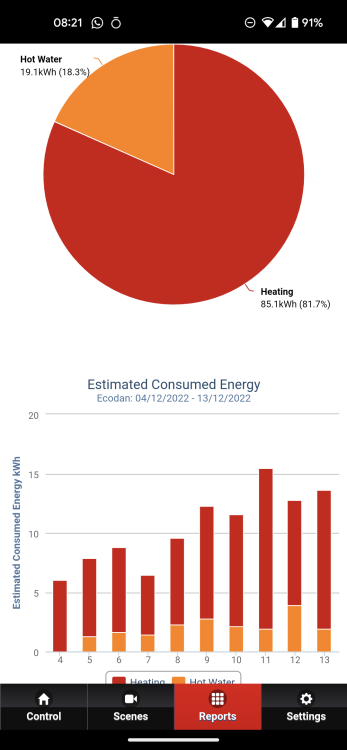
We have a 1960s 151m2 property retrofitted to enerphit standard. Using about 8.5kWh per day for the last 10 days, think it's slowly crept up the 10kWh in recent days
-
IANAL but I understand you can do whatever you like so long as you can show it meets the requirements as set by underlying act of parliament. The part L approved docs etc specify a standard way of doing it that if followed is "deemed" to meet the regs, no additional proof of underlying science needed, but the more offpiste you go the more it falls to you to show your workings.
-
Willis Heater Integration with a Thermal Store
joth replied to JamesDRG's topic in Other Heating Systems
ASHP charging a TS to run UFH sounds inefficient , what temperature would you be running the ASHP flow at for this? Ideally the ASHP should run directly at the desired UFH temperature, say about 30°. If you're not using the TS for DHW then the amount of use you'll get from it seems quite limited -
There is a way, in effect by taking your house (or a subset of loads) off grid and powering them only from the battery. But this is more expensive and less flexible than doing the DNO permission. Regarding Loxone inverter integration, I have solaredge DC coupled inverter for PV and batteries (under a single 8kWp G99) and the Loxone integration works ok. The template on their library is a bit naff, so I rewrote most of it to avoid glitches then discovered the German Loxone forum has copious pages explaining how to make it work well.
-
ASHP environmental yield- seems low?
joth replied to daunker's topic in Air Source Heat Pumps (ASHP)
It's possible Environmental Yield is the difference between thermal output and electrical input (i.e. is the energy savings made vs resistive heating). Which gives a slightly more reasonable (4474+7983) / 4474 = 2.78 Bloody ambiguous way of presenting the data, whatever -
Hmmm if it looses communication it doesn't know how much is being exported so wouldn't be able to export limit, it would just have to shut off the output altogether. Further, if the CT clamp is removed from the outgoing tail and placed somewhere else, no error will be raised (as communication is still intact) thus it will allow full export as the invert is then blind to what's happening I agree the degree of export due to polling time lag is negligible, however these points do contradict your prior claim that it is impossible for an export limited inverter to export.
-
Not true. Even if you turn on export limitation, it uses periodic sampling so has a time delay between noticing that there is export happening and modulating the output downwards. There's a reaction time lag. I can easily see this these momentary spikes using an alternative current monitoring device. So at times, it does indeed export. Furthermore it's far from infallible, and any communication failure from the CT clamp to modbus meter to inverter would leave it in permanent export state. So it's absolutely possible to export even with export disabled.