joth
-
Posts
2918 -
Joined
-
Last visited
-
Days Won
5
Everything posted by joth
-

Telephone/broadband strategy for new build
joth replied to kandgmitchell's topic in Networks, AV, Security & Automation
No you can do it direct with OR now. https://www.openreach.com/building-developers-and-projects/fibre-for-developers/registering-your-site Because of the BR change (Jan 23) they have opened it up to all new builds, not just large developers. Nice little money spinner I'm sure. -
Telephone/broadband strategy for new build
joth replied to kandgmitchell's topic in Networks, AV, Security & Automation
Point is, even if you "know" it is cost prohibitive, you still need to get quotes from suppliers anyway to prove that and pass BR. So you may as well crack on and do that, while installing LTE as the short (and possibly long) term solution -
Telephone/broadband strategy for new build
joth replied to kandgmitchell's topic in Networks, AV, Security & Automation
But this will fail Building regs part R RA2 requirements. (I made a typo and said G2 up thread, which is utterly unrelated but something else I was dealing with this week 😅) -
Telephone/broadband strategy for new build
joth replied to kandgmitchell's topic in Networks, AV, Security & Automation
You have to do this as part of building regs G2 now anyway so you may as well follow that process as do it all twice 1/ put in Gigabit-ready Physical Infrastructure™️ (I.e. a duct) that new cable can be pulled through from the street if needed 2/ ask OR (and any other provider) for a quote to install gigabit internet. Doing #2 does not eliminate the benefit of also doing #1. Register with OR here https://www.openreach.com/building-developers-and-projects/fibre-for-developers/registering-your-site Building regs put a cap of £2000 on the amount you must spend to get it installed so you can guess how much OR typically charge. -
Quick question if I can - are optimisers worth it?
joth replied to MrTWales's topic in Photovoltaics (PV)
But there's a flip side, the optimizes add complexity and introduce new error modes. Like one string on my system loosing pairing with the inverter and loosing half my production for 3 months. So if you have the optimisers make sure to check in on then regularly. (It didn't help I couldn't rely on the total inverter output numbers as I added a SE battery at the same time so was expecting different numbers to previous years) -
Met someone today who spent 45k on getting pp
joth replied to CalvinHobbes's topic in Planning Permission
however having just made the case in favour of this view, looking at it the other way might be even stronger case: if you can convert a 100k plot without PP into a 400k value plot just by having PP approved on it, 50k sunk costs in doing so suddenly look like a no-brainer. As with all forms of financial speculation, it comes down to risk appetite. -
Met someone today who spent 45k on getting pp
joth replied to CalvinHobbes's topic in Planning Permission
Often times the causation is not that people with deep pockets get charged more for the same work (although this definitely is a significant factor*), more that people with deep pockets have more ambitious / grandiose initial ideas and are more comfortable taking bigger risks in the initial application. They often also have bigger egos, so when that first application gets rejected they throw more money down on appeals and battles rather than taking the redesign. And/or they can be fickle and change mind more. After all this, worst case is the end result may still be watered down to something so modest that a more pragmatic customer would have submitted in the first place. So while the end result will look like not a lot of work was involved, there maybe months of sunk costs chasing dead end ideas. * - and of course there's naturally some national variation. The same work will cost more in areas with higher cost of living e.g. SE England simply because it costs the architect (and indeed all Trades) more in their fees; premises lease, wages, etc etc. We call that the "Beaconsfield tax" (insert name of home counties desirable town of choice here). A savvy customer may choose to remotely employ an architect that lives and works in a cheaper area, however that misses out on "local knowledge" about the area and sensibilities of the local planning office, and of course is that much harder/impossible for their other trades. @Thorfun just to highlight that Dave's comment was about a £700k plot, not total project cost. While I personally agree 50k is not peanuts, I do see it's a relatively small drop in a project that is likely to be £2M+ -- and attempting to rationalise this a bit more, there's no point throwing down 2M on something you're really not happy with from the outset due to one failed PP. -
New Phone Line from Pole - Prep
joth replied to richo106's topic in Networks, AV, Security & Automation
Ah ok, your previous post said "Yeh pretty much knock down and rebuild" so I had just assumed you'd be doing a full demo to achieve the zero-% VAT on everything. FWIW on my renovation, the BT (open reach) underground cable got destroyed, I told OR and they didn't care. 2 years later when I wanted connection I signed up a contract with www.aa.net.uk (renowned for proactive approach to hassling OR, but you can use any supplier, plus.net, talk talk, sky, etc) and they dealt with having OR come around and pull a new piece of copper through to the underground duct I had pre-installed for them. (Caveat: it took them about 6 months to do this, during which time I gave up, cancelled contract and went back to relying solely on Virgin Media. OR eventually came and did the work in the street to get new copper through to our boundary about a week after I cancelled the contract 🤦♂️. If they ever get around to putting FTTP down our street I'll defo attempt this dance again, my pre installed duct Gigabit-ready Physical Infrastructure™️ will be waiting for them) -
Hi @Dan F did you ever figure out what these actuators do if flow ~= return? Does it (virtually) shut off flow altogether, in an attempt to increase the delta? Obviously there's a cliff function here that zero flow will never achieve the desired delta! So I guess it's important it's calibration process accurately determines the point of minimum (non-zero) flow Context is I have these on UFH manifold working fine, but now considering adding them to my Fancoil manifold. These is a non-standard use case as: (i) it's FCUs not loops, (ii) it's really just used for cooling not heating (so risk any re-calibration would fail as it wants system set to maximum flow temp for calibration) and (iii) the manifold is in series with a zone-specific buffer tank (system volumizer) required to stop short cycling but I have one manifold port set to use as a bypass so I can rapidly fill the buffer from ASHP (to minimum risk of short cycling) by having some flow bypass the (high resistance) FCUs just when the ASHP is running. The motivation to convert the system to these is actually for the fast response times (30s vs many minutes on the current cheap wax actuators), not the auto balancing feature. it's a shame the standard Salus actuators are not as good mechanically (2W and 2min response time, vs 0.5W and 0.5min on the auto balancing variant). If there's a way to nobble the auto-balancers to act in "dumb" (fully open / fully closed) mode that'd be fine.
-
New Phone Line from Pole - Prep
joth replied to richo106's topic in Networks, AV, Security & Automation
If it's a new build then you're now required to install gigabit internet and gigabit ready infrastructure, under building regs part R. Aiui Openreach now have some sort of process for requesting a connection plan, so you can get BC design approval. Edit: more info here https://www.openreach.com/building-developers-and-projects/fibre-for-developers/registering-your-site -
The main reason for thicker cable is improved bass response, and in ceiling speakers in a wardrobe are neither going to deliver or require that so keep with AWG16 or 1.5mm2 flex as suggested. The only reason I specified QED QX/16 was the pink jacket looks the biz and avoids risk of mixup in the wiring cupboard. (Also it's nice to work with, but mains flex would have been fine)
-
No for zero VAT you just need to level the site to ground level, anything below ground (Inc founds and basements) can remain. Aiui.
-
Well looks like the decision has been taken out of my hands. The commercial version of iotawatt has been discontinued by the original project owner and finding a new commercial distributor is in limbo. https://stuff.iotawatt.com/?v=79cba1185463 As I potentially want 4+ of these things to put in multiple houses - all of which have Loxone - I'm going to explore the Emporia + custom FW route.
-
To check, you've plugged the AC outlet into the grid mains via a death plug or something?
-
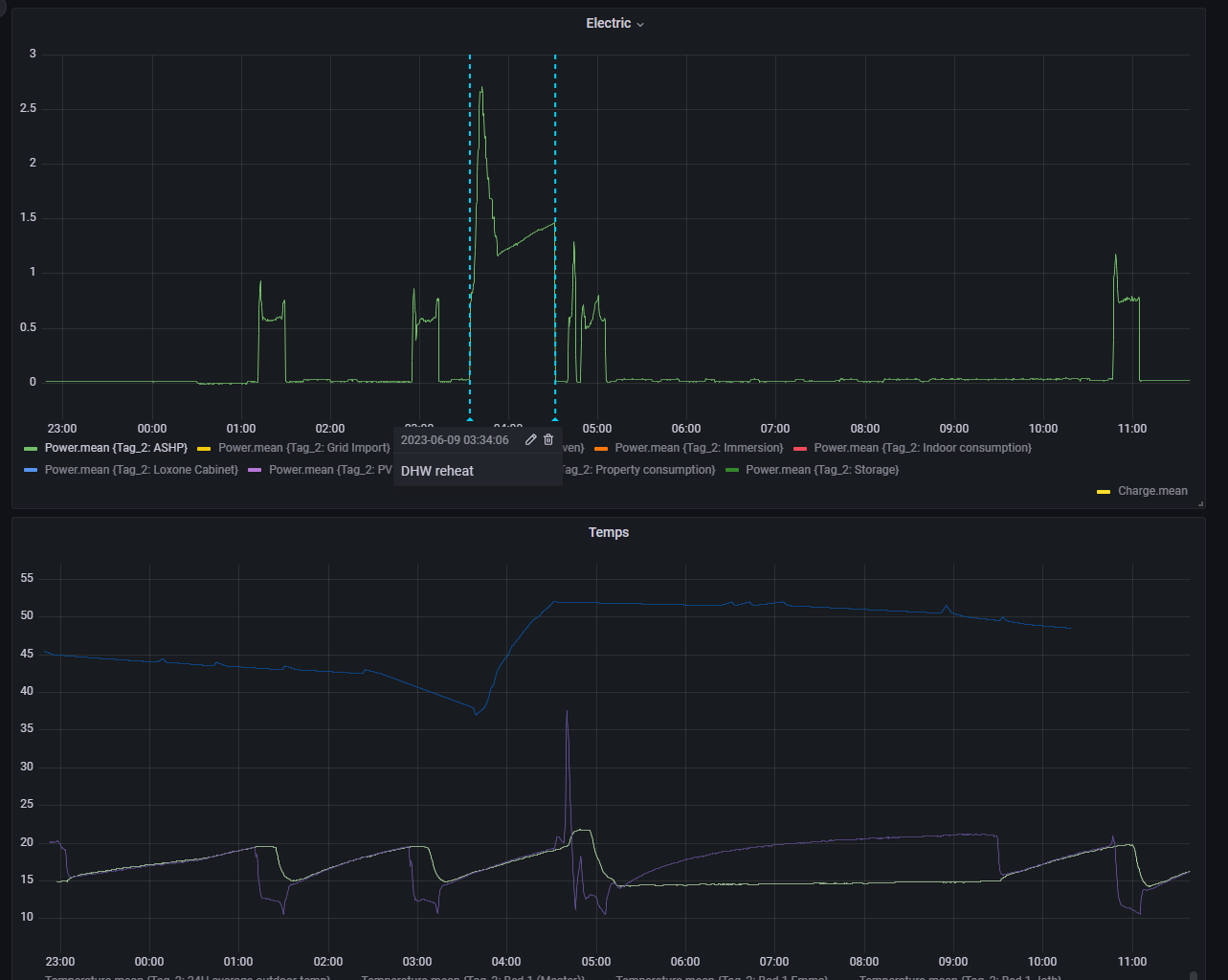
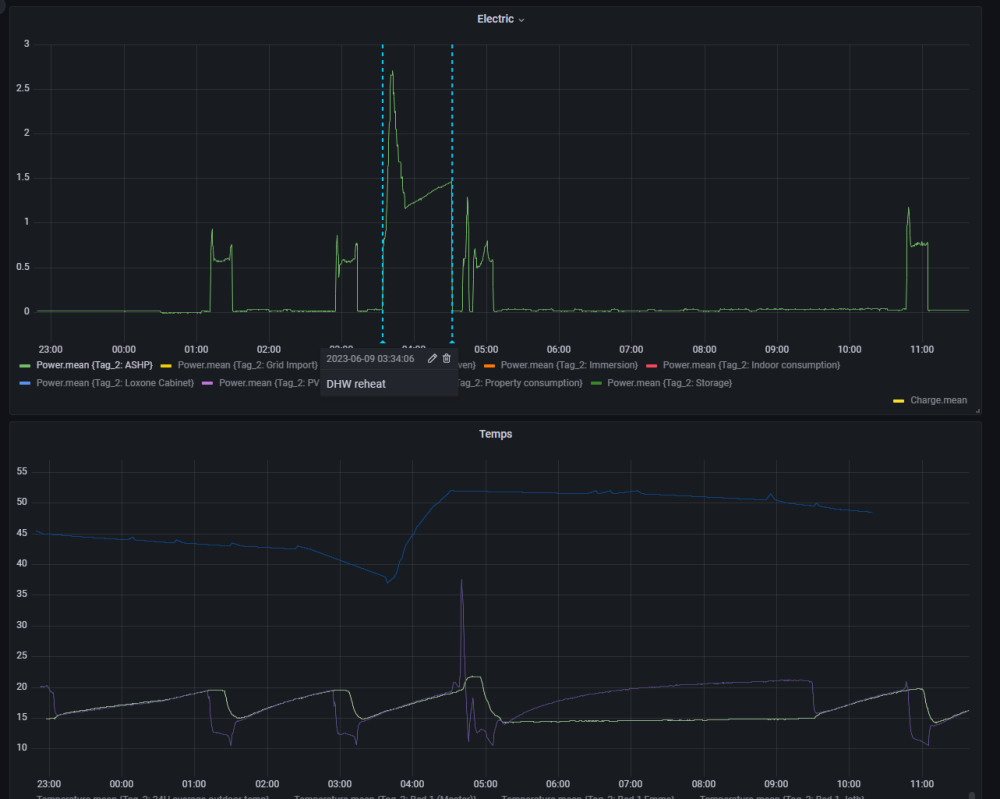
Wow one year on! Just to wrap up this thread, I returned the Kingspan Albion 150L and bought 80 Litre "TESY Bi-Light Electric Hot Water Cylinder" and wall mounted that (my first time having fun with Chem bolts!) and using that as a buffer tank fine. Finally got it all plumbed in last month, and after a lot of tinkering in Loxone have managed to force sensible level of hysteresis from the ASHP in charging/discharing the buffer which looks like it has fixed the short cycling issues when running the FCU: instead of 15 cycles an hour, I'm down to one cycle every 100mins. The controls are a bit complex. I plumbed the buffer in series with the two FCUs but found that when the ASHP is running it would still short cycle as the FCUs are a bottle neck and don't let water through to the buffer fast enough. So I now have a FCU bypass loop (basically open a spare port on the manifold that is piped directly from supply to return) which allows much faster feed into the tank. I have temperature sensors on the zone supply and return pipes, plus in the tank itself, so I can tell if the incoming water from ASHP is cold enough to be "useful" to cool down the tank or not, to control this actuator. As a bonus, this means when the slug of hot water comes through when the heatpump switches from DHW reheat mode back to cooling, I can close down all the actuators to stop this unhelpful 40+ deg water getting into the FCUs or the buffer. (the zone has an automatic bypass across the lot, for this situation). This is all illustrated in the data: Light blue dashed lines indicate where DHW reheat ran in the middle of the night, you can see the buffer continued cold supply to the FCU during this period, until the ASHP switched back to cold mode and that hot slug of water came through and briefly slightly the buffer (the actuators aren't instant, alas). Each ASHO cooling cycle runs for about 20mins (1kW primary energy draw) and then is idle for 80mins as the buffer supplies cold to the FCUs until the buffer drops to the low temp threshold. I haven't insulated all the new pipework yet, so the buffer is working between 15 and 19deg to avoid condensation. Once I have completed insulation I'll crank that down to 10-17deg or something which should work even better for avoiding cycling. For completeness on the project (bits of which mentioned here) my second FCU is now feeding two rooms, using an electric controlled air baffle to shut off supply to the lesser used room when not in use (which is also much nearer the FCU so naturally gets priority when the baffle is open), so we now have 3 bedrooms being supplied from this FCU buffer circuit.

-
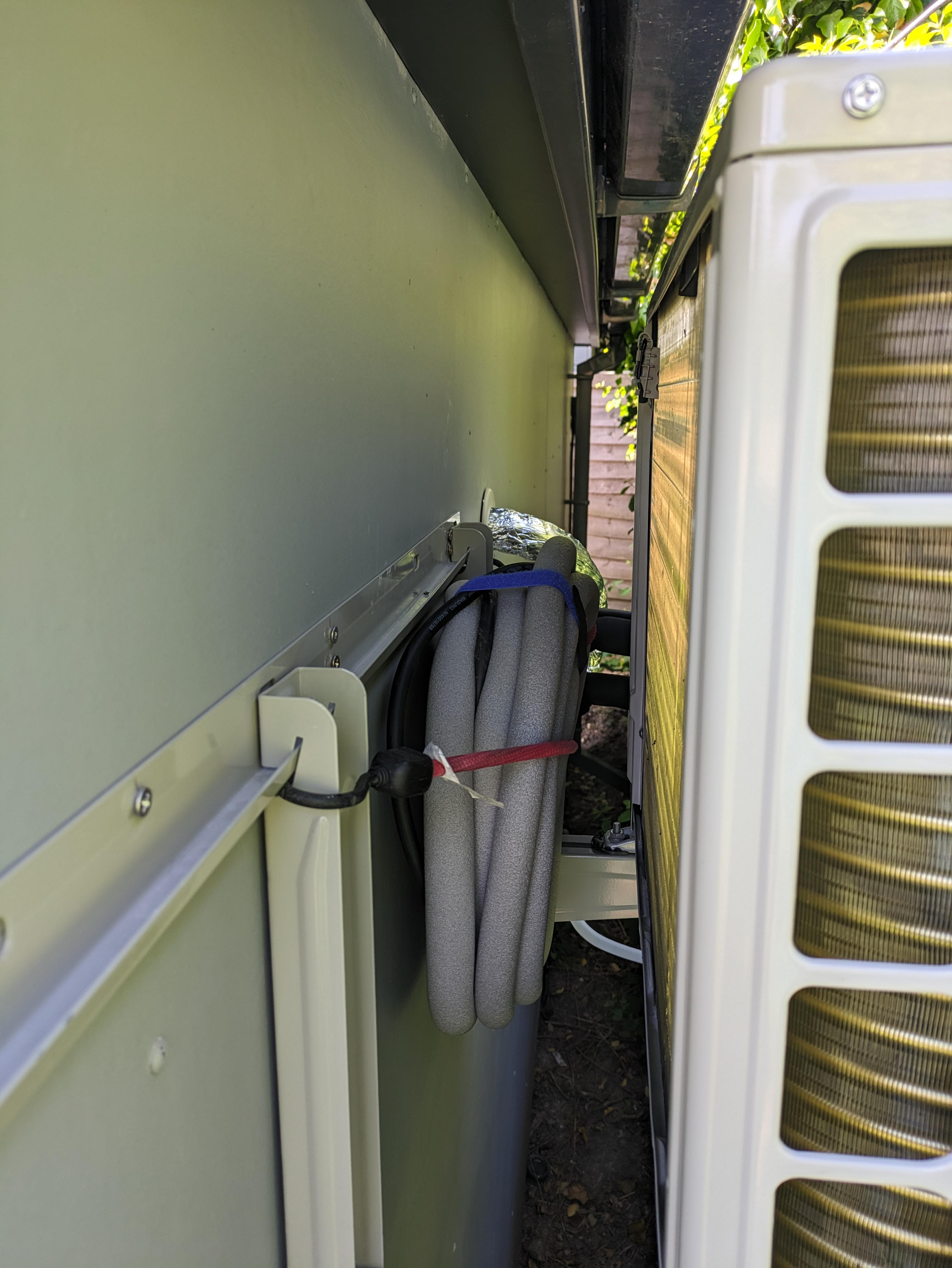
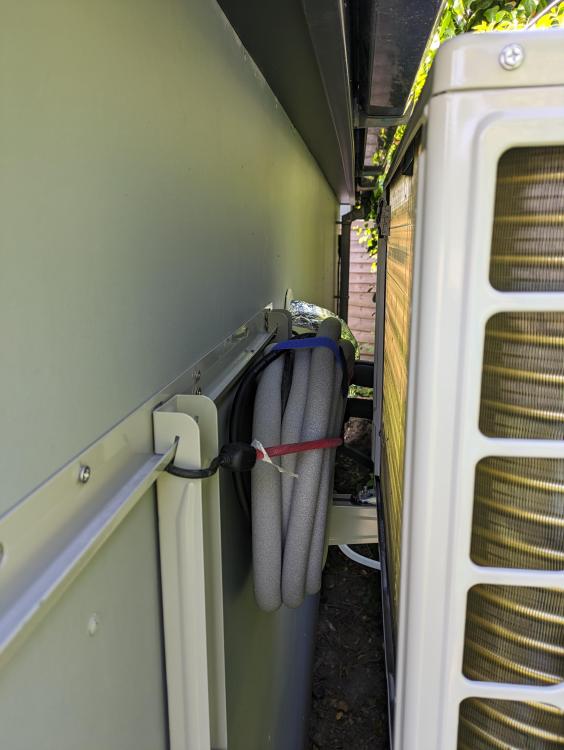
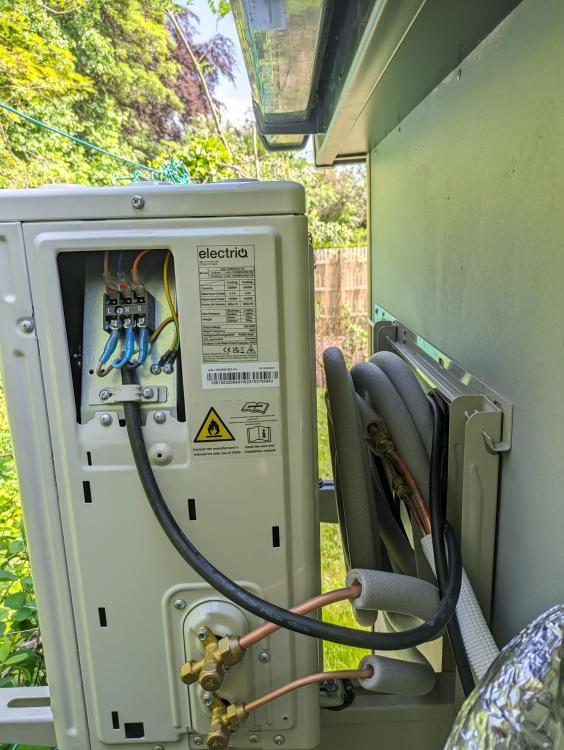
Yeah oddly it says if the pipe is extended indoors it needs insulating, but nothing about these external parts. I may wrap some wool insulation around the service valves, if I ever open it up again. Also, I figured if it ever needs a R290 recharge I'll remove the unnecessary extension at that point. The external unit as a whole kinda resonates when on full tilt, which transmits through the wall so I do hear it inside. But this is a gym, so the music, whirring bike wheels and swearing should drown that out in normal use. Nothing specific coming from the front panel of it. Do you mean like it is rattling? Any screws loose?
-
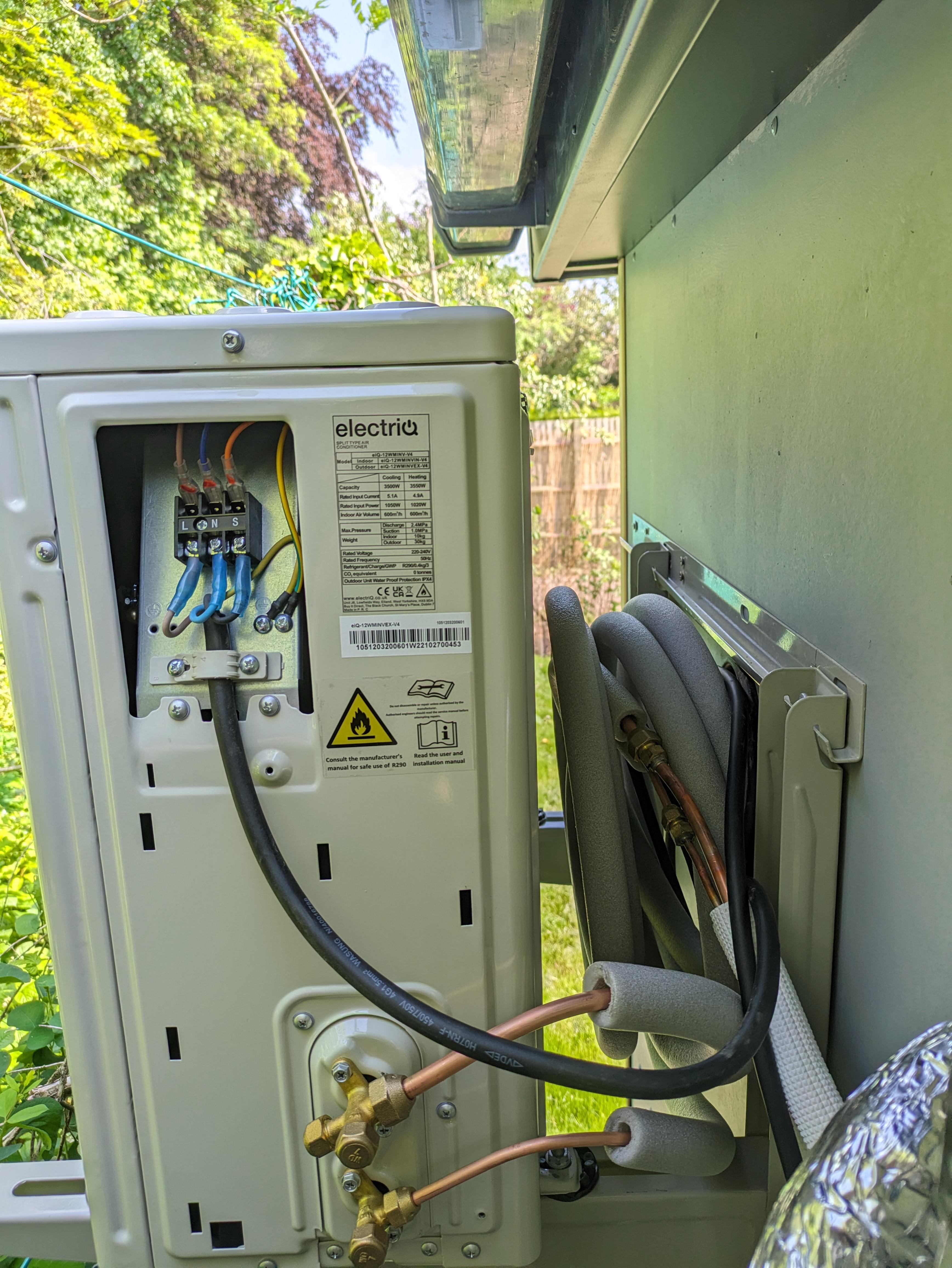
Many thanks for the tips! @S2D2 (I also found a 27 page Nowty thread on that other forum but it rambled all over the place and I gave up trying to find anything on this topic) The coil of spare pipe seemed in elegant but I went with it as path of least resistance. Shoved some misc insulation and neoprene jacket over the numerous joints and exposed pipework. The air bleed process was simple (if a little unsatisfying as there's no feedback I'd done it right) but firing it up all working well. It sat humming for 10mins before really getting going not sure if it has some initial self test or it'll always do that. Now I have WiFi in the room with it, I can try and get the app setup too.
-
Summer bypass should be automatic based on relative indoor/outdoor temperatures (at least it is on mine) so it's still useful even with Aircon as it will only engage if the indoor temperature is above target and the outdoor temperature is cooler than that.
-
I also got one and it does work! Thank you. Now powering 2x unifi WAPs for the garage and garden room, plus all the other ethernet guff I've managed to accumulate in those places. Only snag with unifi is it thwarts the management console view of which WAP is connected to which port of the main PoE switch, but this is a drawback of chaining devices off any unmanaged switch connected to it. Edited to add, the other drawback of unmanaged switches is they can't have different vlans on different ports. Not a problem for me but maybe for some.
-
Aghhh £8 of parts costs £10 in shipping. Free shipping if I order >50quid worth, so now I'm browsing Armaflex for a difference project. FML.
-
Bit more progress today; got the outdoor unit mounted up onto a wall bracket. That was not without some fun as the bracket keyhole slots to screw the unit unto had the large hole in just the wrong places for this fairly slim but nvmd nothing a couple extra large washers couldn't fix. The back of the unit is about 25cm from the wall, not quiet the 30cm the MIs call for but I think it'll be fine for a rarely used device. Hit some snags getting the gas pipeage hooked up though. 1/ the MIs aren't clear what to do with these black plastic on the internal pipe. I assume it is just remove them. There's a lot of gas hissing noise if I do so, so I slapped them back on. I guess they're just charged with some harmless gas to keep dirt out and pressure test. But MIs aren't clear so I'm dithering. 2/ I really don't need the 3m extension coils that came with it, the internal unit is directly inside of the outside unit, so in fact I have 50cm slack in the pipes as it is. However, I now spot the extensions have 2x female threaded connectors, and the pairs of connectors I'm currently trying to mate are all male. Other than use the supplied extensions (and having to tuck them up neatly and insulate the lot) I think my options are to get a couple appropriate sized F-F equal couplers. Perhaps these? https://www.airconspares.com/equal-female-flare-connector-1-4-dus4-4 https://www.airconspares.com/equal-female-flare-connector-5-8
-
This is of course just the ratio between the two absolute temperatures. It does not equate to the % difference in efficiency at those respective outdoor temperatures. That will depend on other factors too. Best just to look it up in the heatpump datasheet.
-
Loxone question: So many dimmers...
joth replied to BartW's topic in Networks, AV, Security & Automation
There's a few potential gotchas to this approach. - many of those mini drivers are constant current, not constant voltage, and Loxone don't make any native CC drivers - wiring multiple fittings on CC drivers means series wiring and higher voltage driver which is not hard but can trip up the design - using a different driver typically invalidates warranty on the light fitting (not that they can prove it but still) - running low voltage working makes the house electrics non standard and potentially much harder to maintain for someone else in future as they need to match fittings to drivers on a given circuit If you're happy with these limitations, then the overall approach can work very well and much more efficient and higher quality dimming than mains phase cut dimming, which really is a kludge technically speaking -
Loxone question: So many dimmers...
joth replied to BartW's topic in Networks, AV, Security & Automation
They do mains dimmers too. Buy 2x of these (16 chan) http://www.whitewing.co.uk/acdim.html -
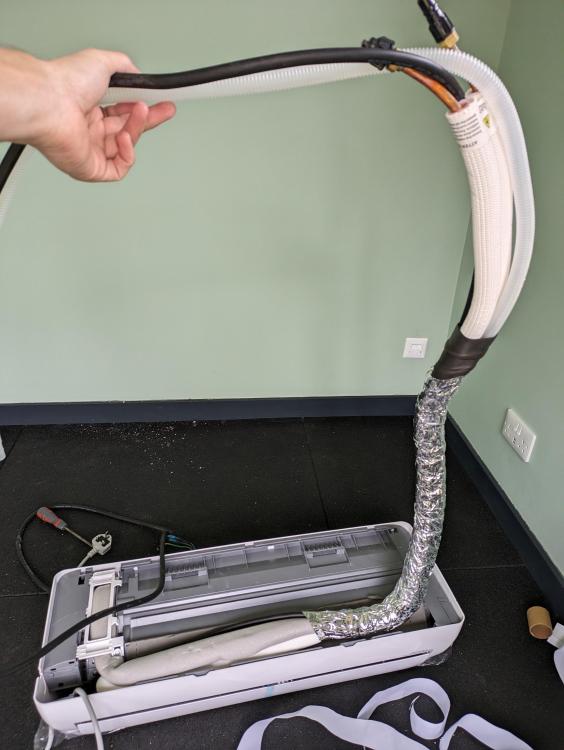
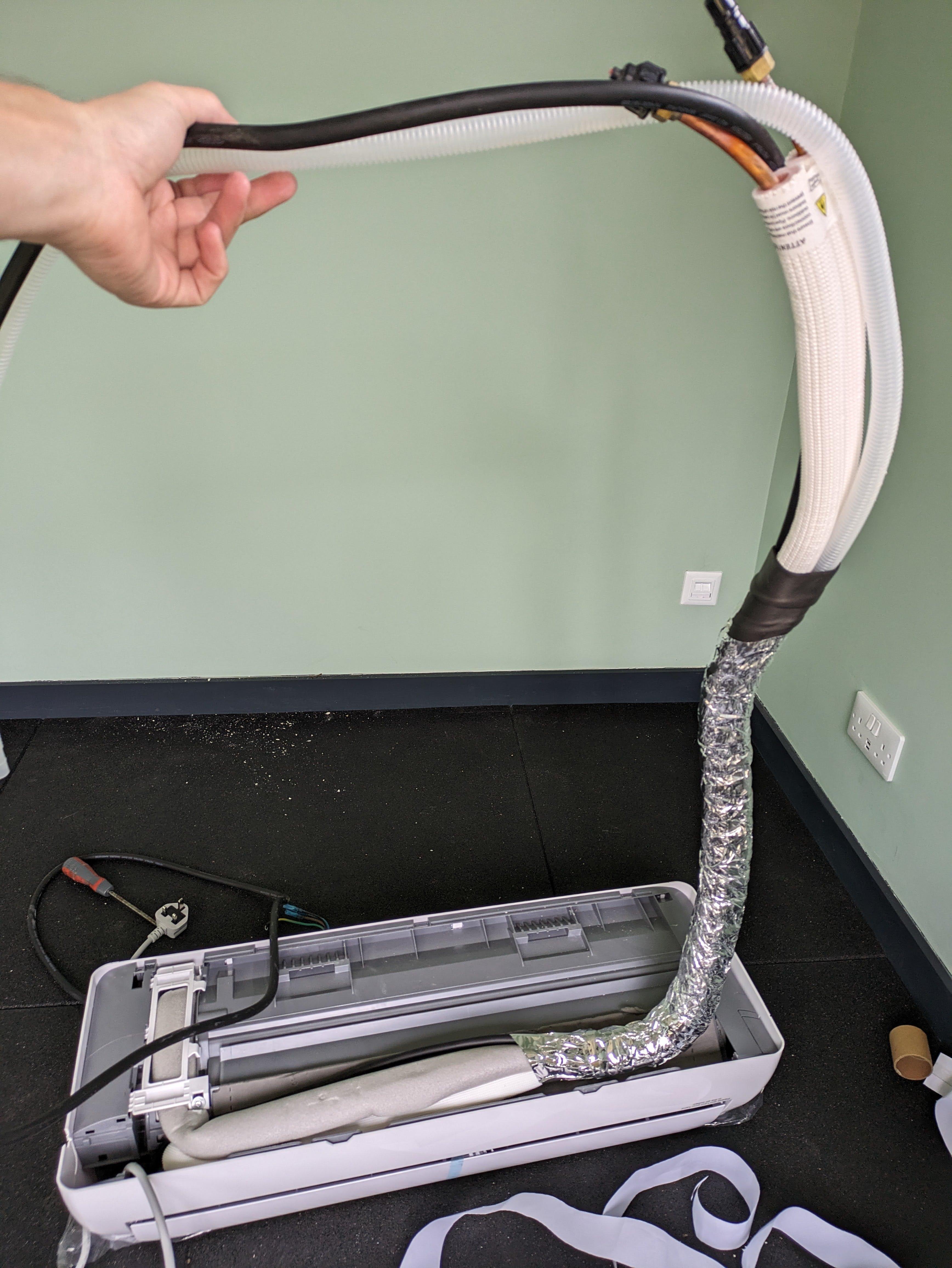
Anyone else installing one, note the illustrations and the installation text don't entirely match. E.g. the text says to install the protective sleeve in the hole cut through the wall, and to wrap the pipe bundle in additional insulation, prior to passing through the (sleeve in the) wall. The diagrams don't show either those steps, nor does the kit include said sleeve or insulation. So, anyway having noticed this I managed to get mine back off the wall and wrap the pipes. I used self-adhesive foam and then a layer of self-adhesive aluminium foil. The result looks OK enough, and importantly the bundle passed much more smoothly through the wall than it did as separate pipes/wires. Next up is mounting the external unit ona wall bracket.